Day 2 – Santander

Yesterday was our first full day in Spain! When we woke up, our hosts had already left for work and it was raining outside. The other guest Taka was awake too and he made us all pasta for breakfast before we all headed into town. Dave and I were spending the day in town then coming back to the house again in the evening, but Taka was laden and ready to go.

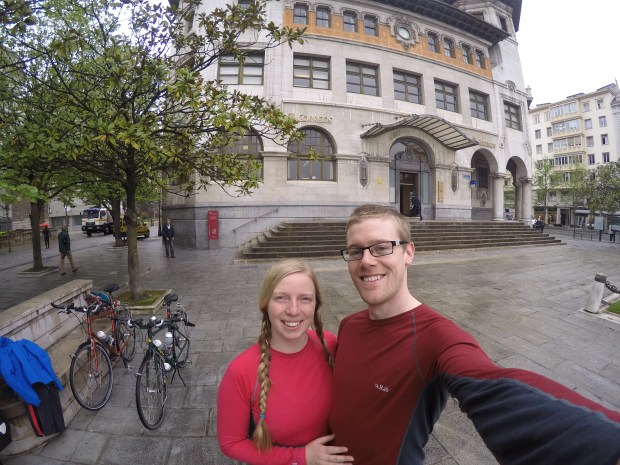
DCIM100GOPROGOPR0045.Waiting outside the grand Curreos (post office).

We went to the post office for Taka, then took him to the bus station so that he could go to Bilbao. Unfortunately he was told that he can’t take his bike on the bus, so he decided not to bother with Bilbao and head south straight out of Santander towards Morocco. From there, he was going to cross the Sahara to Senegal.   Yeah, rather him than me!!

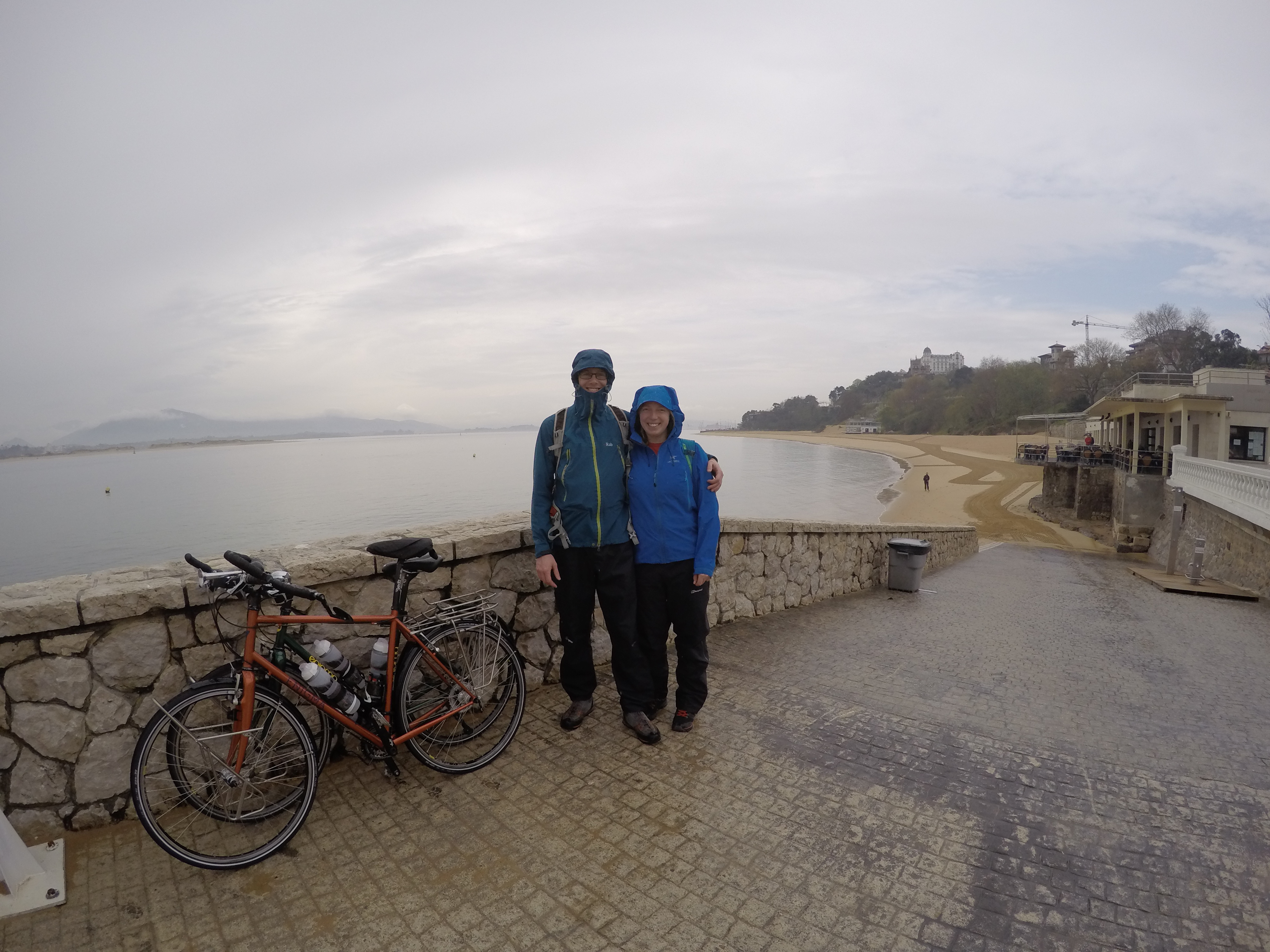
After waving Taka off, we went for lunch then headed along the beach in the drizzle and looked at the views from under our raincoats.

DCIM100GOPROGOPR0049.A rainy start to the day.

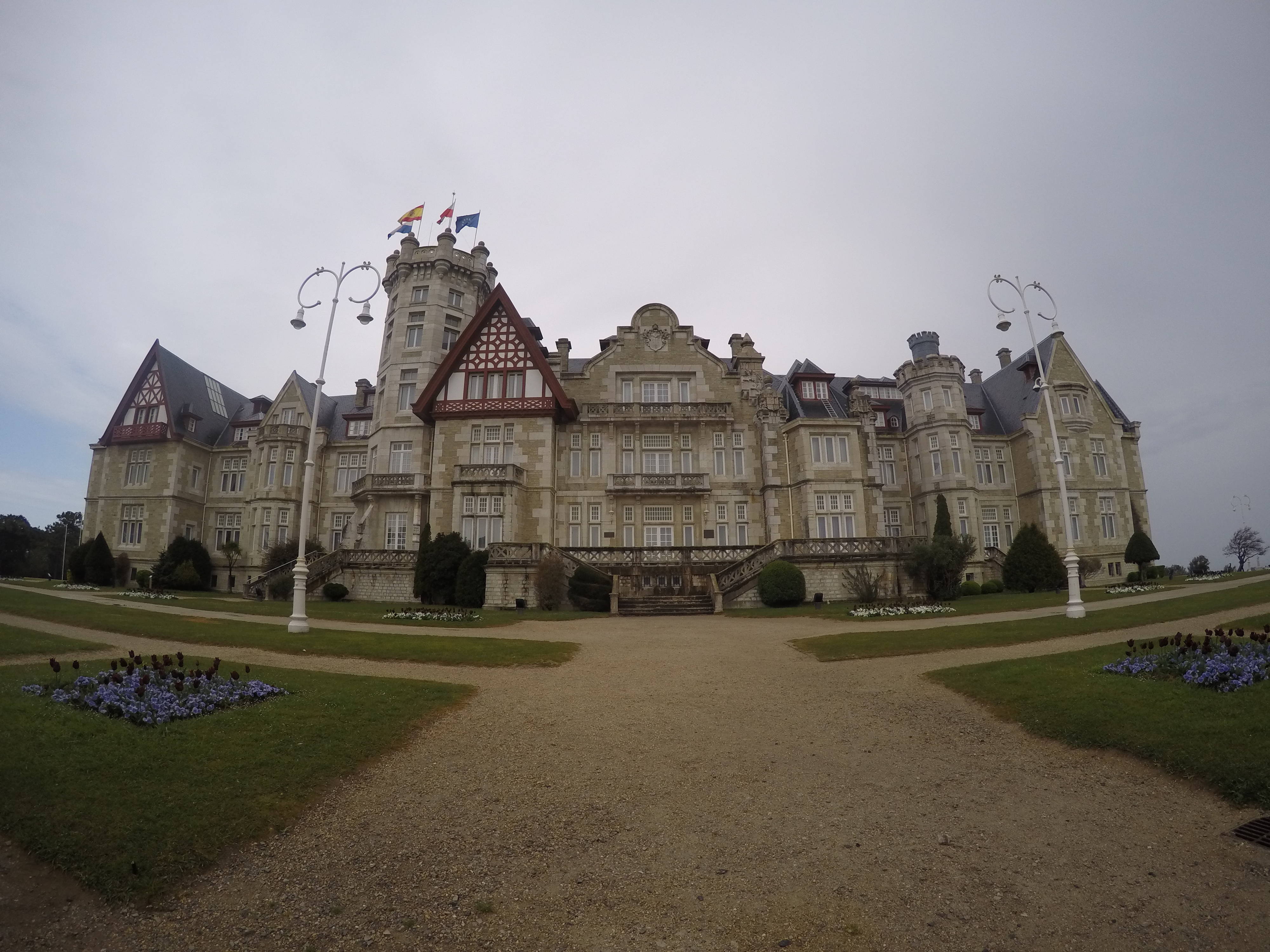
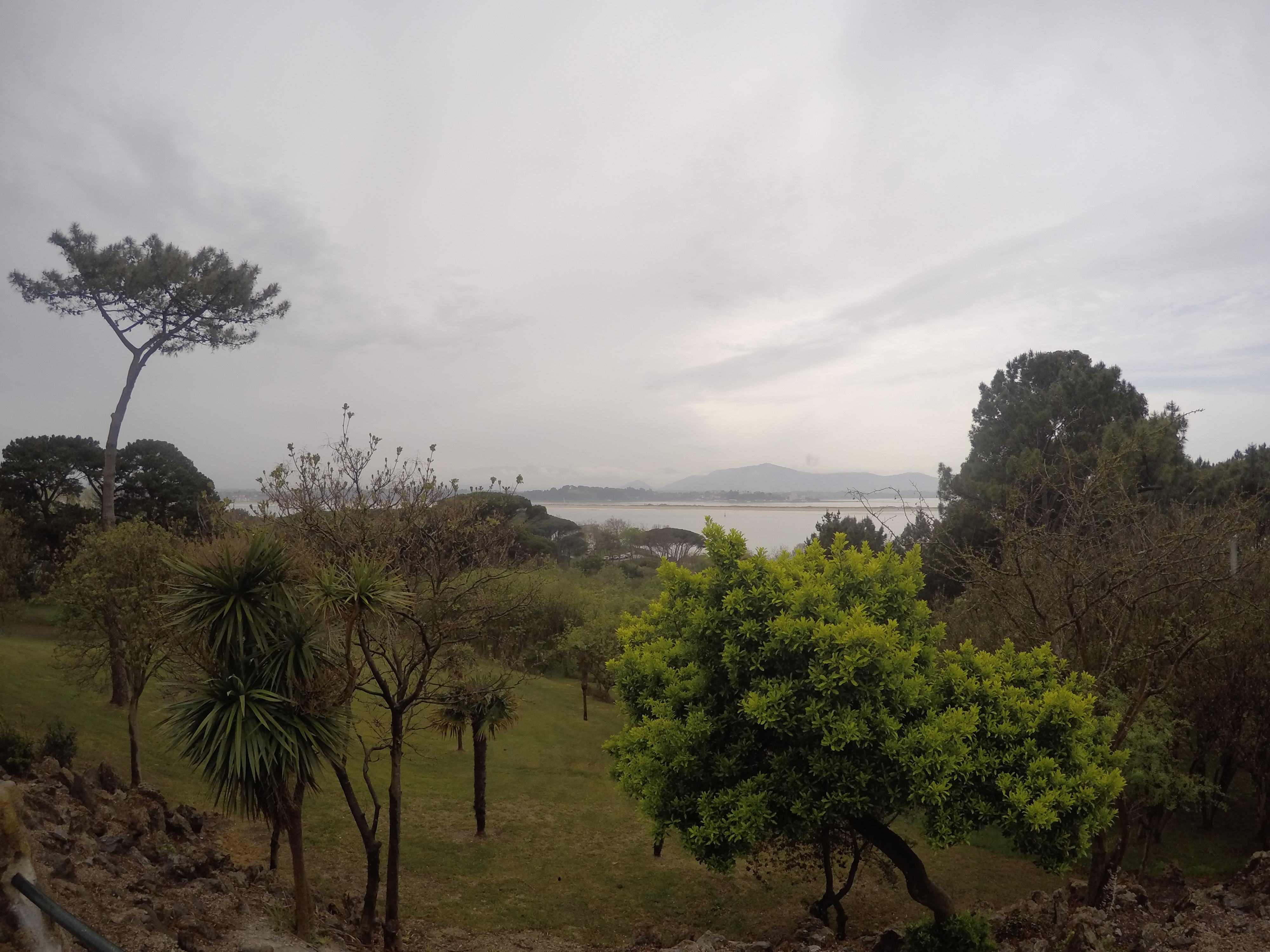
We stopped at a castle on a rocky outcrop with lovely gardens.

DCIM100GOPROGOPR0053.Castle

DCIM100GOPROGOPR0051.Gardens

On our way back, the sun came out for a bit and we enjoyed the lovely coastal views and the picturesque parts of town.

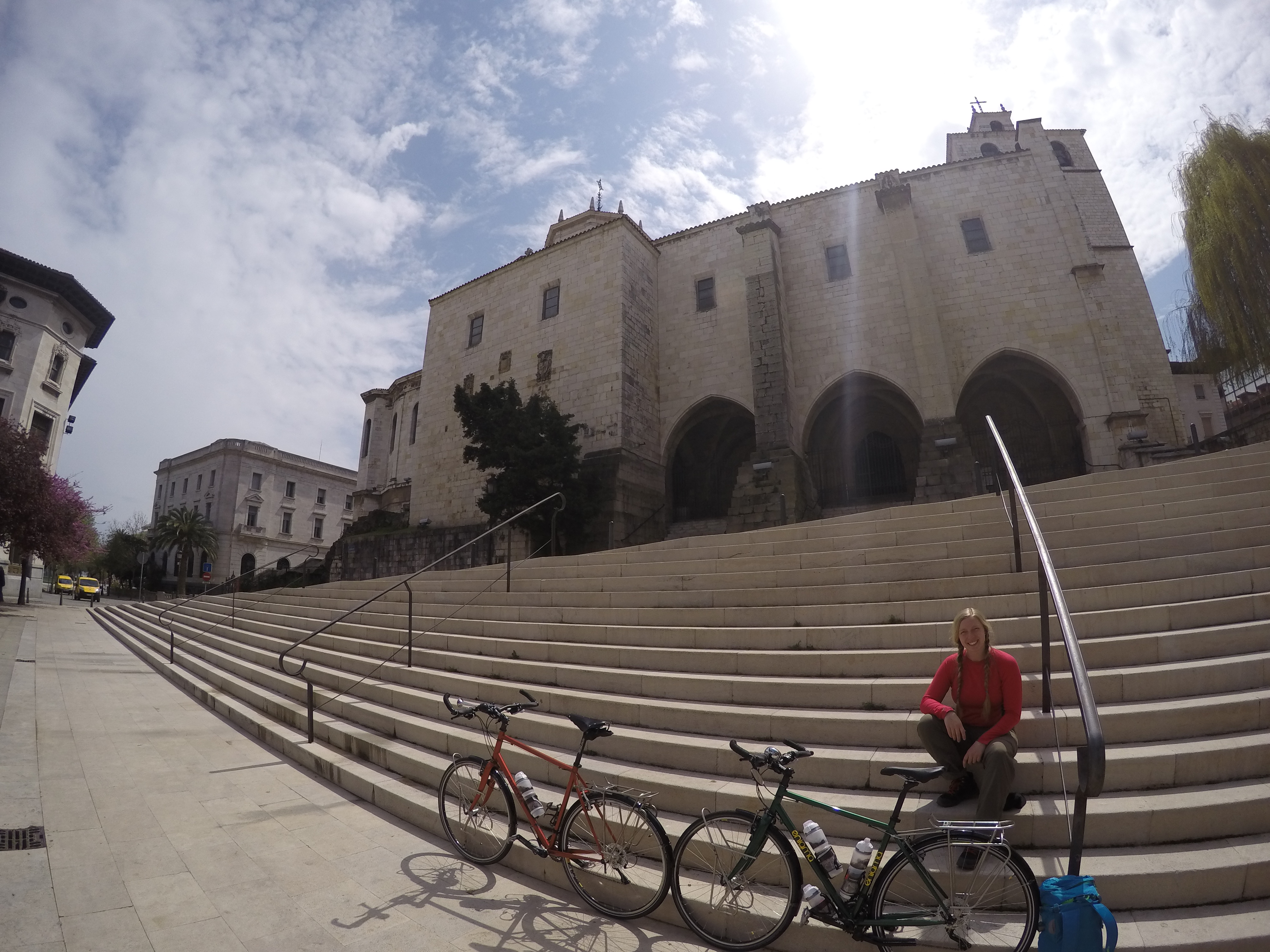
DCIM100GOPROGOPR0061.Sunning ourselves outside the cathedral.

Then we were back with Silvia and Carlos and we made them a great British dinner of Shepherd’s Pie and we talked for ages about cycling and climbing in the Picos mountains that we will get to in a few day’s time. Very excited!

Beginnings

So this is it, we’ve left the UK and we’re on the ferry to Santander! Anna’s mum saw us off from her flat in London yesterday and we wobbled down to the station to catch our train to Portsmouth. It’s the first time I’ve ridden my bike fully loaded, and it’s a weird sensation. The frame flexes and wobbles with the weight, and I’m constantly making micro-adjustments, which makes it worse! Apparently it wears off once you relax.

Luckily the train was pretty empty so there was room for our massively over-laden bikes!

We got into Portsmouth and found the ferry terminal; we then found a little grassy bank near the road to sit and have a quick snack before checking in. Security was tight, we declared our two sizeable knives before having two of our 14 bags scanned, revealing a gas canister. That was all fine though apparently and the friendly Security team waved us on. Not sure what you would have to be carrying to actually be stopped!

My hopes were high that we would be allowed to board first as we were directed down an empty lane almost to the boarding ramp, but Anna’s prediction proved correct and we sat there for an hour while about 500 cars boarded in front of us. It was a lovely sunny afternoon though so we had no complaints. I did find out what a pain it is to move your bags around once they’re off the bike though. We couldn’t carry everything in one trip so we had to relay our bags to the cabin. Maybe we shouldn’t have brought the 60m climbing rope??

We sailed at 5.30 pm, and once we’d taken some artistic photos of the Spinnaker Tower and waved goodbye to the mainland we sat down to dinner while sailing past the Isle of Wight. It was sunset and the sea was amazingly calm; we enjoyed the beautiful view while maximizing the value of the all you can eat buffet. We figured we need to make the most of available calories!

After dinner we wandered around the ship and went outside to watch some gannets before heading to bed for an epic 11-hour sleep! Anna has a bit of seasickness, so the more time spent asleep the better as far as she’s concerned.

Today we’ve eaten, walked around, read and watched the sea for signs of life, to no avail so far. However, I expect the marine mammals will turn up somewhere near the continental shelf break, which is pretty close to the coast on the Spain side. Hoping to see some dolphins and if we’re lucky, some bigger whales too. While I’m writing this I’m listening to Brittany Ferries’ resident lounge singer and piano player, collectively known as “Liaison”. There is an elderly couple waltzing around the dance floor and maybe 3 other people watching and providing occasional applause. It’s amazing. I hope I’m happy to dance around by myself at 3 in the afternoon when I’m old.

I’m really looking forward to getting into Santander and meeting our Warmshowers hosts Silvia and Carlos this evening. Anna is pretty chilled out about it, but it’s all new to me and very exciting. I have to keep reminding myself I don’t have a job or anything to go back to after this, and we aren’t expecting to go home for months. It’s the first time I haven’t had a job since uni, and I think it’s going to take a while to sink in. Maybe some tasty Spanish food and a beer tonight will help!

Knepp Wildlands Safari

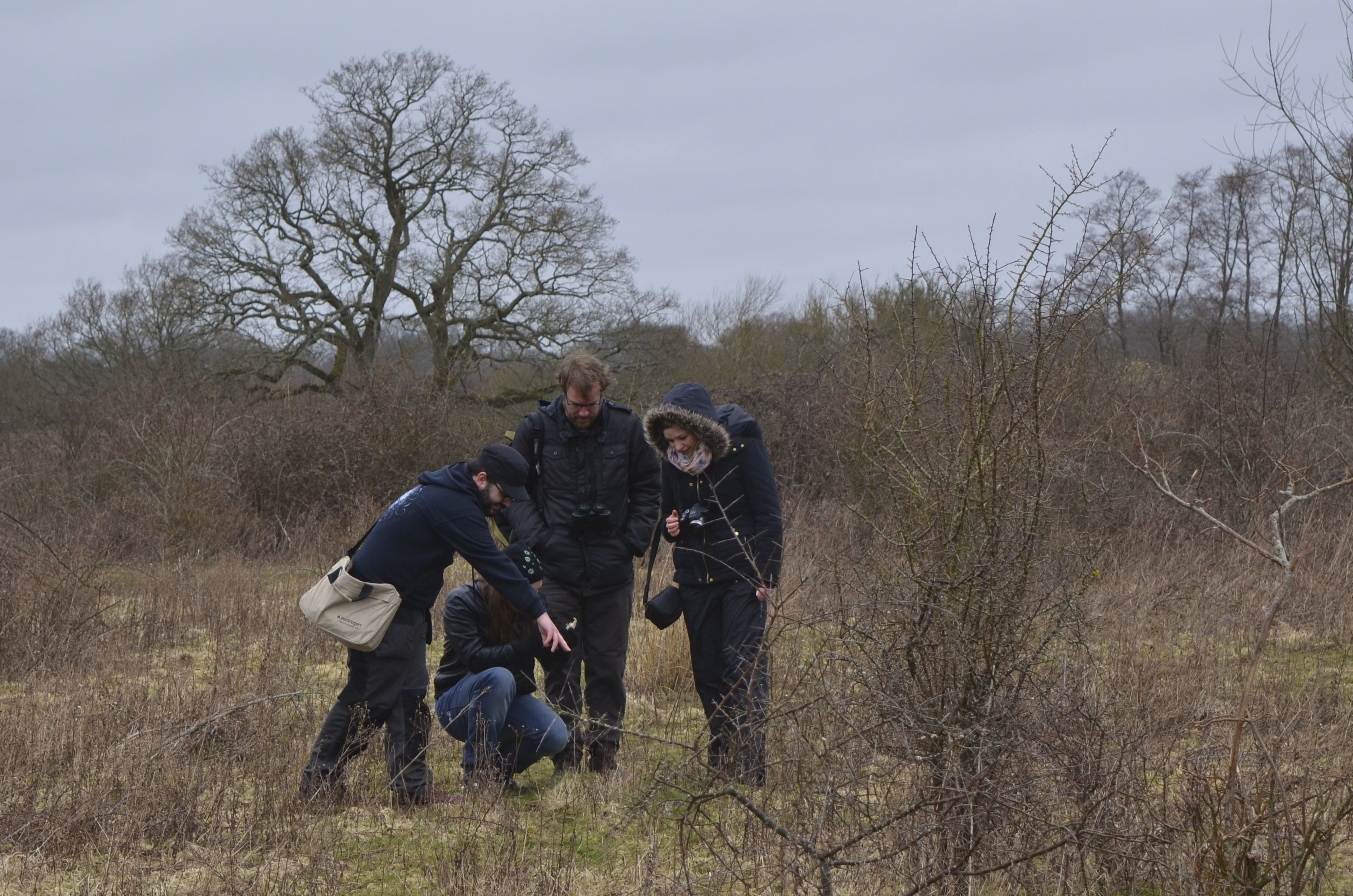
On Saturday we started our rewilding journey with a visit to the Knepp Wildland Project in West Sussex (England). We took some friends along and were guided around by Penny Green, the knowledgeable and enthusiastic Ranger.

The project was formerly a large dairy and arable farm. The current owner, Charlie, got to know Ted Green and Jill Butler (ancient tree gurus at the Woodland Trust) and bravely decided to risk everything by turning his back on 100 years of traditional farming by his family and embrace a new concept – low intervention farming using the animals themselves to manage the land.

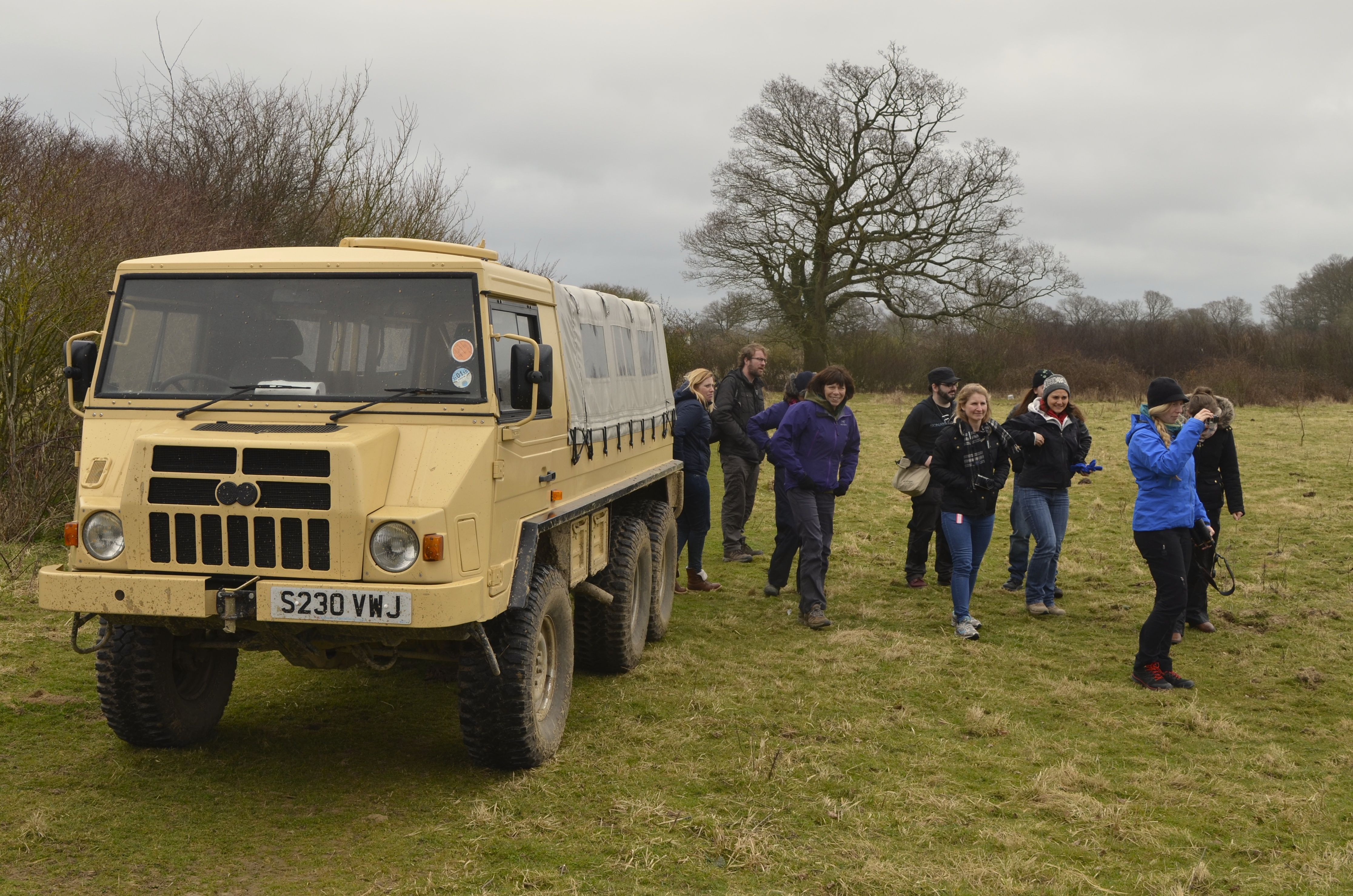
Penny gave us a fascinating presentation on the history of the estate, and how the rewilding project came about. We then went out in a Pinzgauer (a six-wheel drive troop carrier), which apparently is the only thing that can reliably handle the Sussex clay in the winter!

Our trusty steed

Our trusty steed

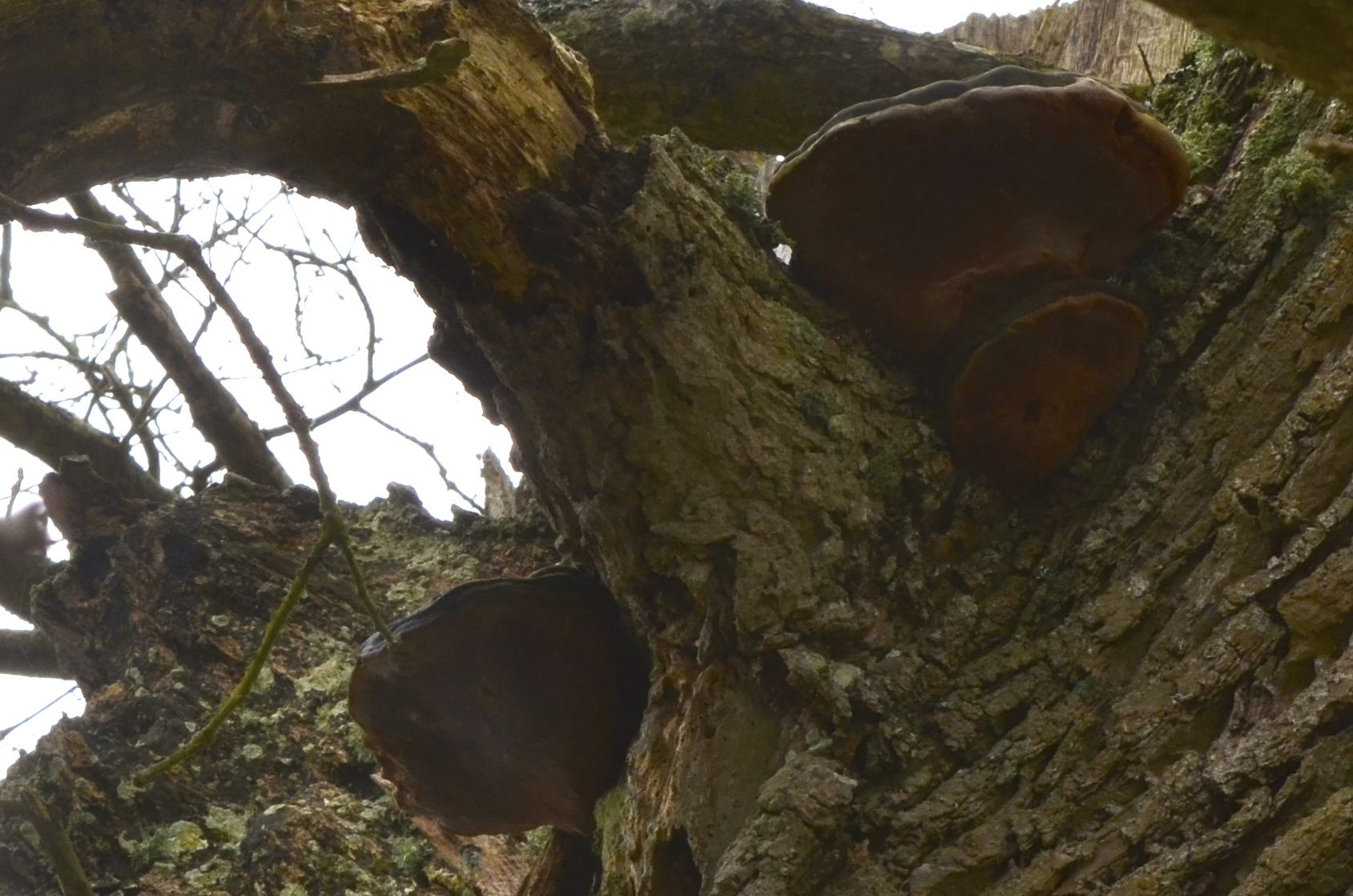
Over 60 km of fencing was removed before the start of the project and we drove through the former fields, hopping out near an oak tree that occasionally (but not today sadly) contains a little owl. To compensate for the missing owl, Penny pointed out a rare bracket fungus (Phellinus robustus) growing high up in the crown of the tree. I guess one of the advantages of fungi as a subject is that they don’t move around too much!
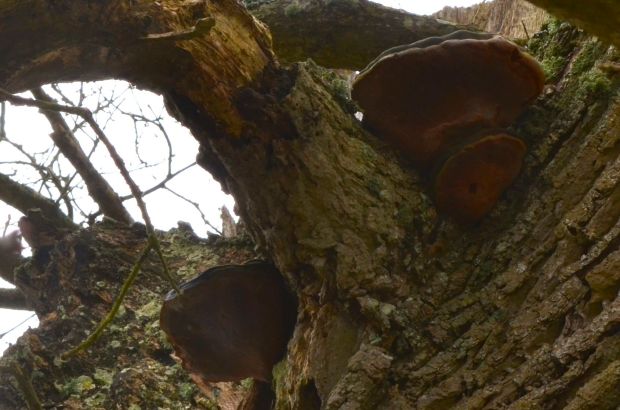
Bracket fungus (Phellinus robustus) in an oak tree

Bracket fungus (Phellinus robustus) in an oak tree

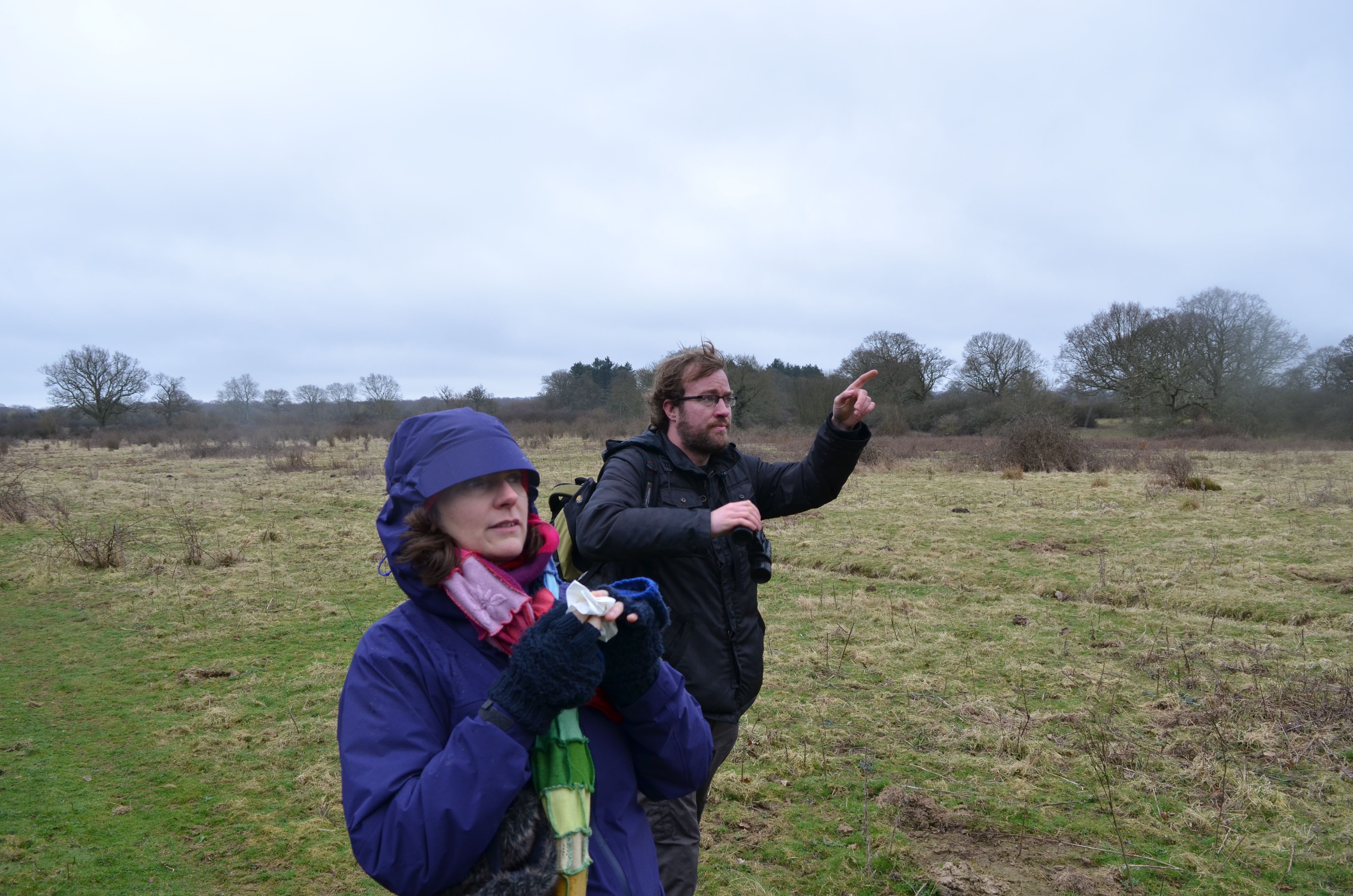
Shortly after this we saw two red kites (Milvus milvus) circling overhead, a nice reminder that this species is making a good comeback in England after over a century of absence.
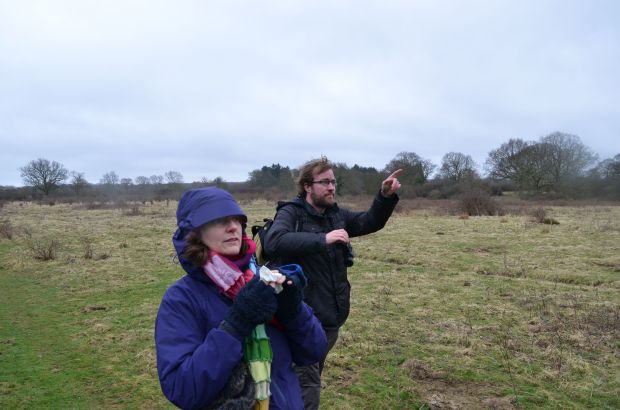
Joe and Anne tracking the red kites

Joe and Anne tracking the red kites

The changes that are happening on the estate were clear to see from the start. The fields that once supported a monoculture are developing a new flora. Rootling for bulbs and other sub-surface goodies by Tamworth pigs (specially selected for the purpose) overturns the soil and creates habitat for invertebrates and wildflowers. Low-intensity grazing by longhorn cattle, fallow and roe deer keeps areas of grass open, but the dog-rose, blackthorn and brambles are providing protection for young oak trees. The thorns are no match for the exmoor ponies however, who seem to enjoy the challenge! Sallow (Salix caprea and Salix cinerea) is becoming established, and is used by the longhorn cattle as lunch and rubbing posts.
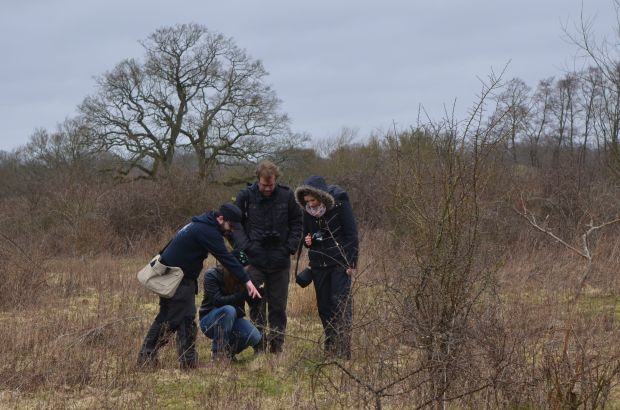
Investigating a rabbit skull amongst the scrub

Investigating a rabbit skull amongst the scrub

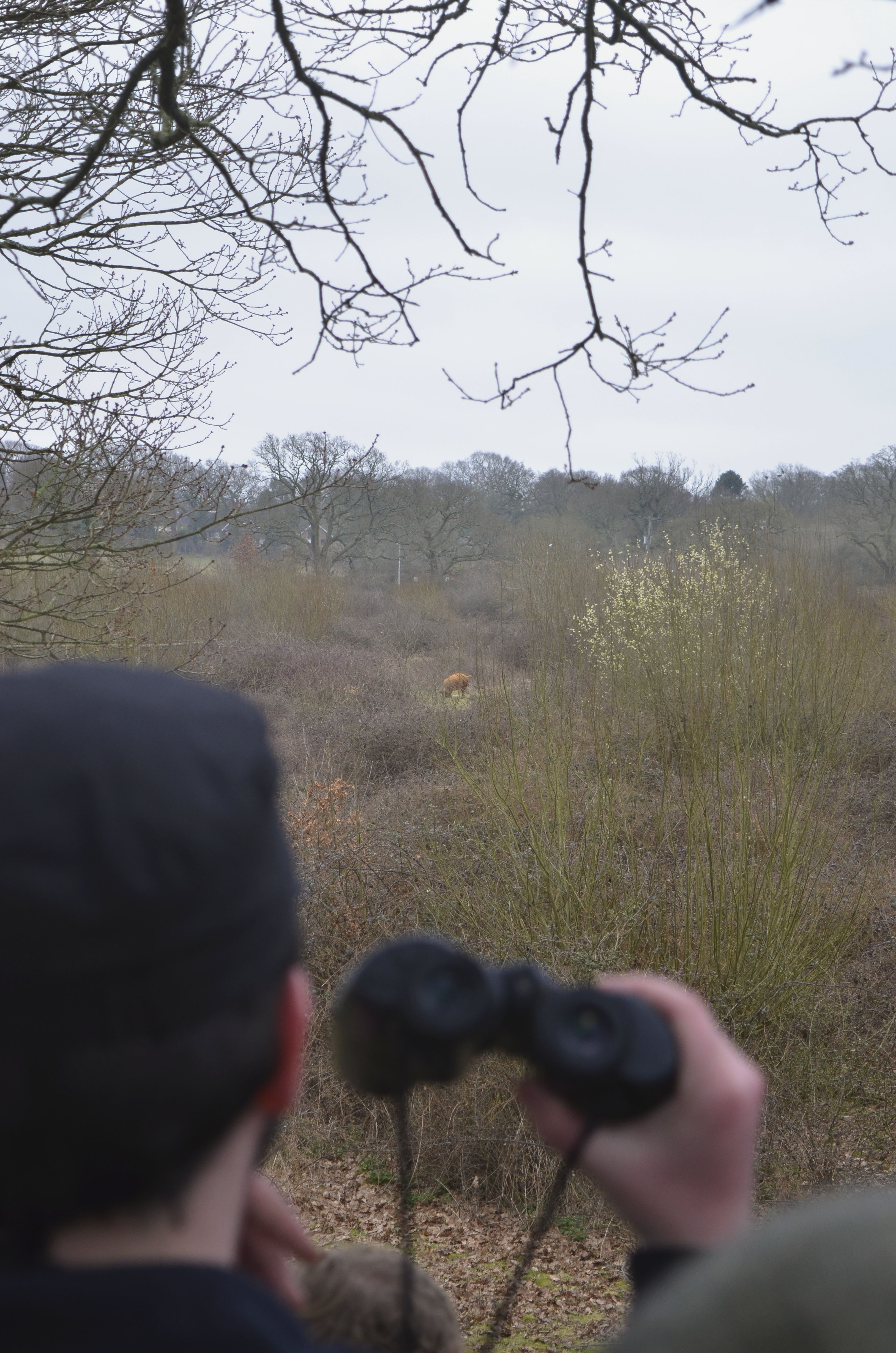
We made our way to a tree platform that had been constructed in the spreading branches of a beautiful old oak tree that survived the intensive farming days. From the platform we got a good look across the emerging landscape, and a glimpse of a Tamworth pig – a big orangey-brown shape snuffling through the undergrowth.
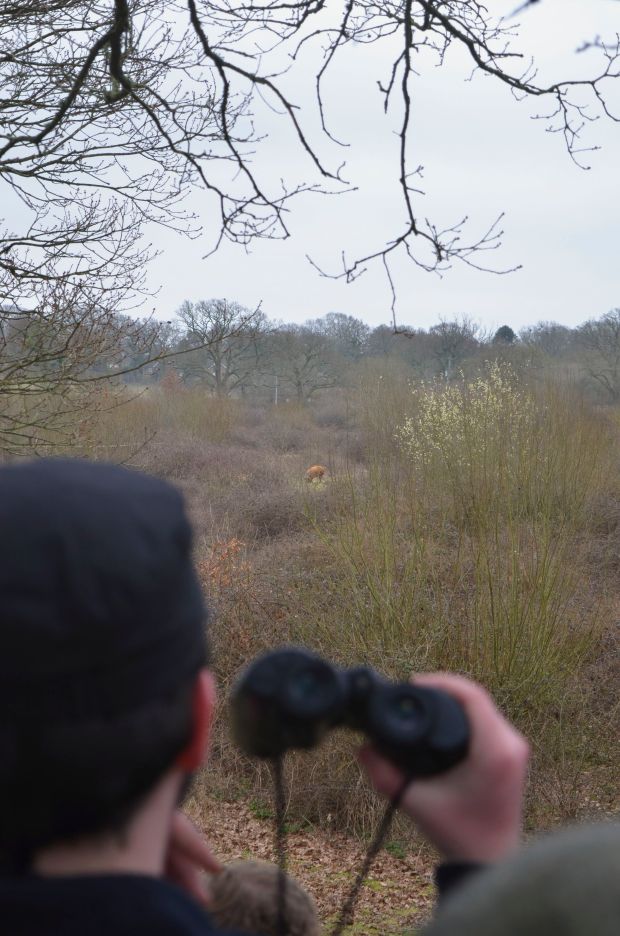
Tamworth pig!

Tamworth pig!

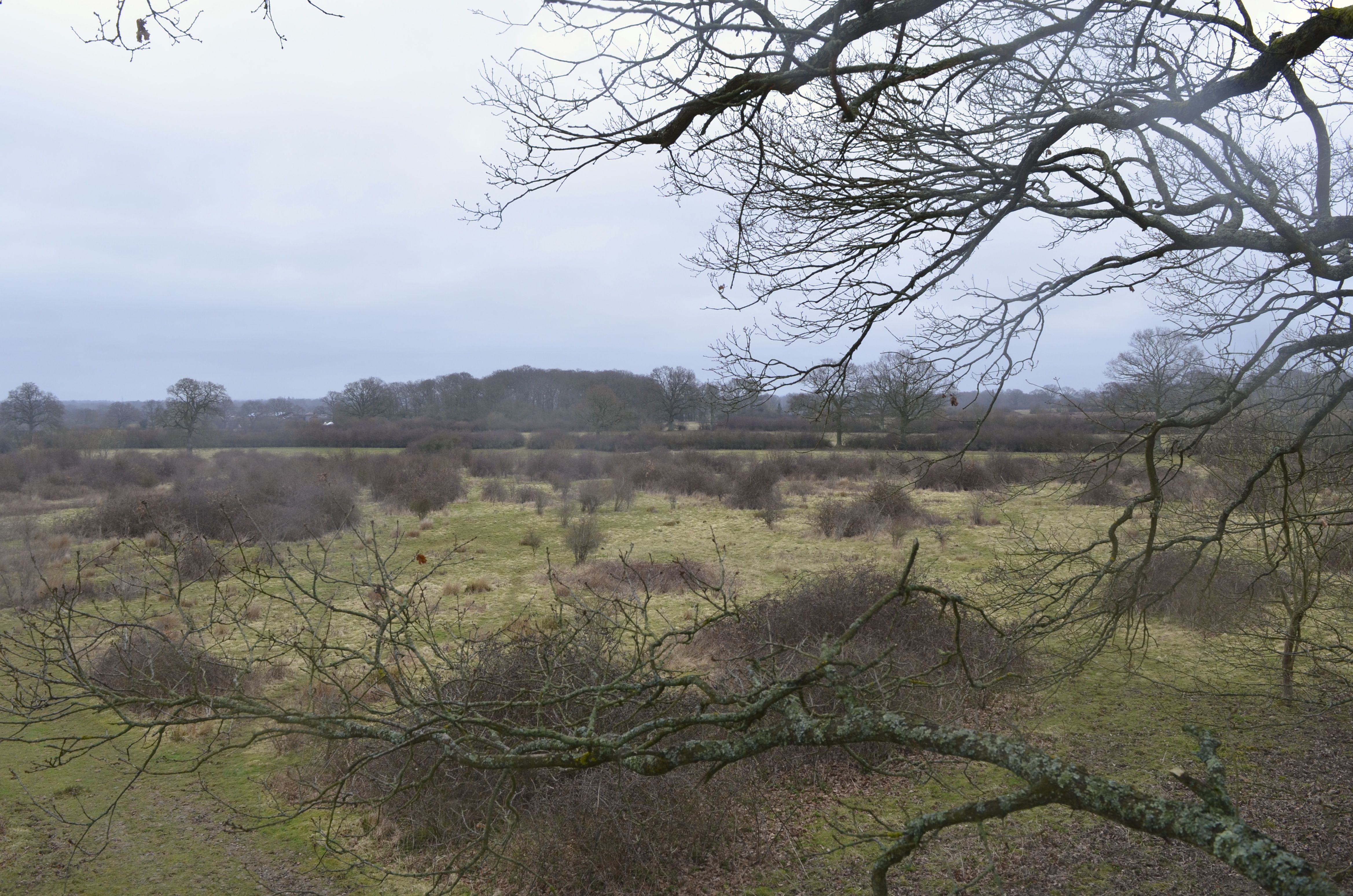
The pattern that was emerging was clearer from the tree platform. Penny explained that once the oak trees become established and immune to the effects of browsing, they will form the basis of an open, wooded habitat. Careful stock management is intended to ensure the fields do not revert to plain but will not turn into dense woodland – browsing is expected to maintain meadow areas. No one is really sure though – the big experiment is to try to replace some of the missing ecosystem-shaping species, and then see what happens.
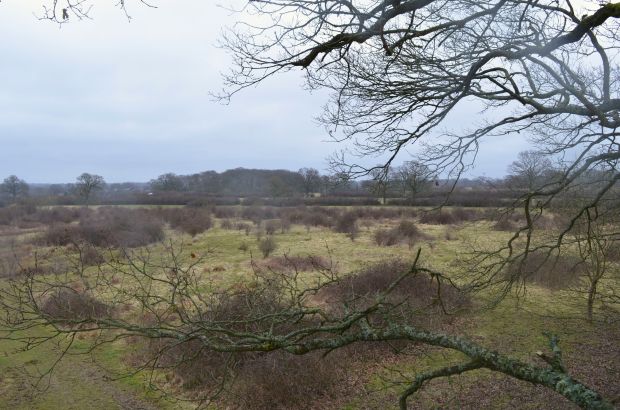
View of the changing habitat from the tree platform

View of the changing habitat from the tree platform

As it is unlikely that large predators will be introduced (it was calculated that the area is only big enough to support one and a half lynx), culling is used to manage herbivore populations. Licensed hunting of deer stags is also an important revenue source. All the meat is sold for consumption and the revenue is used to conduct necessary maintenance. The deer stalking is used to supplement the project’s finances; there is no intention to turn this into a deer stalking estate!

The hedges and field margins are becoming taller, deeper and denser, creating habitat for birds, small mammals and reptiles. Penny told us that beneficiaries from these changes include nightingales (Knepp now supports 2% of the UK’s wild breeding population), turtle doves and cuckoos. Turtle dove numbers in the UK decreased by 96% between 1970 and 2012 and were identified in 2010 as the bird species most likely to be extinct in the UK by 2020. At least four territories were identified at Knepp during 2014, up from an average of two in previous years. This is a drop in the ocean in terms of the UK-wide population crash, but it is very encouraging to see the species appearing to increase in number within the project area.
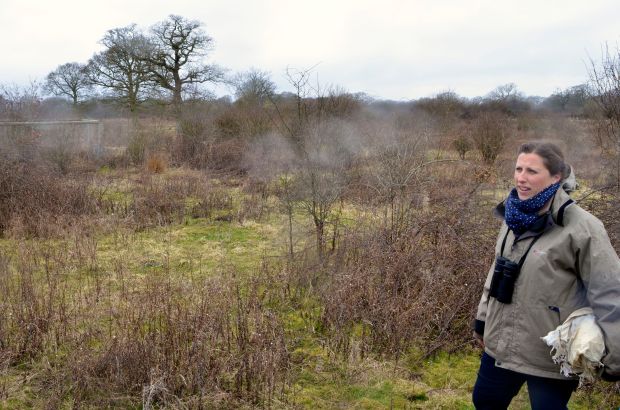
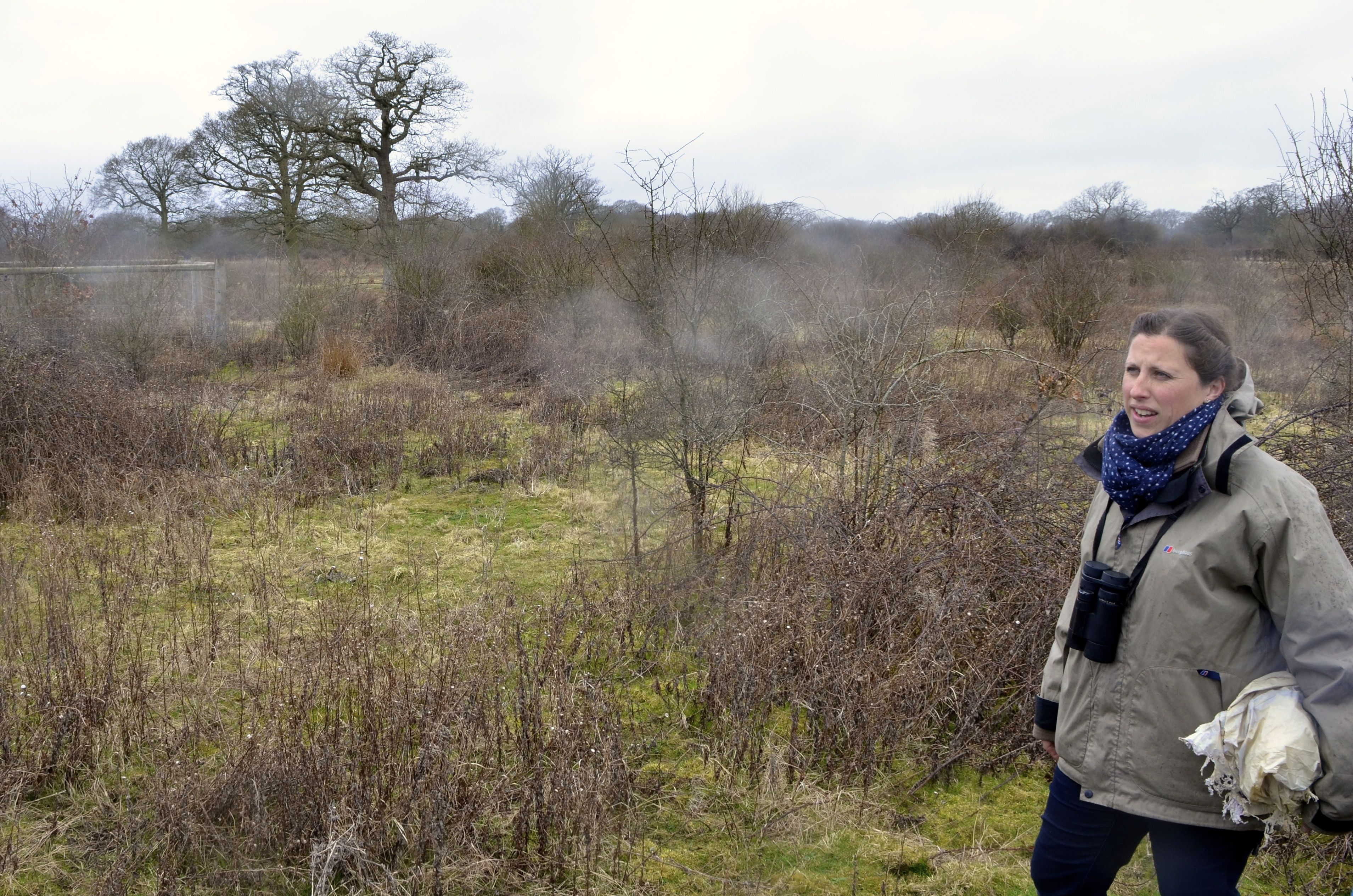
Penny pointing out an area fenced off for reference surveys to see what will happen with no browsing (top-left)

Penny pointing out an area fenced off for reference surveys to see what will happen with no browsing (top-left)

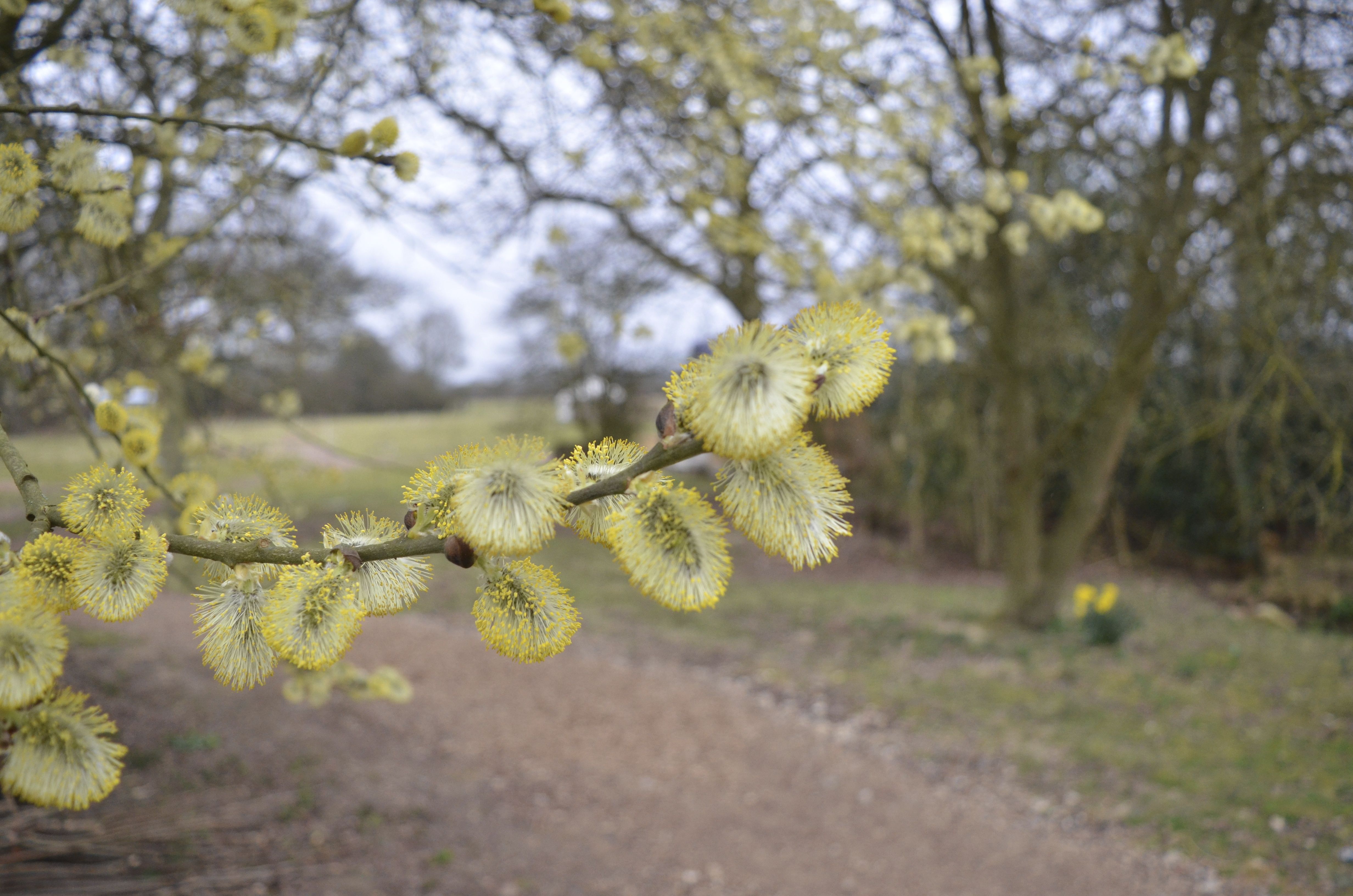
The stunning purple emperor butterfly (Apatura iris) is another big winner at Knepp. It was first noticed breeding at the project in 2009, and by 2013 was considered to host the second strongest population in the country. This species is traditionally associated with mature mixed woodland, but Knepp is changing the received wisdom on this. The males display over large oak trees, and the females lay their eggs on sallow. It seems that the suddenly increased availability of sallow is responsible for the spectacular population increase at Knepp, and that the Purple Emperor could become much more widespread in the southeast if the availability of food plants were increased. We didn’t see any on our trip as the adults emerge in early July, but I recommend going on a summer safari!
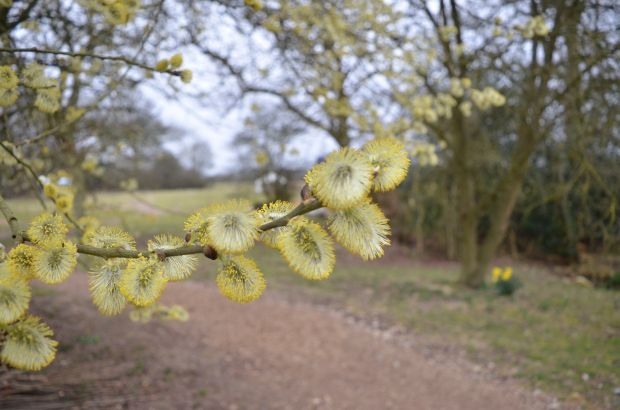
Sallow (Salix caprea i think) catkins

Sallow (Salix caprea i think) catkins

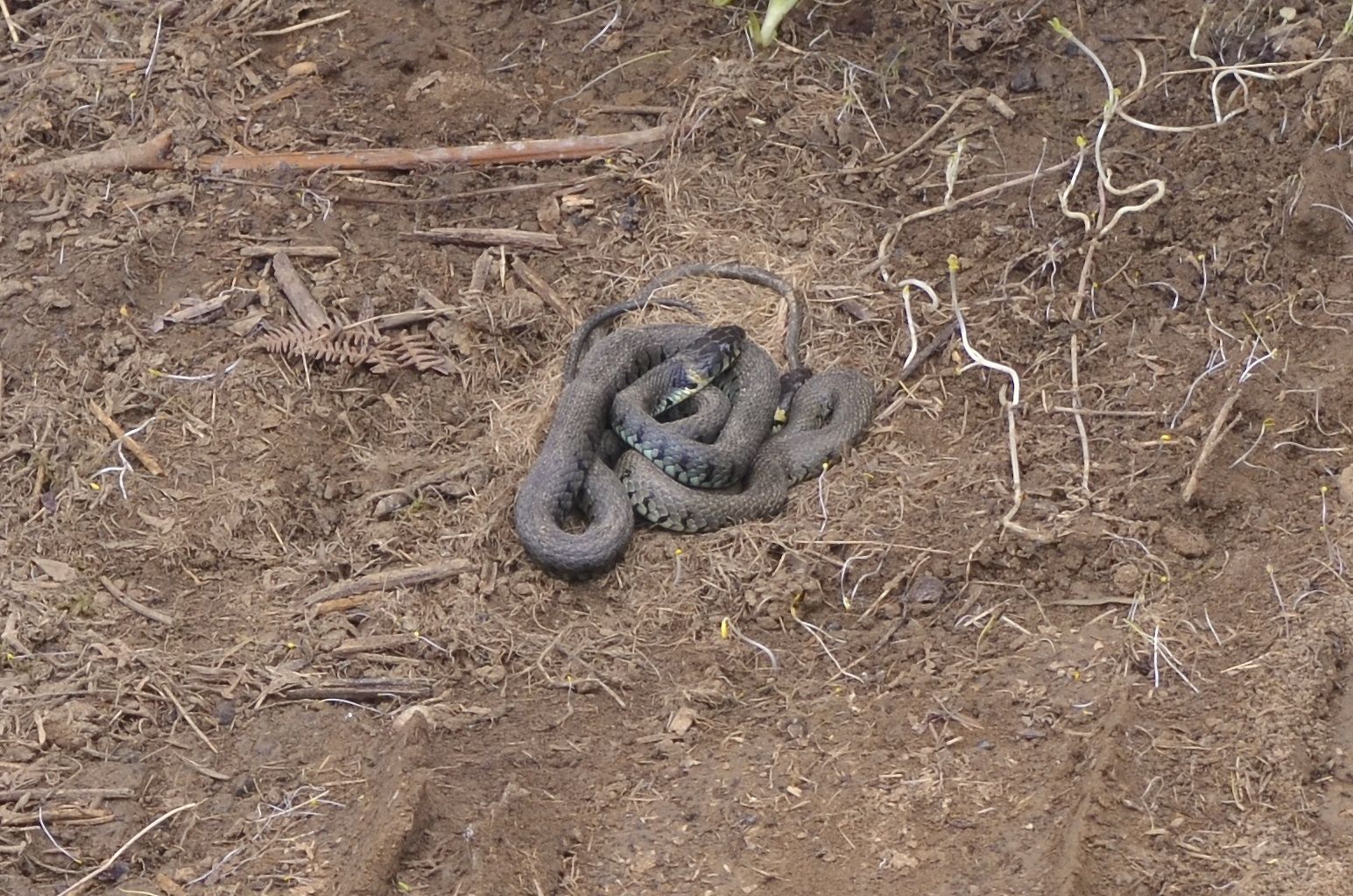
After another stint in the Pinzgauer we jumped out to investigate some sheets of corrugated iron that had been put down to provide winter shelter for reptiles. Under the first sheet we saw two grass snakes curled up together. They hung around and let us get a good look at them before Penny covered them back up.
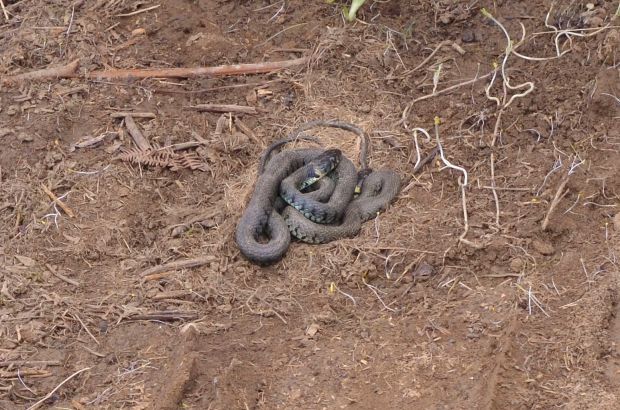
Grass snakes (Natrix natrix)

Grass snakes (Natrix natrix)

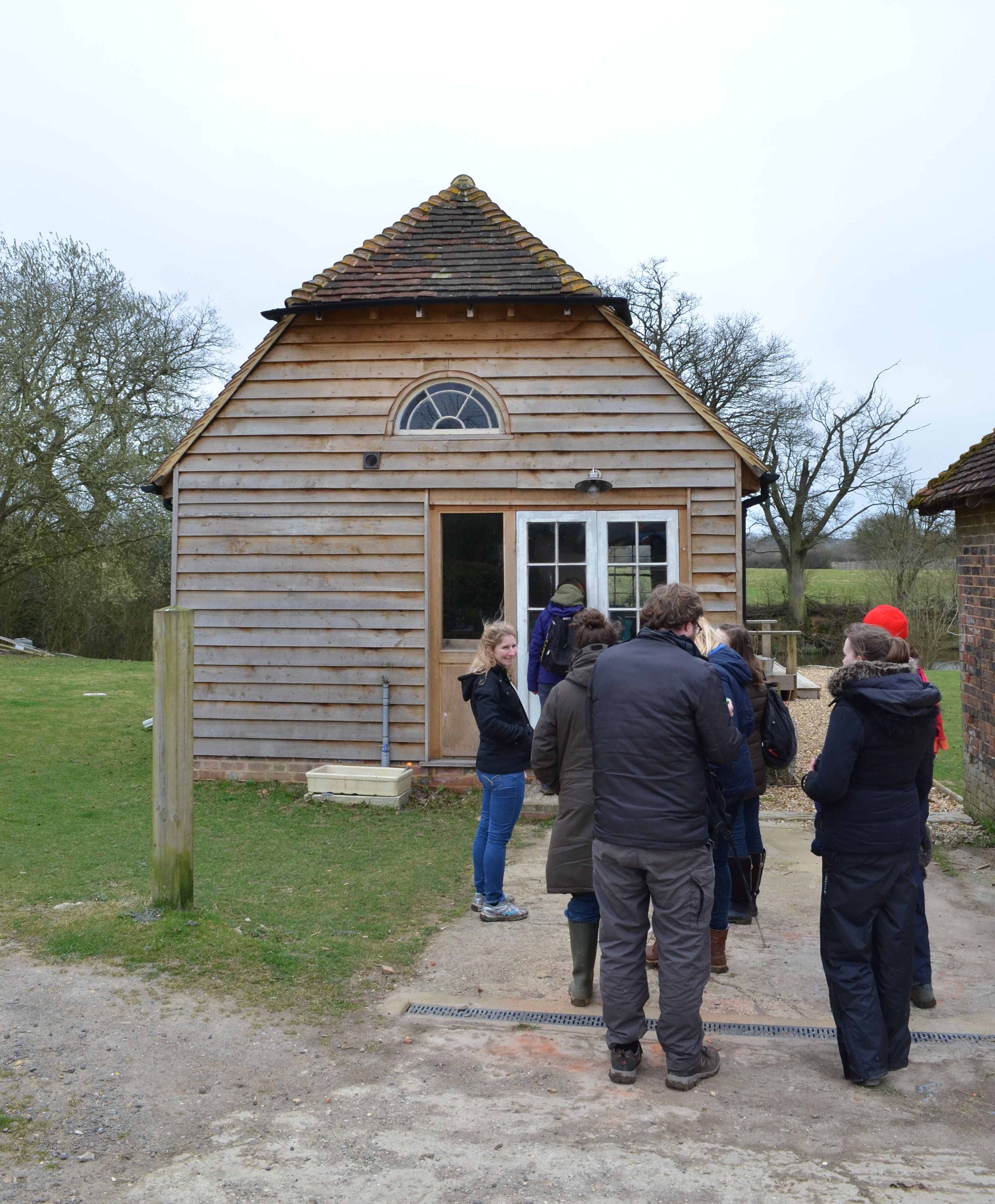
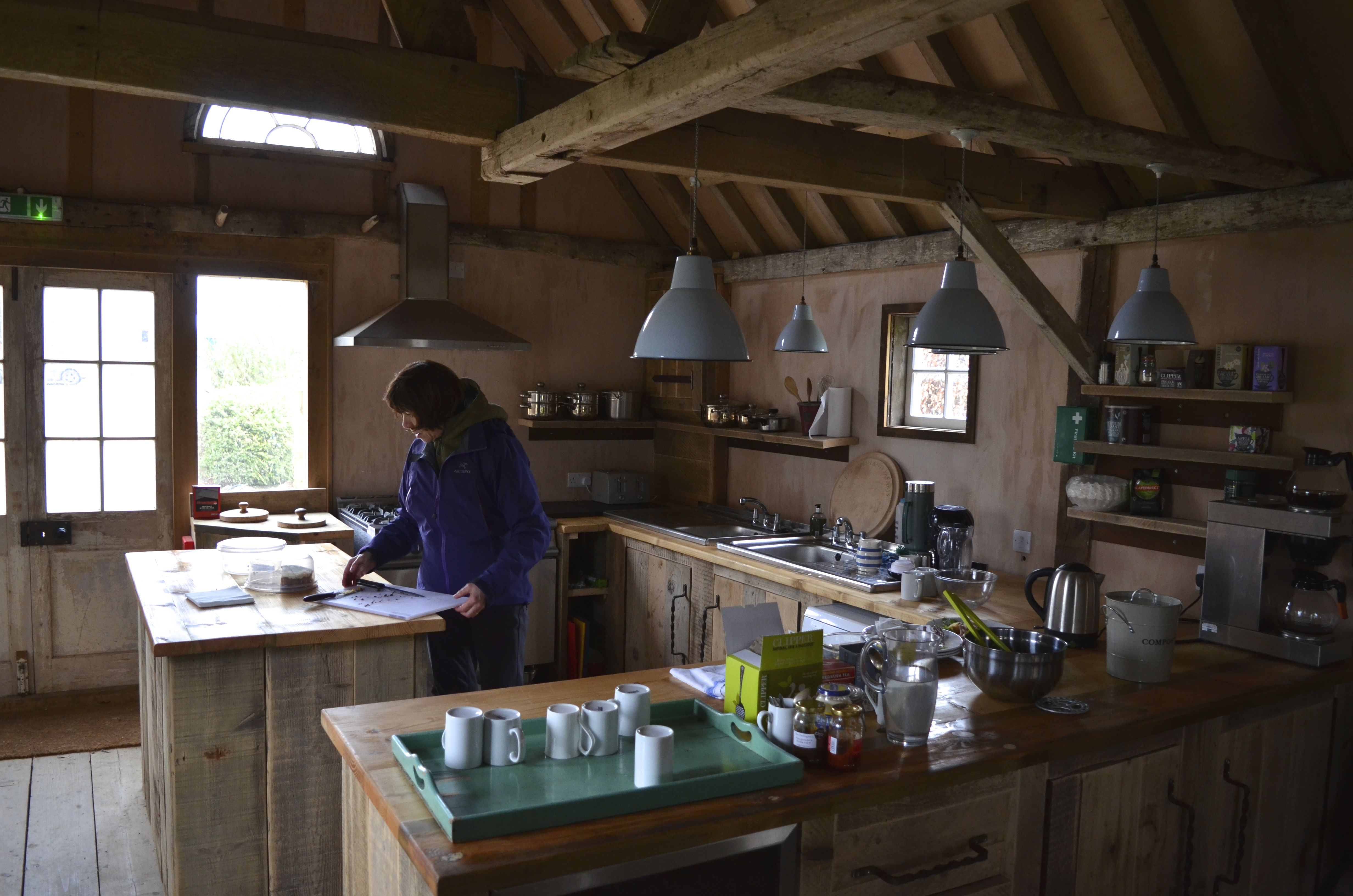
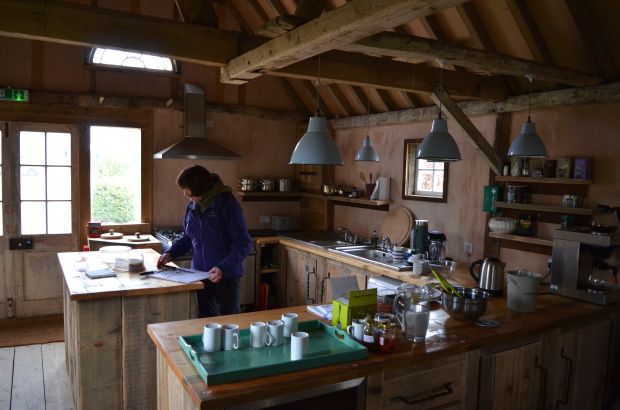
After this we headed back to the dining / conference building for delicious lunch, including home-grown salad, pork pie and ham followed by chocolate brownies and coffee. Mmmmmm!
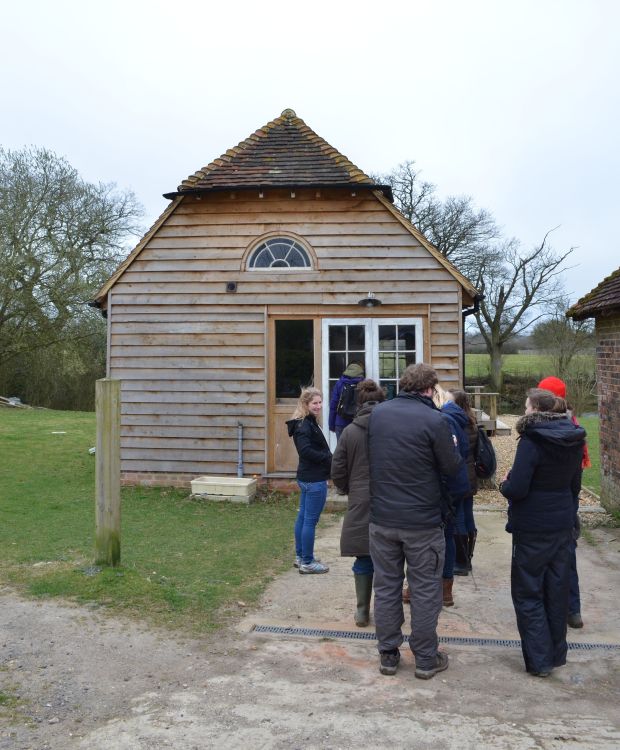
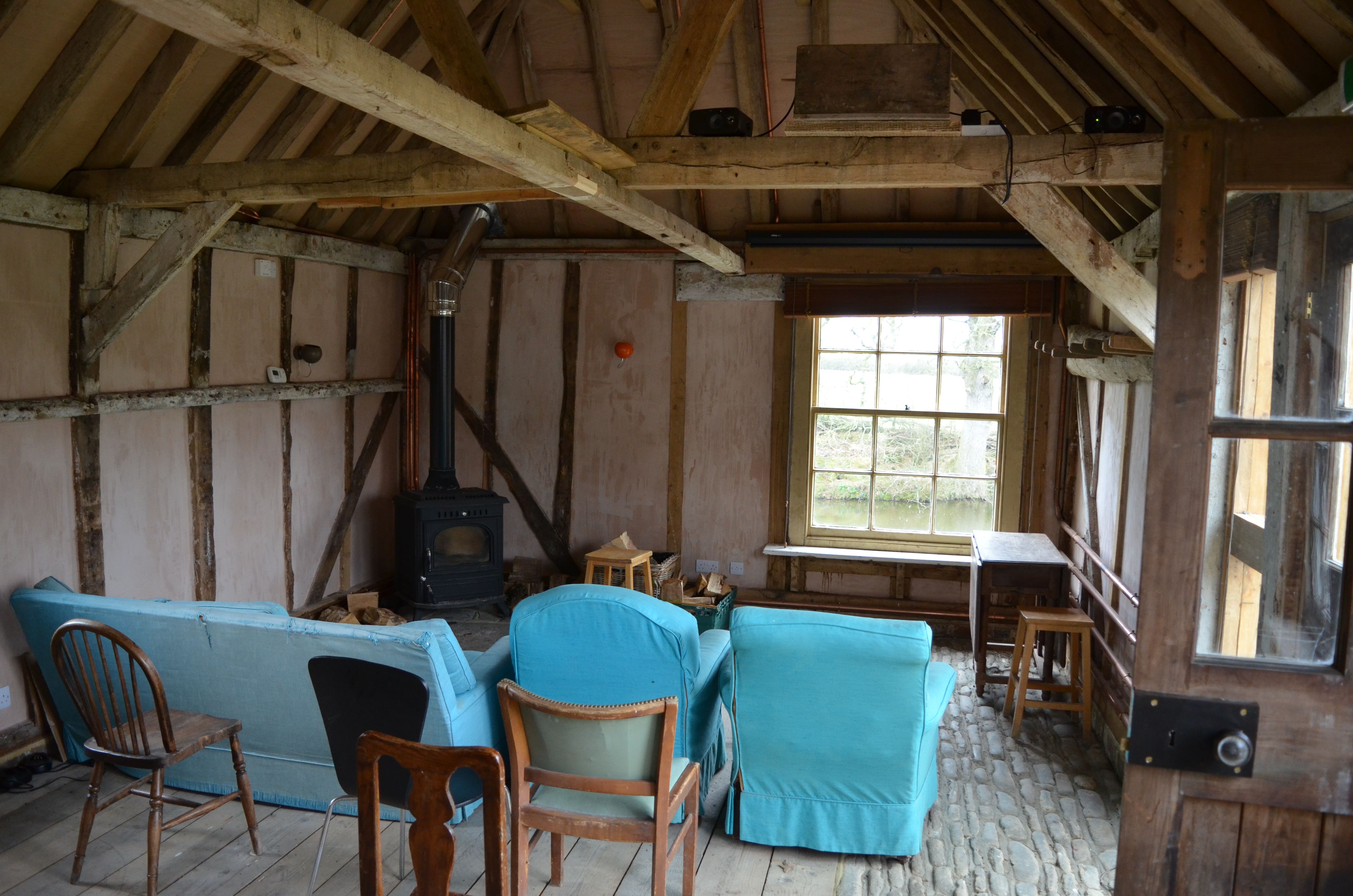
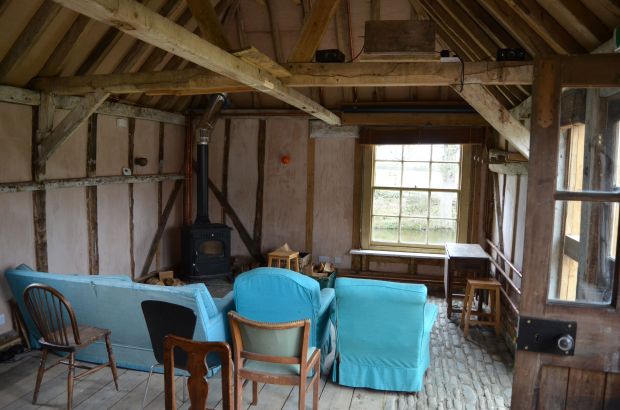
The dining / conference hut
The dining / conference hut

Well stocked kitchen!
Well stocked kitchen!

Presentation area

Presentation area

After lunch we went out again – into the northern area of the farm this time. We saw some long-horned cattle hanging out alongside red deer.
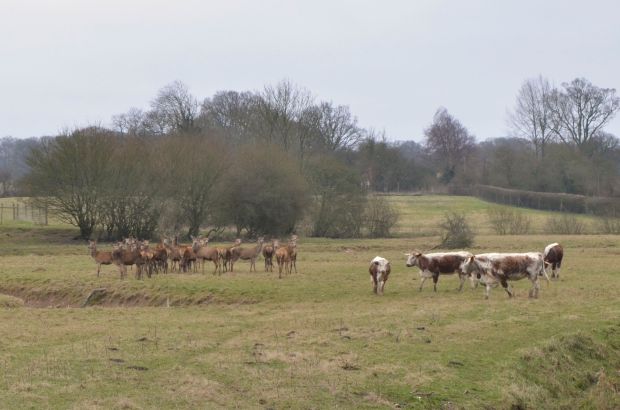
Long-horned cattle and red deer (Cervus elaphus)

Long-horned cattle and red deer (Cervus elaphus)

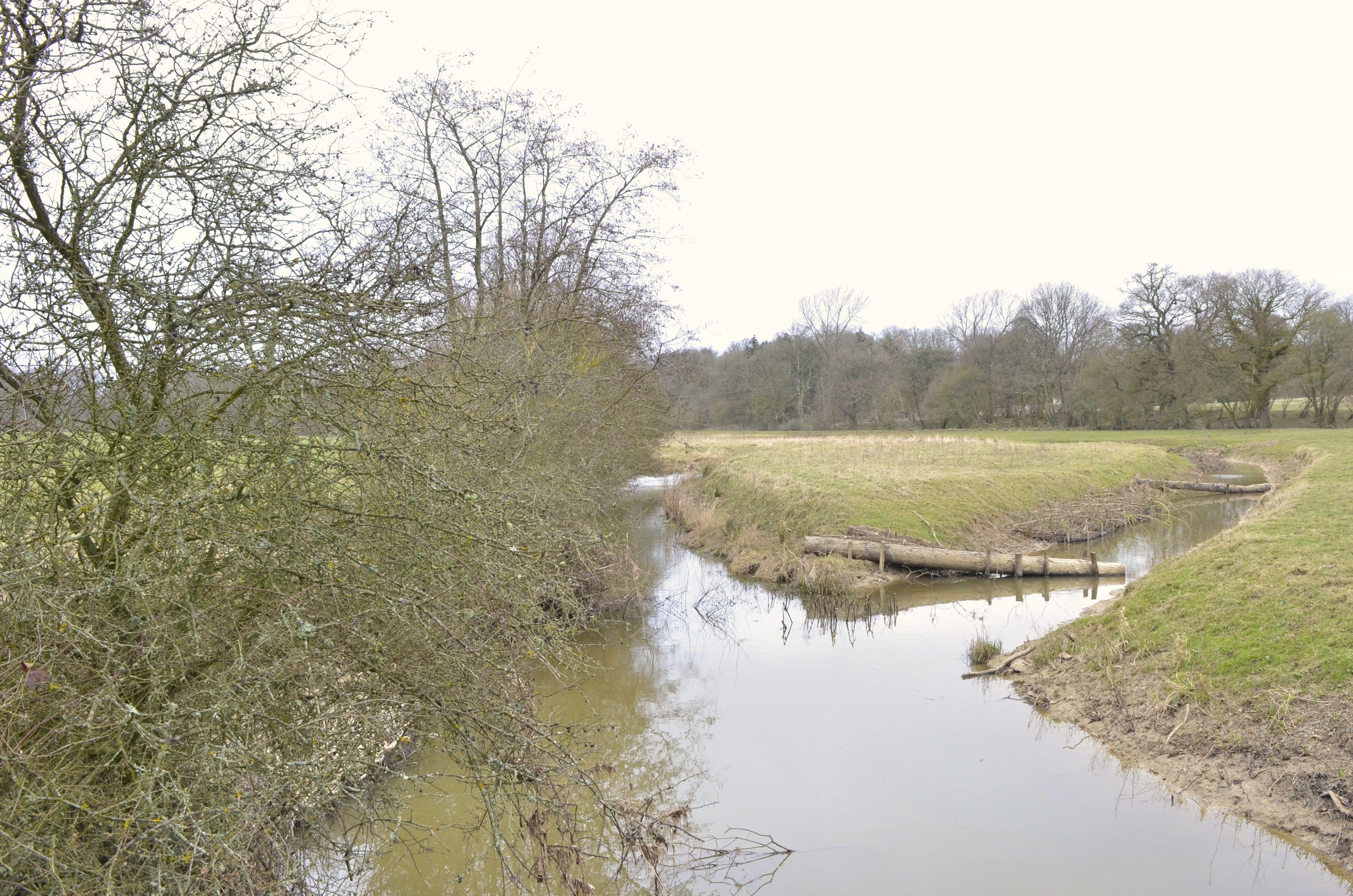
This was also our opportunity to check out the river. At the start of the project the existing canalised river was re-routed into a newly dug, meandering channel along the bottom of the valley, and then left to evolve on its own. Recently, in an attempt to replicate the work of beavers (which Knepp have yet to acquire), volunteers have placed trunks and branches in the river to reduce flow and allow siltation. The meanders and the woody debris placed in the channels will reduce the speed of the flow, allow local flooding, and help prevent uncontrolled flooding downstream.
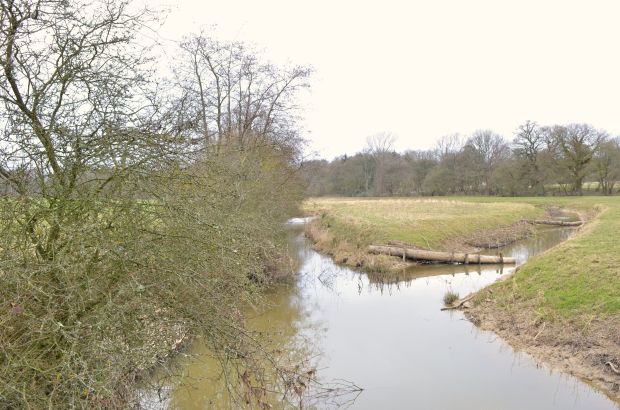
Tree trunk for flow management

Tree trunks for flow management

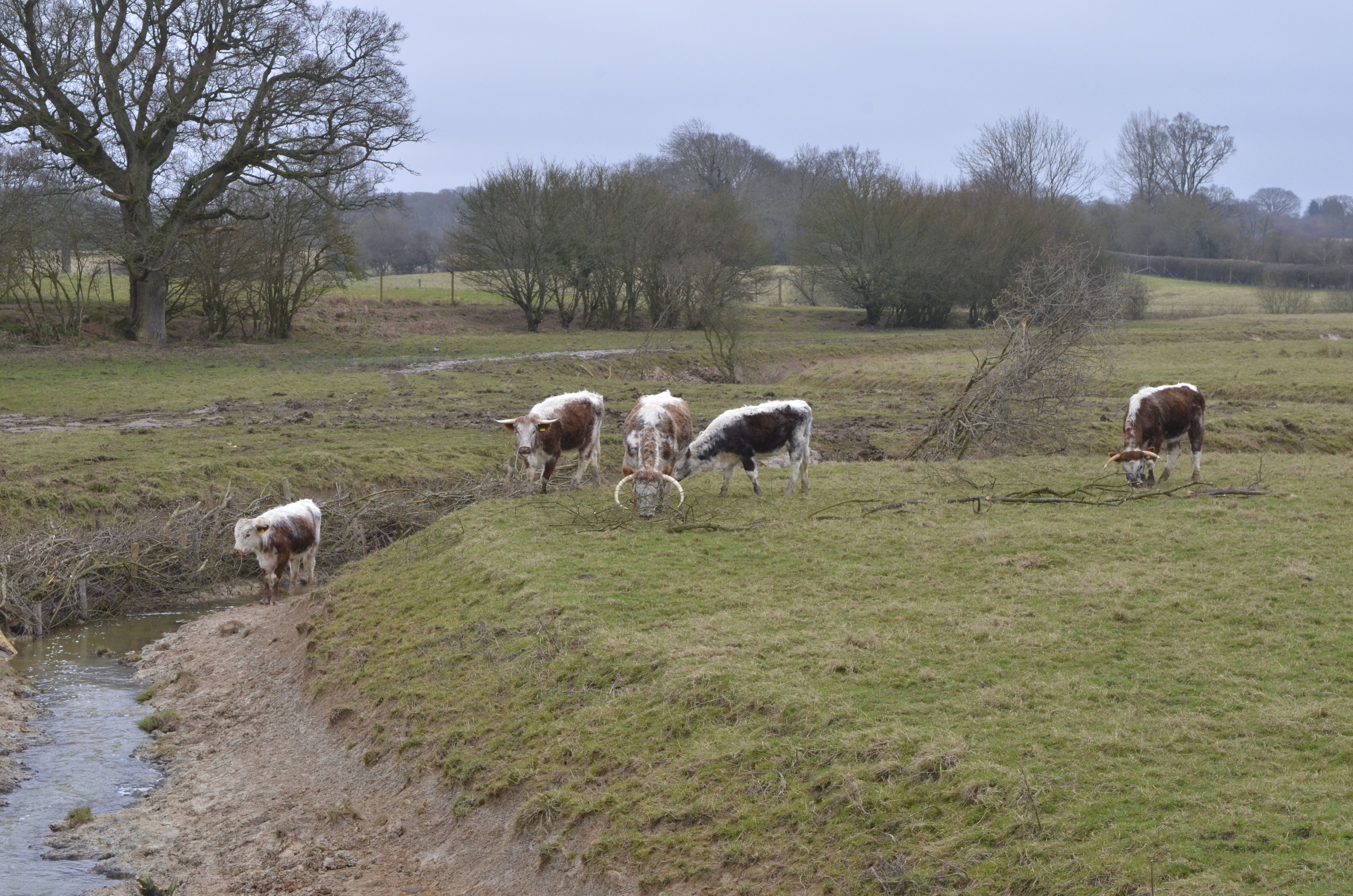
Long-horned cattle drinking at the river
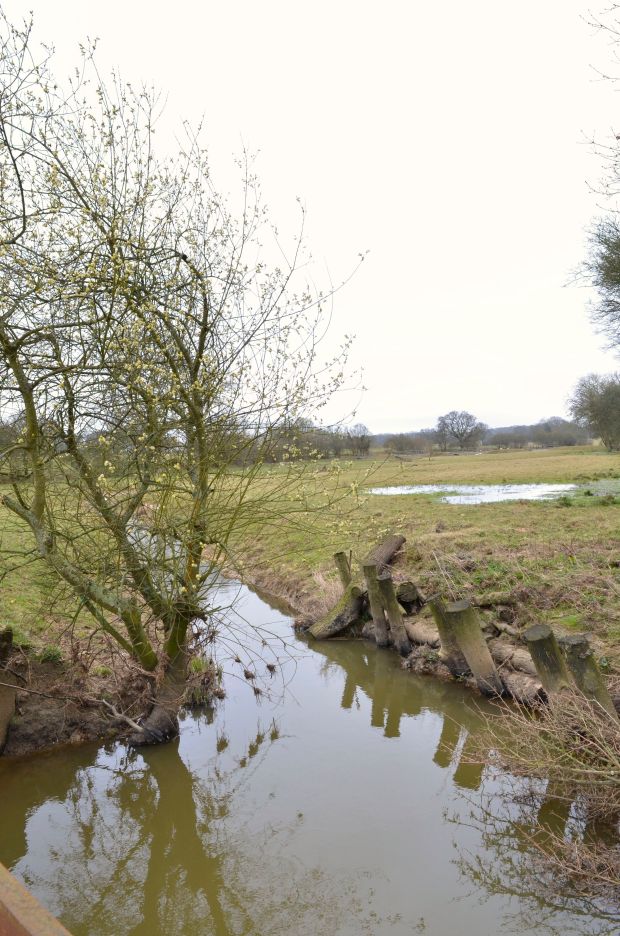
Long-horned cattle drinking at the river

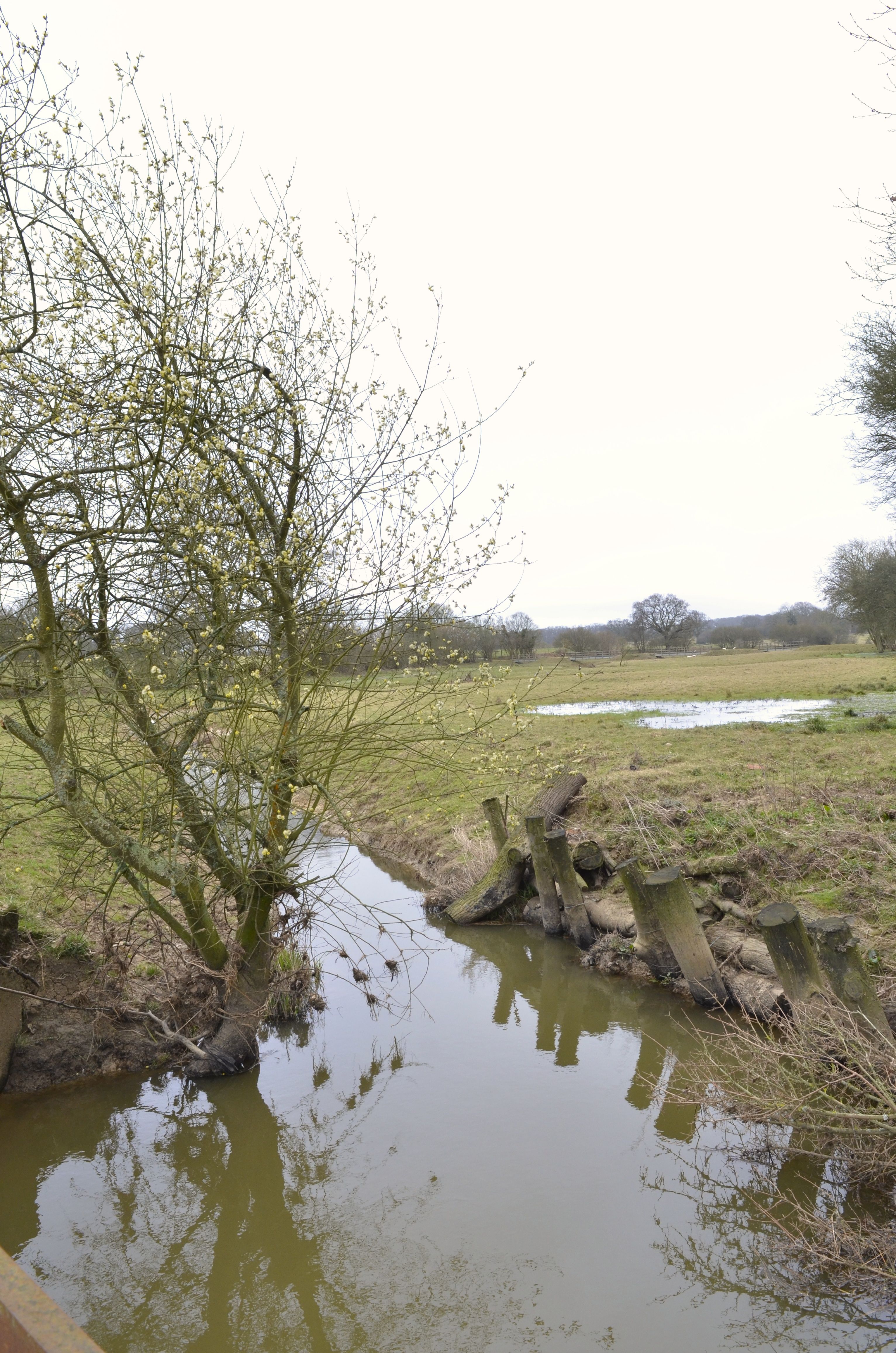
Wooden bank reinforcement (with sallow tree)

Wooden bank reinforcement (with sallow tree)

After checking out the river it was time to head back to base. On the way we spotted a peregrine falcon (Falco peregrinus) gliding over a nearby wood. I’ll take the long camera lens next time!

We had a brilliant time at Knepp. Penny really knew her stuff, and it was great to learn that this type of work is going on in the UK. When Knepp was used for intensive agriculture, it was losing money despite government subsidies. Part of the revenue from the project today is still from subsidies (sustainability subsidies instead of production subsidies), as well as meat production, letting out the farm buildings to local businesses, and eco-tourism. The advantages of converting to rewilding are that there are now no pesticides applied to the land, local employment has actually increased, and the results for wildlife (and visitors) speak for themselves.

We would thoroughly recommend a visit to Knepp. We went right at the start of the season, and there was cool stuff to see. It would be amazing to go back in summer to see it in full bloom.

To organise a visit to Knepp or check out their blog…

http://www.kneppsafaris.co.uk/

http://kneppcastle.blogspot.co.uk/

If you want to look at survey data that has been gathered since the start of the project, check here…

http://www.knepp.co.uk/pages/conservation/wildlife_survey.asp
Interview with Jay Griffiths

By Anna Heslop


JayGriffithsPicJay Griffiths is one of my heroes. She is an incredible author of fiction and non-fiction whose passion and personality flow across the pages like poetry or song. She has written Pip Pip (on time), Wild (on wildness) and Kith (on childhood), to name a few.  We sat in the sunny courtyard at the V&A in London for a chat about her career, her writing and her thoughts.

On the common theme throughout her work. She said, “If there’s one thing that has really connected thus far everything that I’ve done, it’s the theme of enclosure.   And partly that’s with a reference to historical enclosures. Since the enclosures, the basic ability to be peasants and survive has been taken away.”

Your travels have been central to a lot of your writing. How did the idWildJayea for that seven-year journey for Wild come about and how did it grow?

I didn’t plan to make a seven-year journey – and I didn’t make a seven-year journey. I knew that I wanted to write about wildness and I knew from very early on that I wanted it to be a portrait of the world within a book, so I knew I wanted some very different landscapes. What I ended up doing was taking seven years on the book as a whole but that included research, travel and writing, so it was a seven-year project.

You must have spent quite a lot of time on that trip outside your comfort zone. How did that feel, and is there anything that still scares you now?

Hahaha yes I did! Hmm… bullying scares me. Loneliness scares me. Depression scares me. I think in terms of travelling, I think it’d be fair to say that big cities scare me. What I’m much less scared by is that sense of going off the beaten track when I feel I can find people, and I can trust people. To me that’s the wisest and loveliest way to travel – to let your path be guided by the people who are there.

You have written about having depression. Do you think you’d happily delete that part of yourself or is it inseparable from the rest of you?

Erm, no I don’t think I could take it away, but it’s a really interesting philosophical question. I think most people who have manic depression would answer the same. There’s a really good documentary which Stephen Fry did on manic depression, and he talked to a lot of people who have it. He asked them all the same question – if there was a button you could just press that said ‘delete’, would you? And just about everybody said no. No matter the horror, no matter the hardship. There was one person who said she would and what was interesting about her was that she didn’t talk about herself as being creative in any way. And I thought maybe if she had been – or if she’d let herself be – then she would be able to see what was positive about it.

You write so freely and passionately about emotion. It seems like a lot of people identify with that in their teens, but start to lose that passion as they get older. What do you think about that?

I really don’t agree with that. I think that self-surprised rebelliousness is a feature of being a teenager. But passion persists if we let it. We live in a very strange age which seems in so many ways to demean and crush the human spirit. It’s as if we are told that you can get away with spiritedness as a teenager and not afterwards, and that’s not true! If you hang out with people who are middle aged, they haven’t lost their passion, mostly. Well, some of them have and they wear beige and that’s really sad, and I’m sorry about that.

I feel like you are part philosopher, especially in the original sense, a “lover of wisdom”. Has philosophy played a role in your life?

I think my philosophy is the wisdom of language. It’s the wisest thing I know.

I used to be interested in philosophy but I felt so put off by the sense that I couldn’t find enough philosophers who got beyond terminology. They were so hung up on exactly the definitions of the terms they were using that they couldn’t speak with those terms. Then there are philosophers who I absolutely adore like Gaston Bachelard – absolutely top philosopher because he’s got such a sense of beauty, such a sense of the potential of ideas, and the poetry of ideas.

You’ve obviously had a lot of amazing successes. Have you had any failures that you feel were important?

Oooh I like that! The very first book that I wrote didn’t ever get published, that was a very important failure because it was a private failure so it was not humiliating, it was eye-opening to realise that something I had so badly wanted to get published actually wasn’t going to be. And not getting published was the better option. And also because I learned so much! I think especially when you’re a young writer (or in fact a young anything), to have that shelter of privacy and time to learn your craft is really helpful.

YKithou published Kith in 2013. What are up to now and what are your plans for the future?

My editor asked me if I wanted to write a book about manic-depression. Normally I haven’t wanted to write books all about me. But this book about madness, my editor thought it should be very direct, very short, very personal. So I’ve just done it and sent it to him the day before yesterday.

I have also been working on a piece about Frida Khalo for the Greenwich & Docklands Festival. I wrote the script for a 45 min extravaganza – a spectacle for a story about her life. The best way to describe it is that it’s to do with the transforming power of art. It was an absolute joy to work on, and with the team. The festival is on 1-4th July, and it’s free.

What’s next… one lovely thing this year is the Hay Festival, a literary festival that started in Hay-on-Wye and spread internationally. This year, I’m their Festival Fellow, so they send me to their festivals at different sites around the world. That involves Spain, and Ireland, and Bangladesh… and Wales.

I’m very interested in looking again at writing about climate change because I feel compelled to and at the same time very unsure as to exactly how I would do it, so that’s a real possibility. But there are loads of things! I also want to write about home and ideas of home. And I’ve often thought I’d like to write about prisons and this weird sense of punishment that we’ve somehow got used to without realising quite how strange it is.

Have you ever had a proper job?

[Hearty laughter] I’m so glad you asked that! I was talking to a friend about this recently because she is living in a shed (and I’ve lived in a shed and the winters are brutal). We agreed that we’d endure anything rather than give ourselves over to The Man and get a proper job.

Home

First Day of Freedom

So there it is – done.  No more office, no more office work.

And now of course I can know for sure what I suspected would always come true – that it is foolish to wish your time away.  Because in the end it just slips through your fingers.

But at least I only wished away a few months, not half a lifetime.

I feel quite strange that it’s all over (or just beginning) – some amount of guilt that I didn’t leave everything at work as neatly finished off as I would have liked, a definite sadness that there are some wonderful people I had the pleasure of being around every day who I will see much, much less of, and a pinch of something like sadness or mourning.  But of course mostly I’m pretty bloody excited!

The moving boxes arrived today and we started making a massive kit list of everything we need to take with us or leave with friends and family.  I can’t wait to start de-cluttering!

– Anna

How did I get here?

So here I am – it’s February 2015 and I have 23 days left to work in my current job, with no next job lined up. I’m here by my own choice, having somehow plucked up the courage to leave. In April, Dave and I will be leaving the country, leaving the flat where we live and leaving all our belongings behind to trade our safe, easy life for a life of cycle touring adventure, uncertainty and – most importantly – a sense of purpose. I can hardly believe it!  How did I get here?

It was mid-summer 2012 and I’d been living in London for 18 months. To say I’d been burning the candle at both ends doesn’t really do my lifestyle justice. I’d cut the candle into tiny pieces and was trying to burn each little nubbin at both ends. That year so far, I’d signed up to a different sporting event each month – runs, bike rides, triathlon, Tough Mudder – training for each new activity on top of my full time job and jam-packed social schedule that included a lot of drinking. I was absolutely exhausted. I crashed and burned and spent a lot of time in bed, unable to do anything. And then in July, my amazing, immortal grandma died of lung cancer. My Mum was devastated and it was a really sad time for the family.  I spent some more time in bed and slowly started to seriously re-evaluate my life.

Well I suppose that realising you need a change is an important step, but what are you supposed to do then? I kept asking myself the same questions but the answers were never forthcoming. I started asking my friends what I was supposed to be doing, and slowly I started to get somewhere. My first eureka moment was in late autumn that year. I was sitting on a bench on the south bank with a friend; it was dark and cold but the trees have those lovely blue light bulbs all over their naked branches and it was a beautiful, peaceful place to be. We talked and we talked and my usual frustrations appeared – I want to leave a legacy, but I don’t know what I want it to be! It has always troubled me that the world is going to environmental ruin and I’d always thought I should save it. But the task is too big and too scary and too depressing to tackle. My friend suggested I make the task smaller… ok, maybe I could save one species from extinction? Hey, there we go, that sounds like a more achievable goal – Eureka!

Well I suppose that realising you have to save a species from extinction is an important step, but what are you supposed to do then? After over-excitedly sharing my goal with anyone who’d listen, I started by signing a year-long contract with an oil and gas company to work on their HSE procedures. Not an ideal first step, I grant you! But actually it did allow me to earn enough to live on my own, embark on hobbies (other than drinking) and start saving up.

By the time the next year had passed, I had taken up climbing, acquired a lovely boyfriend, done loads of hiking trips and saved up a decent amount. Right, I thought – now I need to make a change. So I signed a second year-long contract with the oil and gas company, but this time incorporating a 6-month sabbatical. And I started to plan my temporary escape.

In March 2014 I had farewell drinks with my colleagues, waved a cheery goodbye to my family and friends, had a tearful goodbye with my lovely Dave at Heathrow airport, and flew to eastern Canada with my bicycle. I spent a month on the east coast, then cycled 5,500km to Vancouver. The journey was truly amazing – I learned a lot about myself and a bit about other people, I saw wonderful scenery and incredible wildlife. It was a trip of a lifetime, people told me. But I’ll be damned if I do the best thing in my life aged 25.

Coming to the end of the bike ride was a surreal experience. The realisation that it would actually be over sunk in all too late and I felt really lost. The latter part of my trip which I spent in BC with Dave and then my family was also amazing. But that, too, had to come to an end and I felt even more lost. Coming back from that sabbatical was horrible – being torn from a beautiful and happy life to return to routine, grey monotony. The busy commute to work, the grey cubicle that houses my desk, the noisy flat where I live, the miserable winter weather. And worse, the realisation that most people hadn’t really done anything in the time I’d been away!  I’d cycled across a continent, worked on a farm, climbed mountains, learned how to whitewater kayak, seen three black bears, camped in the wild, killed my own fish and met the most amazing people in the most incredible places!  And a lot of people had spent all that time doing nothing.  And now I was back doing nothing with them.

My contract was going to come up for renewal in 5 months, and it didn’t take a lot for me to realise that I would struggle to even make it that long. In my first week back at work, I told my long-suffering boss that I would be leaving in 5 months. 5 long cold, dark winter months.

Happily though, regardless of how shit you feel, the relentless march of time continues. Christmas came, New Year followed, I enrolled on a career change course with Escape the City, and finally the end of the long winter looked to be in sight! When I only had 30 working days left to go, my thoroughly rotten mood slowly started to lift. I started to feel like myself again! I started to plan and take action and look forward to the impending change.

The course at Escape the City is making me look at things very differently. I realised that everything I’ve been done has been a specific goal – complete a triathlon, cycle across Canada, even my plan to save a species from extinction! I needed to change how I approach life if I want to avoid that terrible feeling that you get the day after you achieved the goal you set yourself.

So from 2015 I am going to steer my life using my values rather than goals. I am starting a new way of living based on the mantra “for people, for nature”, and I can do whatever I fancy and take whatever opportunities come along, as long as they align with that mantra. Sounds easy, right? I can’t wait to get started and I look forward to seeing what I get up to along the way!

– Anna