Day 5 – Escalar Alpinista / Sportiva

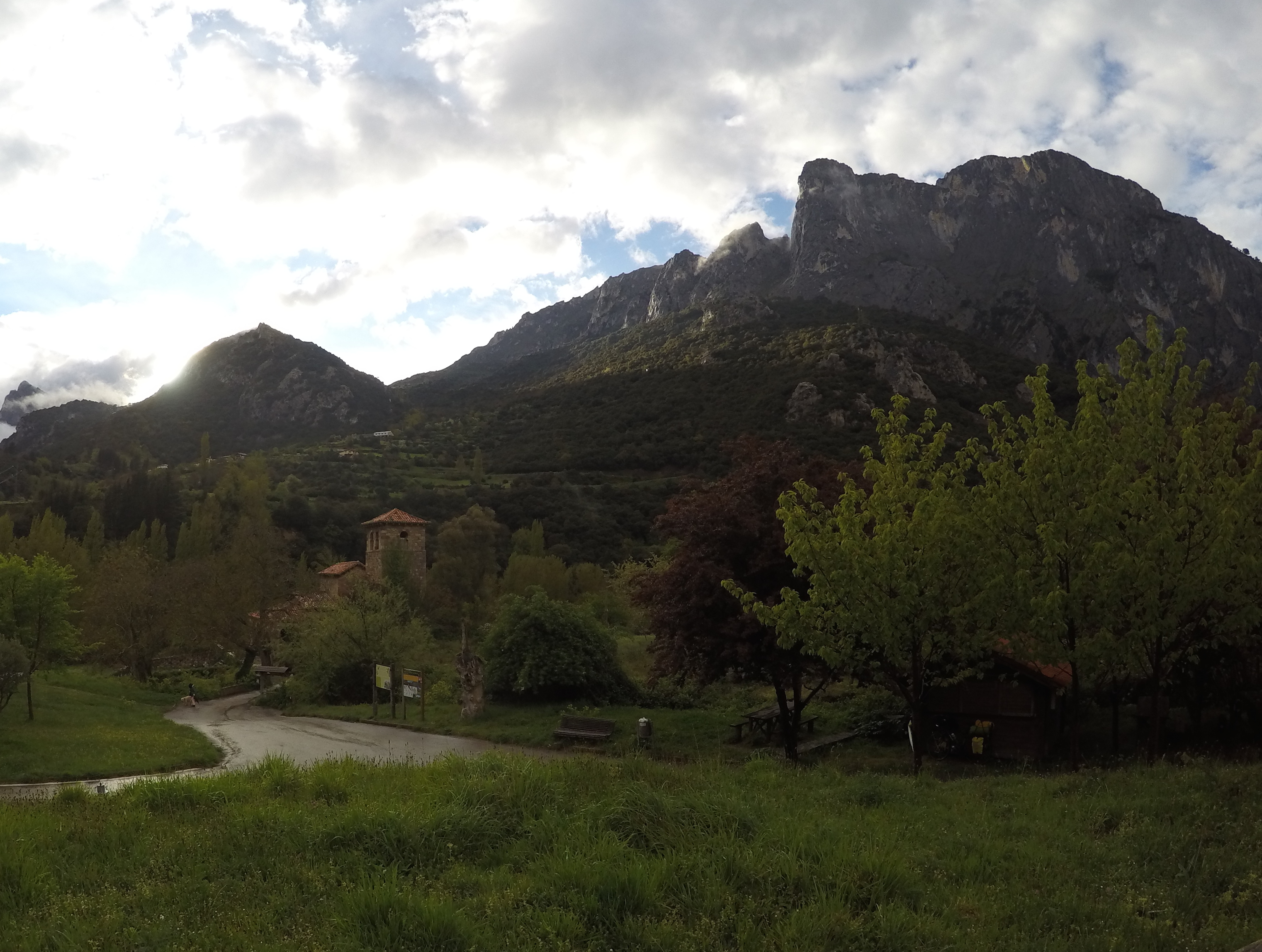
We were undisturbed in our not very stealthy stealth camp and woke this morning to enjoy the view of the church and the mountains over breakfast. We had arranged with Silvia and Carlos, our hosts from Day 1, that if the weather was good they would come to the mountains to climb with us. Text exchange confirmed they were still up for it, so Anna and I hurried on to our new campsite 10 km away in Potes to drop out stuff, while Silvia and Carlos drove out from Santandar.

They came and picked us up from the campsite and we headed in to town for supplies before driving up a steep mountain road – a taste of what we will have to do on the bikes tomorrow apparently!

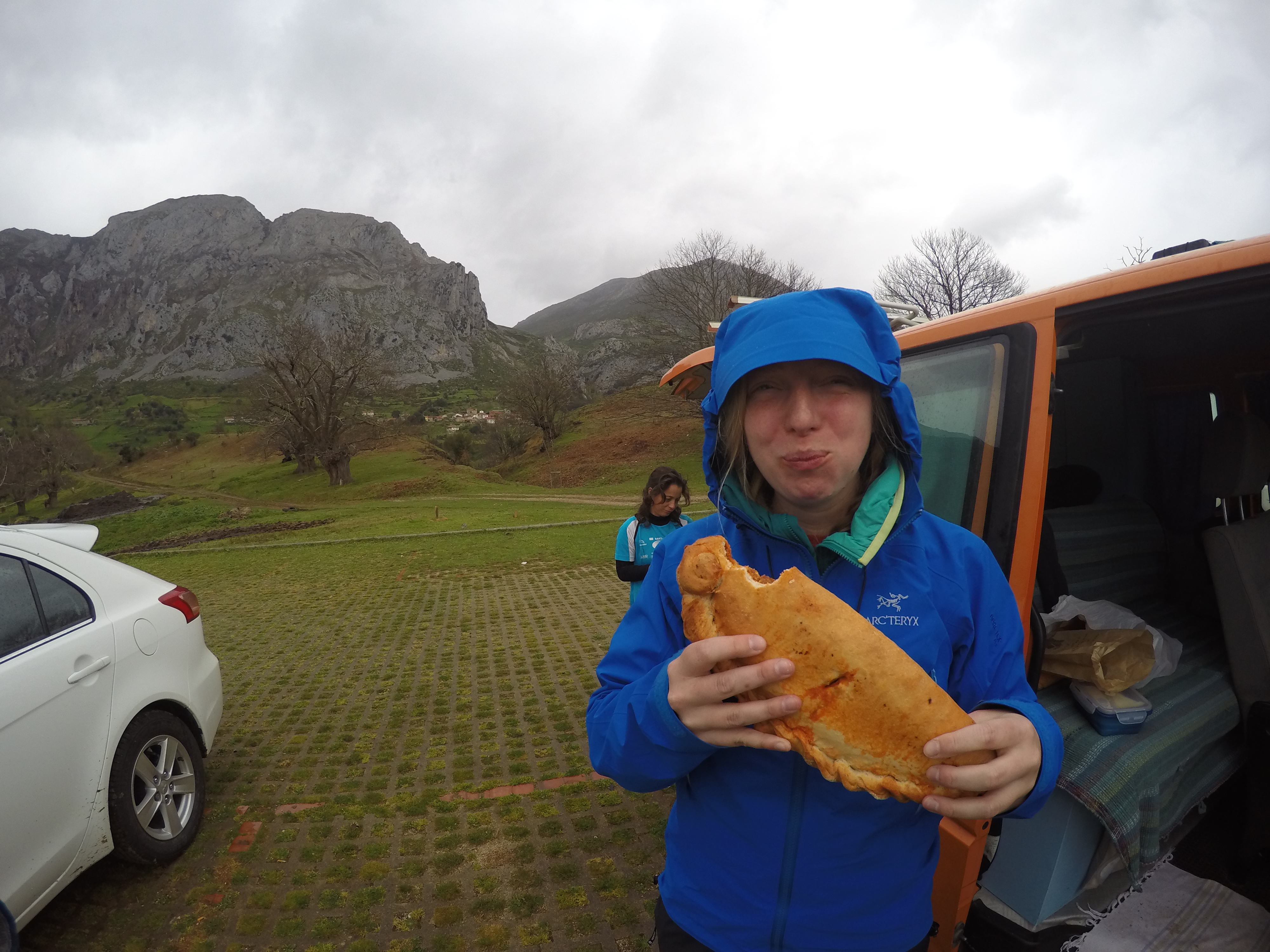
The weather was bad when we got to the car park, but we decided to hike to the rock face and see if it cleared up on the way. Before setting off, Anna tucked into first lunch, a new discovery from the bakery in town. This is what happiness looks like.

Chorizo empinada

Chorizo empinada

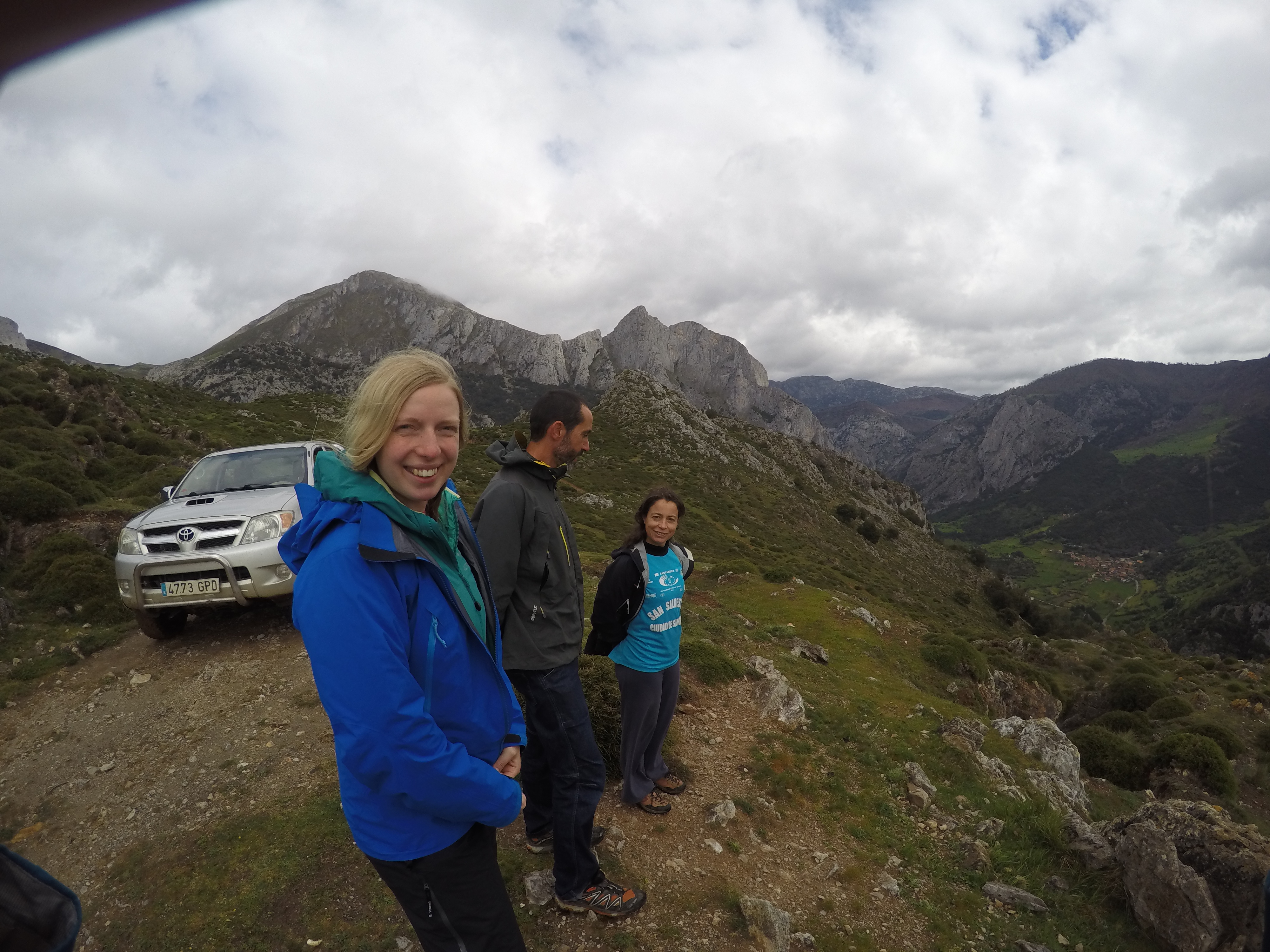
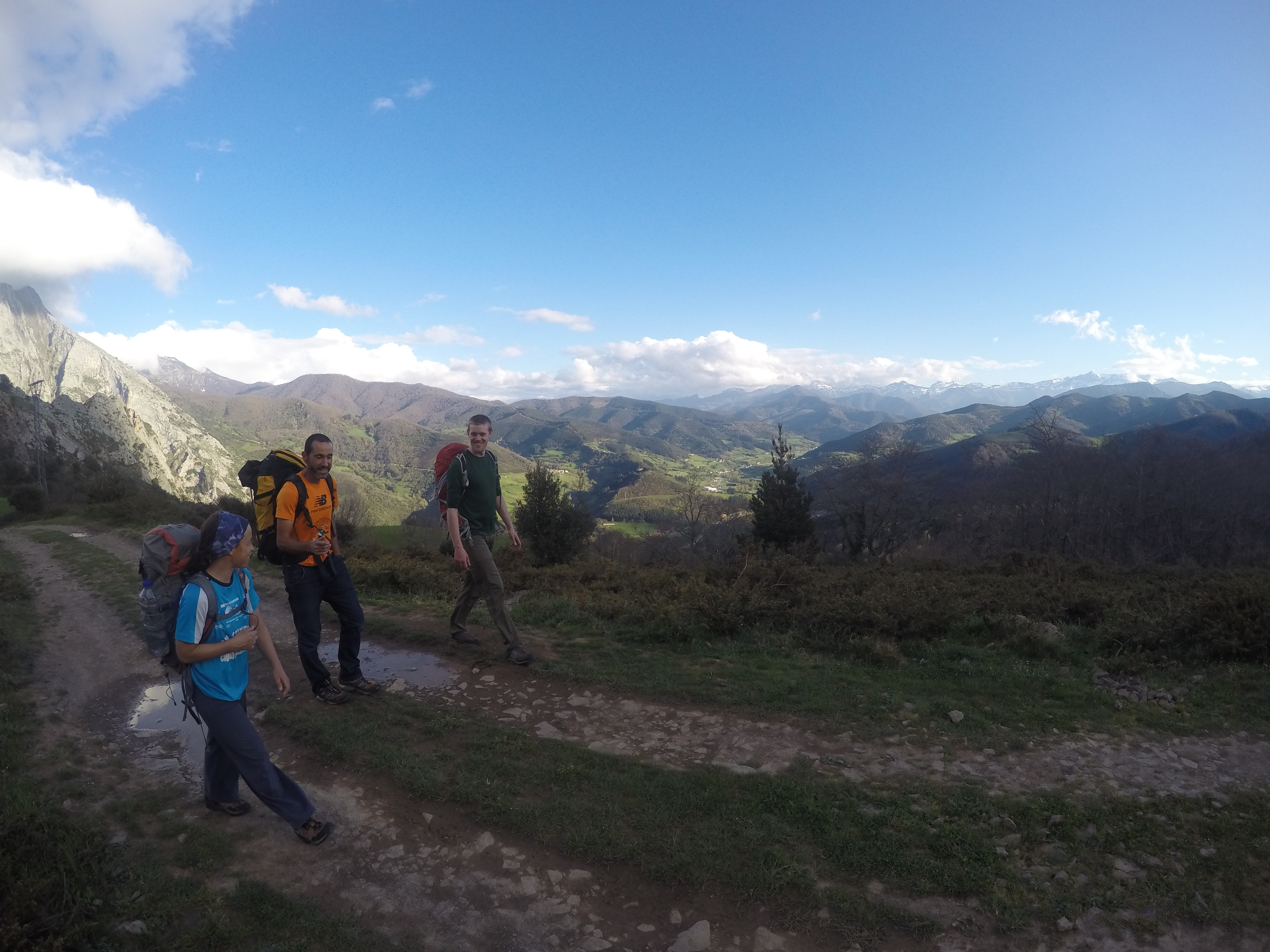
We walked up one of the hills and came past some other climbers who had given up for the day, so things weren’t looking good. But when we got to the top the rain stopped and although it looks bad in the picture, Silvia decided we should get a couple of dry hours, so we went on to the face.

Assessing the weather

Assessing the weather

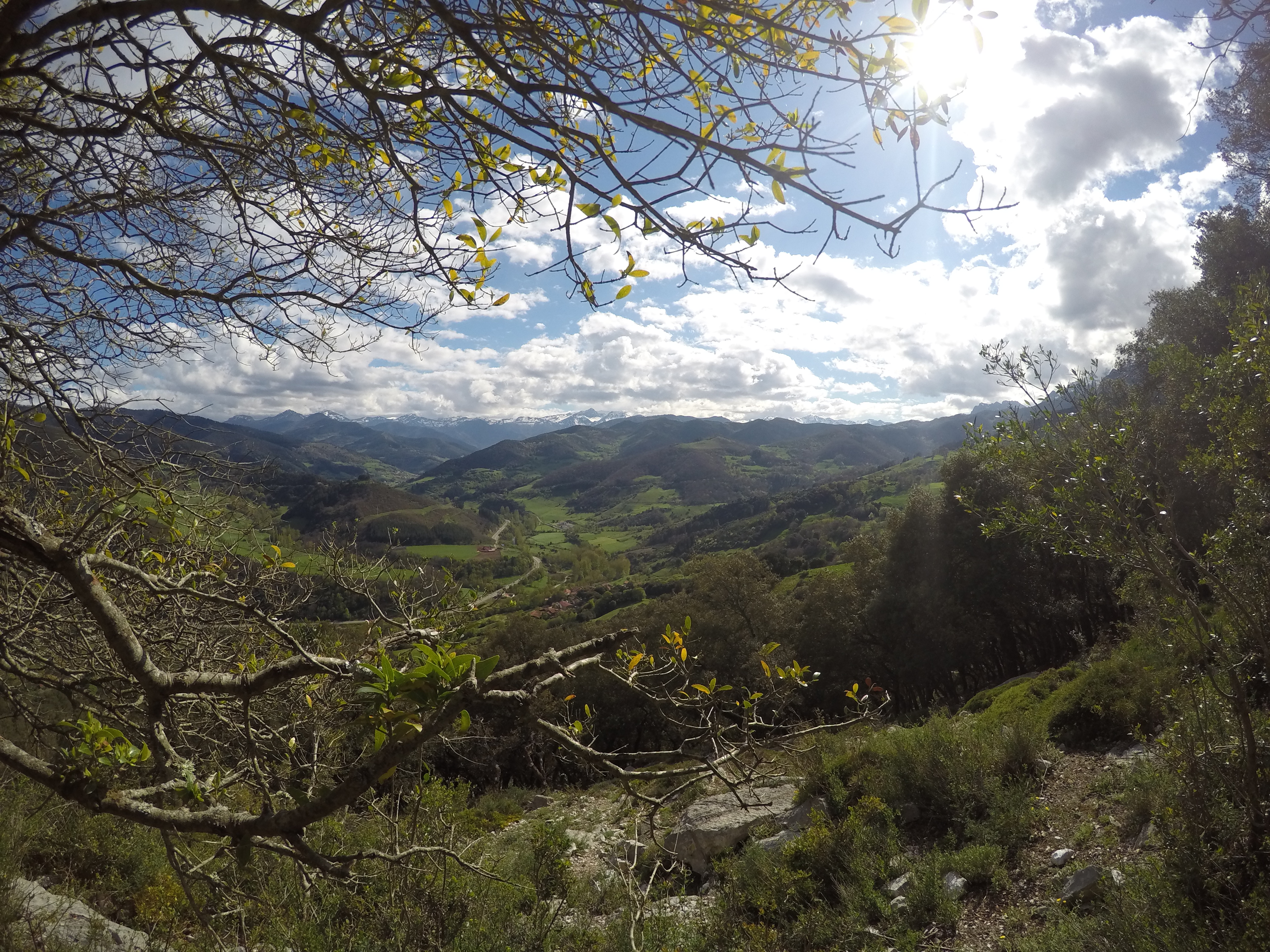
It was a great call, on the way the sun came out, and by the time we got to the bottom of the face the sun was shining over the stunning valley laid out below us.

View of the valley

View of the valley

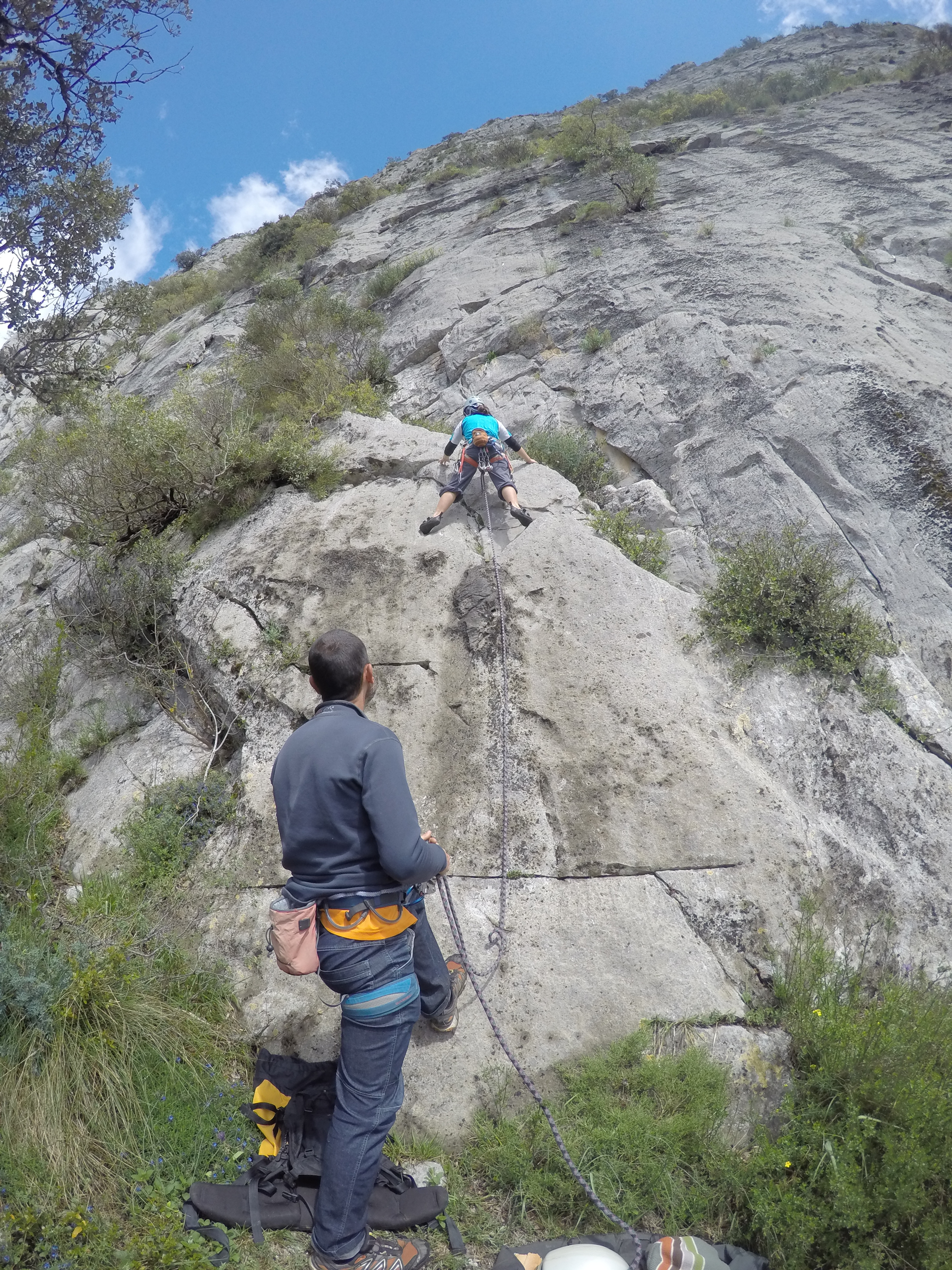
Silvia and Carlos are way better climbers than us, so they climbed first (led), and put a rope in place for Anna and me to tie in to. This meant we could try the routes without any risk of falling. After we got more confident we could try leading some routes if we wanted.

Silvia leading the first route

Silvia leading the first route

Cue about six hours of climbing, chatting and eating. It was amazing, the climbing was fun, and the guys had managed to find some routes that were about the right difficulty for us, although most of the climbing in the area is really hard. After we got tired and footsore (climbing shoes are always tight so they hurt after a while if you’re not used to them) we sat and watched Silvia do her last climb of the day, which incorporated a very smooth vertical face followed by a tricky overhanging ledge with slippery footholds. She got up it fine though and once Carlos had done one last route as well, we packed away and headed back. On the way back we exchanged more language tips, Anna and I now know the words for “far” (lajos) and “near” (circa) and Silvia and Carlos appreciate the important pronounciation difference between “pitch” (a climbing term referring to a single section of a climb) and “bitch” (a lady dog).

Spanish lesson

Spanish lesson

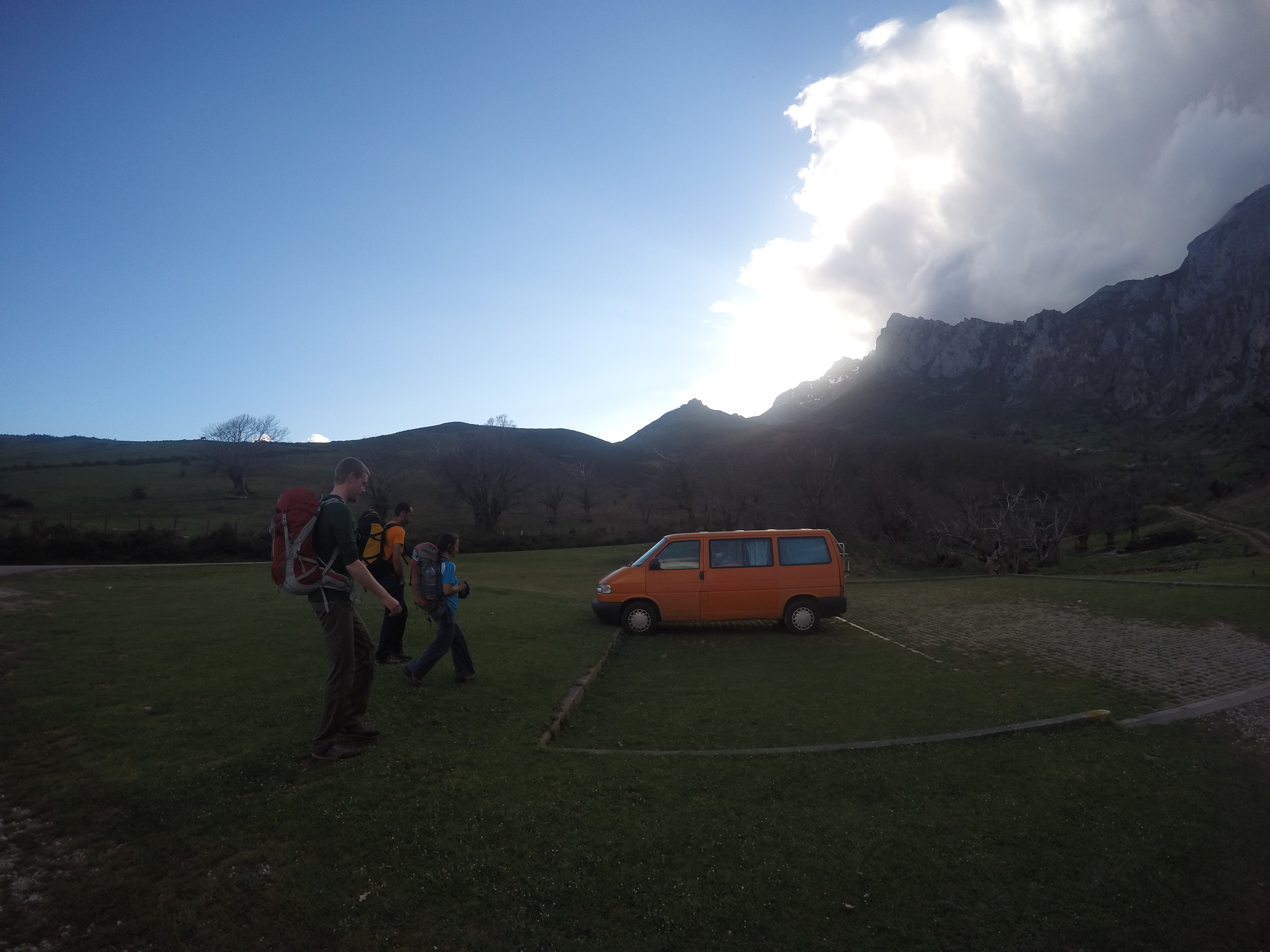
Soon we were back at the car, and I suddenly realised that there is nothing more reassuring at the end of a long and tiring day than a bright orange WV camper van. Must get one of those one day!

Home!

Home!

Silvia and Carlos took us back to our campsite where we wished each other “Hasta luega” for possibly the final time. I’m a bit sad because they are awesome people and have been so welcoming and friendly and made the start of our trip so much fun. Hopefully we’ll catch up one day in the future.

It was about 9 pm by the time we got back to camp, so we interspersed showering, cooking, blogging and tent organisation to good effect and we are just heading off to be for 11. Looks like a massive day of hard climbing tomorrow so we are going to stop in at the bakery in town in the morning for some more empinandas to keep the spirits up and the legs working. On that happy note, goodnight!

– Dave

Day 4 – Into the mountains

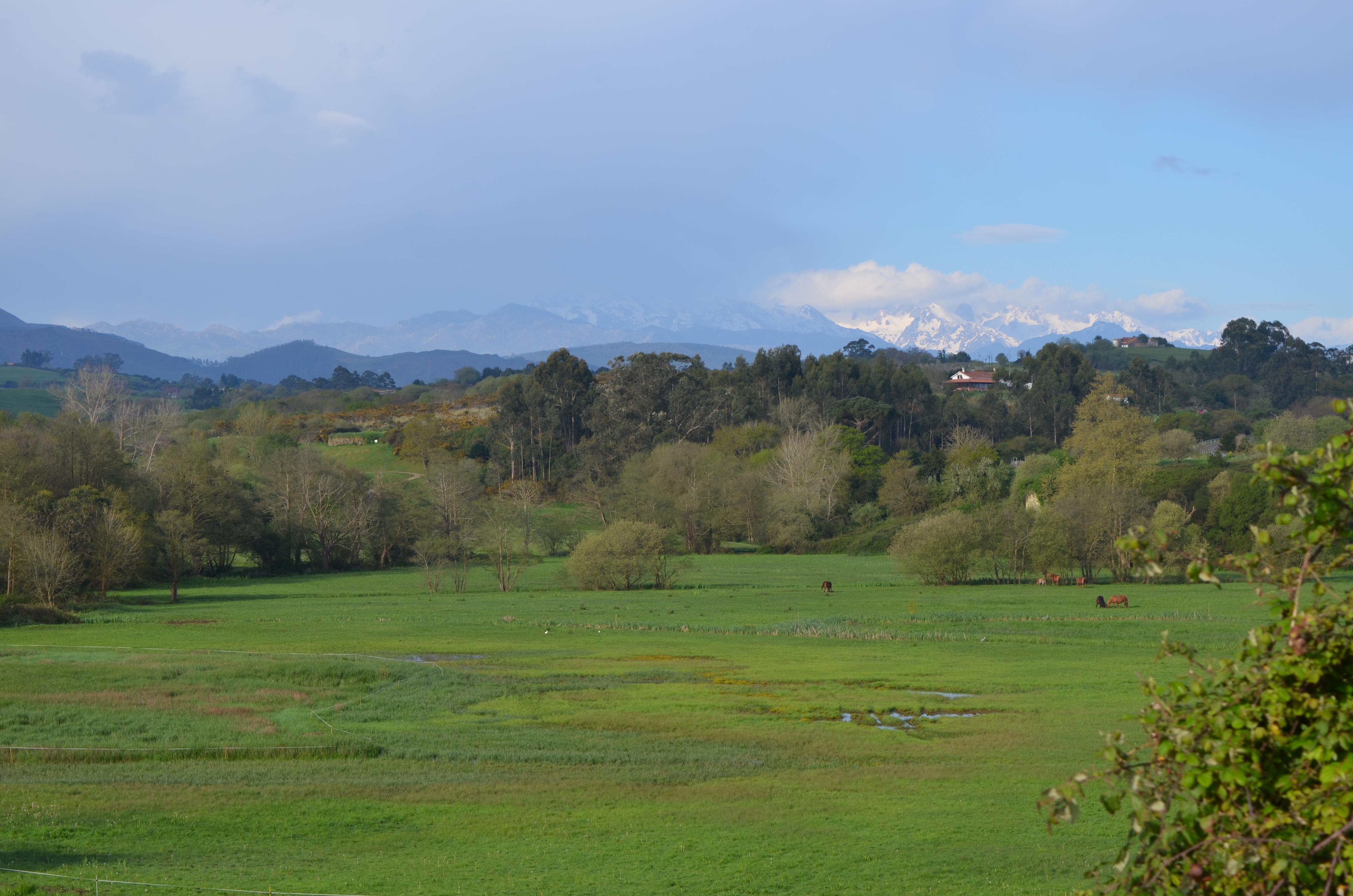
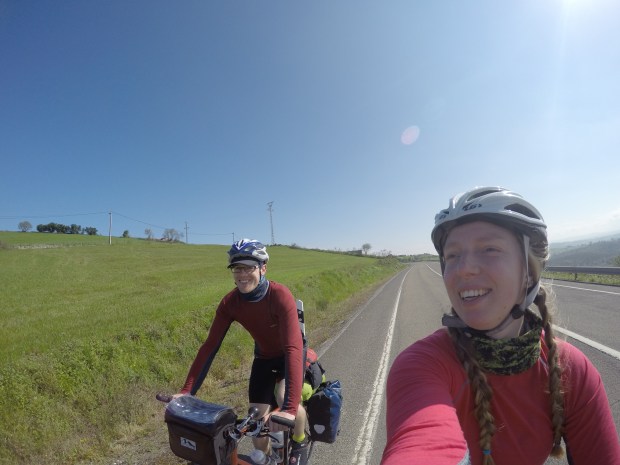
We woke to clouded skies and a damp sea mist, but by the time we’d packed up and were on the road, it was sunny and hot!  We pulled in to oggle at the mountains from a distance and peel off a few layers.

2 Distant mountains

Distant mountain view

We could hear songbirds in the bushes and the distant sound of cow bells from the hills.  The blossom is out everywhere and the wildflowers are in bloom.  We rode up and down, up and down, towards the striking peaks.

For first lunch, we stopped in a small town and stocked up at a deli and a bakery and made much-needed chorizo and cheese sandwiches!  Then there was some confusion about which way to go next (which turned out not to be the motorway – oops!), and eventually we were on our way into the mountains.

DCIM100GOPROGOPR0150.

Mountain-bound

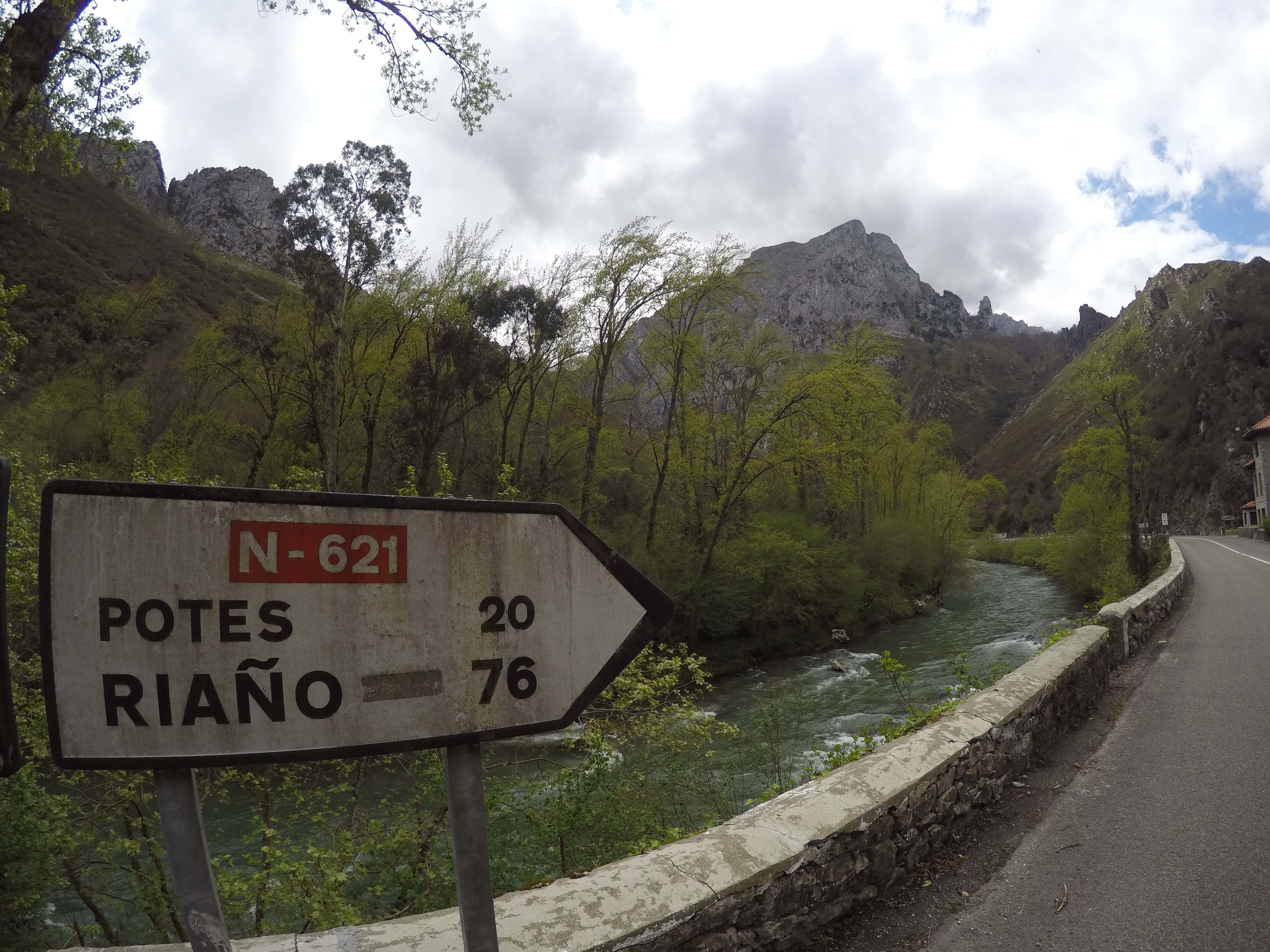
All of a sudden we were in a cool valley, a steep-sided gorge with the wind rushing through the spring-green leaves on the trees.  We rode gradually uphill along a milky blue-green rushing river towards Potes.

DCIM100GOPROGOPR0181.

Steep-sided gorge through the mountains

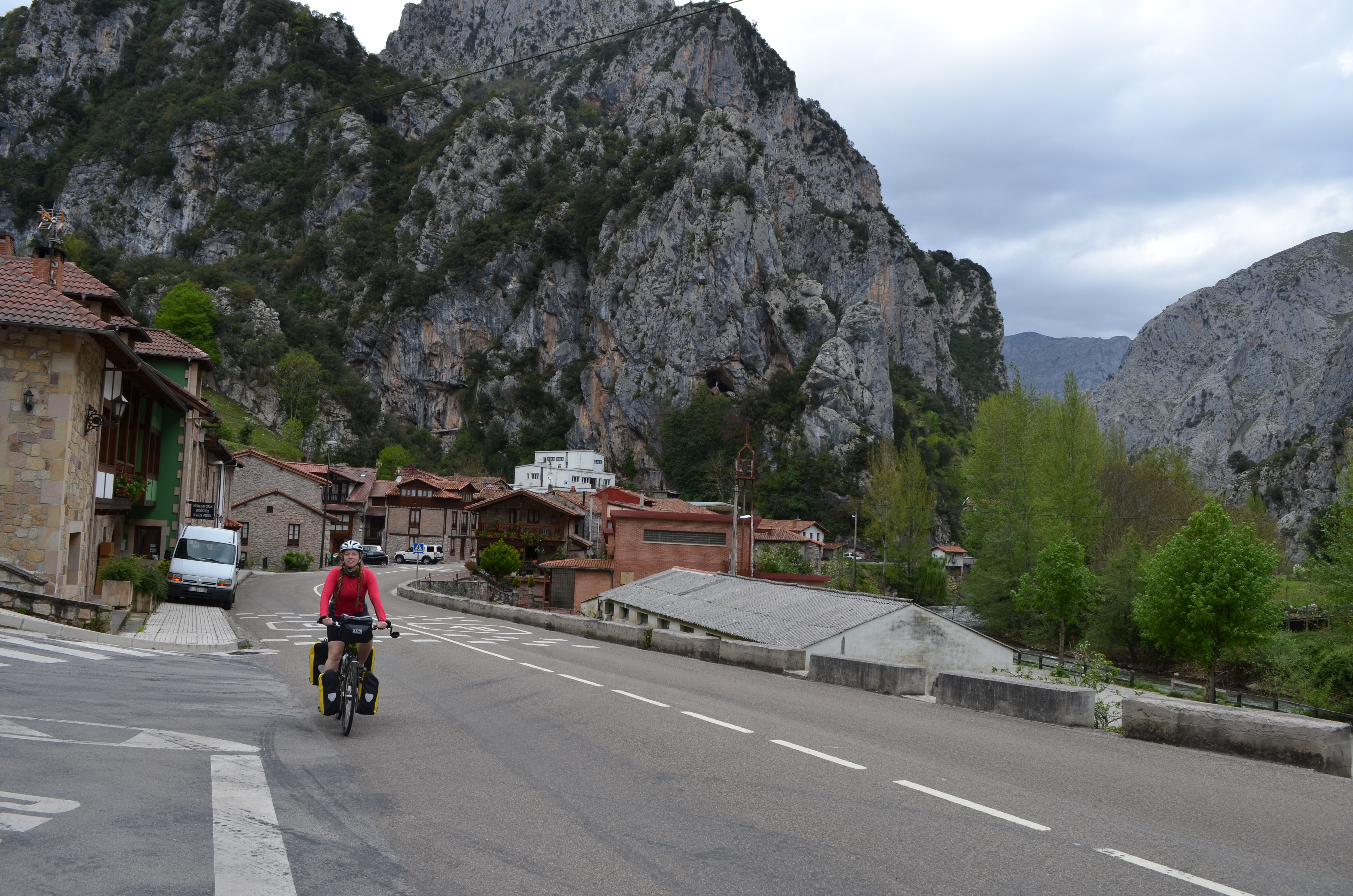
6 Anna in town

Riding gradually uphill

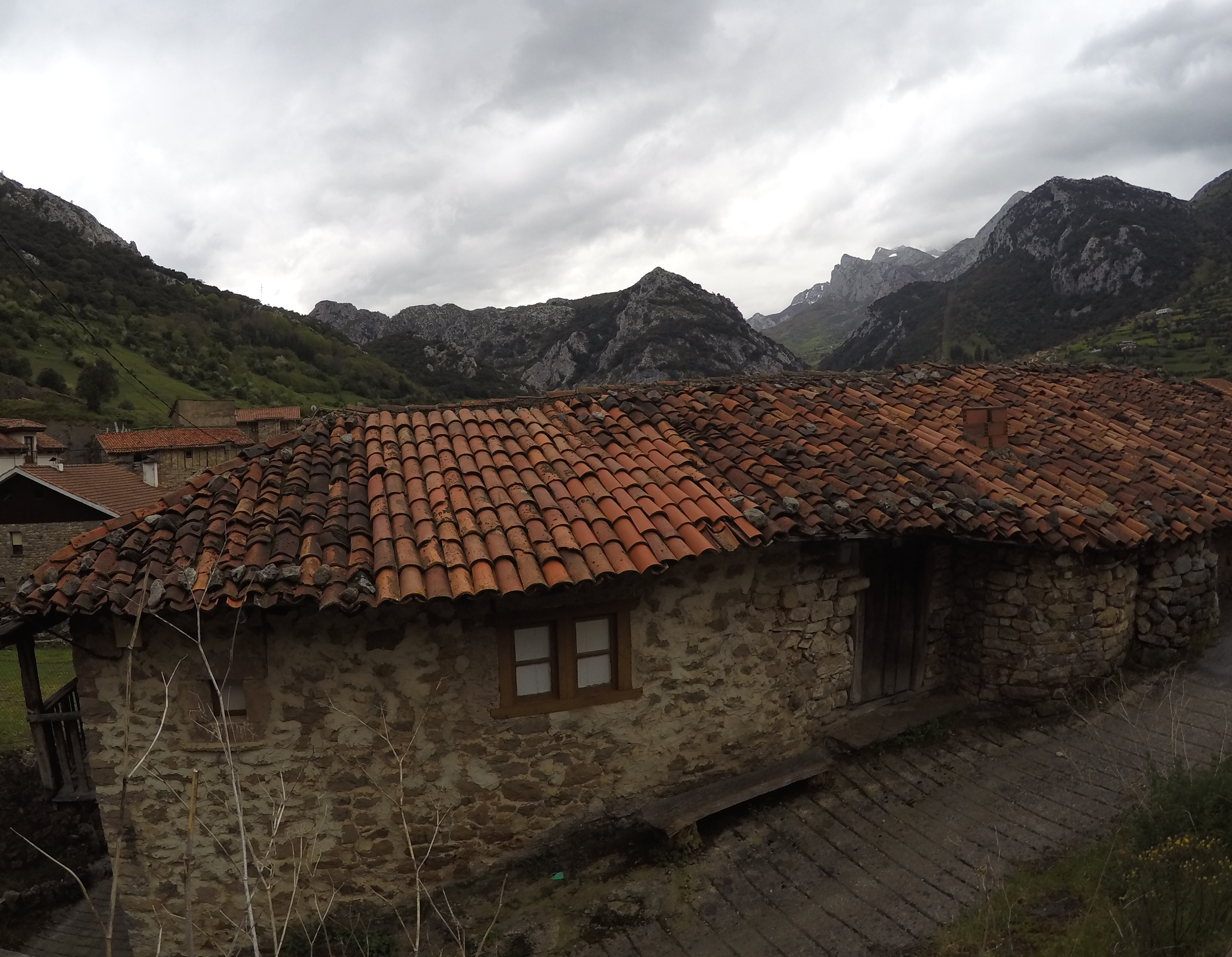
Our warmshowers hosts had recommended a wild camping spot in Lebena, so we left the main road there and headed the short distance into the beautiful village.  All red brick walls and uneven red roof tiles against the greens of the hillside.

DCIM100GOPROGOPR0215.

Beautiful old village

DCIM100GOPROGOPR0222.

Church in Lebena at sun-down

We had a look around town, cooked dinner in the pouring rain then drip-dried as the sun poked its head out before it disappeared behind the mountains and we could pitch our tent.

– Anna

Day 3 – To Camillos!

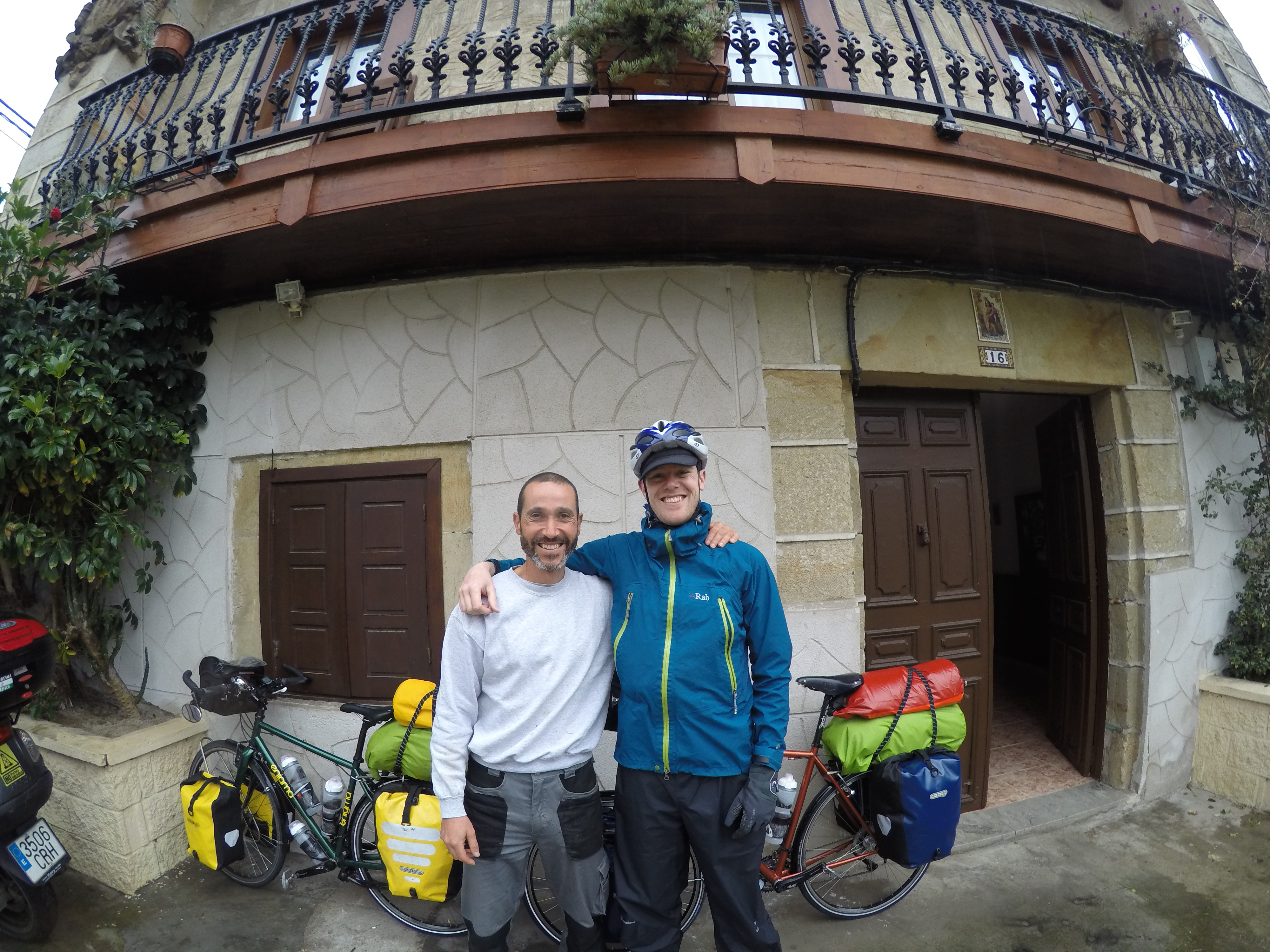
We were up early this morning full of excitement to start the ride. Silvia had to work so we said goodbye to her first thing before having some breakfast and packing up. Once we were ready to go we said goodbye to Carlos and headed off. We were so lucky to meet Silvia and Carlos, they are  so kind and intelligent and full of enthusiasm for life. I hope we get to meet lots more people like them on our trip. We hope to meet up with them again on Sunday for some climbing, but only if the weather’s good so who knows.

Carlos - what a guy!

Carlos – what a guy!

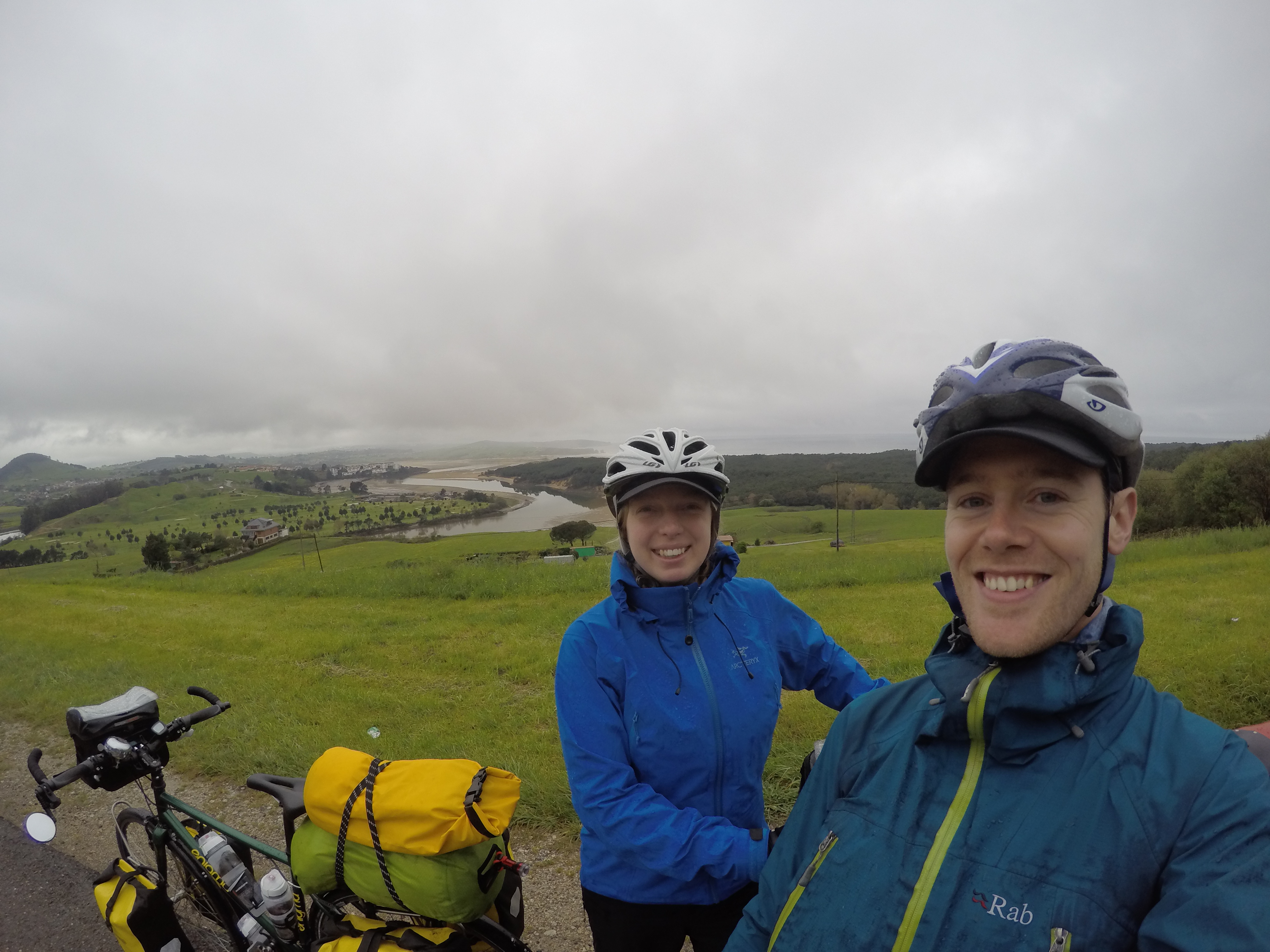
We set of North into some pretty heavy rain and had to go over two busy and STEEP road bridges. A great introduction to touring! The road out of town was pretty busy and the rain and spray kicking up off the road was not great. the tantalising views of the hills kept us going though and once we got out of town the traffic calmed down to a manageable level. The rain stopped just in time for our first break of the day after about 10 km. We found out from Silvia and Carlos that Spanish people have up to three lunches per day. This seems and admirable tradition, and we have decided to adopt it!

Near first lunch stop

Near first lunch stop

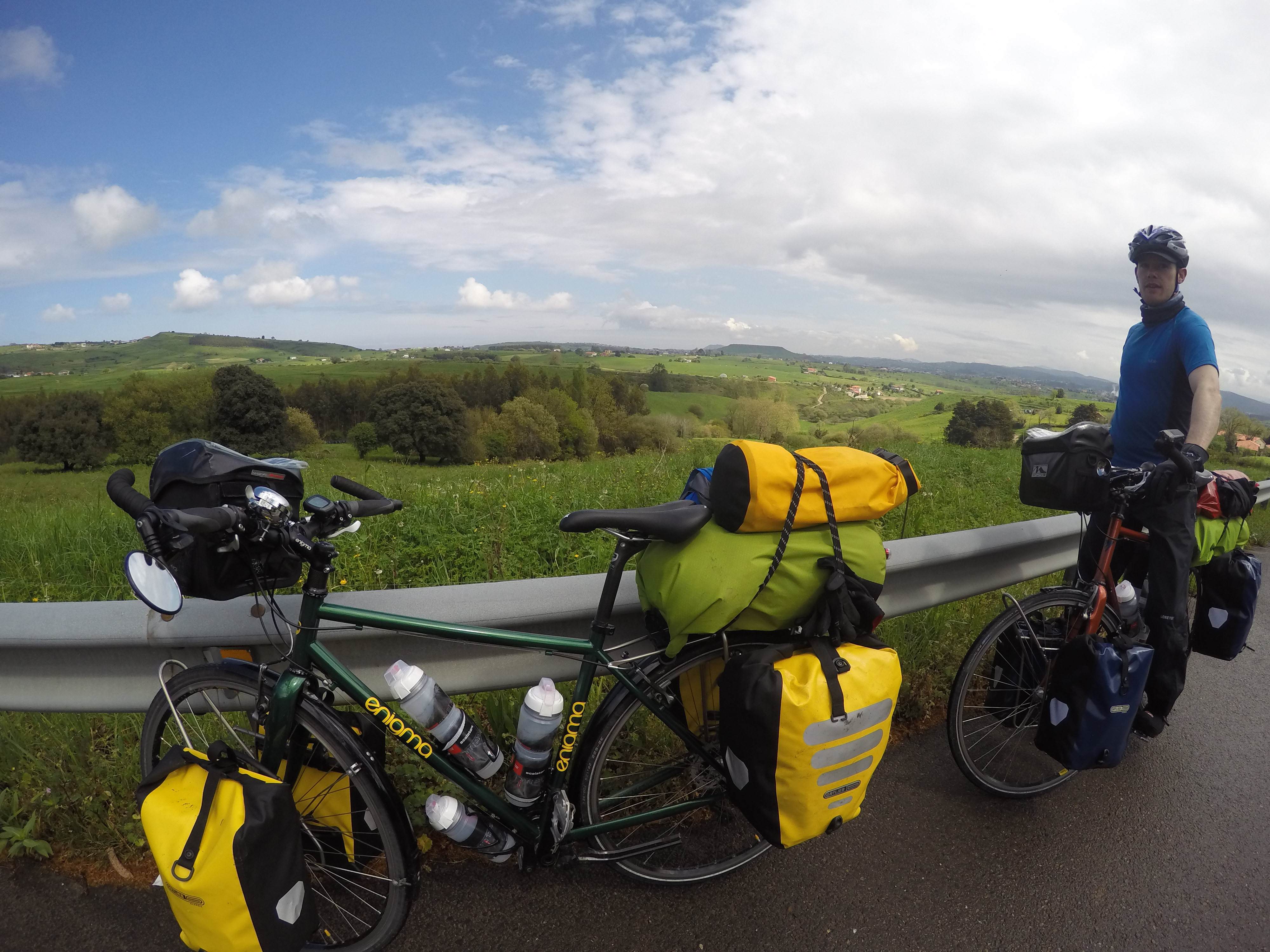
With the weather clearing we headed onwards; the road wound up and down over hills and valleys housing beautiful villages, impressive churches, lots of lovely woodland and  rolling acres of lush green pasture. I think we are getting the best of Northern Spain right now because there are wild flowers EVERYWHERE. We even saw a massive lily growing on the road verge. We also saw a huge bird of prey with a forked tail gliding over the road, we think it might have been a black kite. It’s stunning!

Cantabrian vista

Cantabrian vista

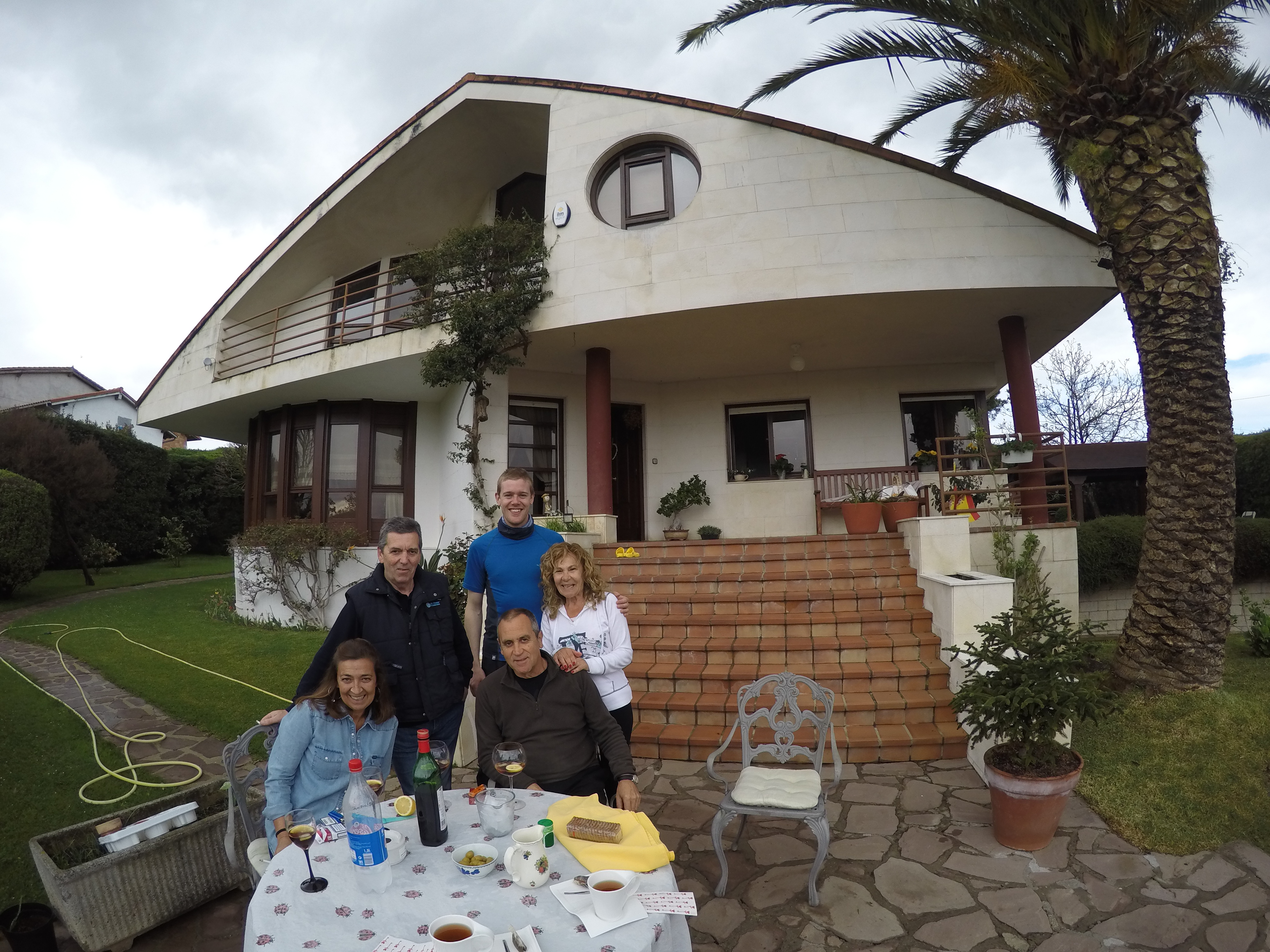
Some time after lunch number 2 (cheesy pasta) we were slogging up another hill when we stopped for some water. There were two ladies in a front garden discussing their flower beds. We said “Hola!” and the next thing we knew they were outside on the road offering us tea! Not going to lie, I really wanted a cup of tea at that moment, so we accepted and followed them up the drive. There were two gents pottering around in the garage, and at a word from the ladies they all jumped into action, a table was set up, chairs appeared and tea was brewed. Our hosts opted for martinis (we stuck to tea) and we had a 20 minute chat where we practised our very bad Spanish and they practised their pretty bad English. We managed to agree that the weather was bad and we may have brought it with us from England. We has to excuse ourselves as they started the second round of martinis, and they gave us a packet of biscuits to see us on our way. EVERYONE HERE IS SUPER NICE!

Pit stop with our new Amigos

Pit stop with our new Amigos

After a couple more kilometres we got to our intended third lunch stop of Santilla Del Mar. This is a beautiful medieval town set in yet another gorgeous valley. We treated ourselves to lunch in a restaurant and an English lesson from a friendly waitress before having a little wander round. We would have liked to stay longer but the road was calling!

Santilla Del Mar

Santilla Del Mar

Re-fuelled we set off to cover the remaining 15 km to our stopping point of Comillas. We were getting pretty tired by this point so we were relieved to find there seemed to be a lot of downhill! We got into Comillas at 5 and found the campsite, picture perfect and right by the beach. The only problem was that it was shut. Crap. The gardener told us there was another site 5 km down the road. We had a conciliatory apple pastry and set off again. Happily it was pretty straightforward and we are now in a lovely campsite with showers and wifi (pretty luxury), contemplating 60 km into the mountains tomorrow and thinking we should probably go to bed!

– Dave

Day 2 – Santander

Yesterday was our first full day in Spain! When we woke up, our hosts had already left for work and it was raining outside. The other guest Taka was awake too and he made us all pasta for breakfast before we all headed into town. Dave and I were spending the day in town then coming back to the house again in the evening, but Taka was laden and ready to go.

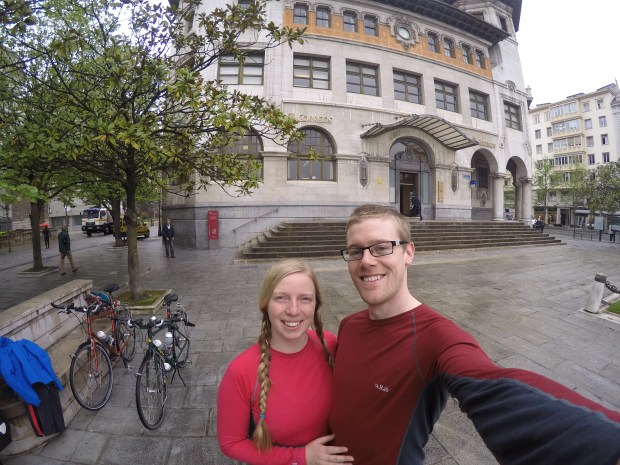
DCIM100GOPROGOPR0045.Waiting outside the grand Curreos (post office).

We went to the post office for Taka, then took him to the bus station so that he could go to Bilbao. Unfortunately he was told that he can’t take his bike on the bus, so he decided not to bother with Bilbao and head south straight out of Santander towards Morocco. From there, he was going to cross the Sahara to Senegal.   Yeah, rather him than me!!

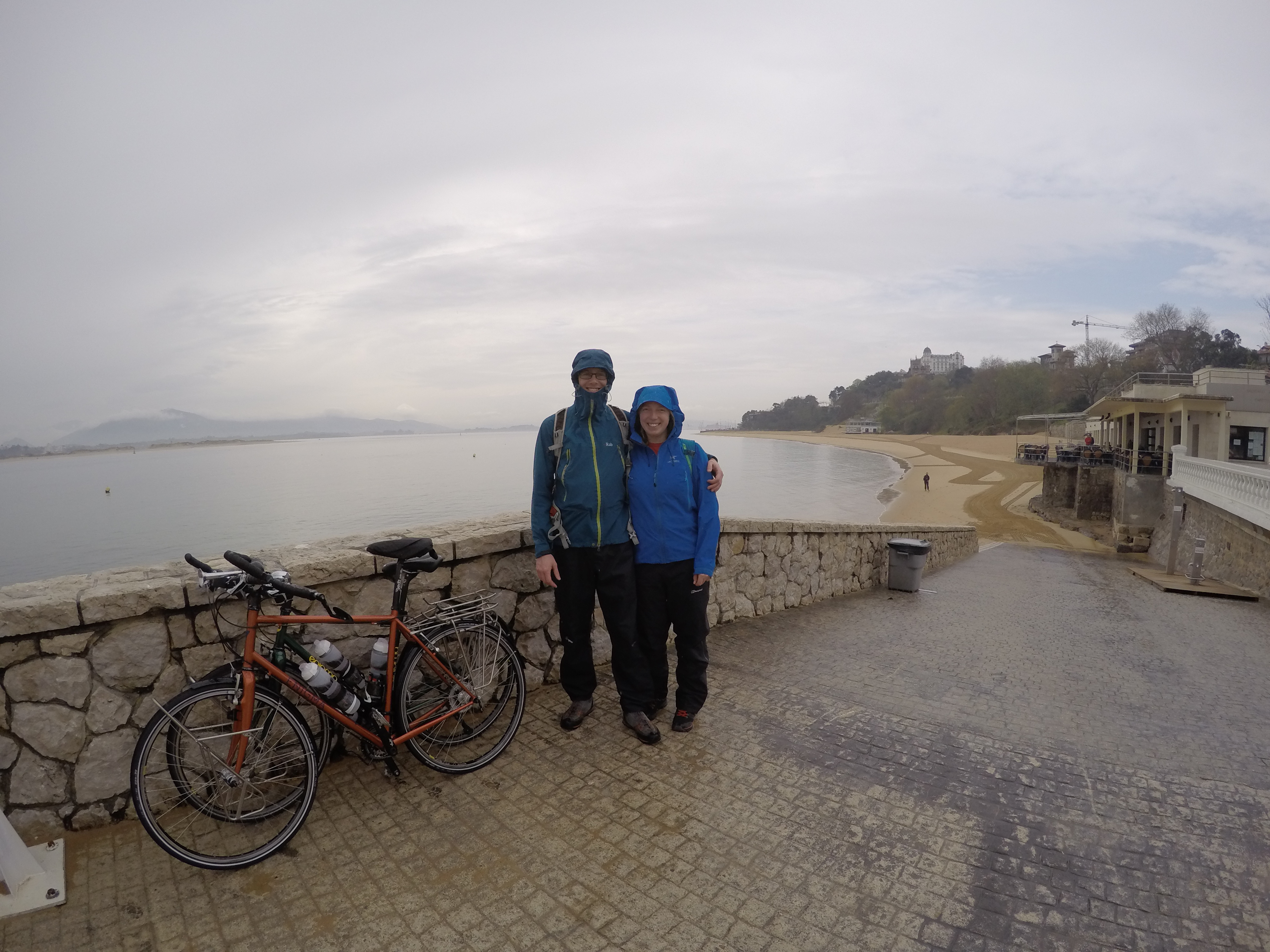
After waving Taka off, we went for lunch then headed along the beach in the drizzle and looked at the views from under our raincoats.

DCIM100GOPROGOPR0049.A rainy start to the day.

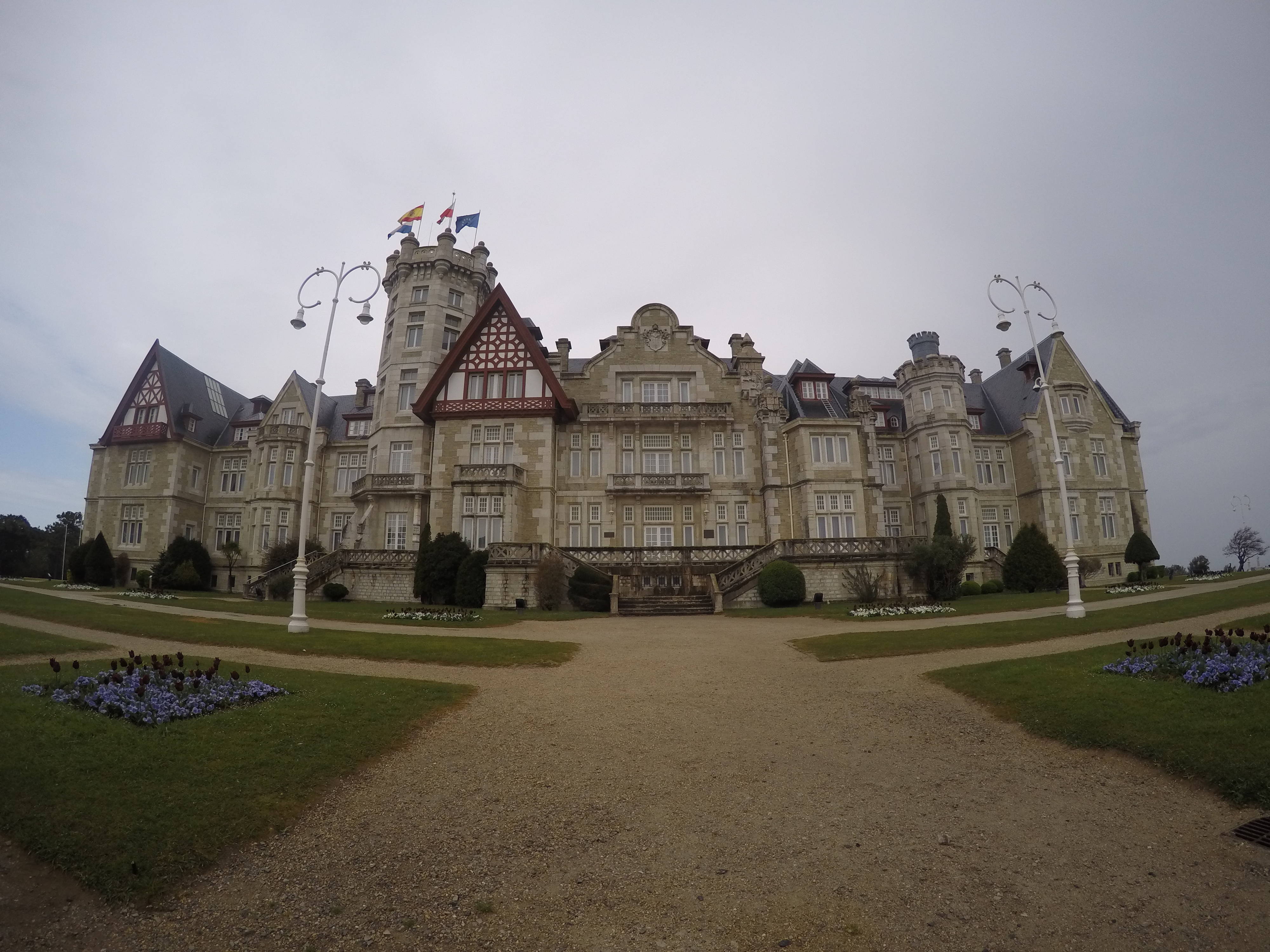
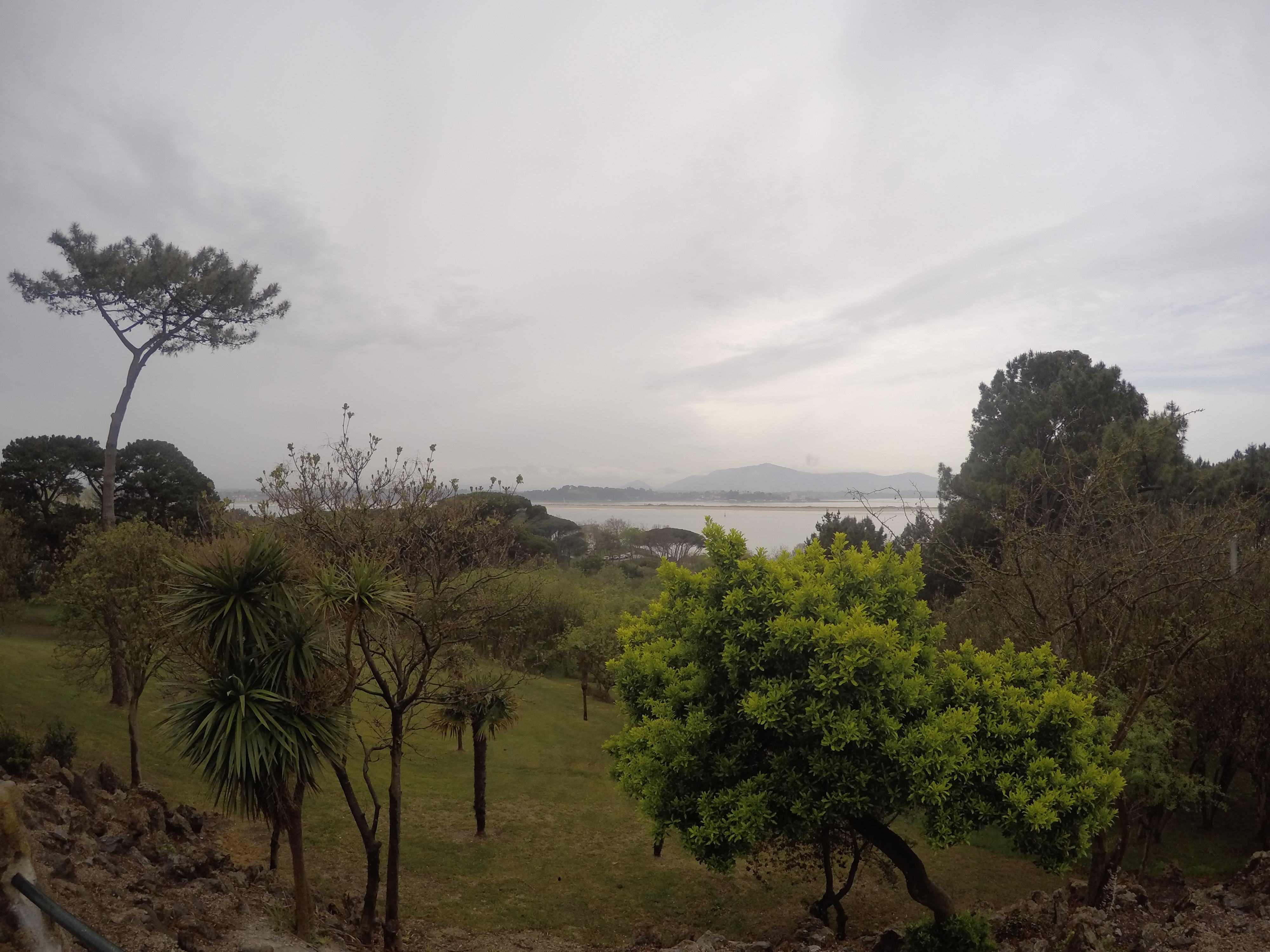
We stopped at a castle on a rocky outcrop with lovely gardens.

DCIM100GOPROGOPR0053.Castle

DCIM100GOPROGOPR0051.Gardens

On our way back, the sun came out for a bit and we enjoyed the lovely coastal views and the picturesque parts of town.

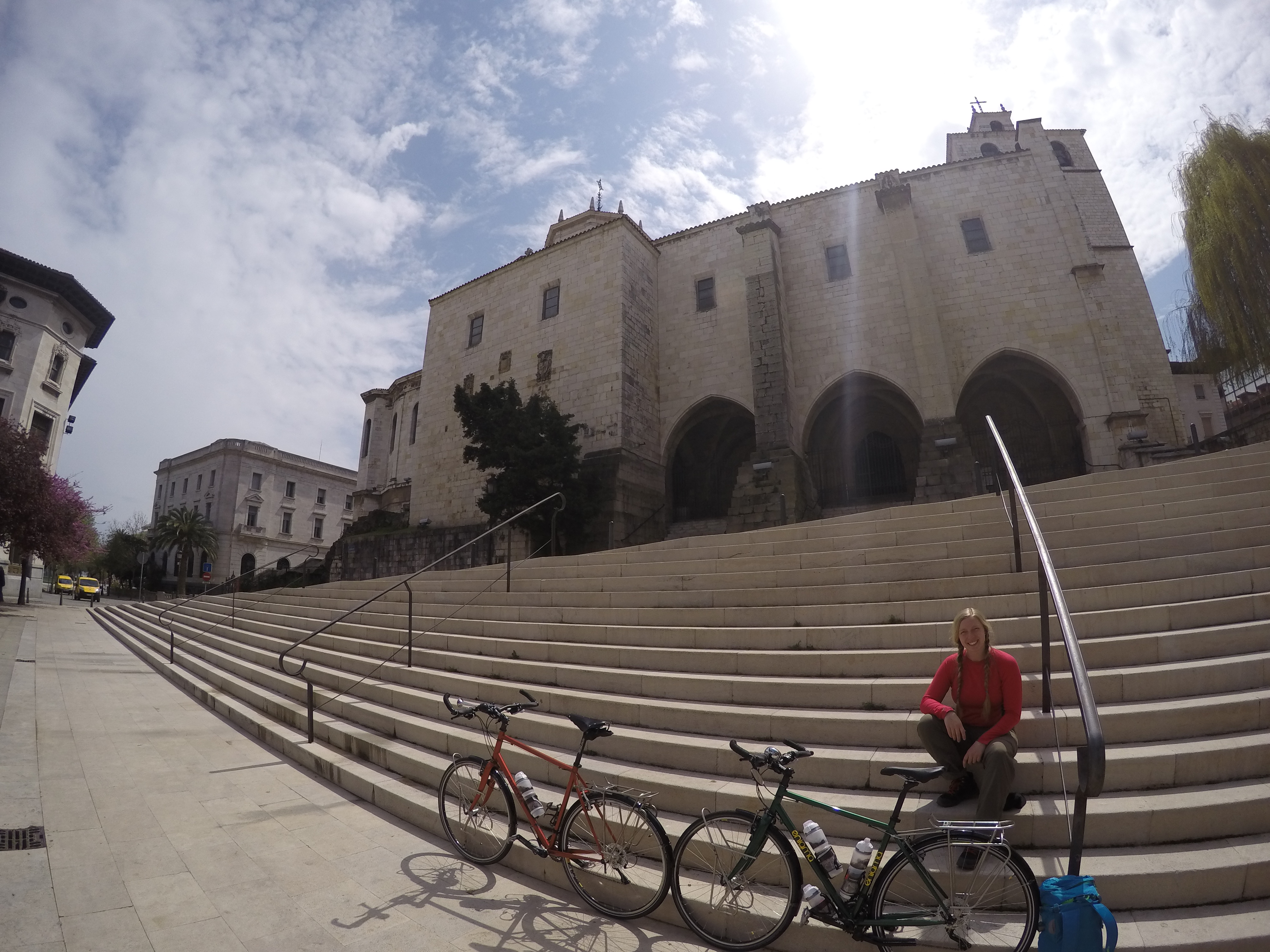
DCIM100GOPROGOPR0061.Sunning ourselves outside the cathedral.

Then we were back with Silvia and Carlos and we made them a great British dinner of Shepherd’s Pie and we talked for ages about cycling and climbing in the Picos mountains that we will get to in a few day’s time. Very excited!

Beginnings

So this is it, we’ve left the UK and we’re on the ferry to Santander! Anna’s mum saw us off from her flat in London yesterday and we wobbled down to the station to catch our train to Portsmouth. It’s the first time I’ve ridden my bike fully loaded, and it’s a weird sensation. The frame flexes and wobbles with the weight, and I’m constantly making micro-adjustments, which makes it worse! Apparently it wears off once you relax.

Luckily the train was pretty empty so there was room for our massively over-laden bikes!

We got into Portsmouth and found the ferry terminal; we then found a little grassy bank near the road to sit and have a quick snack before checking in. Security was tight, we declared our two sizeable knives before having two of our 14 bags scanned, revealing a gas canister. That was all fine though apparently and the friendly Security team waved us on. Not sure what you would have to be carrying to actually be stopped!

My hopes were high that we would be allowed to board first as we were directed down an empty lane almost to the boarding ramp, but Anna’s prediction proved correct and we sat there for an hour while about 500 cars boarded in front of us. It was a lovely sunny afternoon though so we had no complaints. I did find out what a pain it is to move your bags around once they’re off the bike though. We couldn’t carry everything in one trip so we had to relay our bags to the cabin. Maybe we shouldn’t have brought the 60m climbing rope??

We sailed at 5.30 pm, and once we’d taken some artistic photos of the Spinnaker Tower and waved goodbye to the mainland we sat down to dinner while sailing past the Isle of Wight. It was sunset and the sea was amazingly calm; we enjoyed the beautiful view while maximizing the value of the all you can eat buffet. We figured we need to make the most of available calories!

After dinner we wandered around the ship and went outside to watch some gannets before heading to bed for an epic 11-hour sleep! Anna has a bit of seasickness, so the more time spent asleep the better as far as she’s concerned.

Today we’ve eaten, walked around, read and watched the sea for signs of life, to no avail so far. However, I expect the marine mammals will turn up somewhere near the continental shelf break, which is pretty close to the coast on the Spain side. Hoping to see some dolphins and if we’re lucky, some bigger whales too. While I’m writing this I’m listening to Brittany Ferries’ resident lounge singer and piano player, collectively known as “Liaison”. There is an elderly couple waltzing around the dance floor and maybe 3 other people watching and providing occasional applause. It’s amazing. I hope I’m happy to dance around by myself at 3 in the afternoon when I’m old.

I’m really looking forward to getting into Santander and meeting our Warmshowers hosts Silvia and Carlos this evening. Anna is pretty chilled out about it, but it’s all new to me and very exciting. I have to keep reminding myself I don’t have a job or anything to go back to after this, and we aren’t expecting to go home for months. It’s the first time I haven’t had a job since uni, and I think it’s going to take a while to sink in. Maybe some tasty Spanish food and a beer tonight will help!

Knepp Wildlands Safari

On Saturday we started our rewilding journey with a visit to the Knepp Wildland Project in West Sussex (England). We took some friends along and were guided around by Penny Green, the knowledgeable and enthusiastic Ranger.

The project was formerly a large dairy and arable farm. The current owner, Charlie, got to know Ted Green and Jill Butler (ancient tree gurus at the Woodland Trust) and bravely decided to risk everything by turning his back on 100 years of traditional farming by his family and embrace a new concept – low intervention farming using the animals themselves to manage the land.

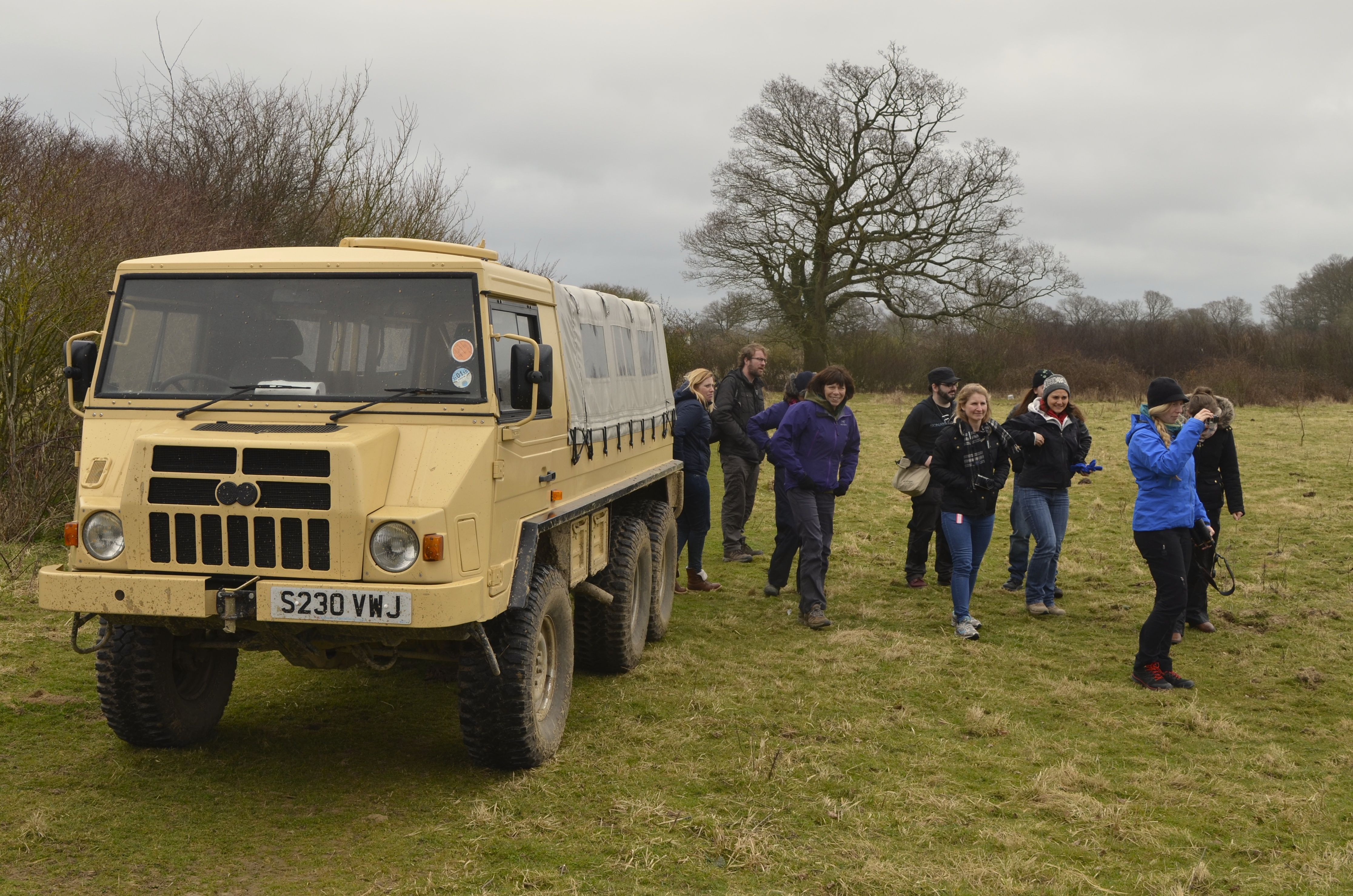
Penny gave us a fascinating presentation on the history of the estate, and how the rewilding project came about. We then went out in a Pinzgauer (a six-wheel drive troop carrier), which apparently is the only thing that can reliably handle the Sussex clay in the winter!

Our trusty steed

Our trusty steed

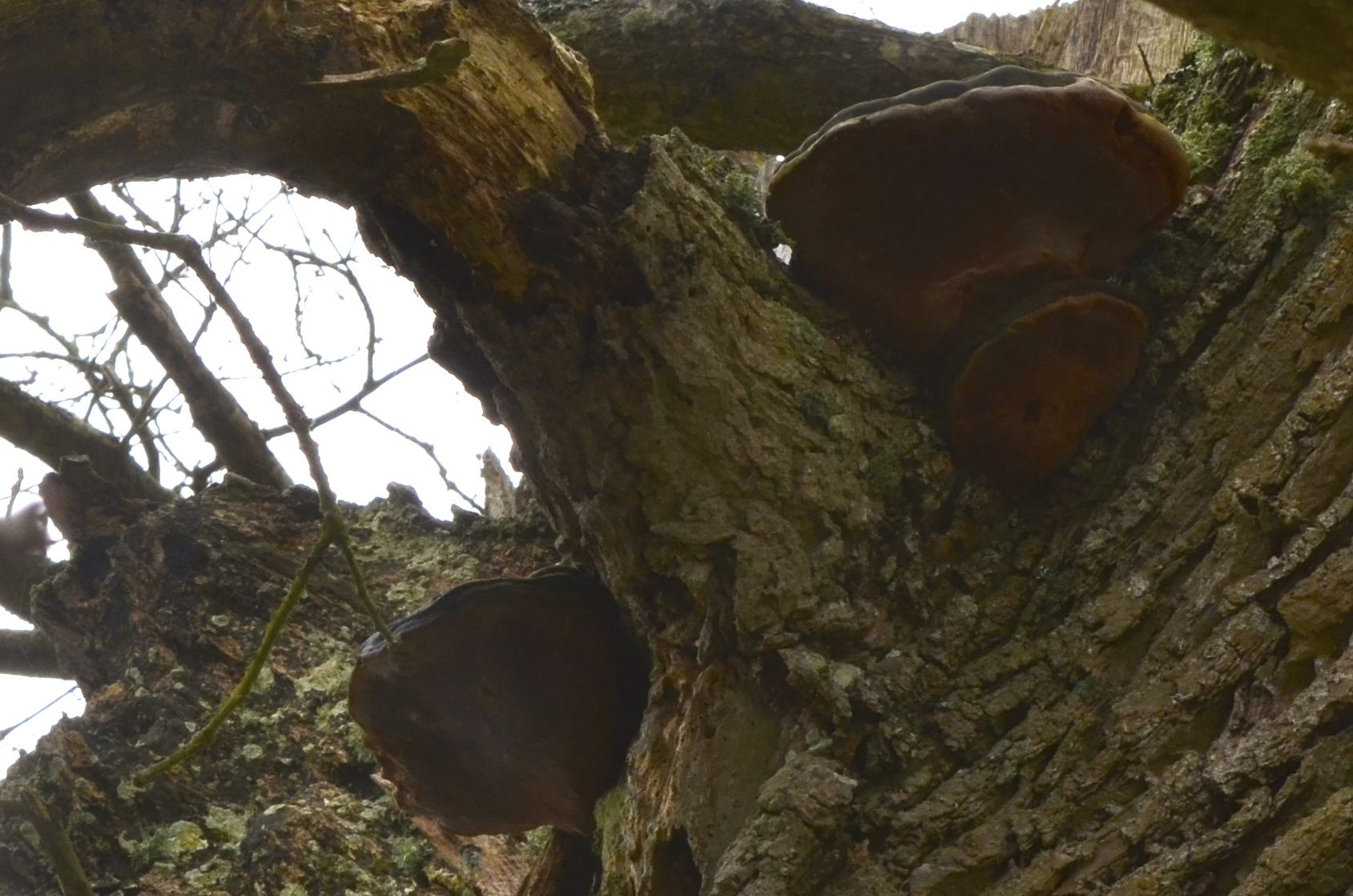
Over 60 km of fencing was removed before the start of the project and we drove through the former fields, hopping out near an oak tree that occasionally (but not today sadly) contains a little owl. To compensate for the missing owl, Penny pointed out a rare bracket fungus (Phellinus robustus) growing high up in the crown of the tree. I guess one of the advantages of fungi as a subject is that they don’t move around too much!
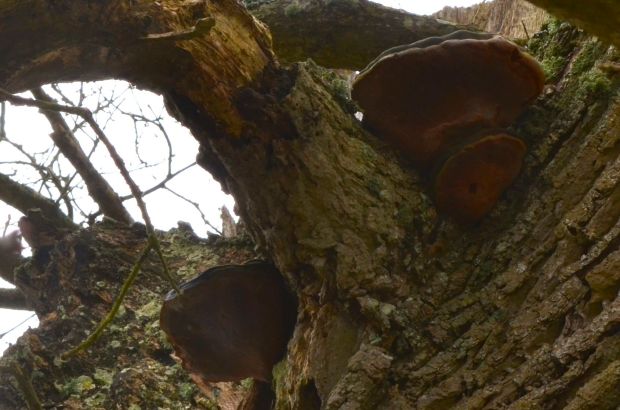
Bracket fungus (Phellinus robustus) in an oak tree

Bracket fungus (Phellinus robustus) in an oak tree

Shortly after this we saw two red kites (Milvus milvus) circling overhead, a nice reminder that this species is making a good comeback in England after over a century of absence.
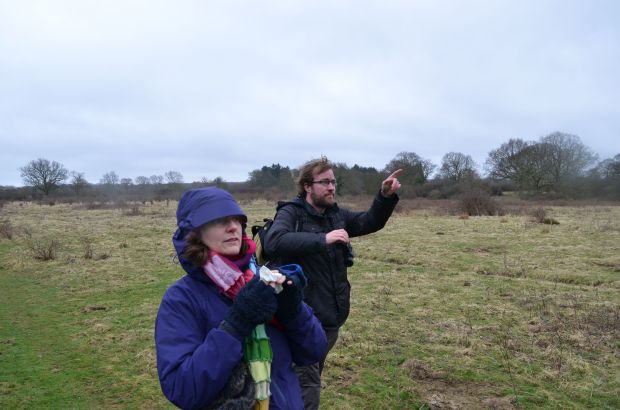
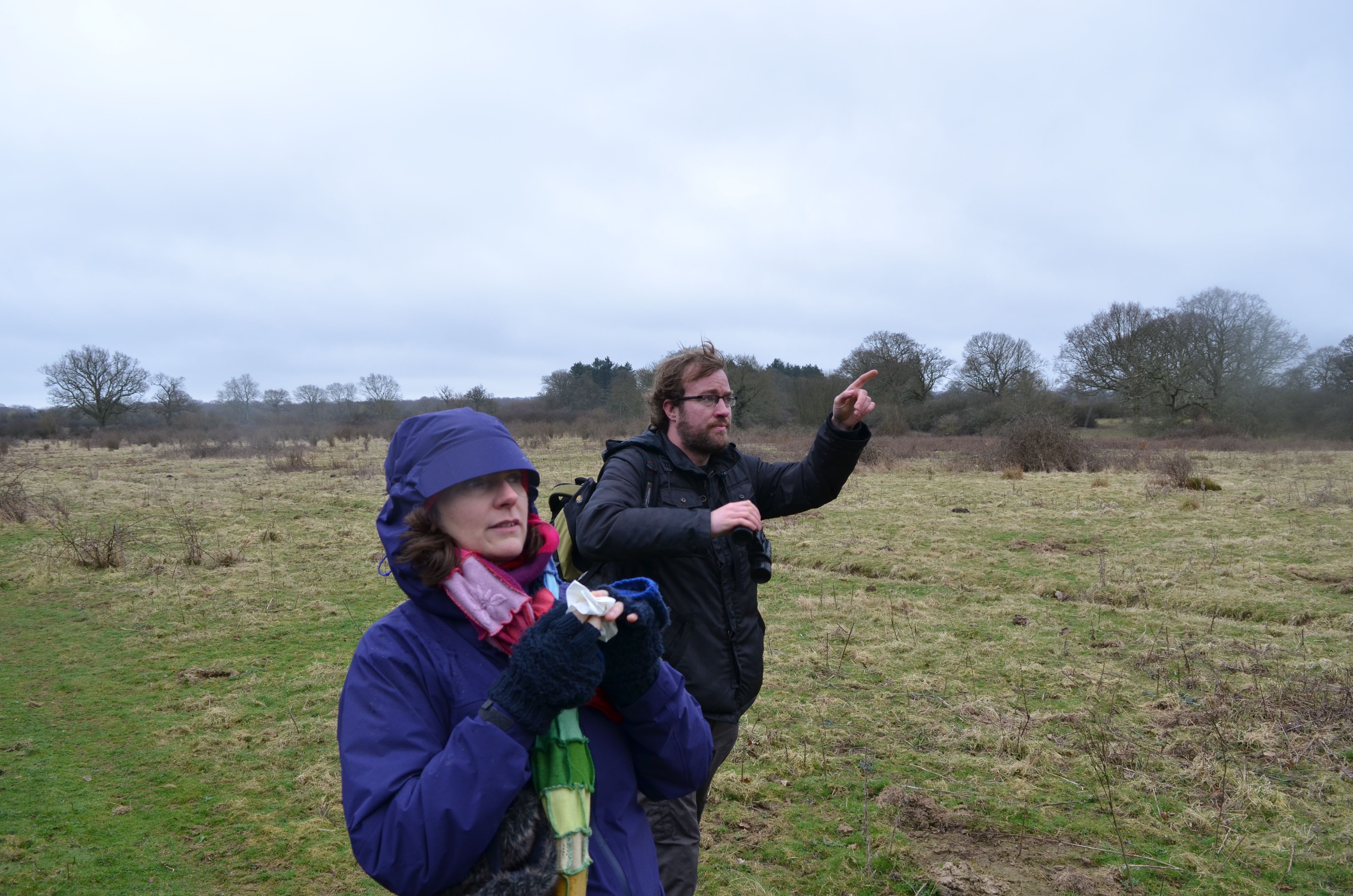
Joe and Anne tracking the red kites

Joe and Anne tracking the red kites

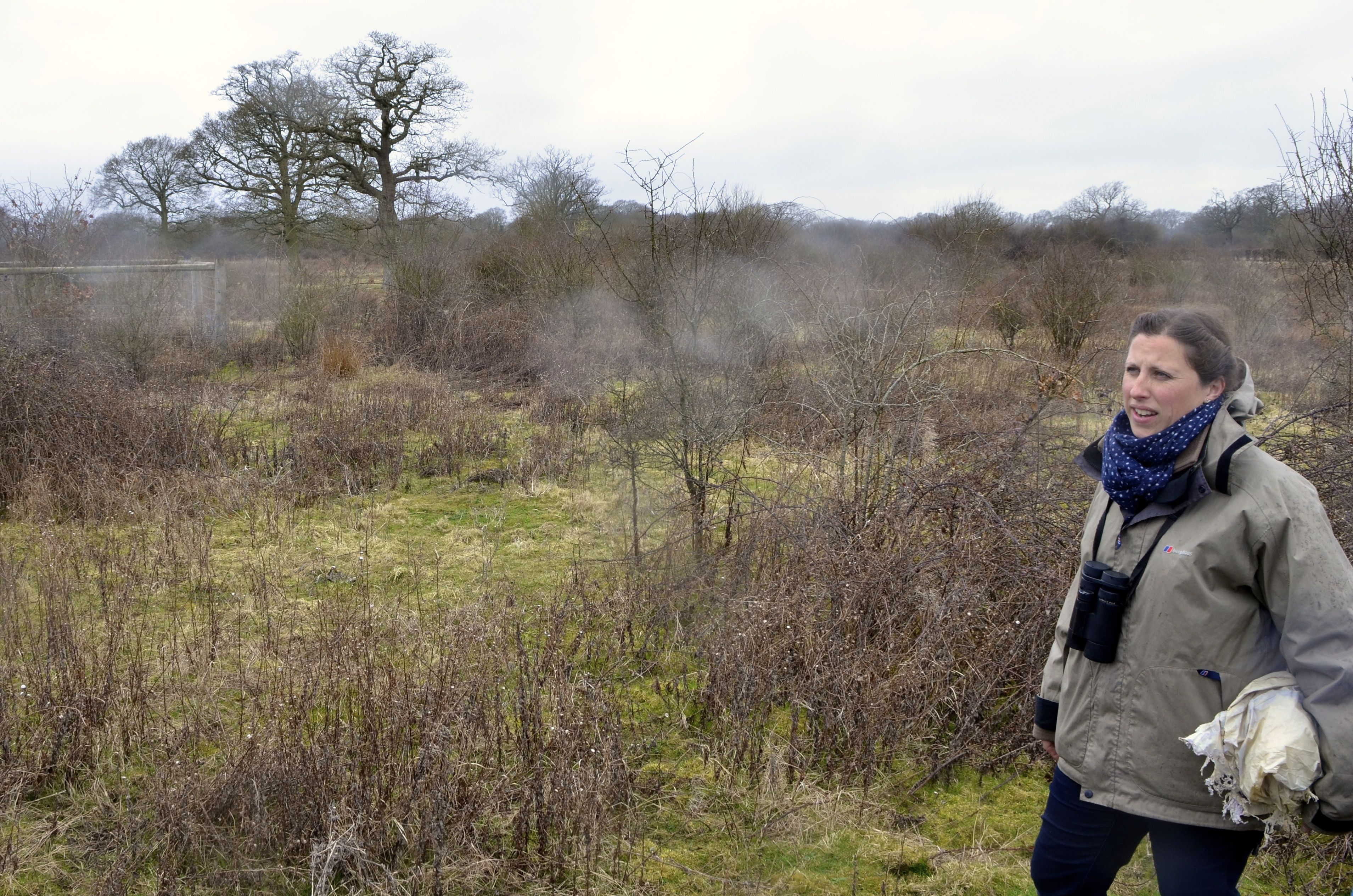
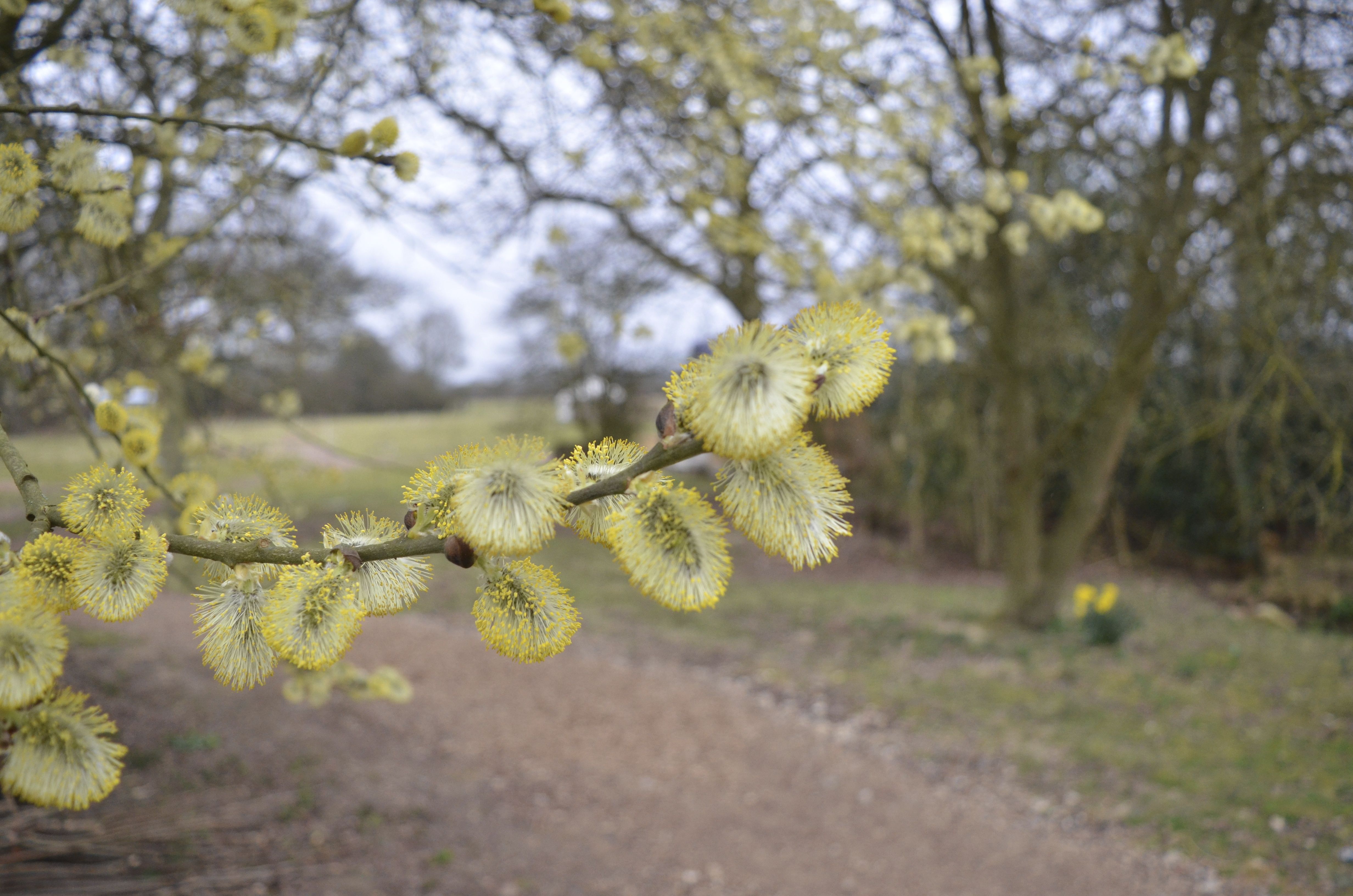
The changes that are happening on the estate were clear to see from the start. The fields that once supported a monoculture are developing a new flora. Rootling for bulbs and other sub-surface goodies by Tamworth pigs (specially selected for the purpose) overturns the soil and creates habitat for invertebrates and wildflowers. Low-intensity grazing by longhorn cattle, fallow and roe deer keeps areas of grass open, but the dog-rose, blackthorn and brambles are providing protection for young oak trees. The thorns are no match for the exmoor ponies however, who seem to enjoy the challenge! Sallow (Salix caprea and Salix cinerea) is becoming established, and is used by the longhorn cattle as lunch and rubbing posts.
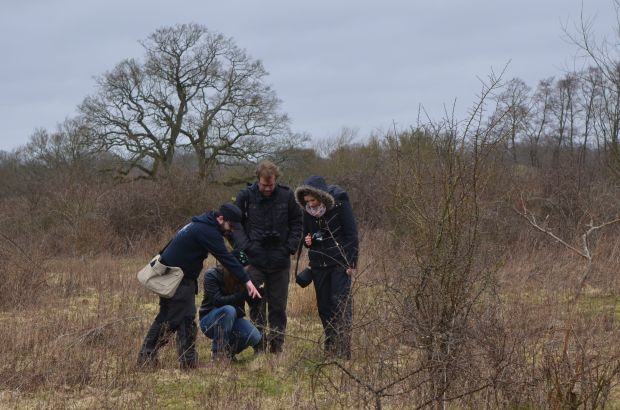
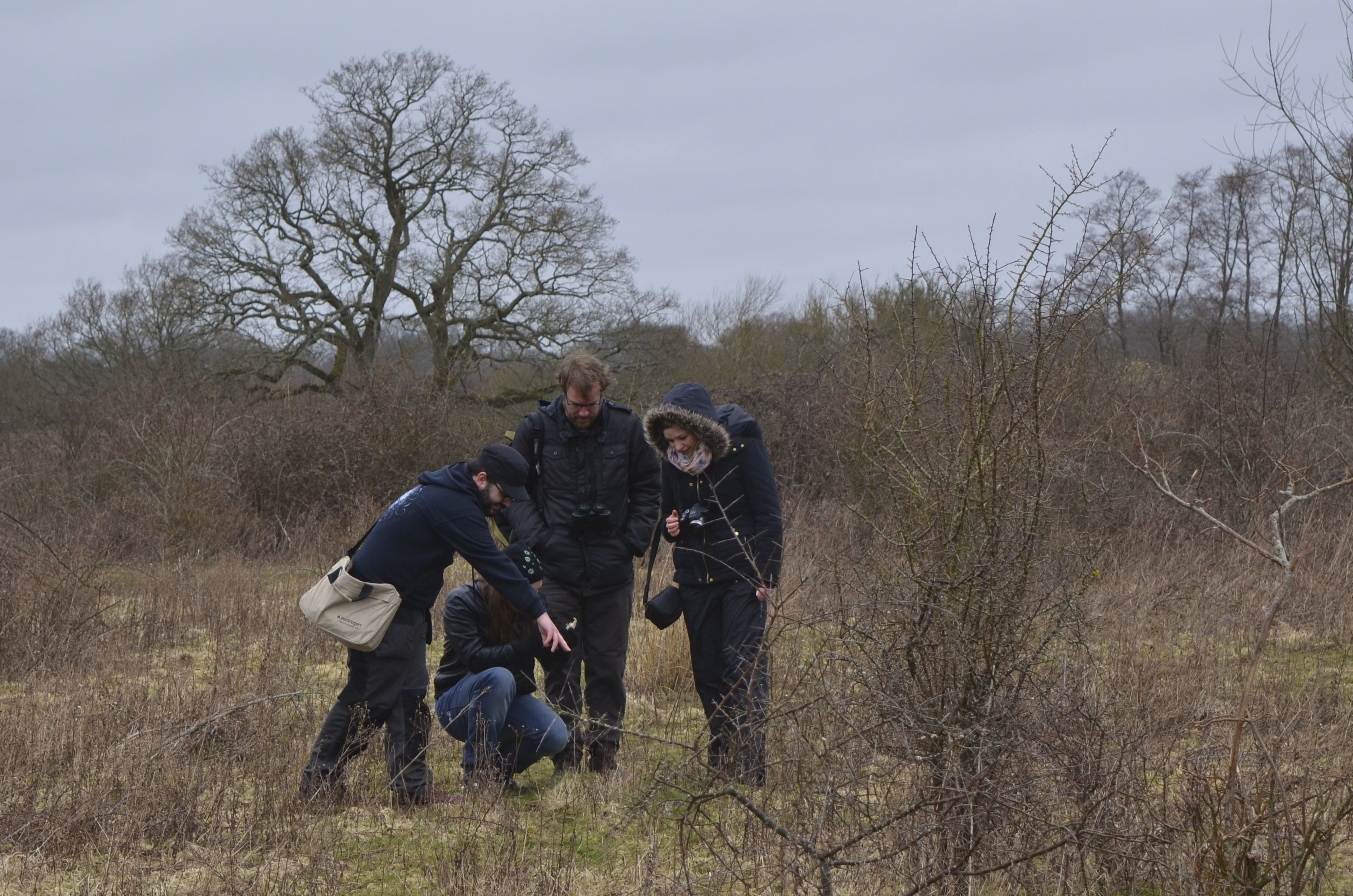
Investigating a rabbit skull amongst the scrub

Investigating a rabbit skull amongst the scrub

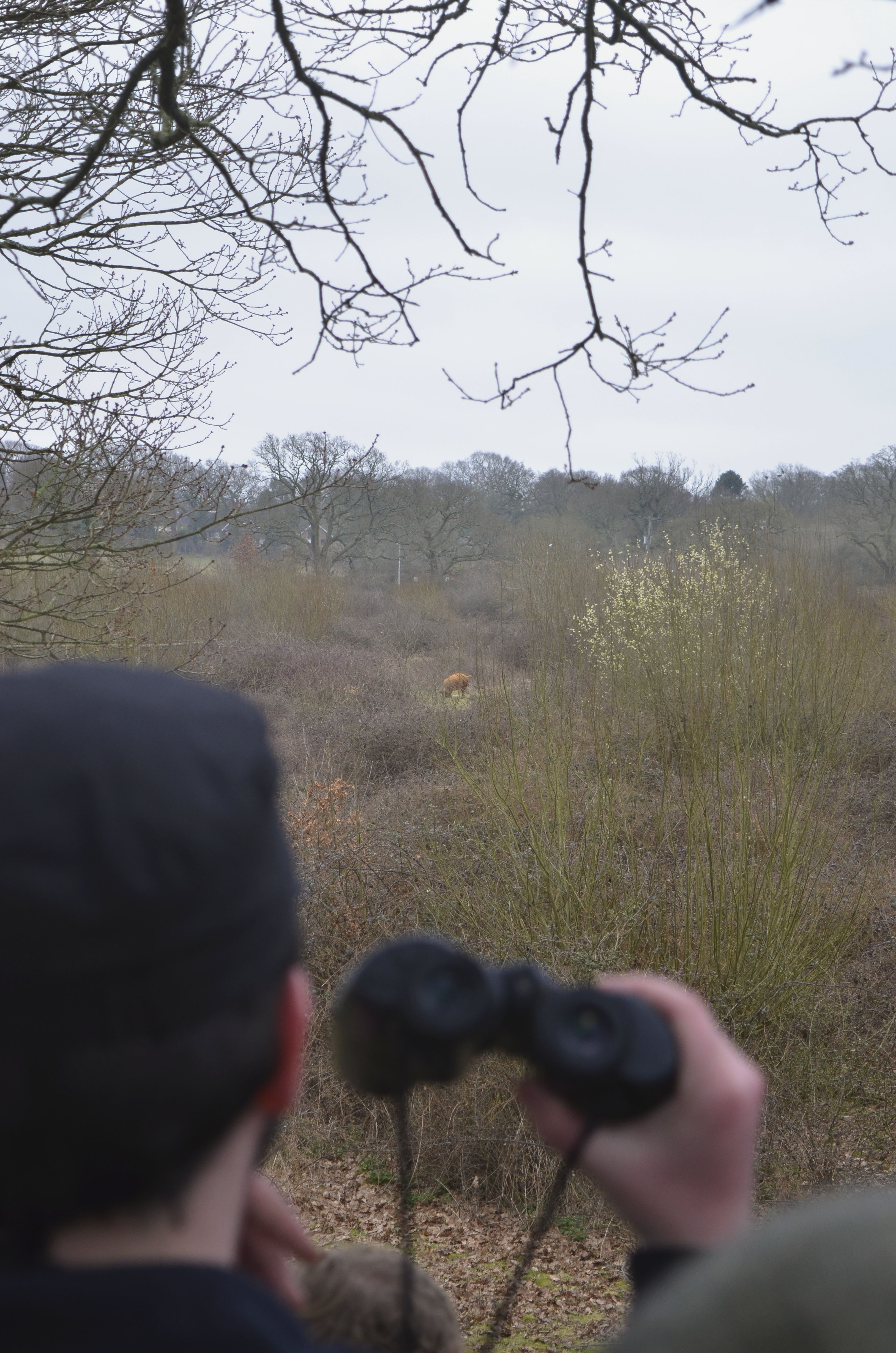
We made our way to a tree platform that had been constructed in the spreading branches of a beautiful old oak tree that survived the intensive farming days. From the platform we got a good look across the emerging landscape, and a glimpse of a Tamworth pig – a big orangey-brown shape snuffling through the undergrowth.
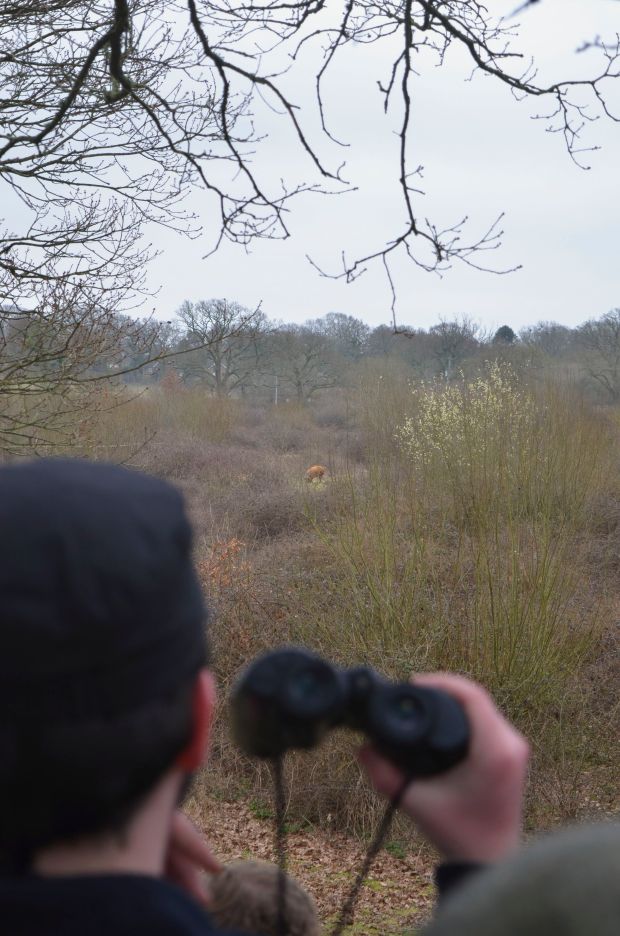
Tamworth pig!

Tamworth pig!

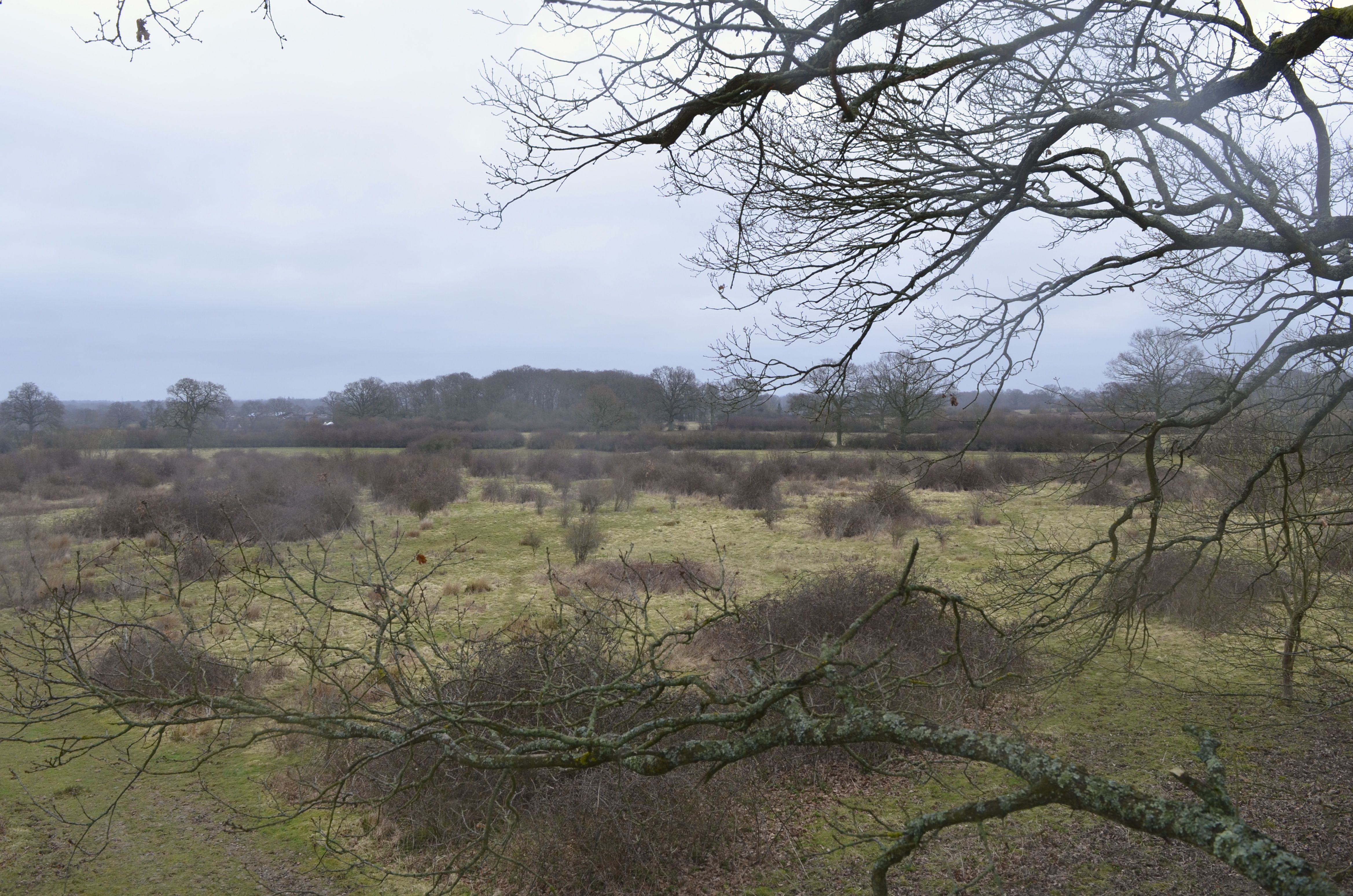
The pattern that was emerging was clearer from the tree platform. Penny explained that once the oak trees become established and immune to the effects of browsing, they will form the basis of an open, wooded habitat. Careful stock management is intended to ensure the fields do not revert to plain but will not turn into dense woodland – browsing is expected to maintain meadow areas. No one is really sure though – the big experiment is to try to replace some of the missing ecosystem-shaping species, and then see what happens.
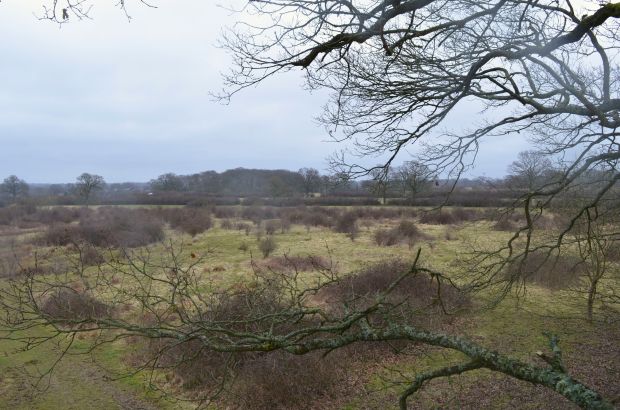
View of the changing habitat from the tree platform

View of the changing habitat from the tree platform

As it is unlikely that large predators will be introduced (it was calculated that the area is only big enough to support one and a half lynx), culling is used to manage herbivore populations. Licensed hunting of deer stags is also an important revenue source. All the meat is sold for consumption and the revenue is used to conduct necessary maintenance. The deer stalking is used to supplement the project’s finances; there is no intention to turn this into a deer stalking estate!

The hedges and field margins are becoming taller, deeper and denser, creating habitat for birds, small mammals and reptiles. Penny told us that beneficiaries from these changes include nightingales (Knepp now supports 2% of the UK’s wild breeding population), turtle doves and cuckoos. Turtle dove numbers in the UK decreased by 96% between 1970 and 2012 and were identified in 2010 as the bird species most likely to be extinct in the UK by 2020. At least four territories were identified at Knepp during 2014, up from an average of two in previous years. This is a drop in the ocean in terms of the UK-wide population crash, but it is very encouraging to see the species appearing to increase in number within the project area.
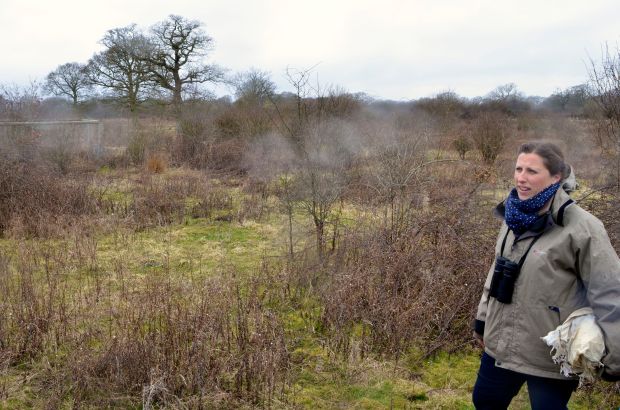
Penny pointing out an area fenced off for reference surveys to see what will happen with no browsing (top-left)

Penny pointing out an area fenced off for reference surveys to see what will happen with no browsing (top-left)

The stunning purple emperor butterfly (Apatura iris) is another big winner at Knepp. It was first noticed breeding at the project in 2009, and by 2013 was considered to host the second strongest population in the country. This species is traditionally associated with mature mixed woodland, but Knepp is changing the received wisdom on this. The males display over large oak trees, and the females lay their eggs on sallow. It seems that the suddenly increased availability of sallow is responsible for the spectacular population increase at Knepp, and that the Purple Emperor could become much more widespread in the southeast if the availability of food plants were increased. We didn’t see any on our trip as the adults emerge in early July, but I recommend going on a summer safari!
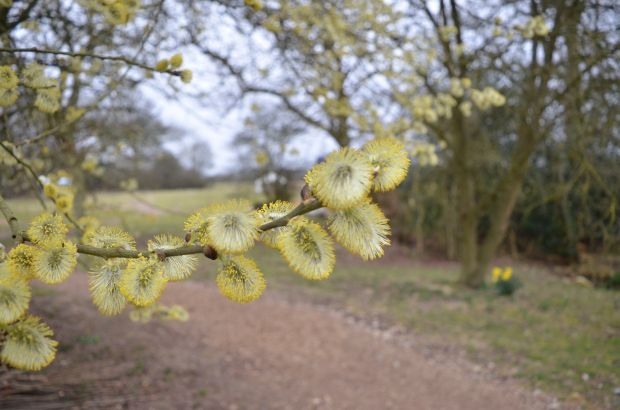
Sallow (Salix caprea i think) catkins

Sallow (Salix caprea i think) catkins

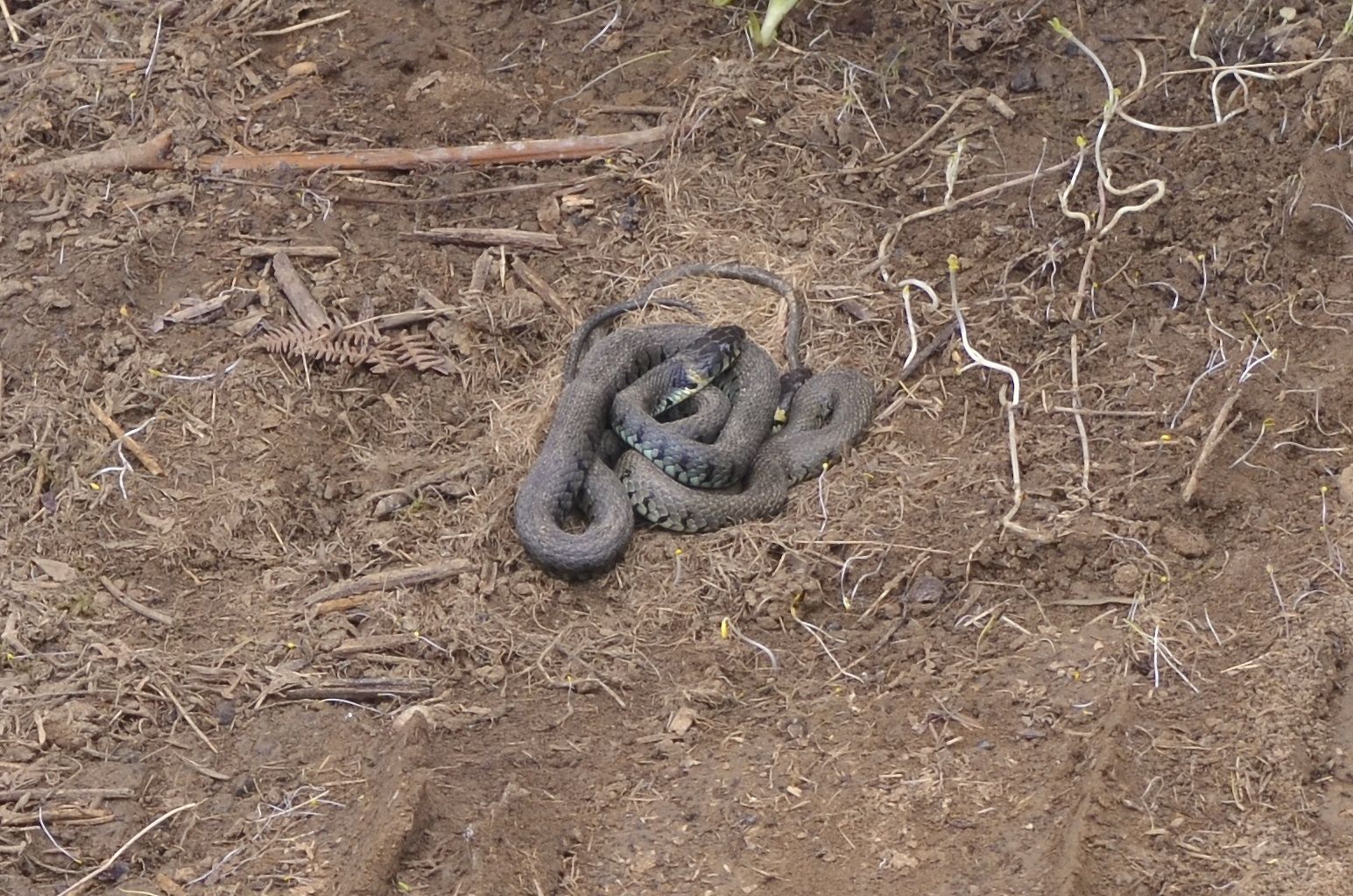
After another stint in the Pinzgauer we jumped out to investigate some sheets of corrugated iron that had been put down to provide winter shelter for reptiles. Under the first sheet we saw two grass snakes curled up together. They hung around and let us get a good look at them before Penny covered them back up.
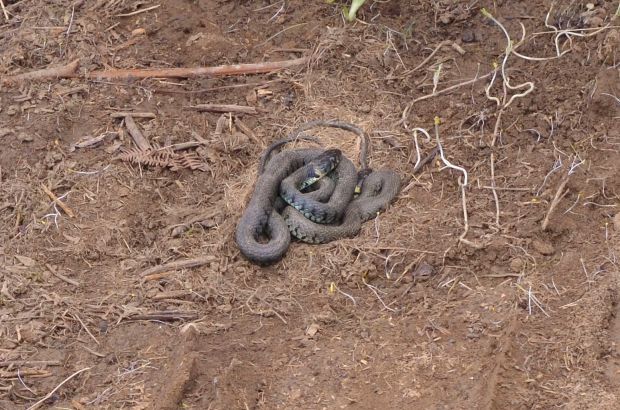
Grass snakes (Natrix natrix)

Grass snakes (Natrix natrix)

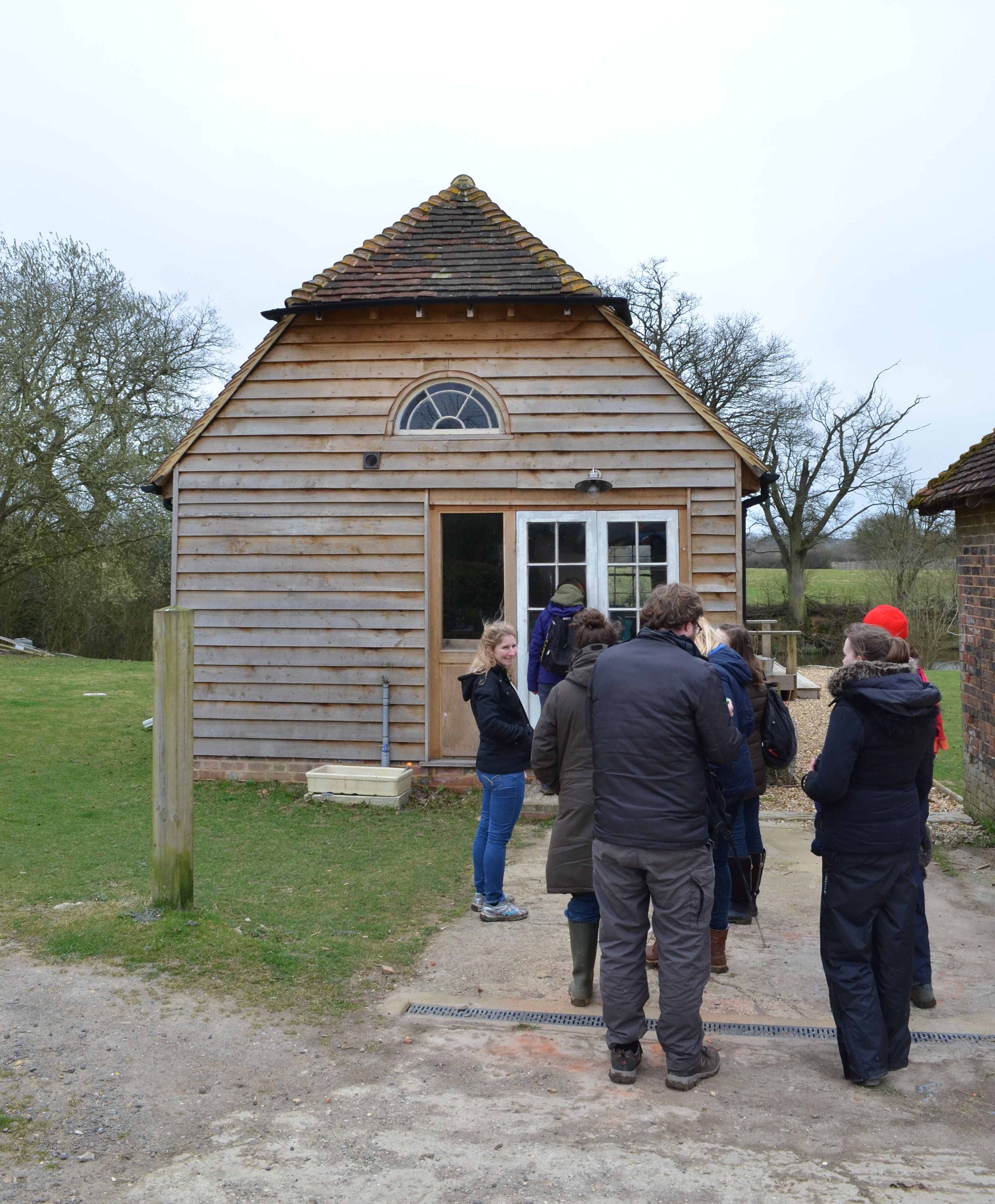
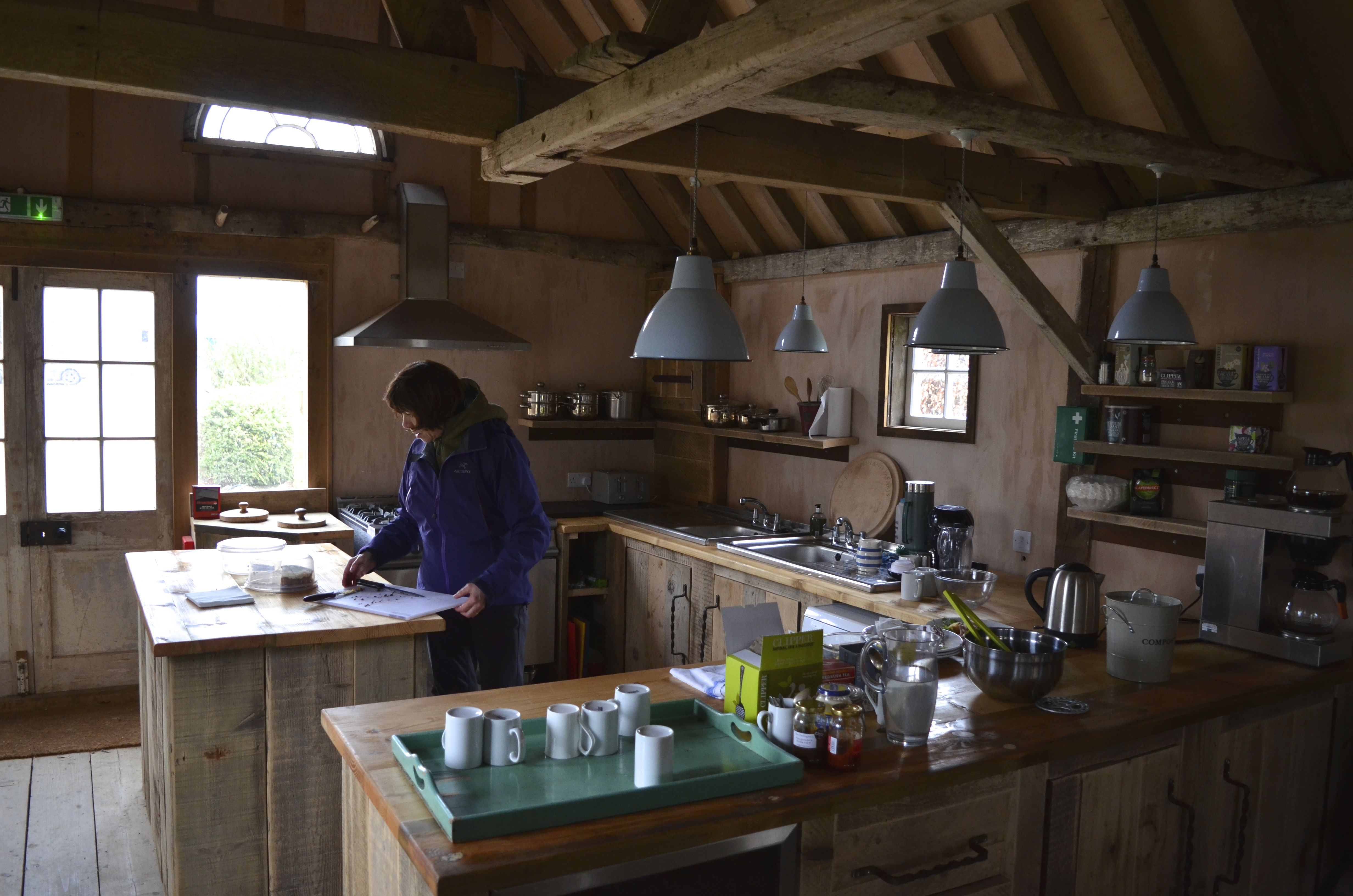
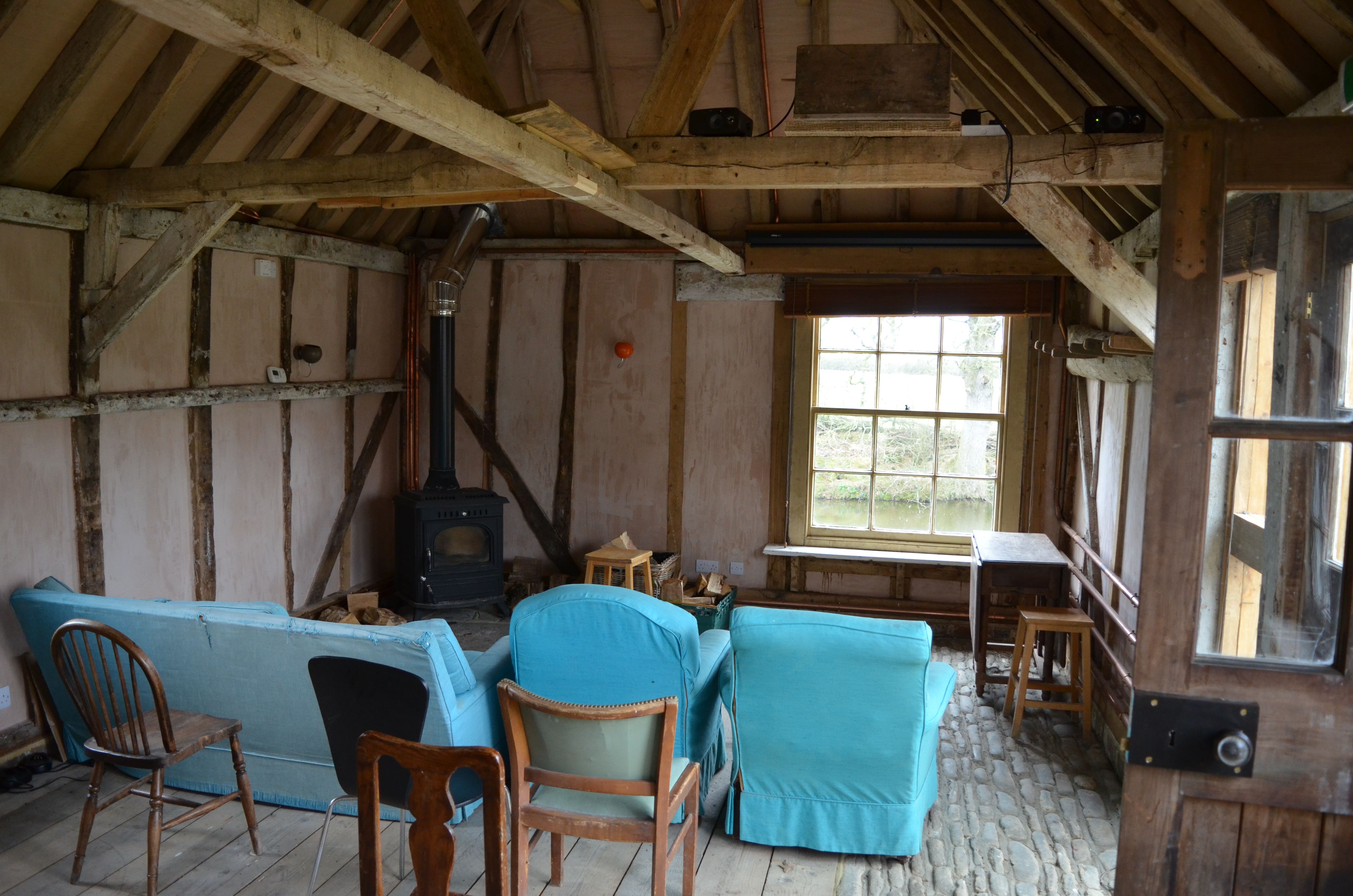
After this we headed back to the dining / conference building for delicious lunch, including home-grown salad, pork pie and ham followed by chocolate brownies and coffee. Mmmmmm!
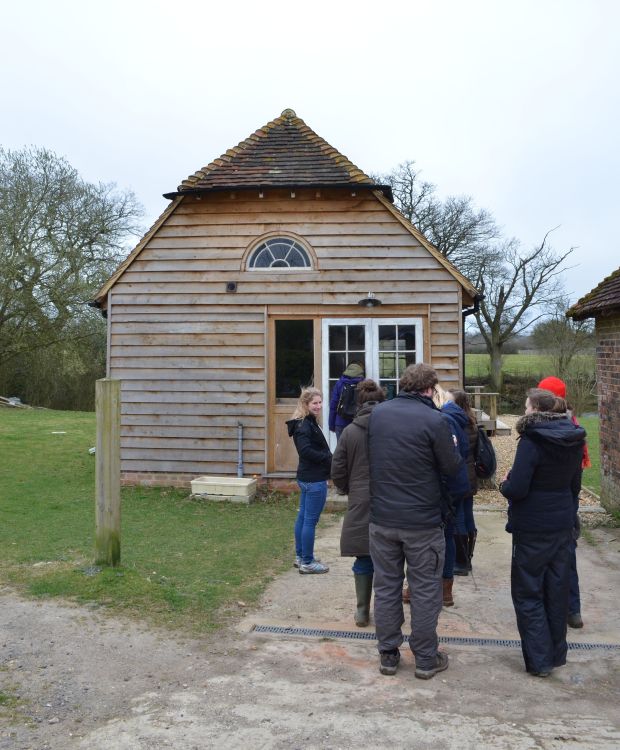
The dining / conference hut
The dining / conference hut

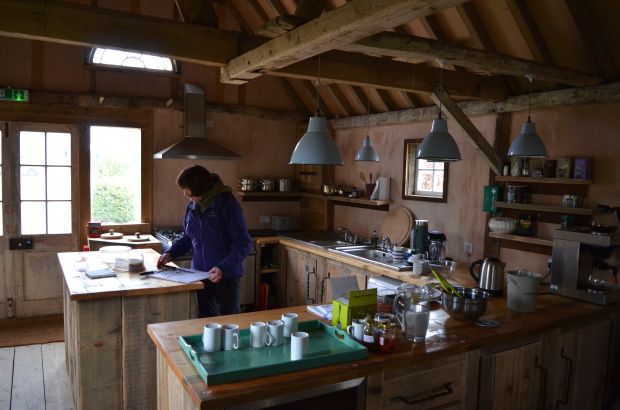
Well stocked kitchen!
Well stocked kitchen!

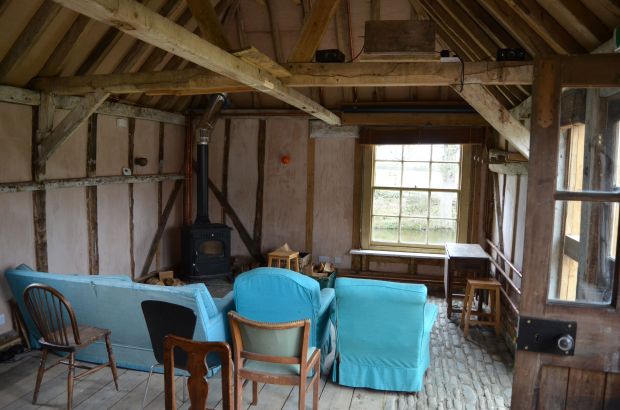
Presentation area

Presentation area

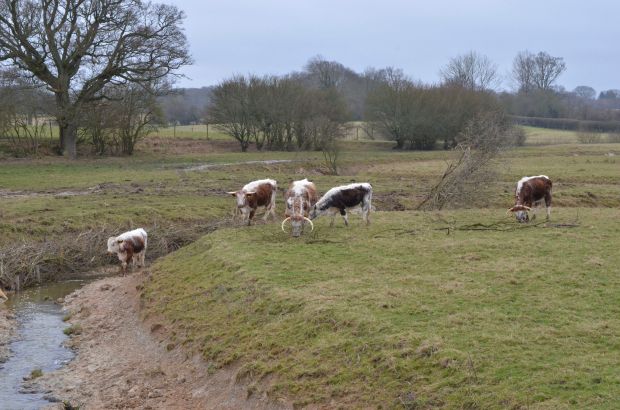
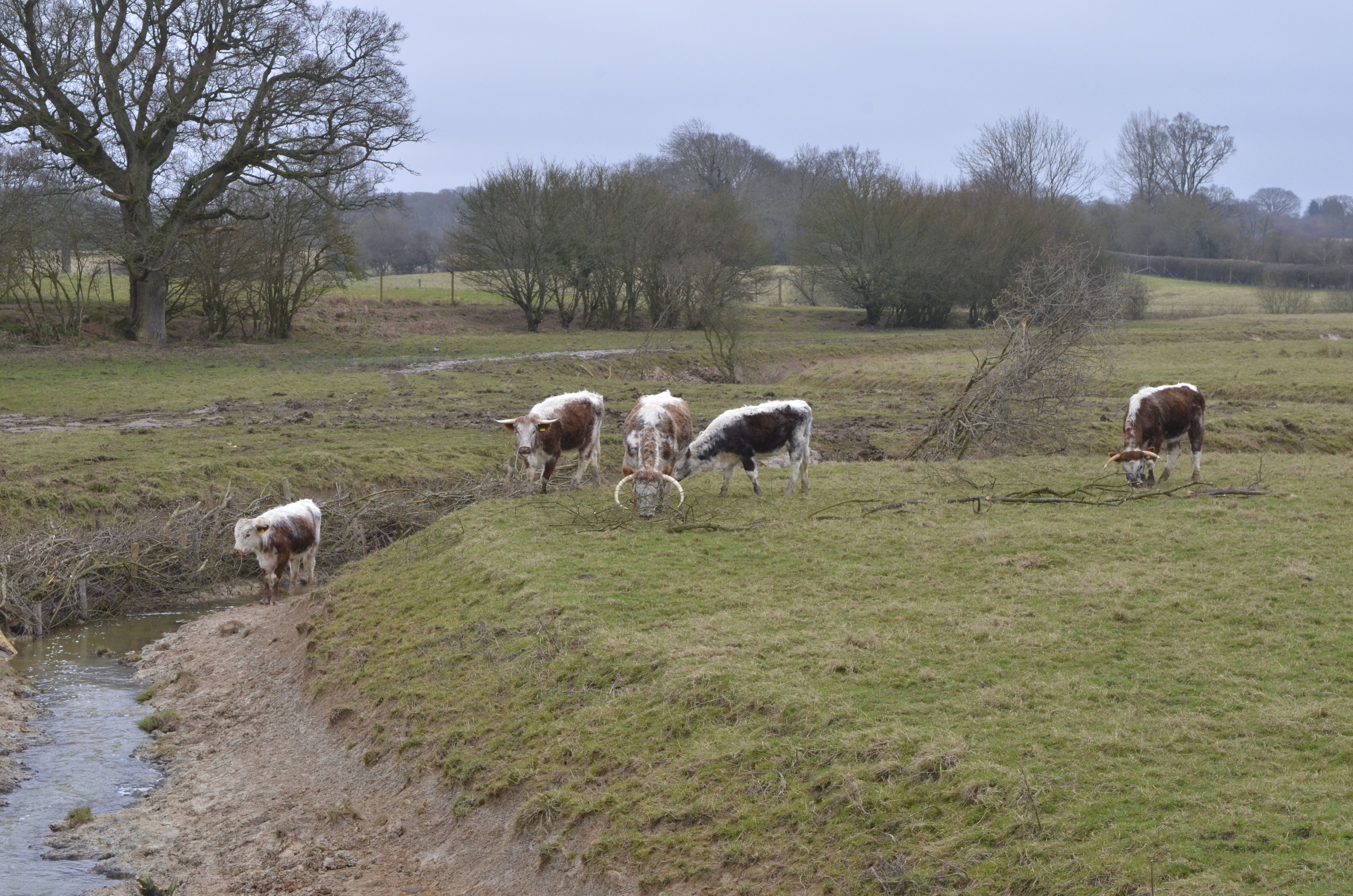
After lunch we went out again – into the northern area of the farm this time. We saw some long-horned cattle hanging out alongside red deer.
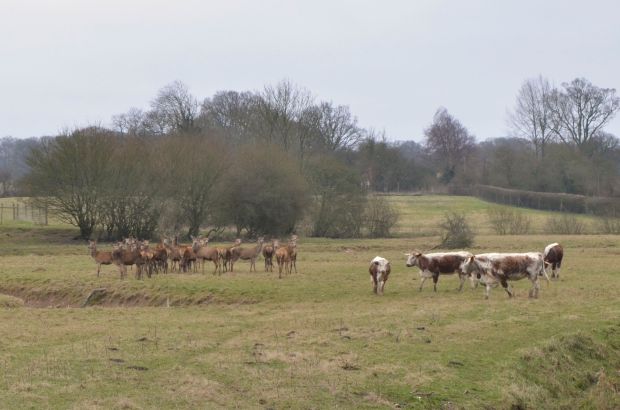
Long-horned cattle and red deer (Cervus elaphus)

Long-horned cattle and red deer (Cervus elaphus)

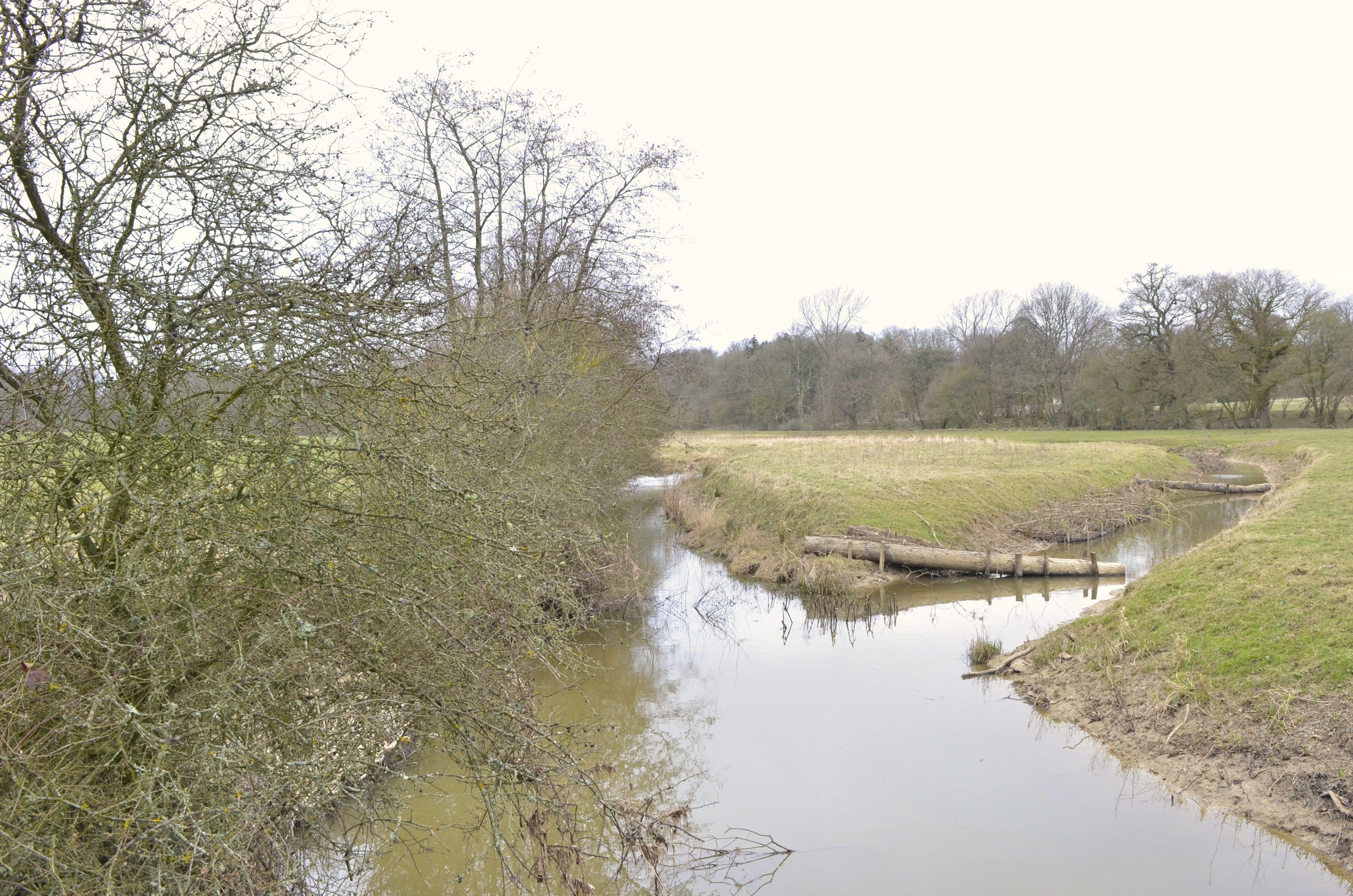
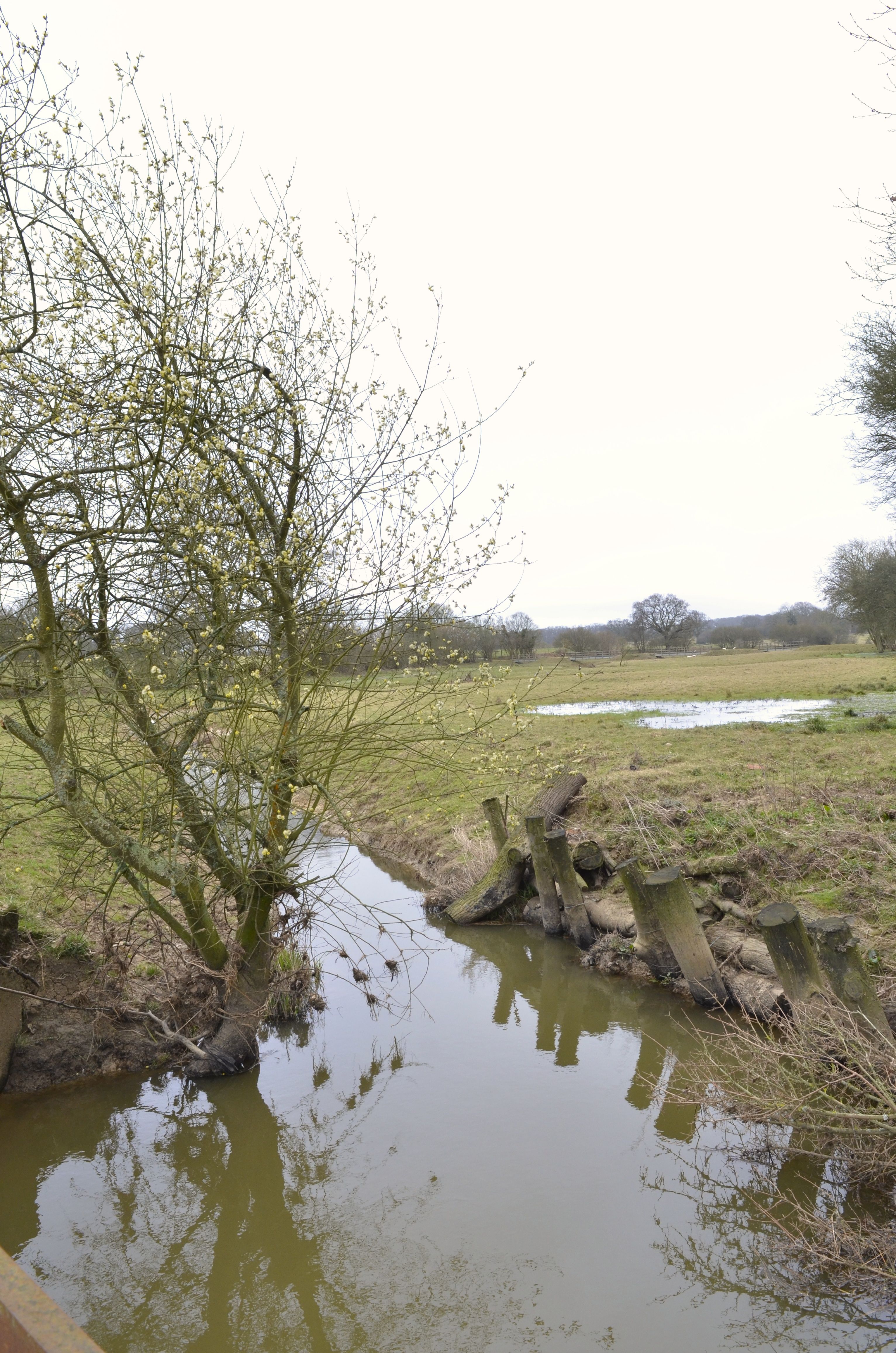
This was also our opportunity to check out the river. At the start of the project the existing canalised river was re-routed into a newly dug, meandering channel along the bottom of the valley, and then left to evolve on its own. Recently, in an attempt to replicate the work of beavers (which Knepp have yet to acquire), volunteers have placed trunks and branches in the river to reduce flow and allow siltation. The meanders and the woody debris placed in the channels will reduce the speed of the flow, allow local flooding, and help prevent uncontrolled flooding downstream.
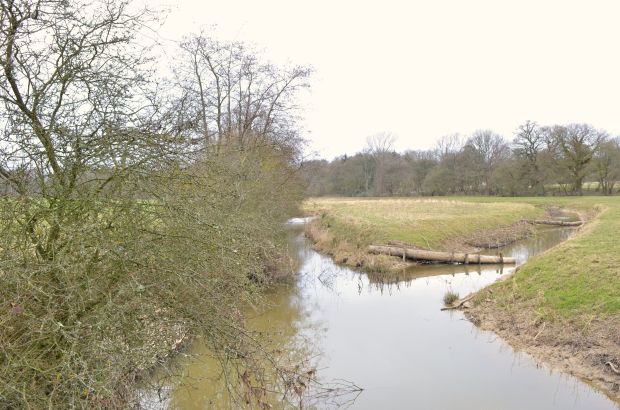
Tree trunk for flow management

Tree trunks for flow management

Long-horned cattle drinking at the river
Long-horned cattle drinking at the river

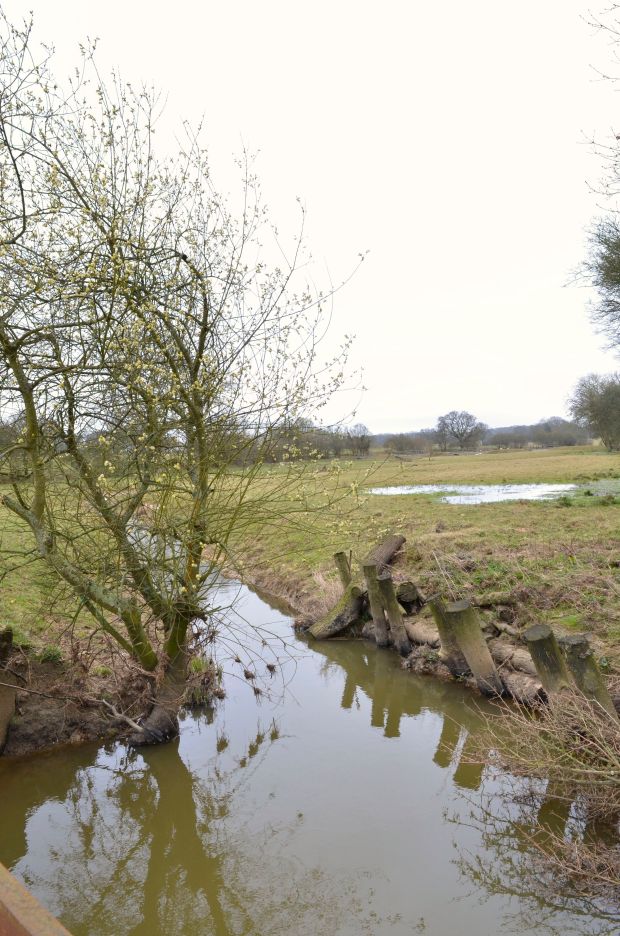
Wooden bank reinforcement (with sallow tree)

Wooden bank reinforcement (with sallow tree)

After checking out the river it was time to head back to base. On the way we spotted a peregrine falcon (Falco peregrinus) gliding over a nearby wood. I’ll take the long camera lens next time!

We had a brilliant time at Knepp. Penny really knew her stuff, and it was great to learn that this type of work is going on in the UK. When Knepp was used for intensive agriculture, it was losing money despite government subsidies. Part of the revenue from the project today is still from subsidies (sustainability subsidies instead of production subsidies), as well as meat production, letting out the farm buildings to local businesses, and eco-tourism. The advantages of converting to rewilding are that there are now no pesticides applied to the land, local employment has actually increased, and the results for wildlife (and visitors) speak for themselves.

We would thoroughly recommend a visit to Knepp. We went right at the start of the season, and there was cool stuff to see. It would be amazing to go back in summer to see it in full bloom.

To organise a visit to Knepp or check out their blog…

http://www.kneppsafaris.co.uk/

http://kneppcastle.blogspot.co.uk/

If you want to look at survey data that has been gathered since the start of the project, check here…

http://www.knepp.co.uk/pages/conservation/wildlife_survey.asp