Sunday catch up

We had Sunday free, which was good because we had loads to catch up on. It was a beautiful day!
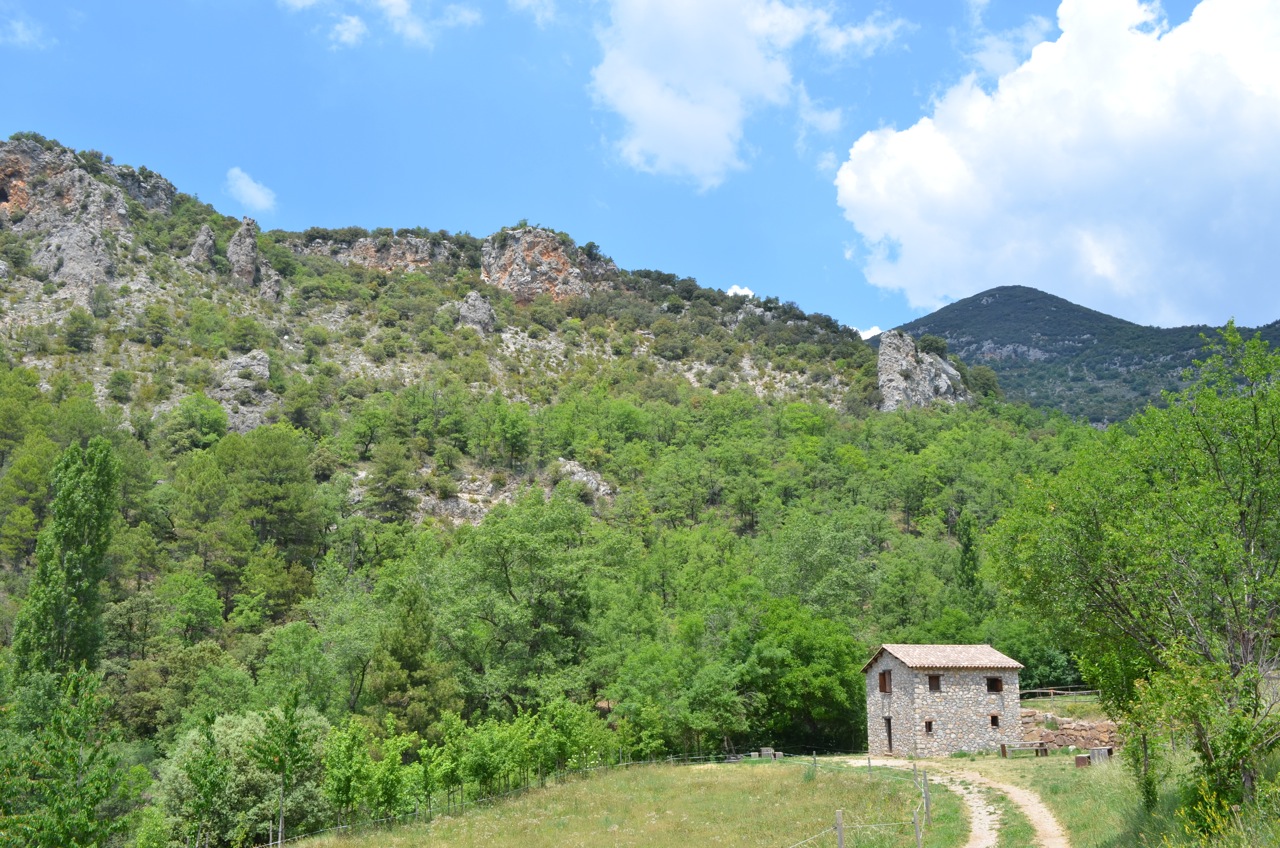
Just another day in paradise

Home for the week – we’ve had worse I suppose

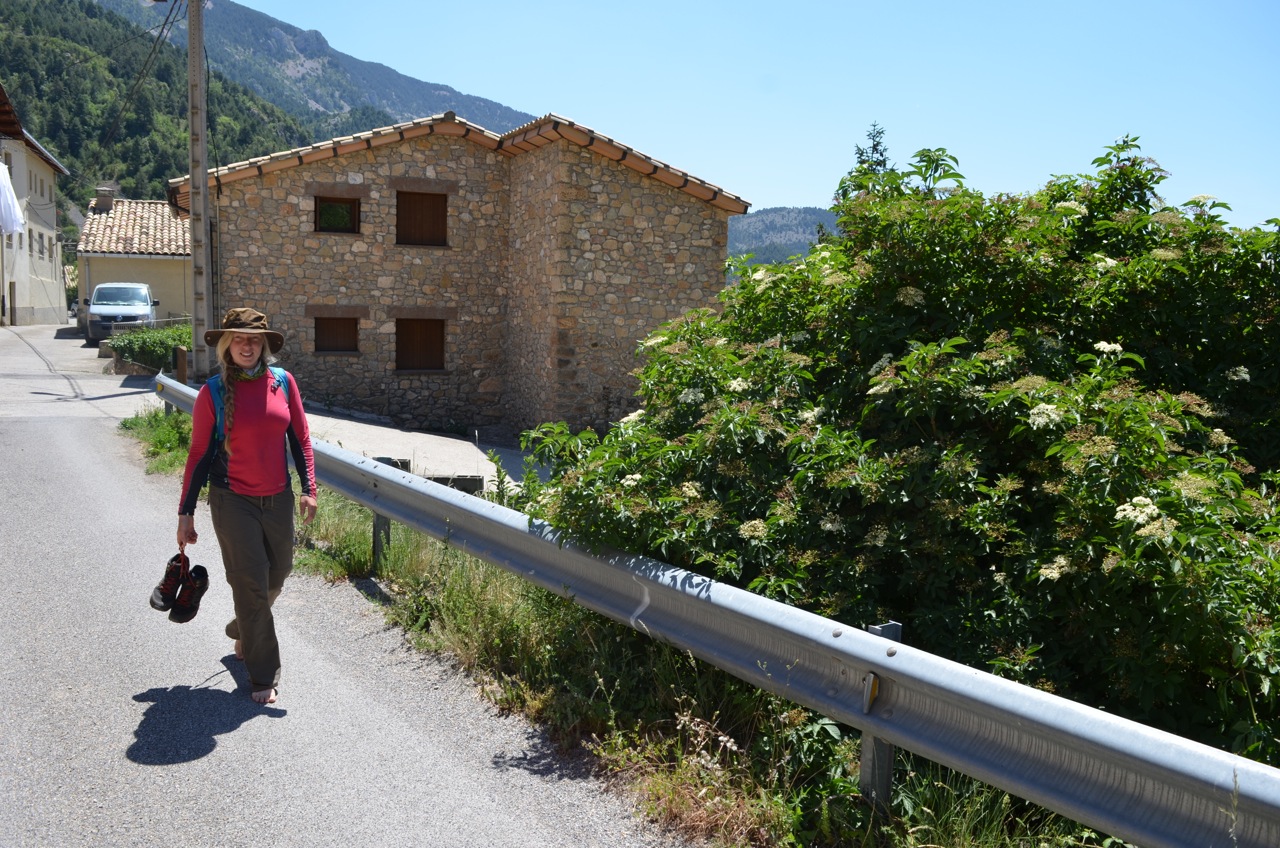
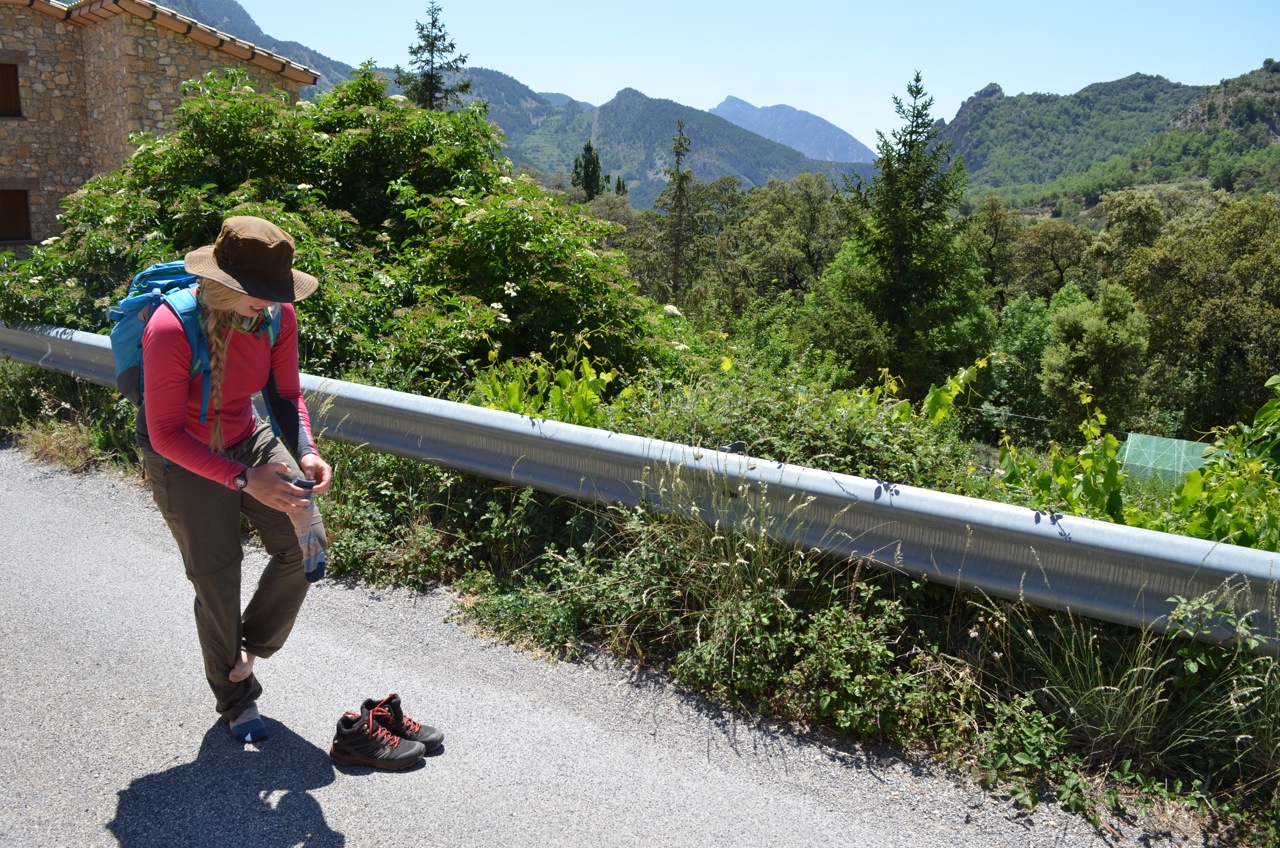
We spent the morning writing up the blog from the last few days – we’ve been doing so much cool stuff that we haven’t had time to update it. We then headed to Cal La Lluisa to upload everything, check emails etc. We both walked barefoot down the road, and it felt pretty good apart from the occasional sharp stone. We were also happy to avoid this poo, although the butterflies seemed to appreciate it.
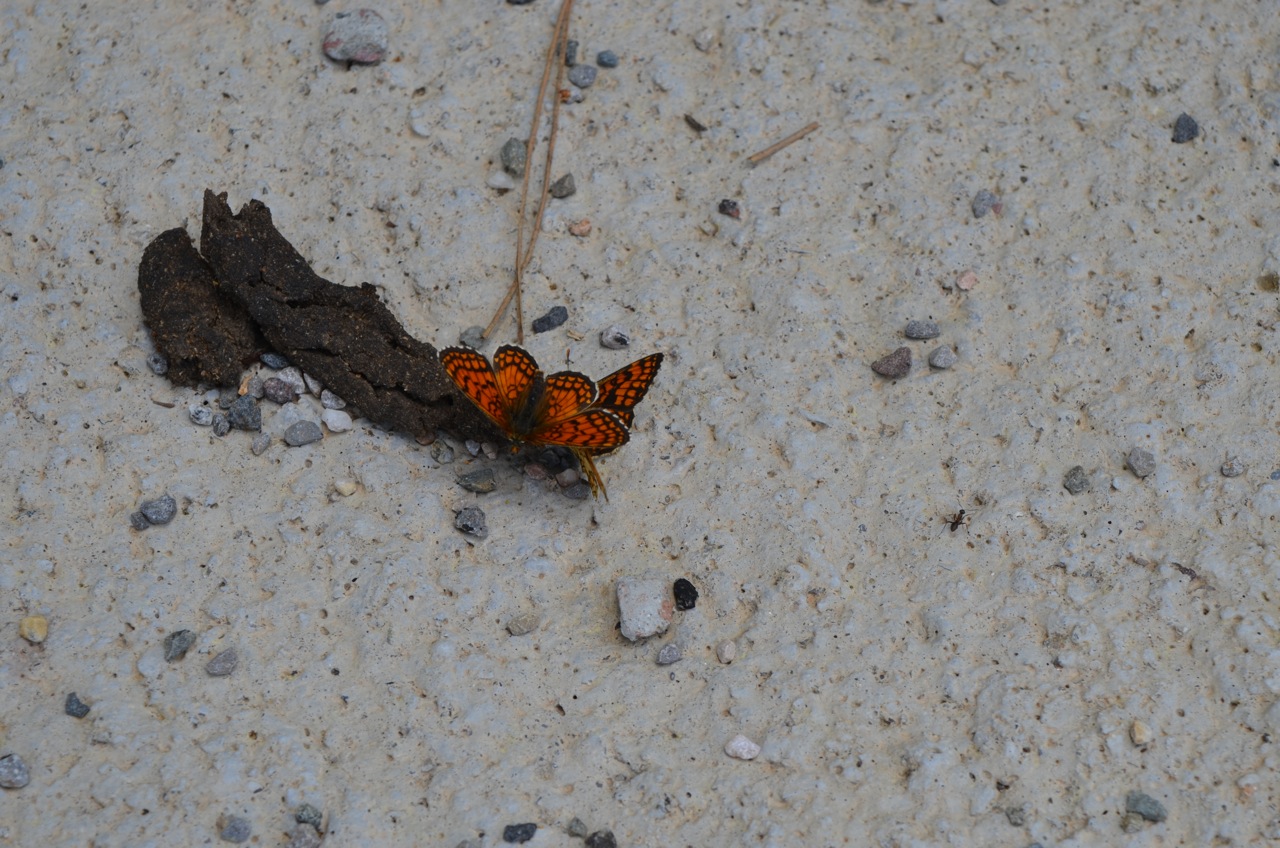
Mmmm, tasty
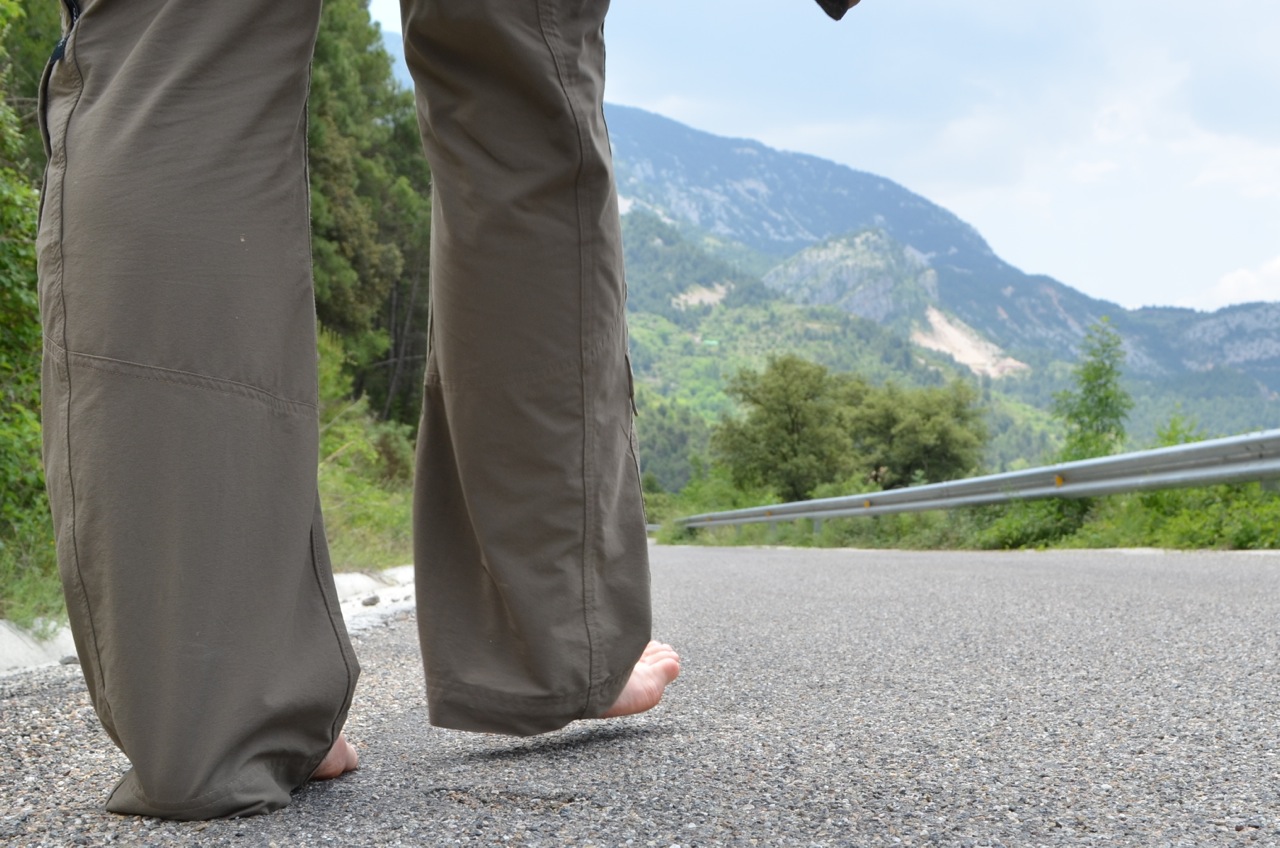
Mmmm, tasty

Arty nonsense

Arty nonsense

I stuck to coffee in the restaurant, but Anna had had enough of fruit teas and decided to try a mystery bottle from the top shelf. It turned out it is called Ratafia and is something that people make at home all over the Pyrenees. It has up to 50 different plants in it, which vary from valley to valley, and is fermented outside – apparently being exposed to moonlight is important in the process! All I can say is that this one was bloody delicious, like a fortified wine with added herbs that made you feel like it was doing you good! It was also about 20% alcohol but served in a half pint glass, so by the time we left we were feeling a bit light headed!

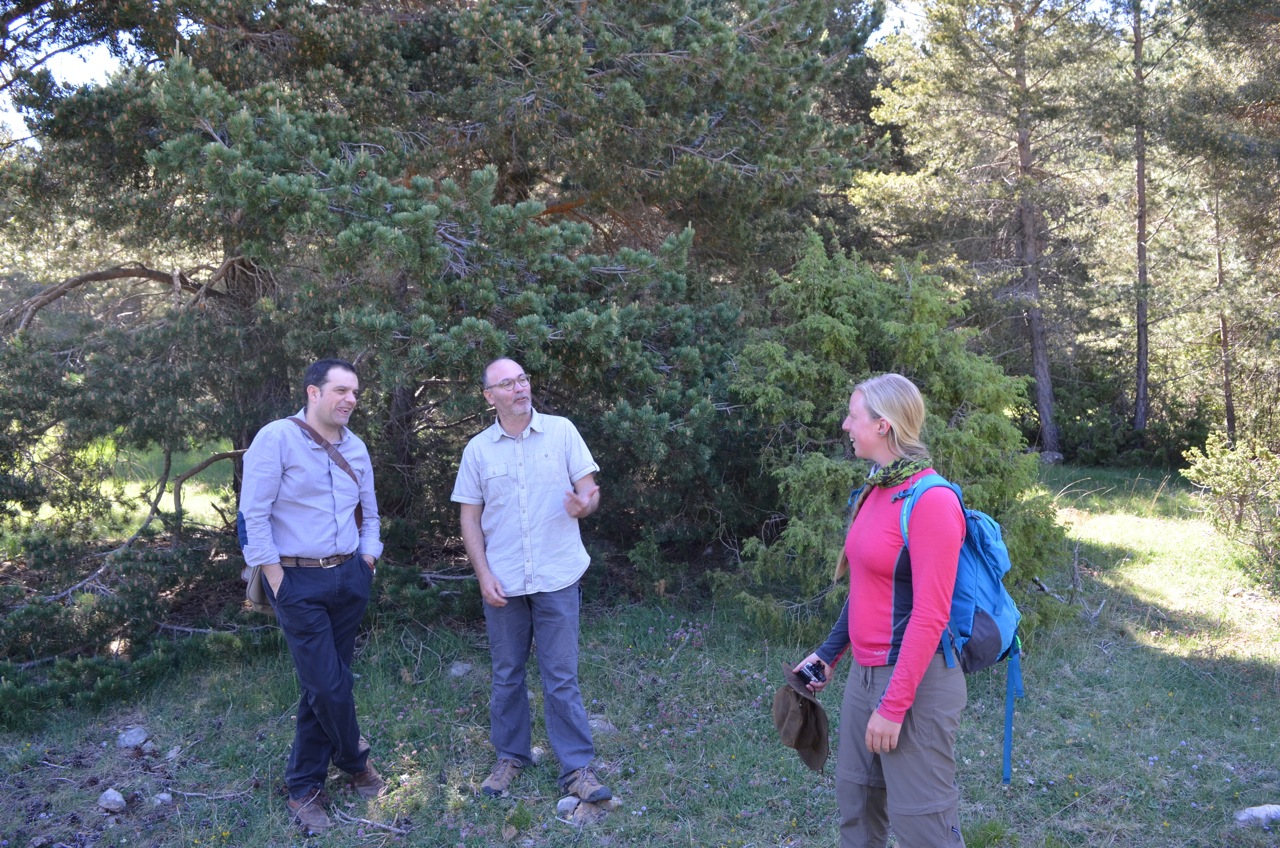
We walked down to the village to catch up with Silvia – she wanted to take us to one of the Project areas with her husband Rafael so they could show us some work we could get on with tomorrow. We waited in the other restaurant (there are two!) for a while, and then she and Rafael came to collect us.

We left the village and wound our way up another gravel track to the top of a small hill on the side of the mountain. The project is basically a herb garden; they are growing herbs in lots of different microclimates in the area to see which microclimates are best suited for each species. Our job for tomorrow is to weed the plots. Rafael gave us a demonstration of what to do. We said we felt a bit bad that he was doing all the work, but he said that one person working and three people watching was quite normal in Spain! After the demo we went and checked out a cool little cave formed by a spring. The water from here works its way down the hill and forms the village supply. Apparently natural water supplies are quite common here and are regularly tested by the government to ensure they’re safe to drink – better than paying for horrible hard water at home!

Silvia asked us if we had time before dinner to see their chickens. Of course we did, being basically tramps these days (in the best sense of the word). So we went up another track, at the top of which was a massive black and white dog bounding around and checking out the car. This was Silvia and Rafael’s Pyrenean Mountain Dog (Great Pyrenees). He is only eight months old! Apparently he will put on another 20 kg before he is fully grown, so will weigh in at about 60 kg.
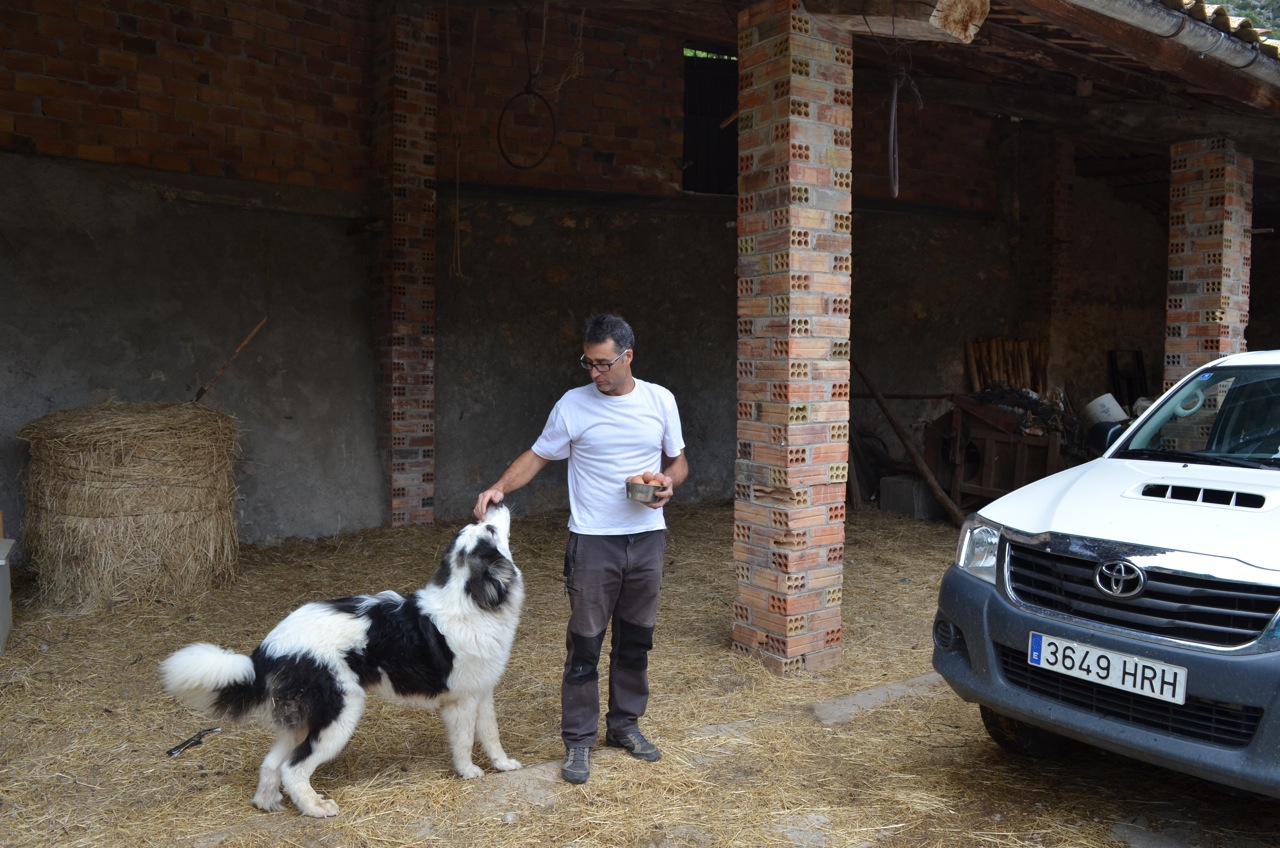
Rafael and his massive baby guard dog

Rafael with some eggs and his massive baby guard dog

These dogs aren’t used to herd animals, they are to protect them from predators, including eagles and wolves (which used to be more common here). They are raised from pups in the company of the animals they will guard, so that they become family. It’s important not to pet and fuss them too much because they also need to guard against people sometimes. Silvia said she struggled with that, and so did we! Apparently you have to be careful to pick the dogs with the right temperament; the ones who are too nice are no good for guarding. I said I thought there would be a good market for those nice dogs in the UK. So fluffy!
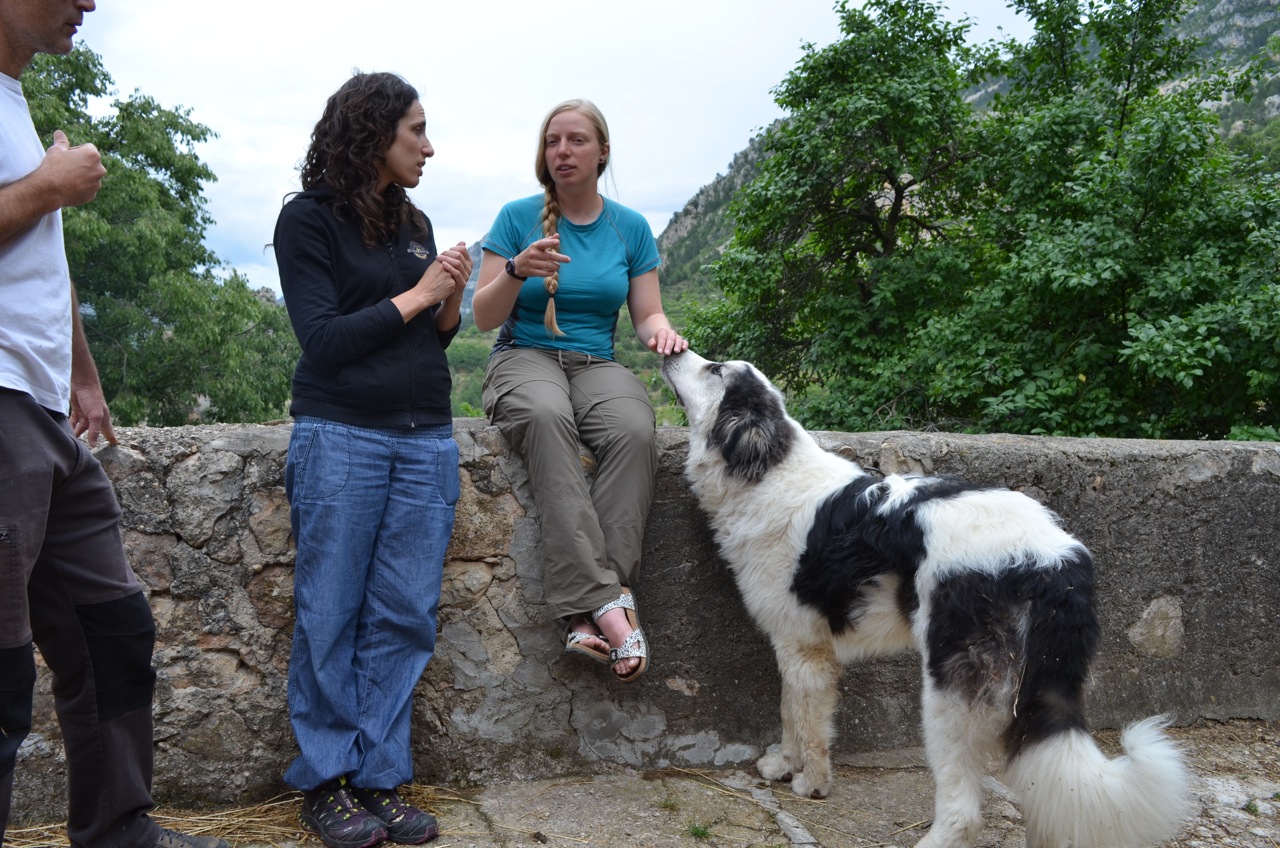
Anna fussing the beast

Anna fussing the beast

This guy was being used to guard chickens. Rafael told us that the hardest thing for the dog is to guard against predatory birds, because it’s hard for him to tell the difference from the chickens. When they started this little family they lost one chicken and had another injured, probably to eagles, but recently there haven’t been any incidents so they think the dog has learned his job!

Guarding the family

Guarding the family 

Rafael said that he had heard of rewilding projects in the UK to re-introduce big predators, and he said that these dogs could be part of the solution to protect livestock. I think this would be a great idea; I would definitely not mess with these chickens – look at those teeth!
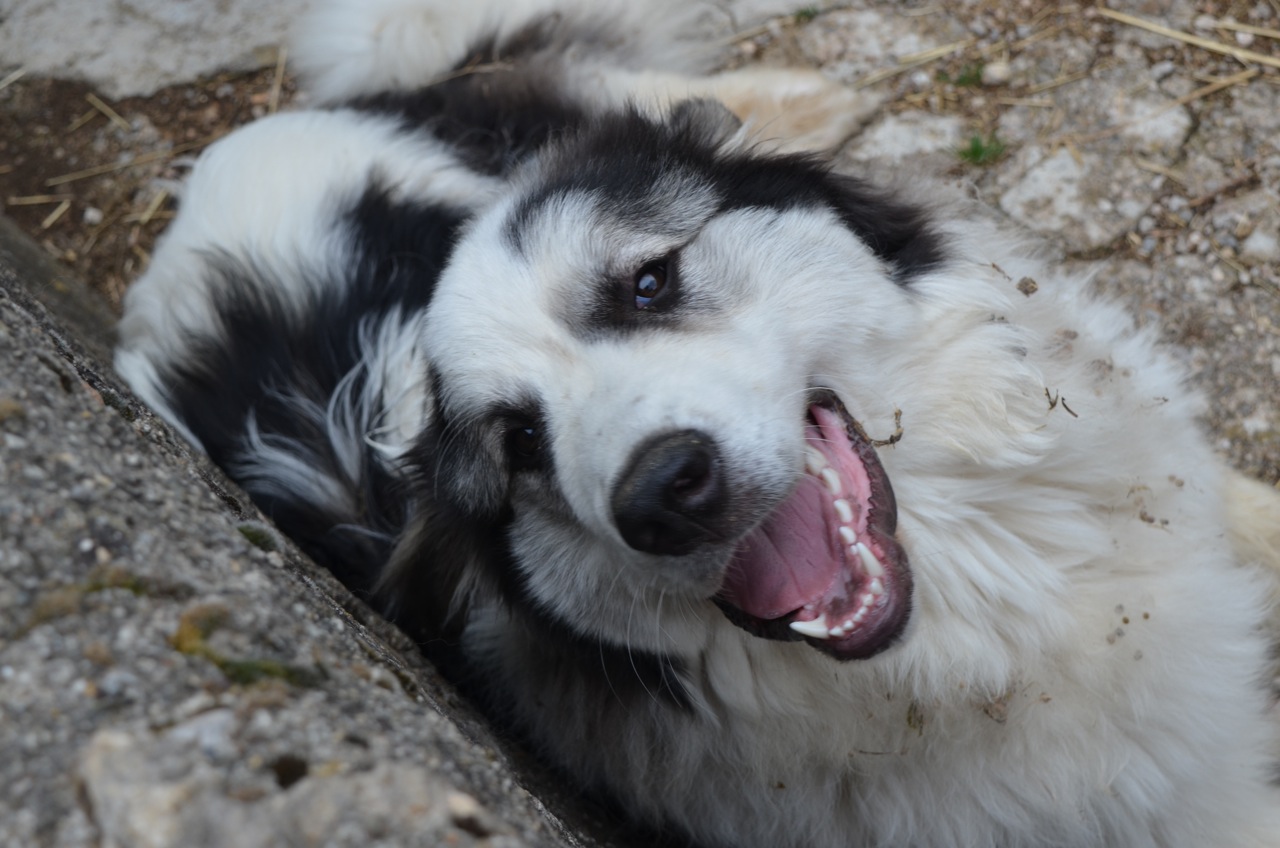
Teeth!

Teeth!

We headed back down the hill and Silvia and Rafael drove us home. One the way they insisted on stopping at their place to give us some of their home-grown potatoes. They had another dog at home, a little spaniel who was completely mental, jumping up at us and rolling over to get his tummy tickled. Silvia said he was very nervous, Rafael added that this is what happens when you cross a Spanish dog with a French dog. I don’t know if this is always true but I wasn’t going to argue.

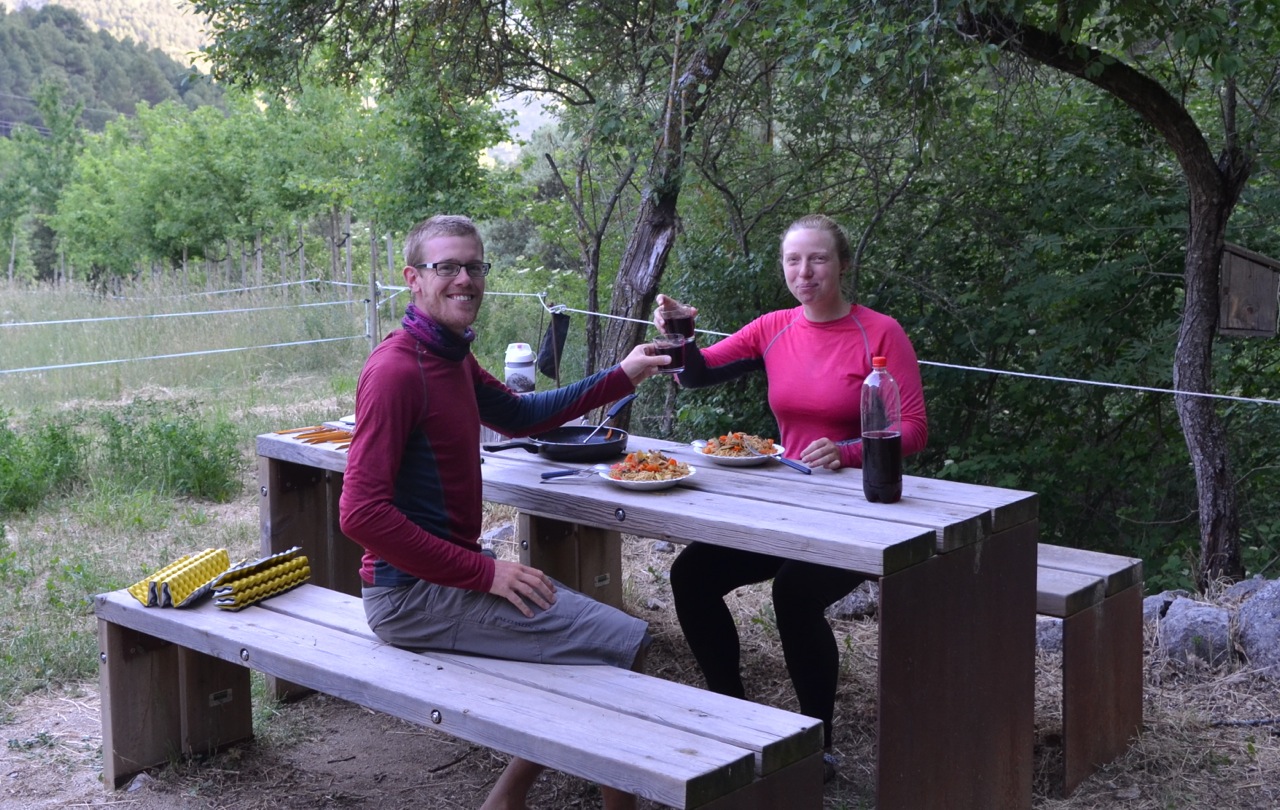
After the guys dropped us at home we started cooking a much-needed dinner. Halfway through there was a knock at the door – Silvia had brought us gardening gloves. These people are too kind! Eventually we had dinner – sausage and mash with amazing Spanish sausage from the butcher in Organya. So good! Now all we need to do is get started early tomorrow and do sufficient weeding to justify all the incredible kindness we’ve been shown in our time here. A tall order!

– Dave
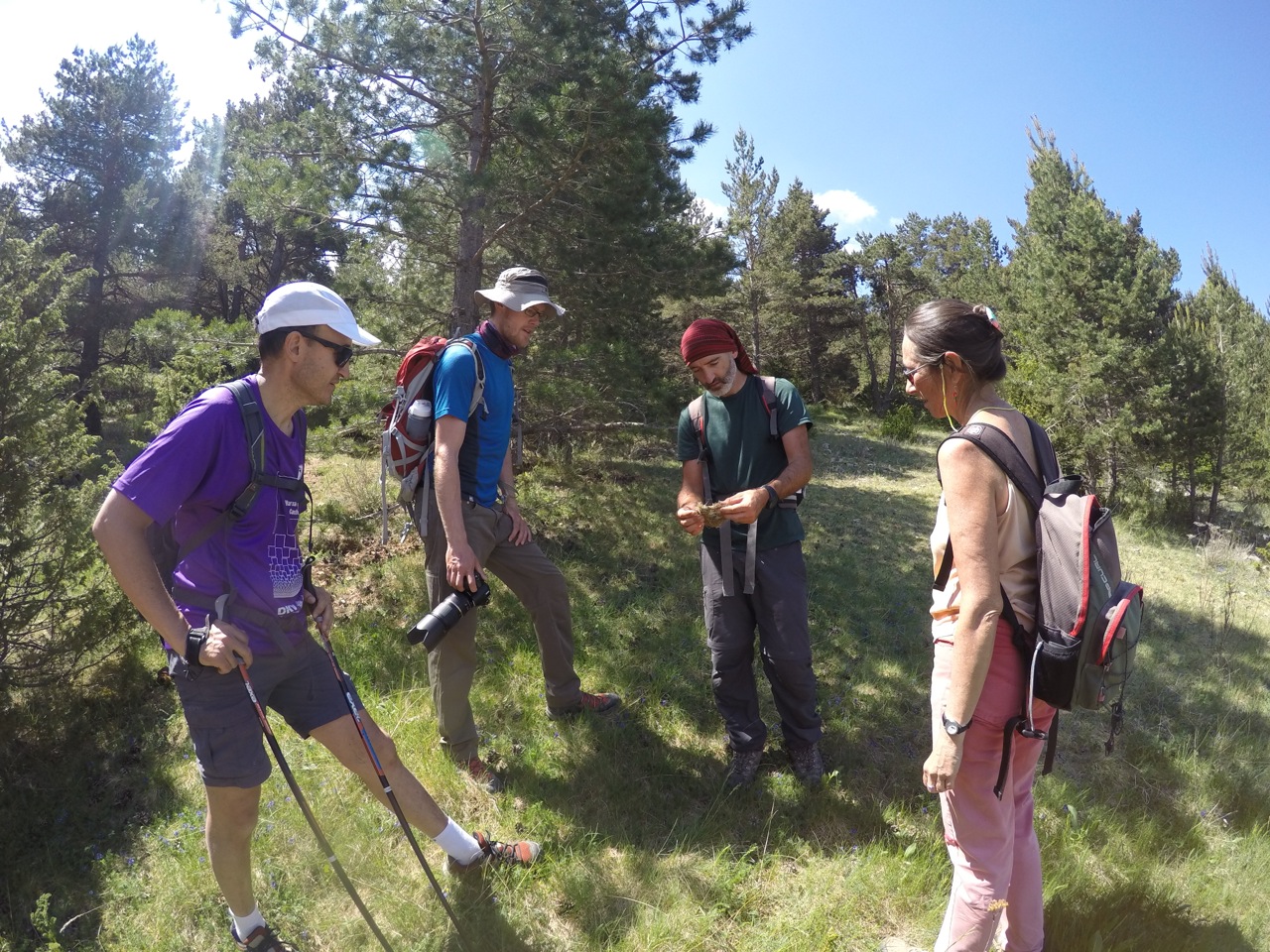
Hiking with a guide

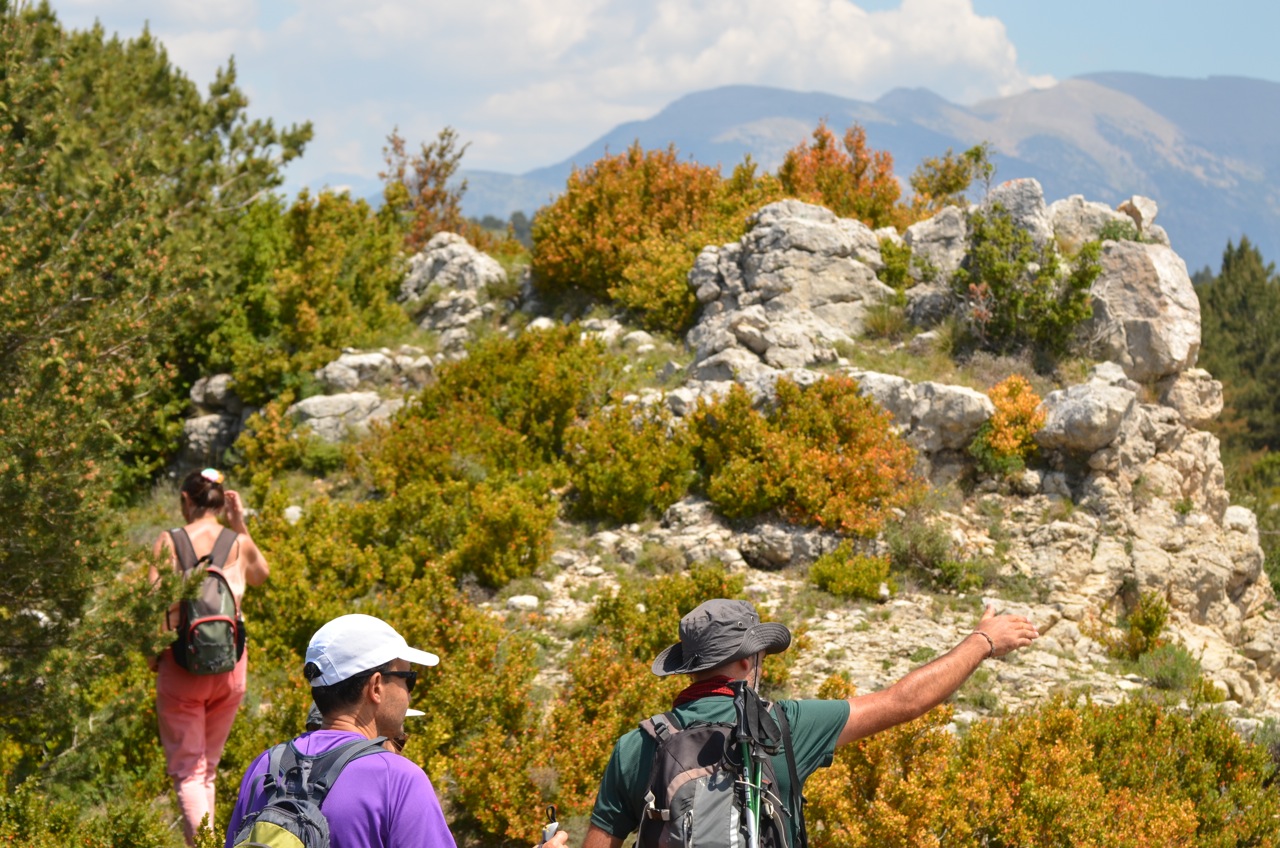
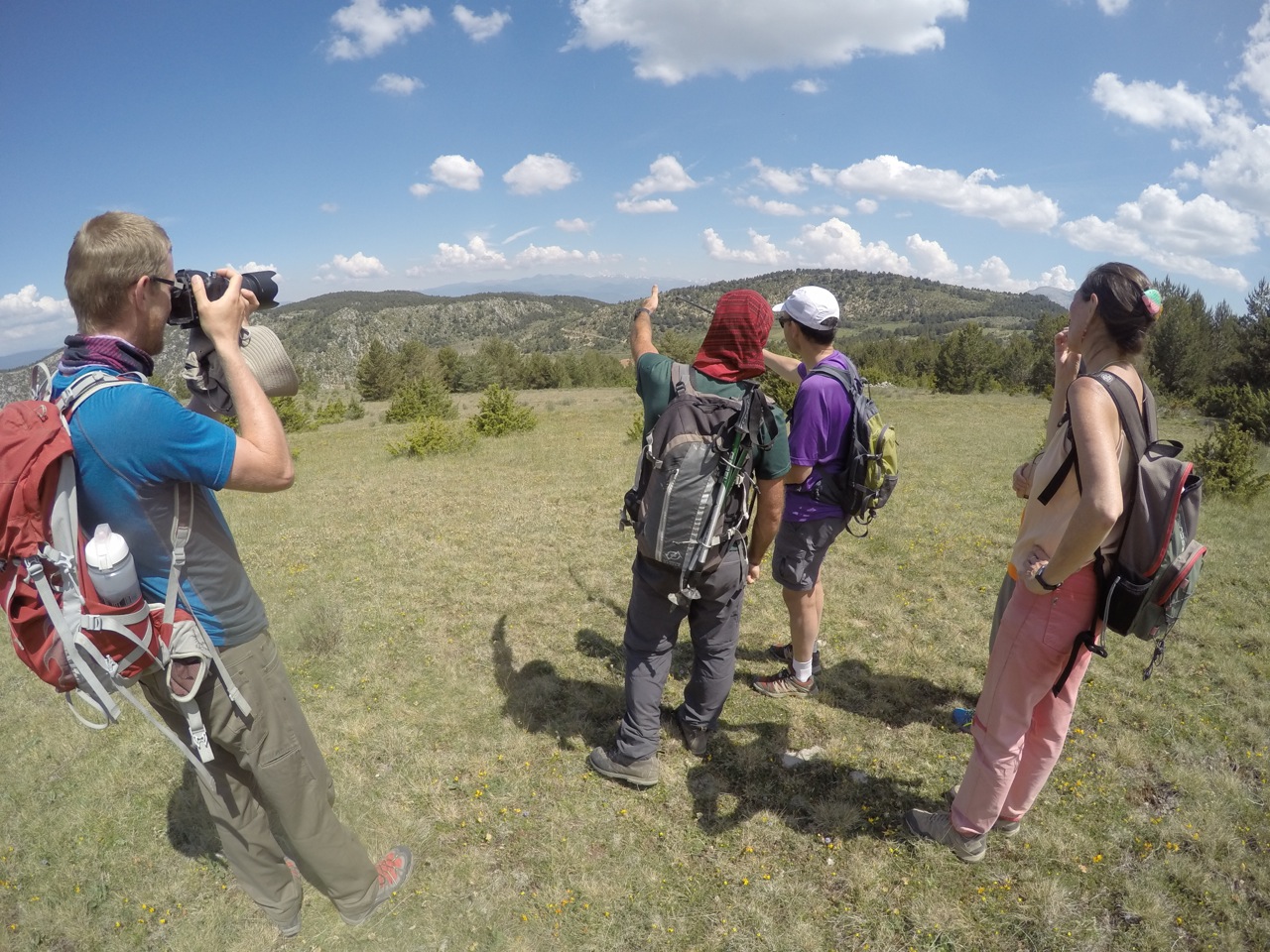
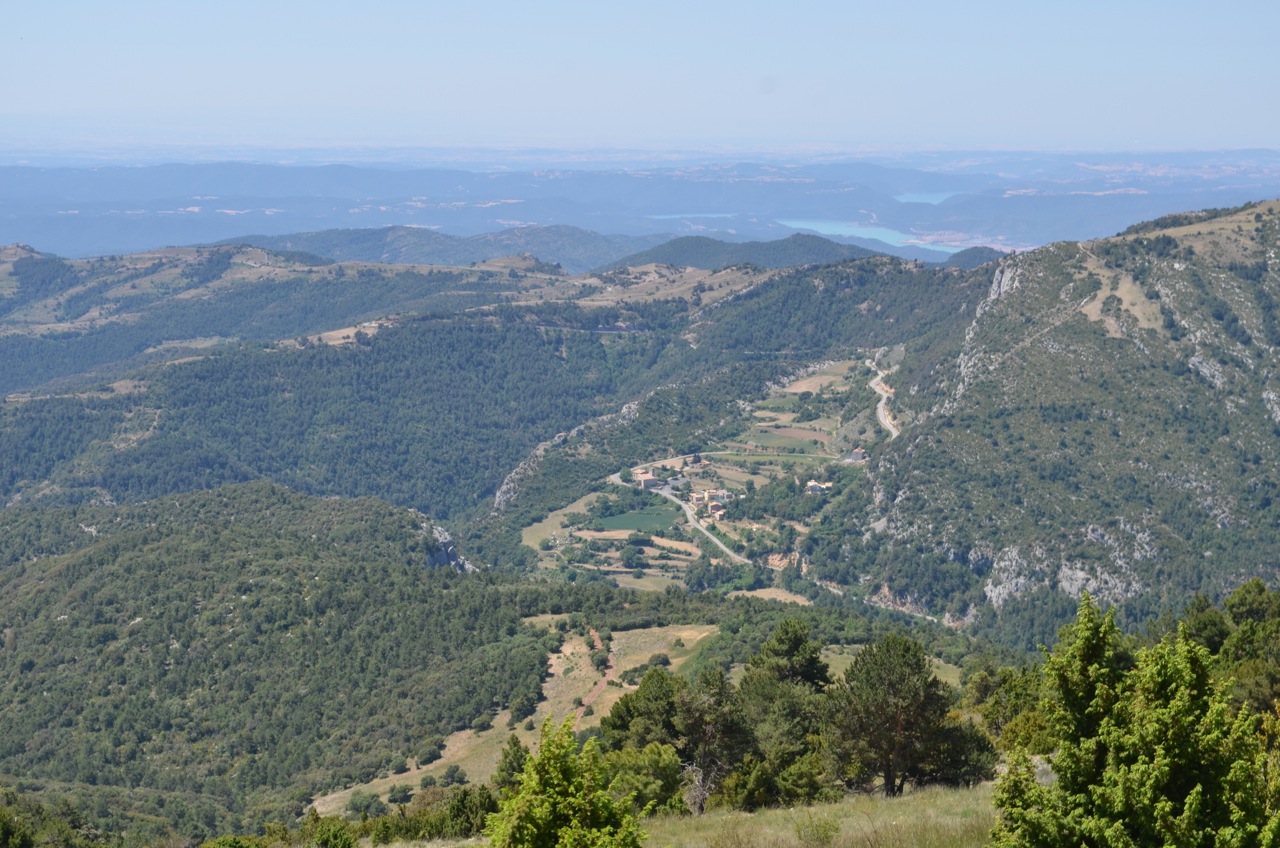
We breakfasted with Carles and enjoyed more nice chats over museli. Then we drove down to the visitor centre in Alinya at 10am to meet the hikers he would be guiding. They were three local people from La Seu, down in the valley. We all introduced ourselves then Carles gave us the plan for the day – we would drive to a village further up the mountain then walk up past some huge rock formations to a ridge. From there we could enjoy the great views before heading back down a different route to make a loop back to the village. We would be going from about 1200m to around 1750m.

So off we went and parked the cars at the hillside village, the stone buildings overlooking the valley below. We walked past more potato caves and learned about the traditional farming methods here. The people would have kept the potatoes in the caves until the price was good enough to make the long journey down to the valley by mule to sell the potatoes at the market. As well as potatoes, they would have grown cereal crops here in the terraced fields on the hills and kept sheep and goats.

Carles showing us a fallen bird's nest

Carles showing us a fallen bird’s nest

We walked between two huge rocks on our way up the valley. The mountains here were formed by tectonic movements and have since been eroded by wind and water. The harder rock has resisted erosion for longer and so you can see huge sections of mountain sticking up out of the ground in places, forming ridges, peaks and ledges. The trees like to grow along the cracks, highlighting the layers in the rock, so you can see that the lines sometimes run horizontal, sometimes vertical and all other variations in between.

We walked passed different types of vegetation. At the beginning of the walk we were in a Mediterranean habitat with shrubs and oak trees. Then we went up into the Scots pine and juniper. Above us, starting around 1800m, were black pines that grew up to the tree line.

We walked through forest and then wildflower meadows to the ridge that was our summit for the day. The rocky ridge was exposed to the wind and, although calm today, all of the plants were growing close to the ground to protect themselves.

Up to the ridge

Up to the ridge

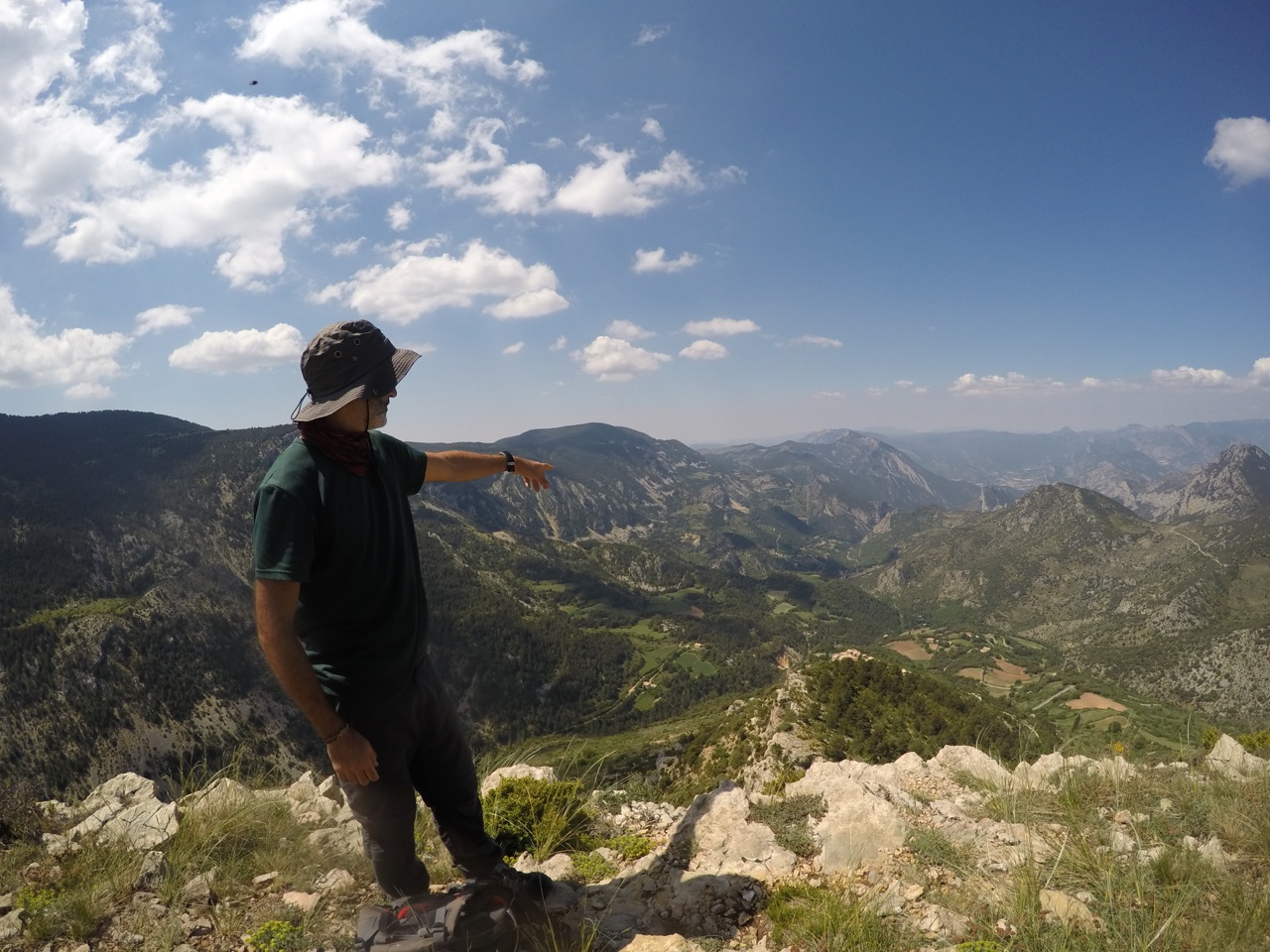
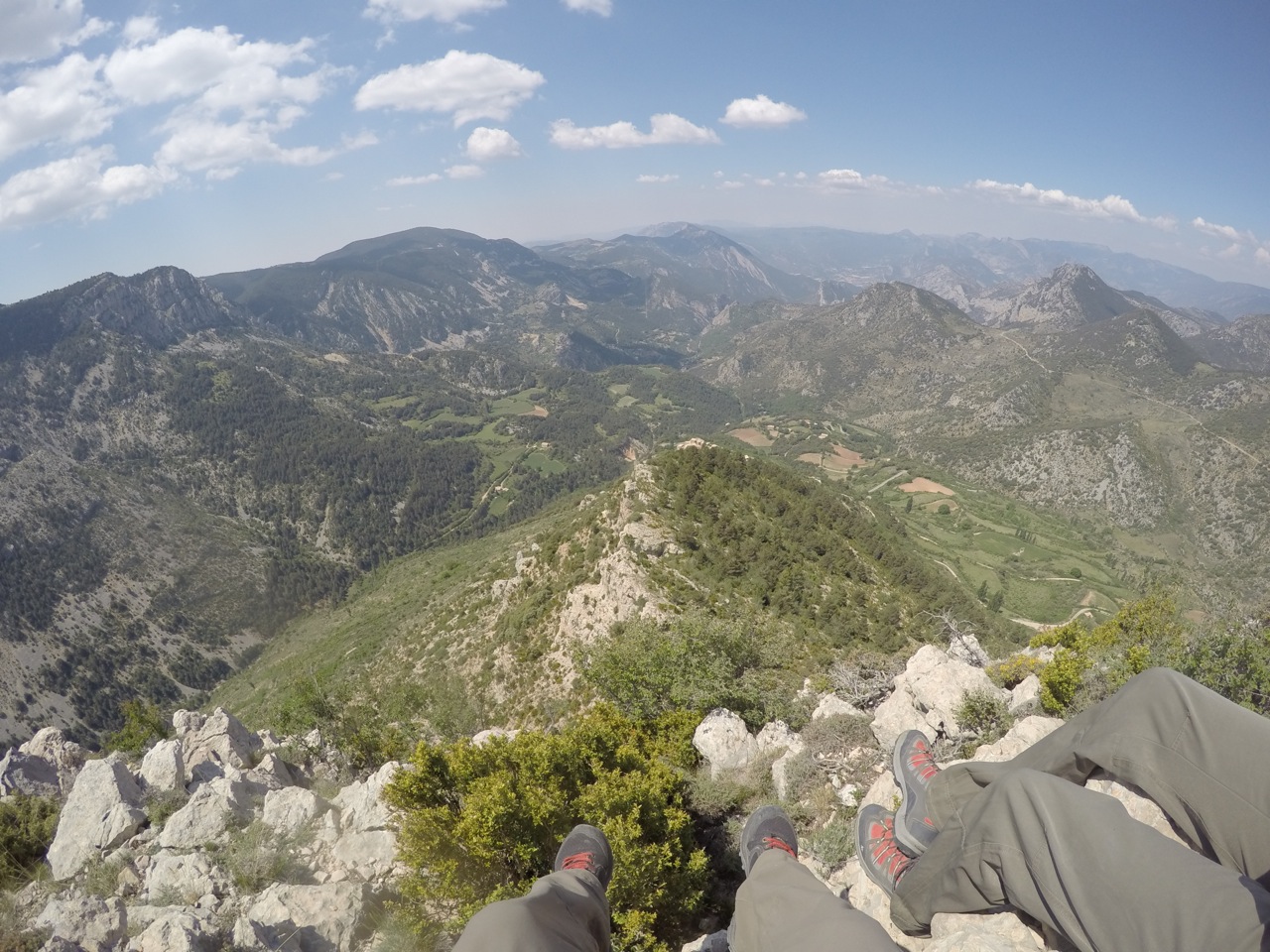
We stopped for lunch with fabulous views of the landscape. From there, the rock formations, human impact and vegetation patterns we had learned about were all on display.

Carles at the summit

Carles at the summit

Lunchtime

Lunchtime

After lunch, we walked back along the ridge and spotted a type of mountain goat called an isard! They’re very shy and it scampered up a crazy ledge to escape from us. Then we had to make our way down through some forest. It was an old trail that hadn’t been maintained and we scraped our way past Scots pine and spiky juniper bushes to make it out to the wildflower meadows once again.

Which summit is which?

Which summit is which?

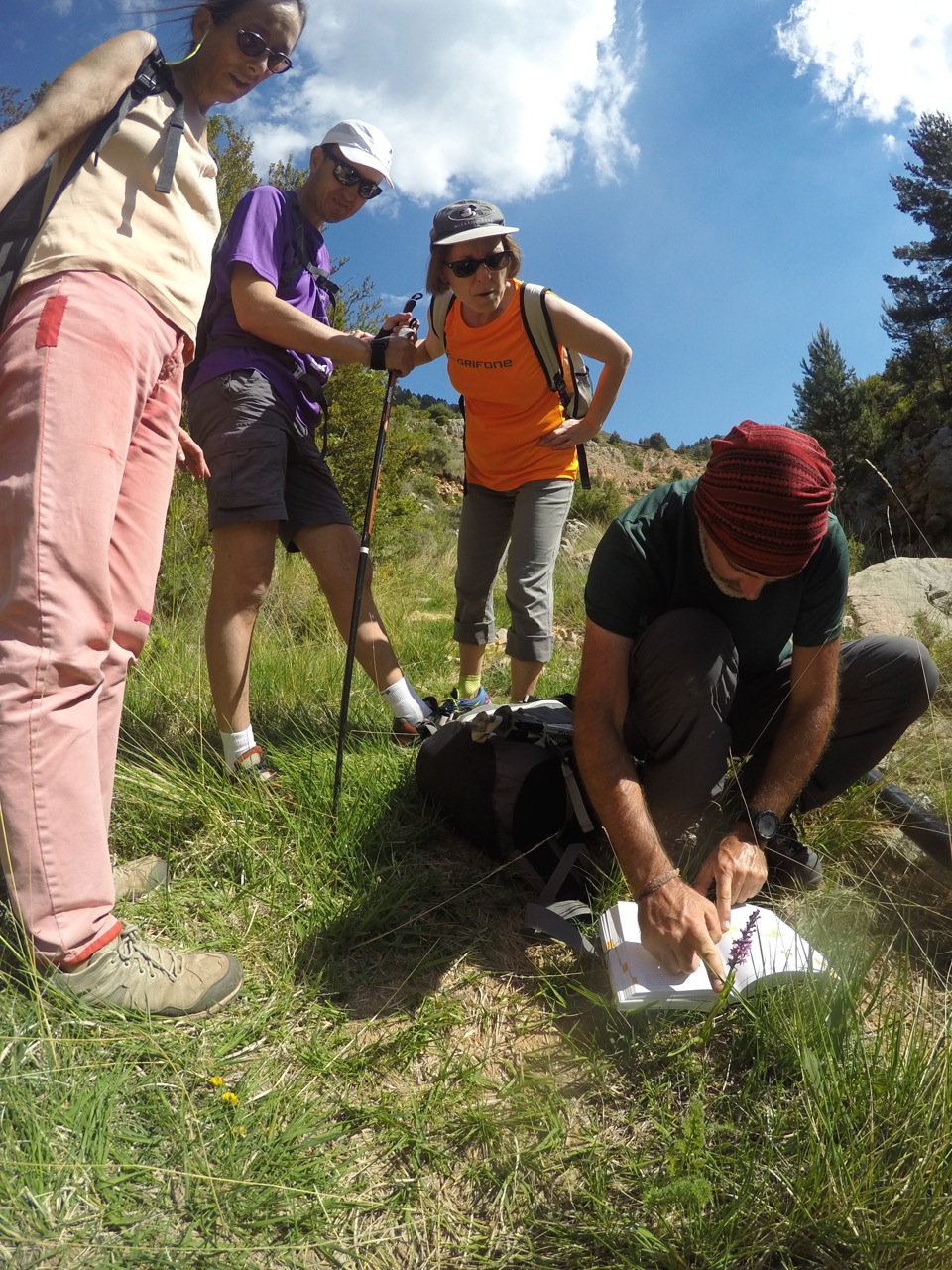
An orchid perhaps...

An orchid perhaps…

When we were about half way down, the three local hikers decided to take a short cut to the car since they were in a hurry to get back to town – Adieu! Then, with time on our hands, Carles decided to take us on a little detour.

There was a storm brewing in the north and a cool wind was blowing, sweet relief from the afternoon sun. We chatted about the valley, its people and its landscape and Carles told us some of what he’d learned from the people who had come on the walk. One of the women had grown up nearby and said that she had come to Alinya for mass with her parents. The village of Alinya used to have a rectory and a school. The rectory is now used as a visitor centre but the school is long run down. The lady said that the last rector here was a woman who had moved to Alinya to be away from it all but still in a community. She held mass and helped the people in the community until she was too old to stay on the mountain and moved to the valley before passing away in her 90s.

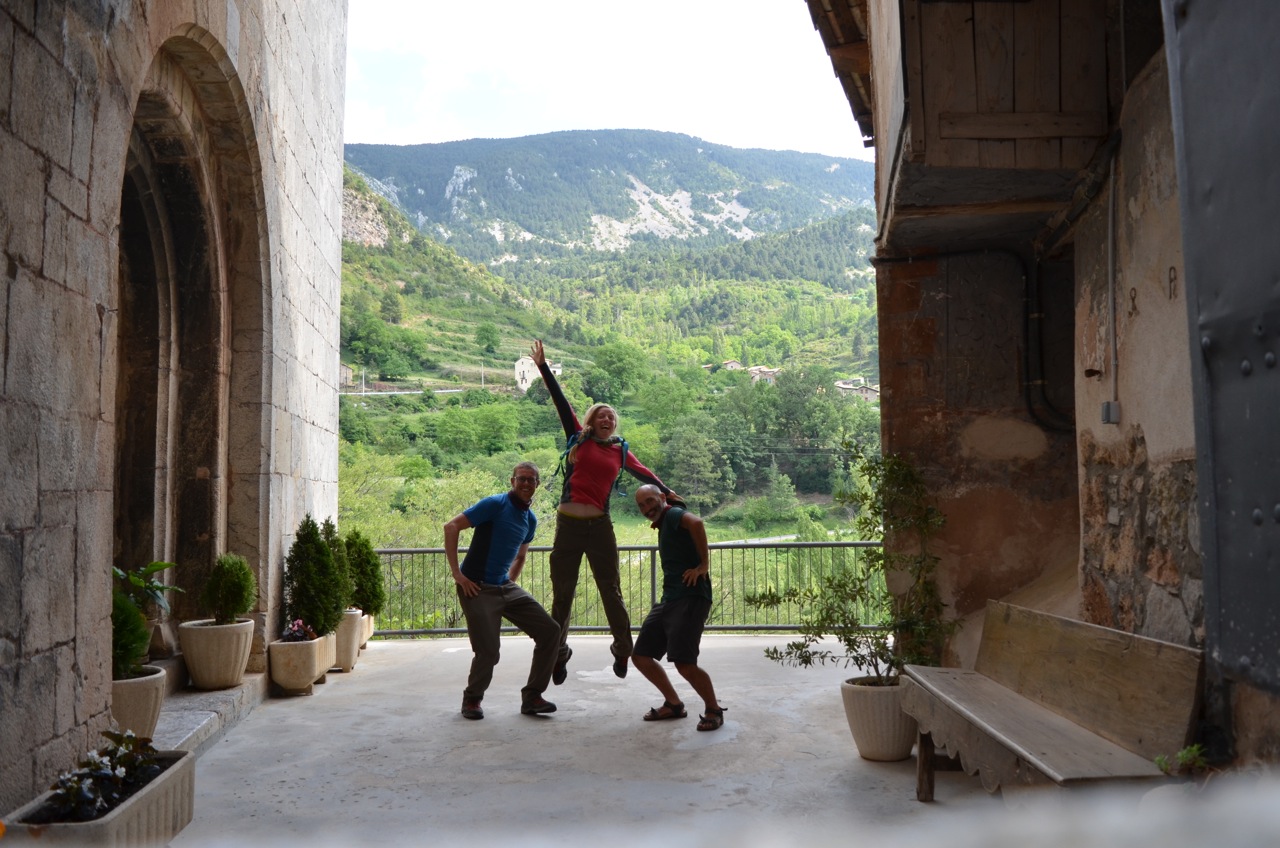
When we reached Alinya again, it was early evening and we looked at the rectory with fresh eyes. Then took a silly picture!

Outside the rectory

Outside the rectory

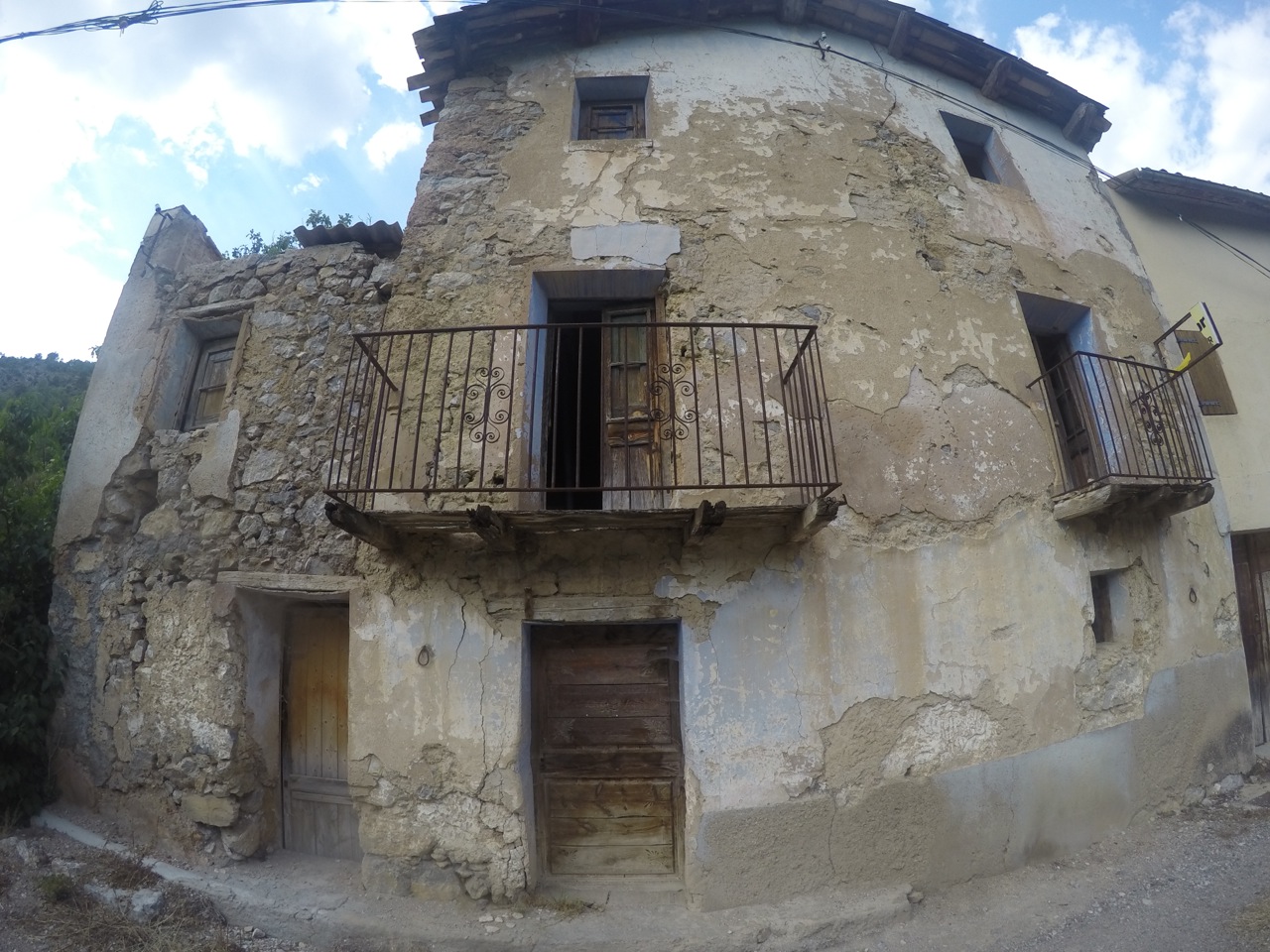
The old school

The old school

Carles was reluctant to head back home to his town near Barcelona so we all went for teas and coffees in Alinya. We spent hours talking about sustainable living, Transition Towns, cycle touring, inspiring adventurers, and our plans for the future. Carles and his girlfriend Anna had a lot of inspiring ideas! They grow their own food, she makes her own soap and they are part of a local co-orperative. Carles has plans to set up a community bike shop where you can learn to ride, rent bikes and go to the workshop to fix your bike. It felt so good to share stories and ideas with someone with similar values.

At 7pm we were hungry and Carles had to start his drive home so we parted ways. He’s a great guy, I hope we will keep in touch!

Dave and I headed home on the walking trail, which is much shorter and steeper than the road. We collected a few elderflower heads and soaked them overnight to make cordial.  We had fajitas for dinner (sort of – the supermarkets here don’t have much in the way of foreign food, so there were a few substitutes to be made!), and went to bed.

I’m hoping we get a day off tomorrow – there’s so much to catch up on! Whoever would have thought you could be so busy without having a job!

– Anna

Forestry fun

Today was a fascinating day! We went with the students again, this time to a forest management project.
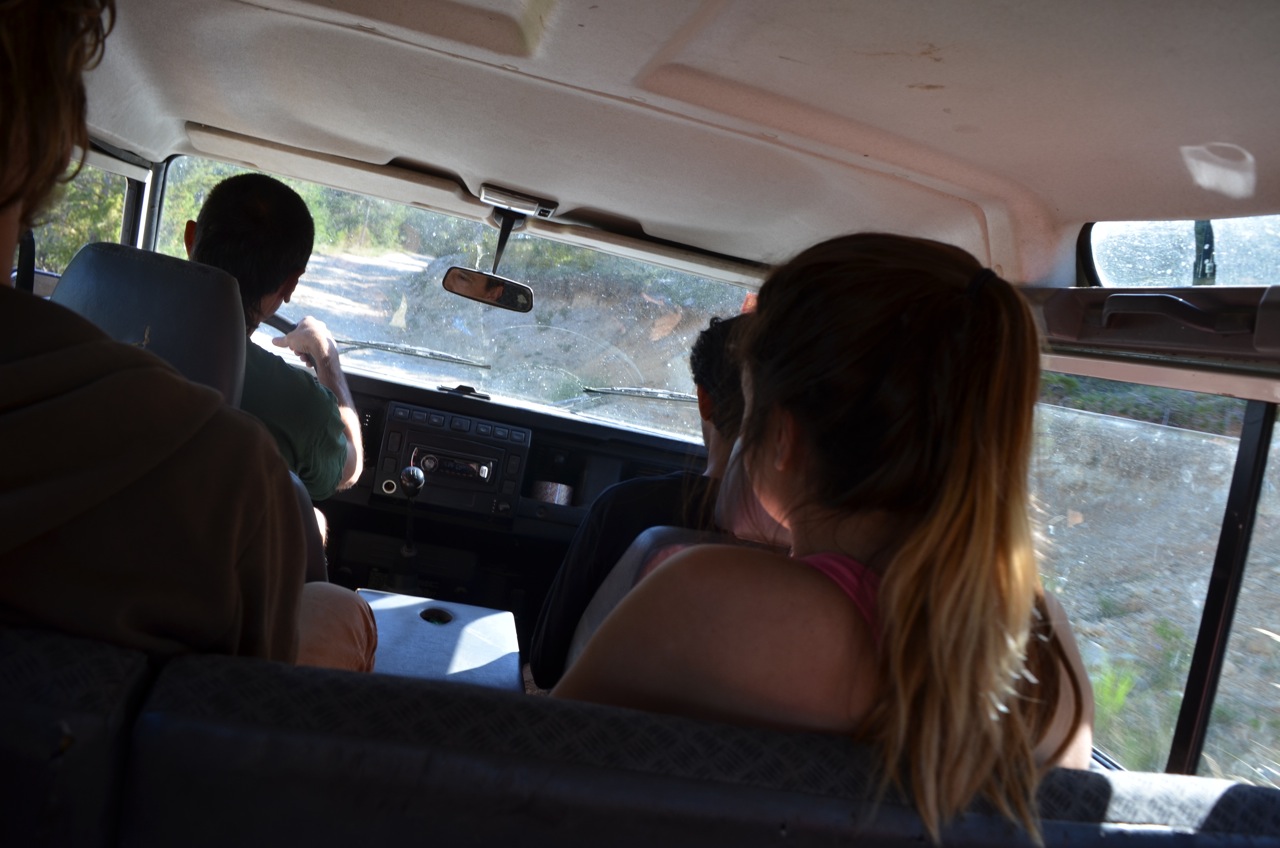
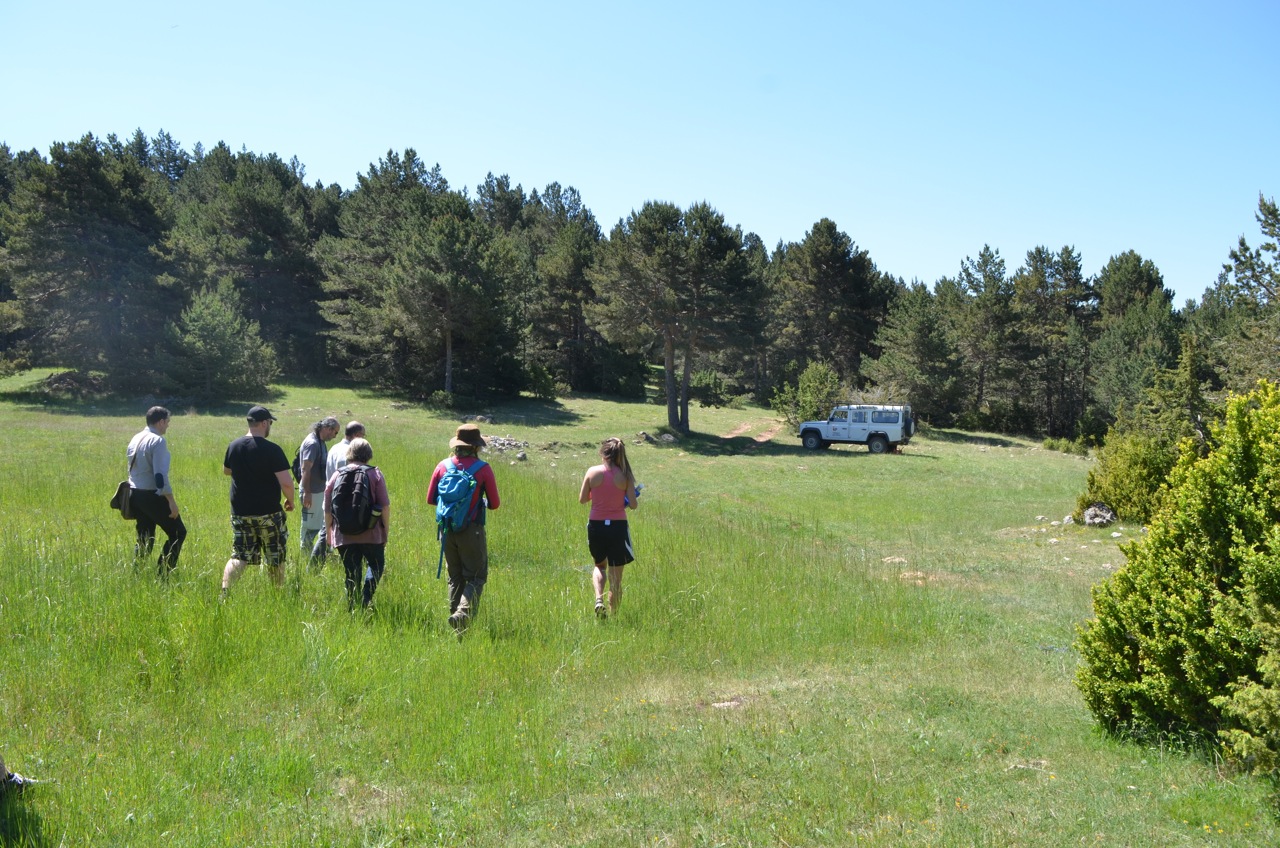
The area we visited was much higher than where we are staying in Alinya. Our ride for the day was a trusty Landrover Defender. We definitely put it through its paces grinding up the mountain on a rutted dirt track!
The camera is horizontal

Another pothole!

The project area used to be used for agriculture (growing potatoes and grazing) but now a lot of the land has been abandoned and with no grazing pressure the forest is growing back over the small areas of grassland.  That could be considered quite a positive development, but here they are not so keen on having unbroken wild forest. The Foundation that owns the land has started a project to develop the new woodlands into a commercial forest that will preserve some areas of open land, and provide job opportunities (as lumberjacks) for people at risk of social exclusion – mostly due to mental disability.
We learned that the project is run on a not for profit basis, but it is also unfunded. The Manager’s job is to ensure employment for as many people as possible, to preserve grassland areas AND to balance the books exactly – he can’t make a loss. Not an easy task when he is working with poor quality timber in a remote mountainside with only a gravel track for access! The one advantage is that the Foundation allows use of the land for free, reducing the cost base.
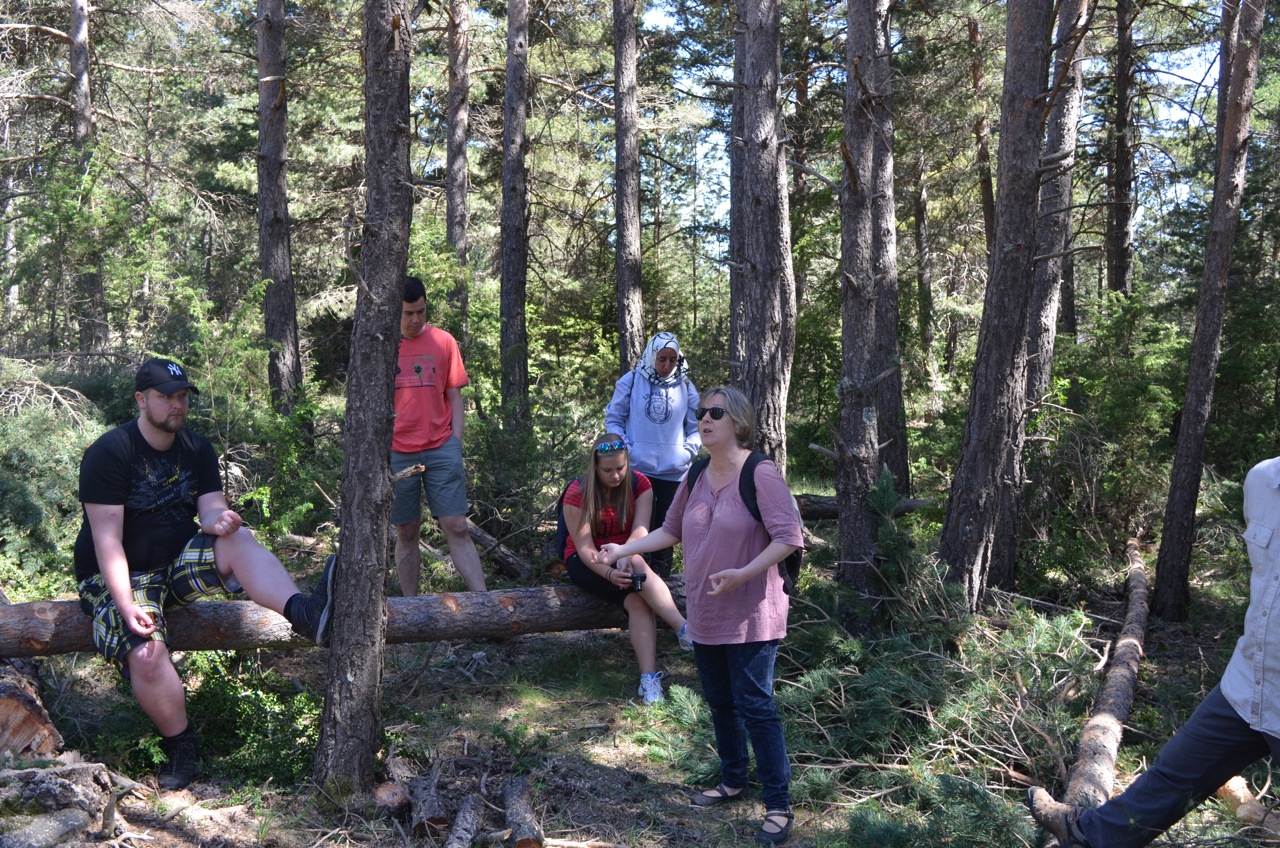
All this was explained to us, after which Anna dropped the question “so if it isn’t profitable, why not just leave the trees where they are?”. I was waiting for it, but still enjoyed it when it came. The answer was that the Foundation’s priority is people,  they want to use the land to provide opportunities for people to work, while managing the land in a sustainable way.
Anna seeking answers

Anna seeking answers

We could see that the trees we were standing under were only 50-60 years old. We learned from one of the Professors that Spain was mostly deforested during the days when Spain was a superpower (building the armada among other things), and that was only turned around beginning in the 1930s with a huge reforestation program, which even continued under the Franco dictatorship. So Spain has a lot of young forest but hardly any old growth. The forests are now expanding naturally; approximately 65% of annual growth is harvested per year, meaning 35% of annual growth is left standing. In areas like the one we were in, this is considered a problem because the forests are encroaching on grassland. The grassland areas that are being lost contain a different ecosystem to the forest – losing the grassland means losing biodiversity. Coming from the UK where we have entire national parks full of grass, the idea of preserving grassland is a bit strange. Me and Anna want to look up how biodiverse grasslands actually are compared with forests. We think forests are better, but lets run with it for now!
The Prof - loves grassland

The Prof – loves grassland

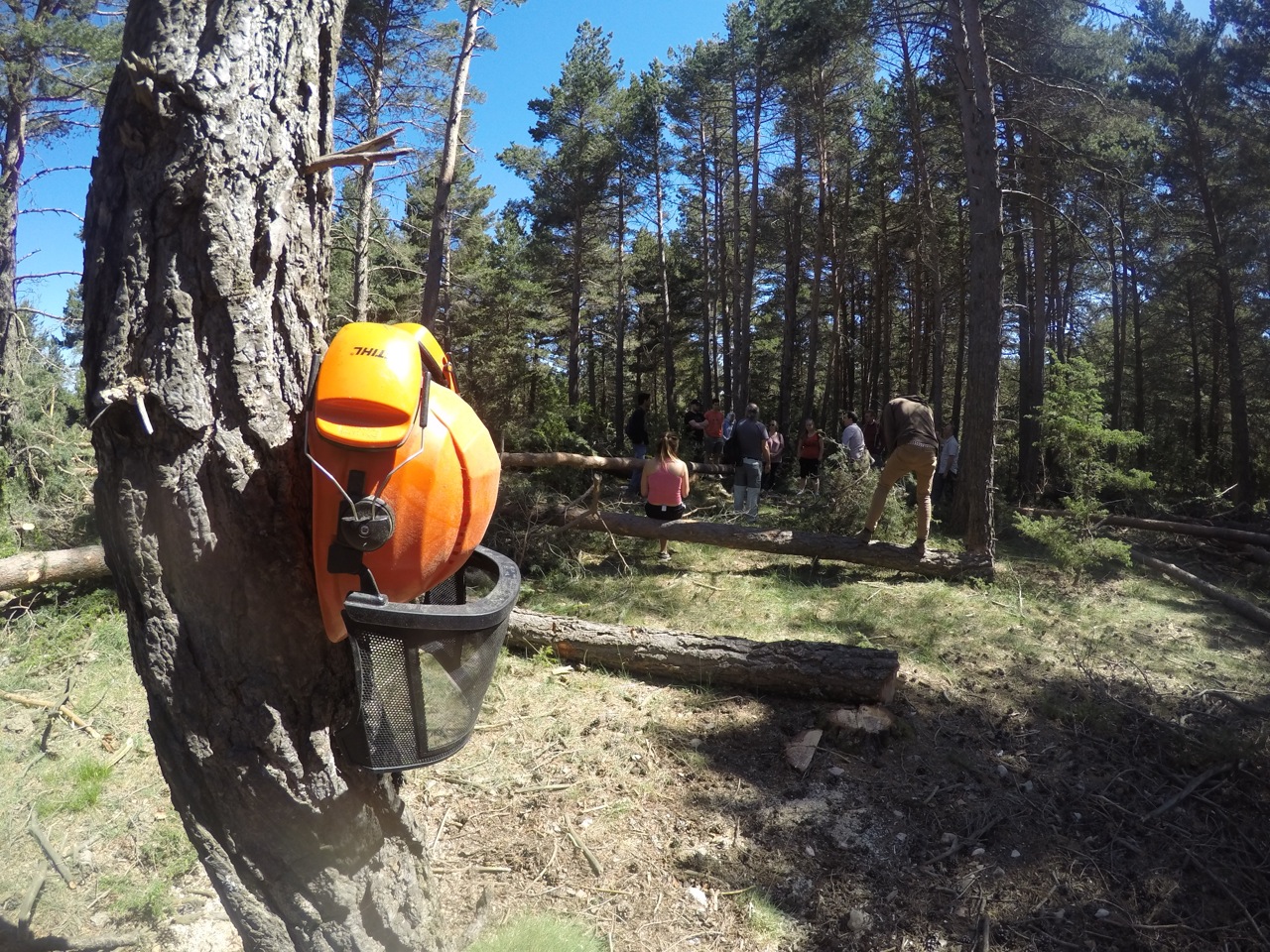
We went to an area where the lumberjacks had just been working. The Manager told us that in this stage they are basically clearing out the crooked or otherwise non-uniform trees to allow more space for the straight ones to grow – this will make them more profitable when they are harvested in 10-15 years’ time. The wood that is felled now will either go to the sawmills as lower grade timber, or be chipped and dried for use as biomass fuel. Only the trunks are taken, branches and needles are left as they are unprofitable, as a side benefit they return nutrients to the soil and provide habitat for other flora and fauna.
Work area

Work area

Approximately 50% of the standing wood is being removed during this phase. Apparently there is no need for replanting as regeneration occurs naturally, and the soil is fertile enough to cope with the removal of trees without becoming nutrient deprived. Not sure how long for though, and it wasn’t clarified at the time.

Walking back across the endangered habitat!

Walking back across the endangered habitat!

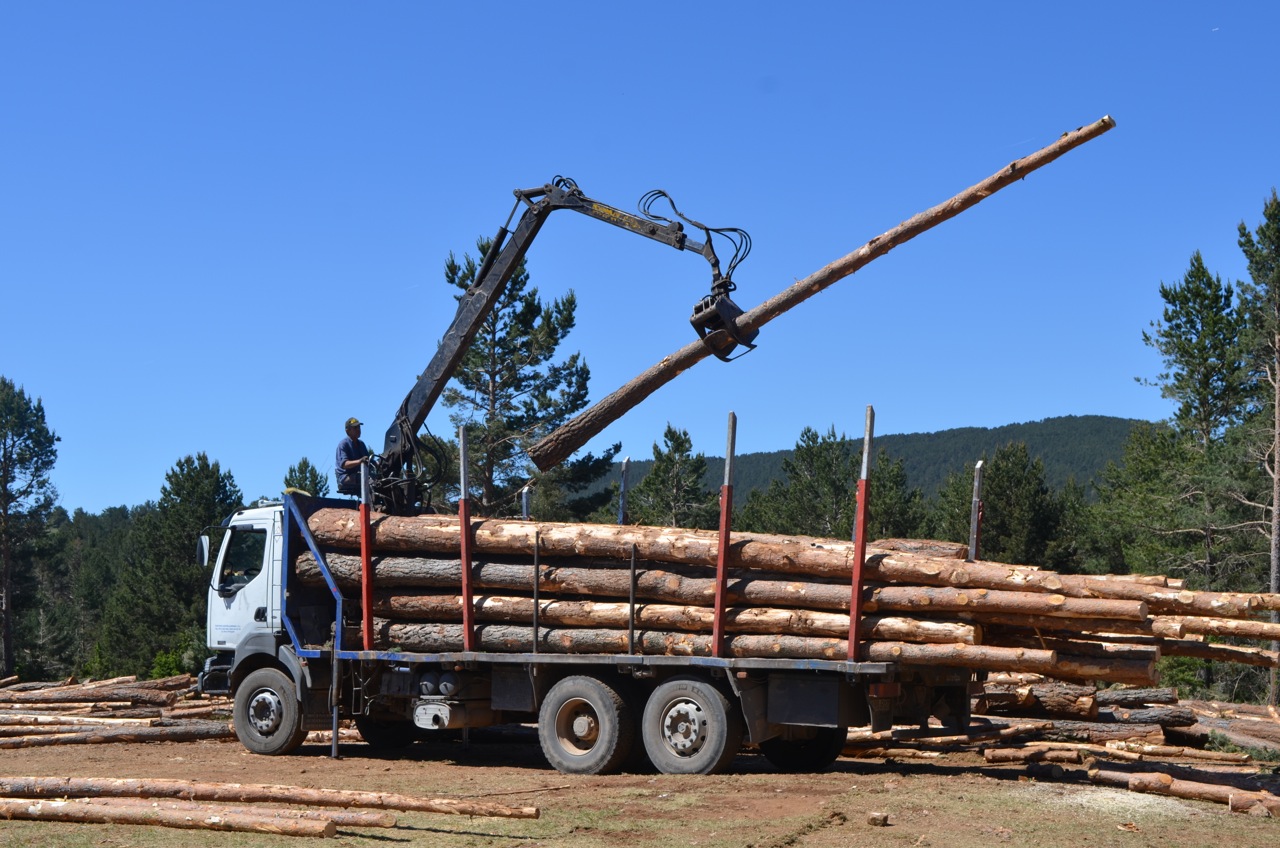
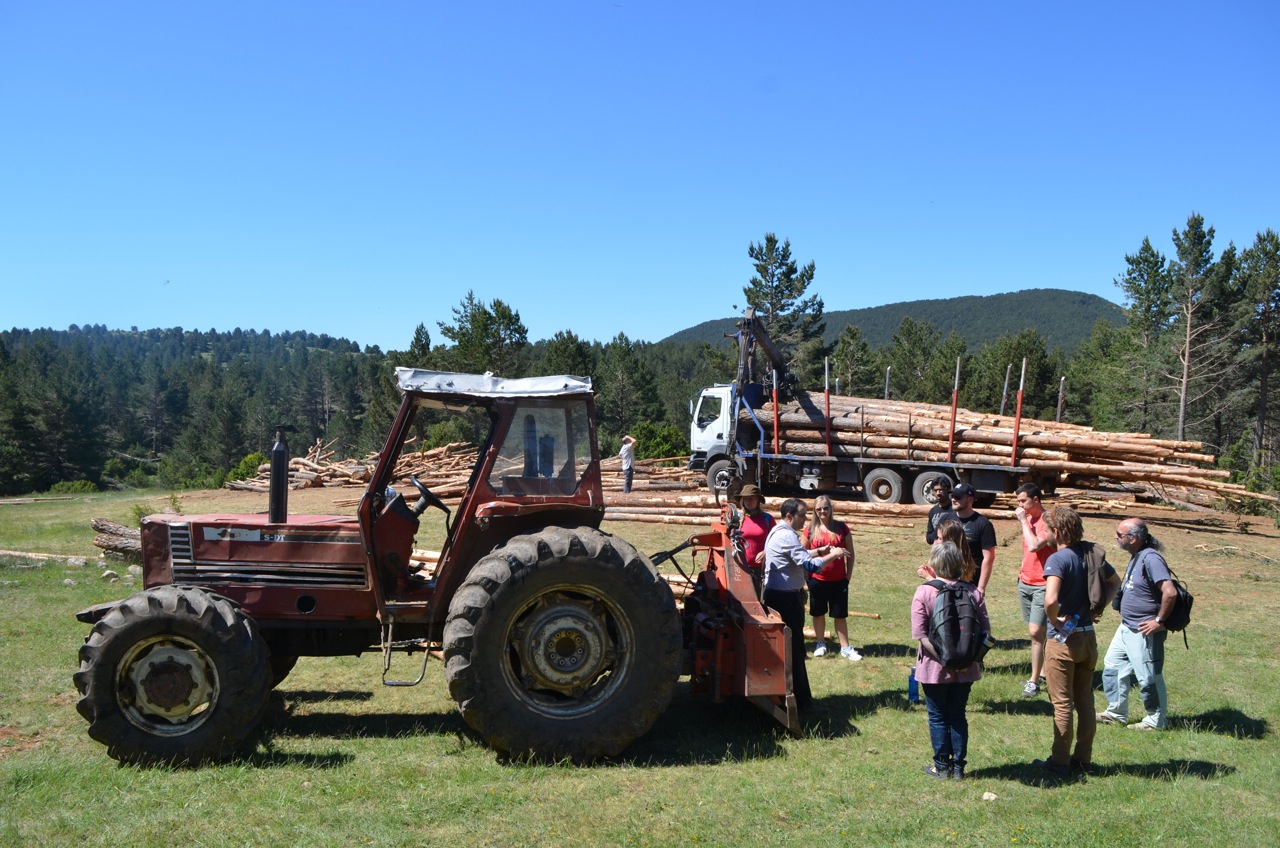
We walked back to see the logs being loaded onto a lorry for the drive to the sawmill. The loading was really impressive, the crane driver was working at super speed, picking up 6m trunks and stacking them neatly on the bed of the lorry. A lumberjack was simultaneously trimming the ends off a few trunks that would be too long for the sawmills. A whole lorry was loaded while we stood around chatting and admiring the old agricultural tractor that had been converted to drag the trunks to the loading area. The Manager told us that today the trunks were being sorted into 3 quality grades, but sometimes they sort up to 7 grades.
Loading up

Loading up

Learning about timber grades

Learning about timber grades

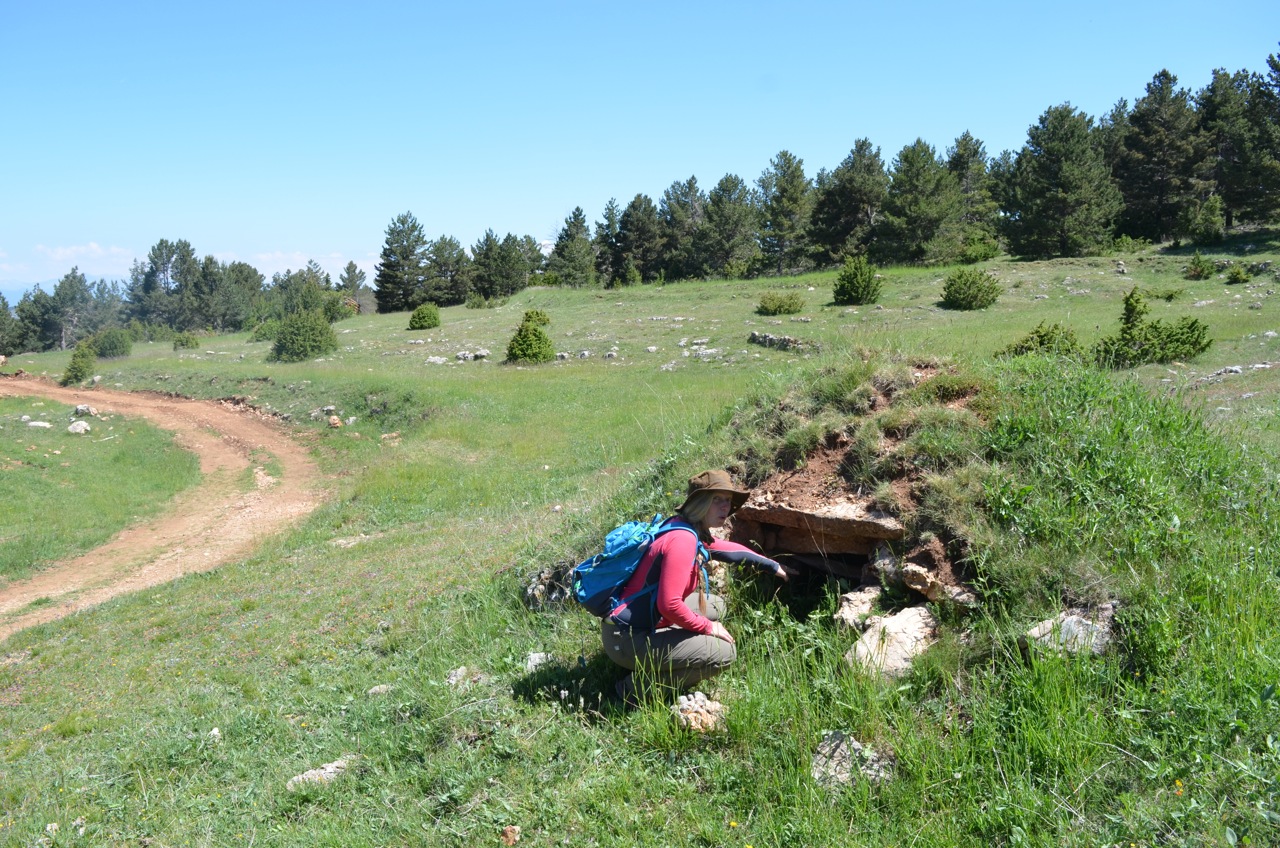
On the way back to our ride, Anna posed charmingly with this potato cave, which is probably hundreds of years old and still in good condition. The potato caves were used to store harvested potatoes and keep them cool and in good condition until the market price was right, then the potatoes were taken to market in the big towns in the valleys by mule. Some are still in use, although not on the industrial scale once enjoyed here.

Every potato shall have a home

Every potato shall have a home

Just after this the timber lorry came past, the driver probably dreading the tortuous road he was about to take back down the valley. Chatting to the Manager I learned that the timber on the lorry would be sold at about €80 per tonne, not much for all that growing time!

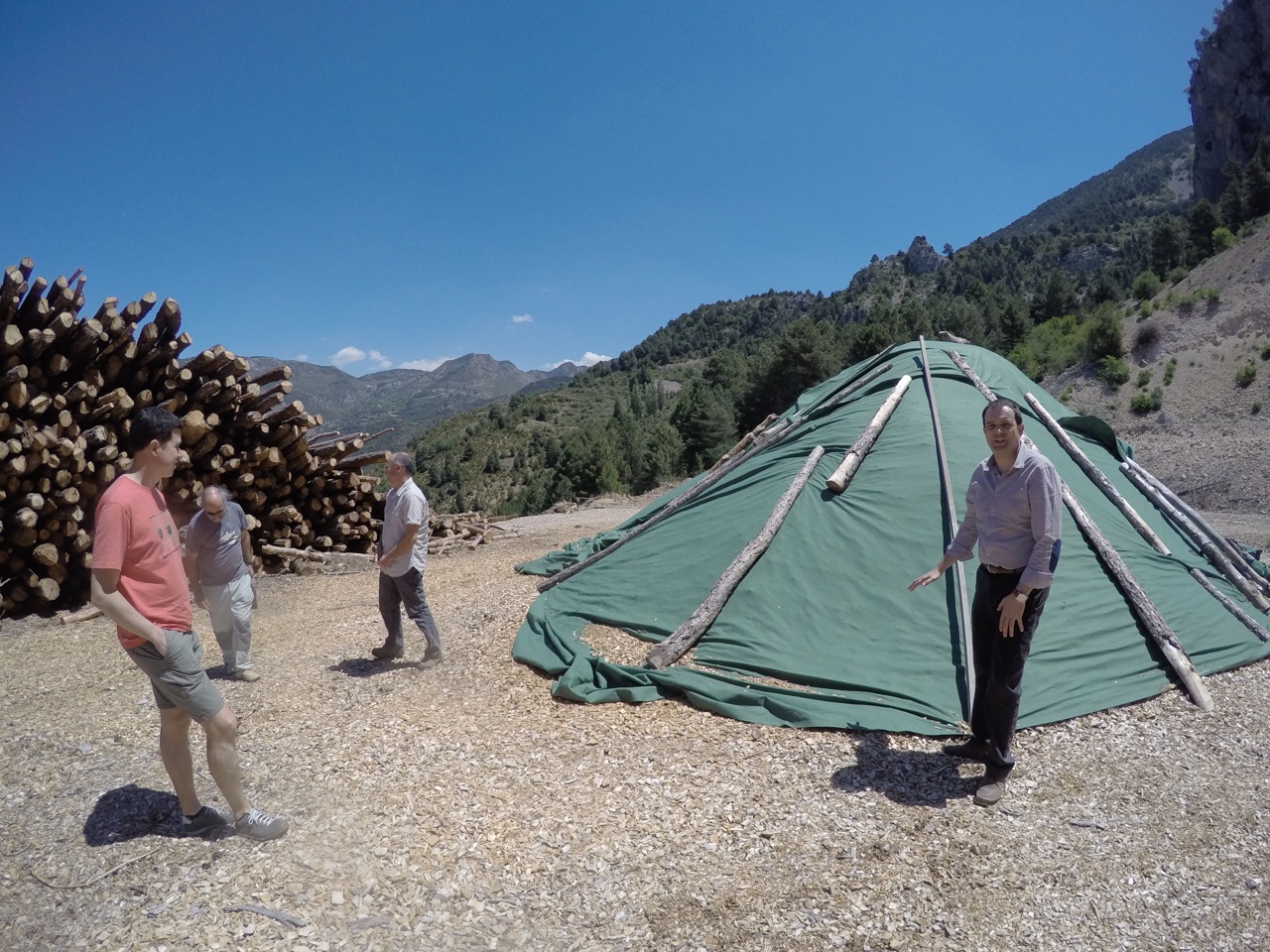
The next stop was the biomass storage and processing area. Here we learned that the trunks are stored whole for 7-8 months to dry before being chipped and sold in 1 tonne bags. The bags are sold for about €50 per tonne. The cost to produce a tonne is also about €50!
Biomass everywhere

Biomass everywhere

The storage area is on the north face of the mountain. It is situated to take most advantage of the the wind, in order to dry the trunks before chipping. Wood used in biomass boilers must be as dry as possible, to ensure efficient combustion. This site acheives a biomass humidity of about 22%, which is as good as it gets without artificial drying.

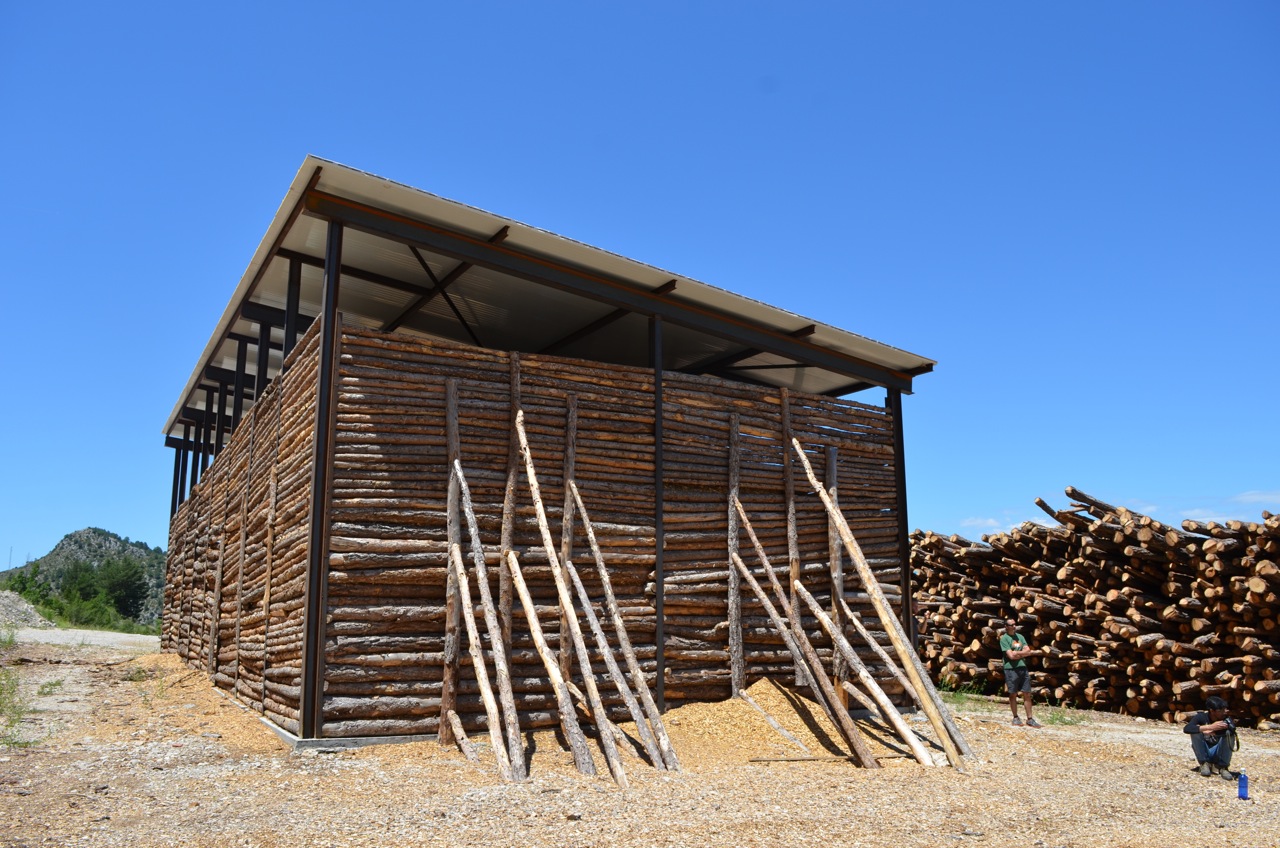
Here is the old storage method. It’s cheap but inefficient as you get higher humidity and you have to leave the bottom layer as it gets contaminated with soil.
Low tech

Low tech

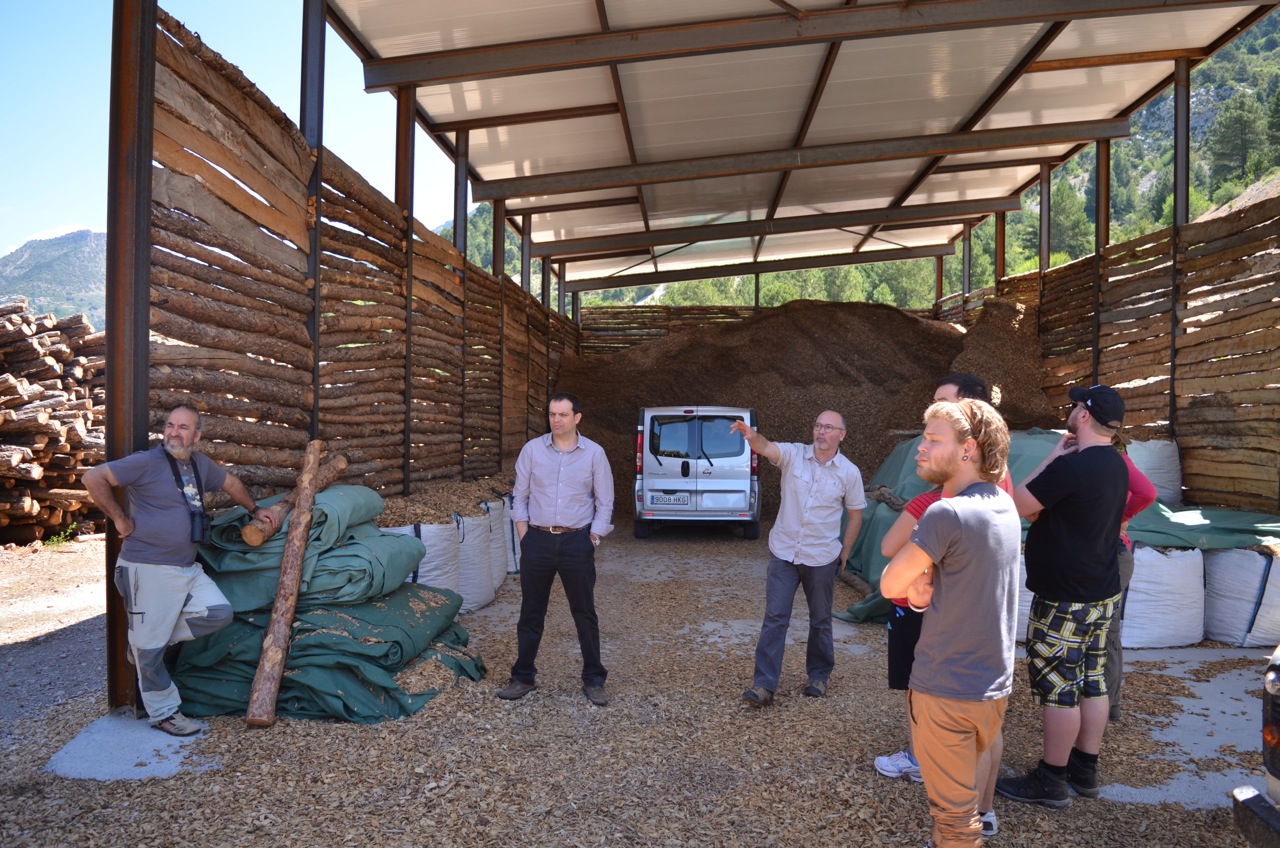
Here is the new shed, the Manager’s pride and joy! It was pretty empty when we visited; apparently they rent a chipper for 4 days per year, which is enough to chip a whole year’s worth of trunks and fill the shed.
The Rolls-Royce solution

The Rolls-Royce solution

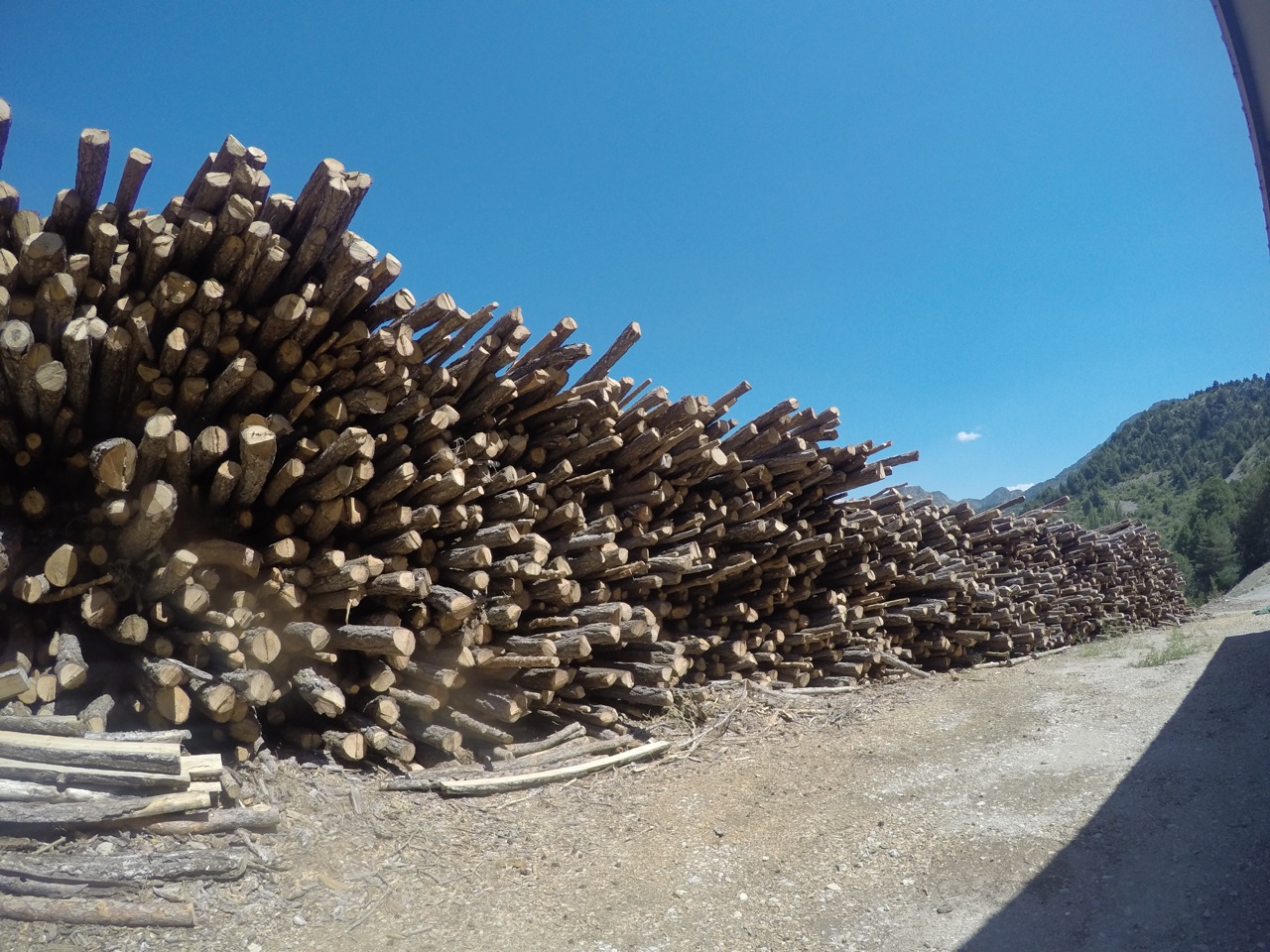
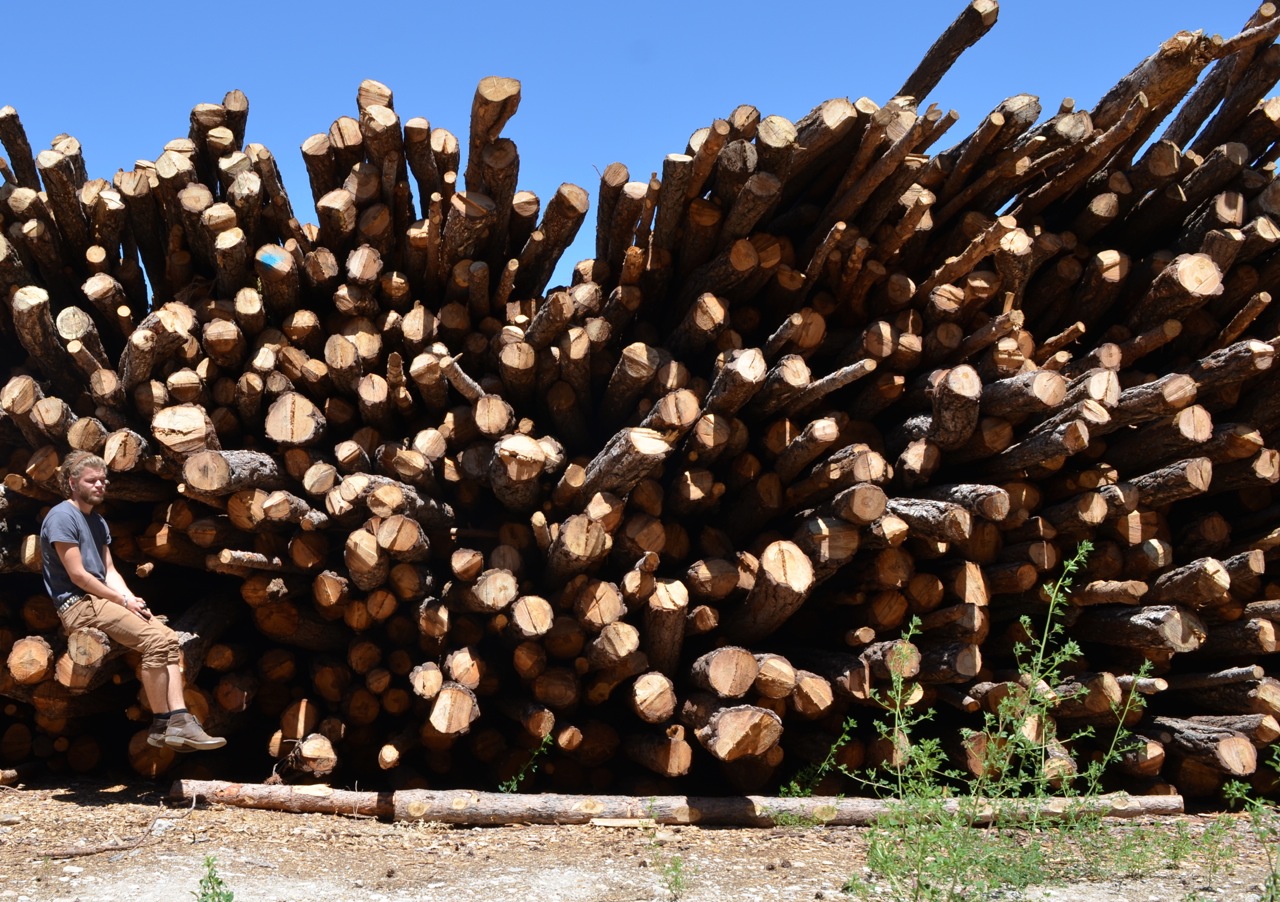
There is about 300 tonnes of timber in this photo. The chipper will go through this in less than a day, at a maximum rate of 9 trunks per minute!
Timber!

Timber!

Too cool

Too cool

After this it was back down the bumpy track, enjoying the views of Monserrat in the distance.
View from the road

View from the road – confusingly Monserrat isn’t in this picture!

We went to the hotel and had a coffee, then it was time for the students to head back to Lleida. We said goodbye then walked back to camp. Anna had been inspired by one of the students to try barefoot walking again, but gave up after a few metres when she realised the tarmac was at about 50°C. Maybe practice on the grass is in order!

Aah, barefoot

Aah, barefoot

Argh, barefoot!

Argh, barefoot!

Back at base, we prepared dinner and enjoyed it with a glass of Mario’s delicious homemade wine.

Last of the Portuguese wine

Last of the Portuguese wine

We were just packing away when a car pulled up and a guy came over and started speaking in Spanish. Anna tried a bit of Spanish too before we got to the good old ‘sorry we don’t understand”. We must have done better than usual though because it took him ages to try “do you speak English?”. Luckily, we do! It turned out his name was Carles (Carlos) and he wanted to camp in “our” garden. Anna said yes and started showing him round. It turned out Carles is the guide for the walk we are doing tomorrow! He lives outside Barcelona with his girlfriend (also Anna) and discovered the Alinya valley with friends one day. He fell in love with it and after meeting Aleix the bird expert here they decided it would be cool to run guided walks around the valley. And we get to be on the first one!

Obviously we offered him some of Mario’s wine, and he provided some chorizo, so that was pretty much the rest of the evening, sitting out drinking and chatting until dark. Carles had already walked the route today to check it out and told us about being harrassed by the massive sheepdogs they use here. It turns out he is also a touring cyclist and has crossed Canada the wrong way, just like Anna! He was really excited about our trip, and Anna’s grand plan to have her own big rewilding and eco-tourism project one day. He is into self-sufficiency and the transition town concept so there was loads to talk about and we had to drag ourselves away at the end of the night to try and get some sleep before the hike tomorrow!
So things to ponder/research from today.
Is the type of forestry they are doing here sustainable? We know that intensive forestry can de-fertilise the soil, and lead to eradication of natural forest species through removal of standing and fallen dead wood, non-profitable tree species and understorey. Some of the pine woods in the UK’s largest forest (Thetford Forest) stand in regimented rows with nothing growing between them and no refuge for anything else to thrive. That isn’t what’s happening here so far. What about the soil though? The generation time for this forest will be 60-80 years. Is that long enough for the soil to recover between harvests?
Is the aim of sustaining “unnatural” grasslands in this area a good one? Perhaps before people got here, large animals, fires and big trees falling down would have ensured that there was space in the forest for grasses, legumes and scrub, and all the species that depend on those habitats. Now those natural agents have been removed, is it a good idea to try to replicate them? And does it make a difference that the act of doing that is providing employment for people who would otherwise perhaps not have a job and the self esteem that can go along with that?
Another thing that was mentioned is that Cantabria imports the majority of its wood, even though the forests are growing here. Is it better to use the wood that grows here, or try to restore Cantabria’s woodland by essentially outsourcing the damage to South America where the forests are currently shrinking?
I’m not sure what I think about it all right now, but it’s definitely given me an appetite to find out more.
 – Dave

Black Vultures

The students were arriving at our ‘house’ for a lecture at 9:30 and we had been invited to join them. Aleix [pronounced Aleysh] was giving the lecture all about the black vulture reintroduction project at Muntanya d’Alinya.

Aleix arrived to set up before the students arrived and we had time to introduce ourselves. He is a charismatic man who seems completely at ease with himself and the world. He apologised for his ‘bad’ English even though we are in Catalonia and don’t speak Catalan! Then of course he delivered his lecture in perfectly coherent English (his third language). He has been working here for over a decade and has clearly found his place in life. His enthusiasm for the place and for his work is infectious.

He told us that the black vultures have been introduced over about 10 years here. Every year more animals are released to the area and they tend to go off travelling (covering up to 10,000 km per year!) before returning to the area to find a mate and rear young. They generally mate for life and rear one chick a year in a large nest in the top of a pine tree. Black vultures can live for over 40 years so don’t start trying to reproduce until they are about 4 years old, but generally have a few unsuccessful years before their first chick flies the nest.

So it takes a long time for a colony to become established, especially since there need to be a minimum of 50 birds for the colony to be viable! There are 44 birds here now, so with any luck the reintroduction programme will be complete next year.

After the lecture, we headed to the village of Alinya then walked up the mountain to a viewpoint. On the way, Dave and I got to chat to a few of the students and hear their stories as well as sharing ours. They are a group of 8 Masters students studying forestry on an Erasmus programme. They are spending this year in Lleida then are going to various places next year for the second half – Turkey, Portugal and Italy.

After walking uphill in the midday sun for half an hour, we arrived at a viewpoint. It was looking out onto the slope opposite where there is a supplementary feeding station for the vultures. There were hundreds of vultures circling the mountain! I’ve never seen anything like it.

Aleix was in his element, looking chilled out as ever, pointing out what was going on and telling us all about the birds. Muntanya d’Alinya is one of the only places where you can see all four European vulture species! They have different niches and different habits. All the vultures we could see circling were griffon vultures, the most common and most sociable of the four.

When the conservation area at Muntanya d’Alinya was establised, the team was providing whole carcasses for the griffon vultures. Now that the griffon population is established, they don’t do that any more. The supplementary feeding station is scattered twice a week with bones for the black vultures and the bearded vultures. But the griffons are always looking for something to eat, so once the bones are laid out, they flock down to the ground and fight over the scraps. Then once the melee has calmed down and most of them have flown away, a few black vultures come to pick bits of the outsides of the bones with their sharp beaks. Then, once all is quiet, the solitary bearded vulture swoops in to eat the leftover bones and the marrow. By the time they’re all done, there’s nothing left. Vultures are so important for cleaning up dead animals and preventing the spread of disease. They can eat everything that’s raw and rotten without getting sick, and once it has passed through them, it’s no longer harmful.

We watched the melee of griffons then a black vulture but we didn’t get to see a bearded vulture. There was an Egyptian vulture soaring above the feeding station too. They are the only ones that don’t live here all year round, but migrate to Africa during the winter. Aleix told us how different the bearded vultures are from the rest – they fly like eagles, swooping and darting through they sky! Not like the others he said, they ‘fly like a door’, conserving energy by riding the thermals on their search for food.

After soaking up the vultures, we went to a rabbit enclosure nearby. This is unthinkable in the UK, but here they have problems trying to maintain the rabbit population! The rabbits are an important food source for many mammals and raptors here but they suffer two diseases that mutate each year, preventing the establishment of a stable population. Every year they breed hundreds of rabbits in the enclosures and release them but without much success so far. We saw a few rabbit droppings around so there must be at least a few surviving!

It was around 2pm by the time we’d learned all about vultures and rabbits and we were starting to feel hungry. We all headed back down to the car, chit chatting on the way. One of the students from the Czech Republic was walking barefoot all day! We talked about the benefits of the practice and he said he really enjoyed it. It’s something I’ve been interested in for a while but have never given the time to… maybe something to start practicing around camp!

The students went for lunch at the hotel and we headed back home for ours. They still had a trip to make in the afternoon but we had to go to the shops. Silvia was heading into town by car to take her son to football, so we hitched a ride to go to the supermarket. There is a fridge in the place where we’re staying (imagine!) so we were able to buy a whole week’s worth of food. After months of buying one day at a time, we found this quite stressful and spent about an hour in the supermarket! I’m still not sure whether we’re going to have a surplus or a deficit at the end of the week.

After that, we came back, unpacked, had dinner and it was bedtime. Back with the students in the morning…

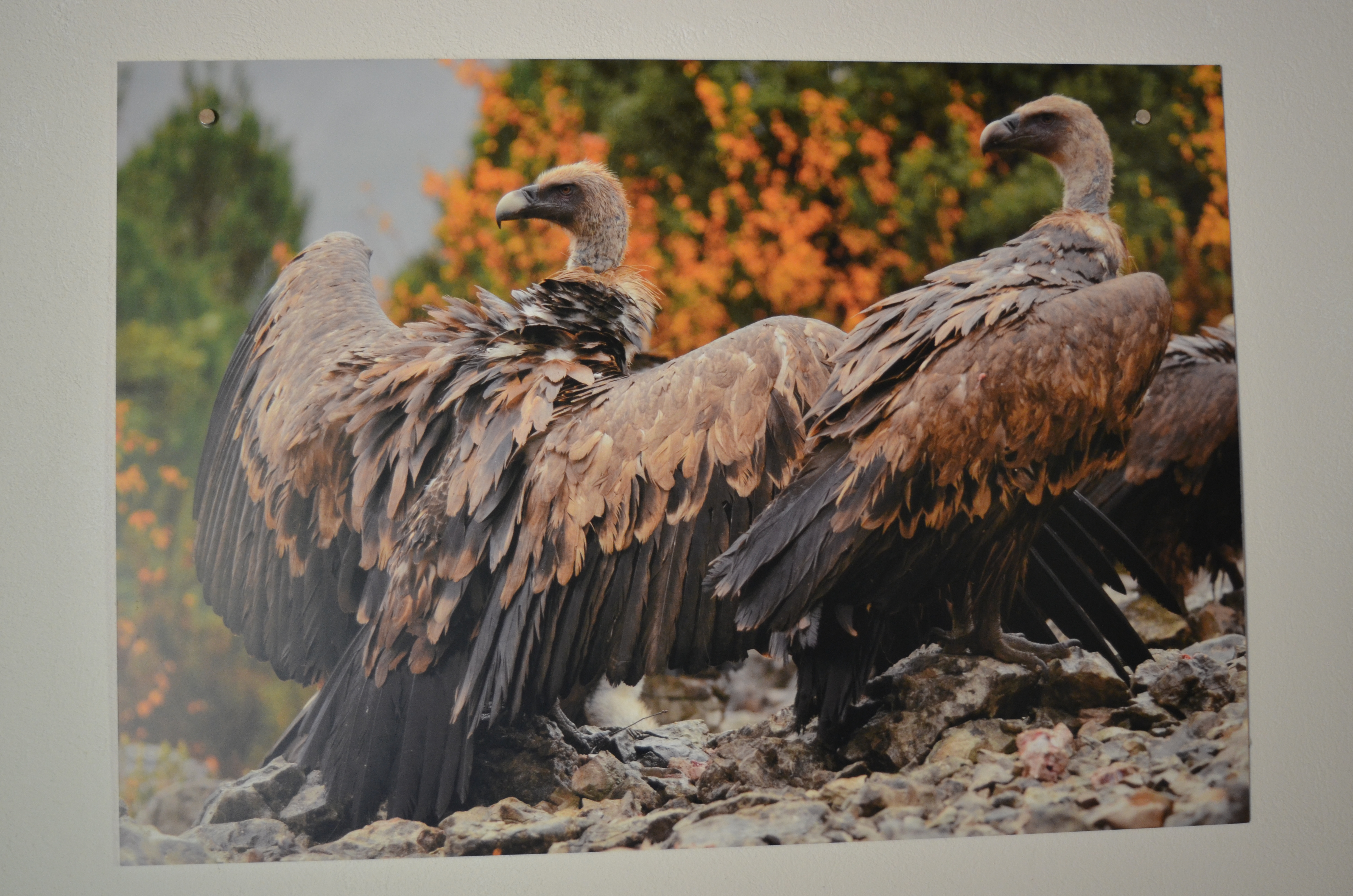
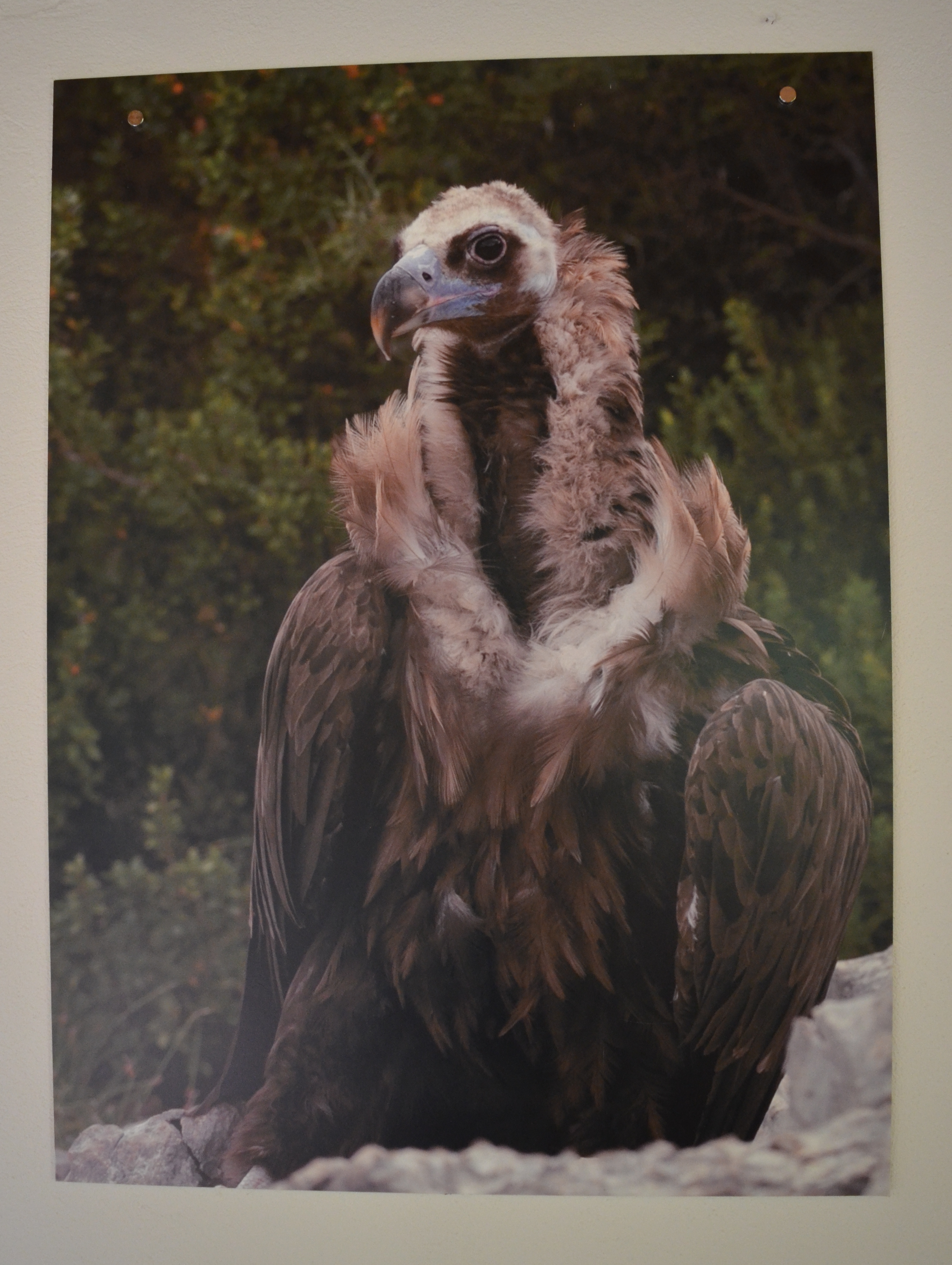
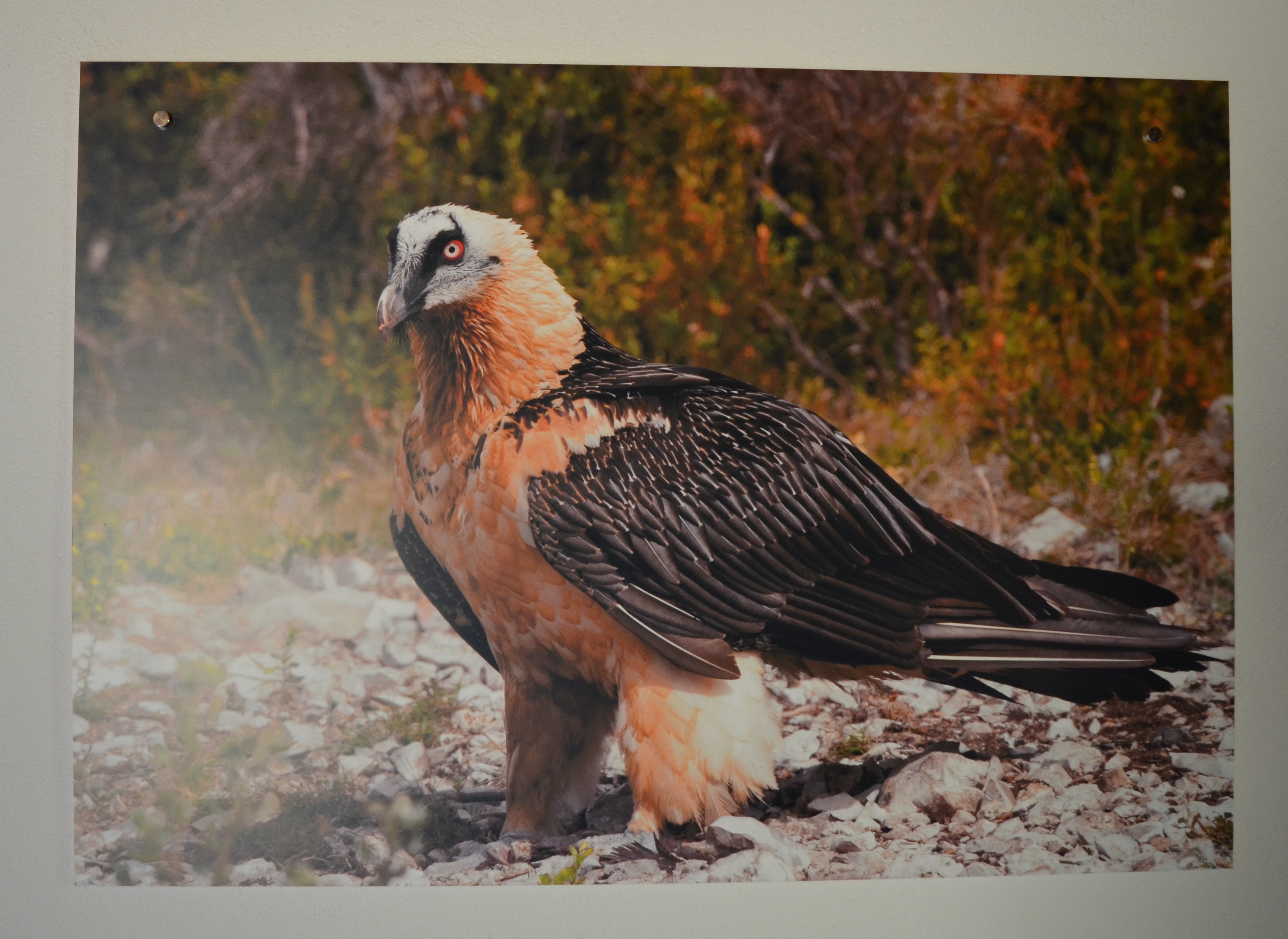
There are some amazing pictures of three of the vulture species at our house.  We didn’t get this close, but you can see that they’re adapted to eating different types of food.

Griffon vulture - flesh eater

Griffon vulture – flesh eater

Black vulture - bone picker

Black vulture – bone picker

Bearded vulture - marrow muncher

Bearded vulture – marrow muncher

– Anna

Day 31 – La Muntanya d’Alinyà

We woke up to find that we hadn’t been murdered in our bags. Good news to start the day! Anna was severely lacking in sleep though; luckily we are now so well versed in breaking camp that we can do it without talking! We had a quick brekkie before hitting the road. The first bit was downhill and I soaked up the cold morning air, knowing that it would be more than hot enough in a couple of hours. We crossed the river and climbed the valley on the other side, and the view opened up in front of us, revealing the “pre-pyrenees” that we were about to tackle.

The day ahead

The day ahead

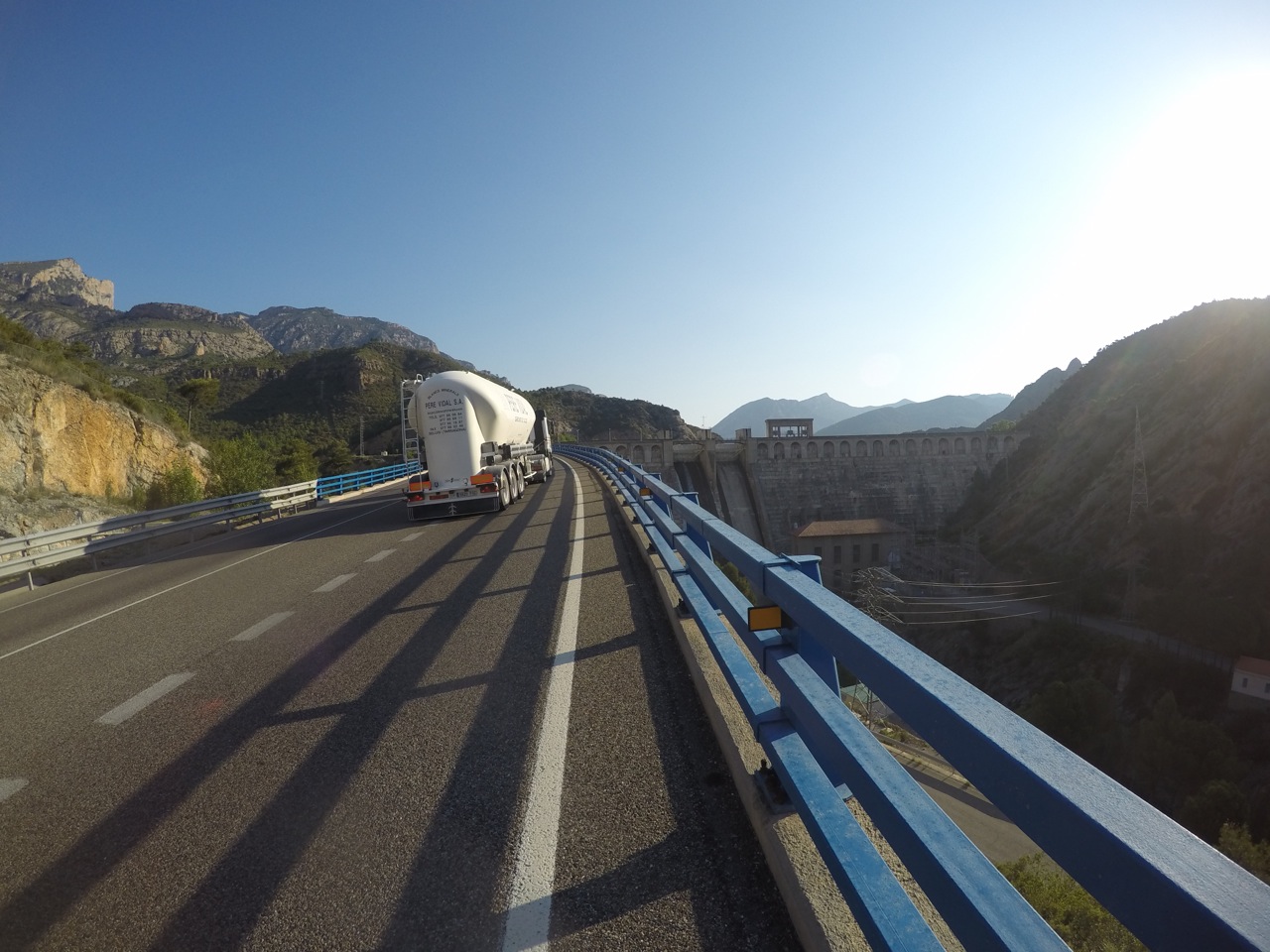
As we got nearer the ridges, we started climbing the road beside the river, just below a dam. It was pretty busy, with lorries swerving around us, but Anna risked life and limb to document the dam, so you’d better enjoy it.

Safe photo taking

Safe photo taking

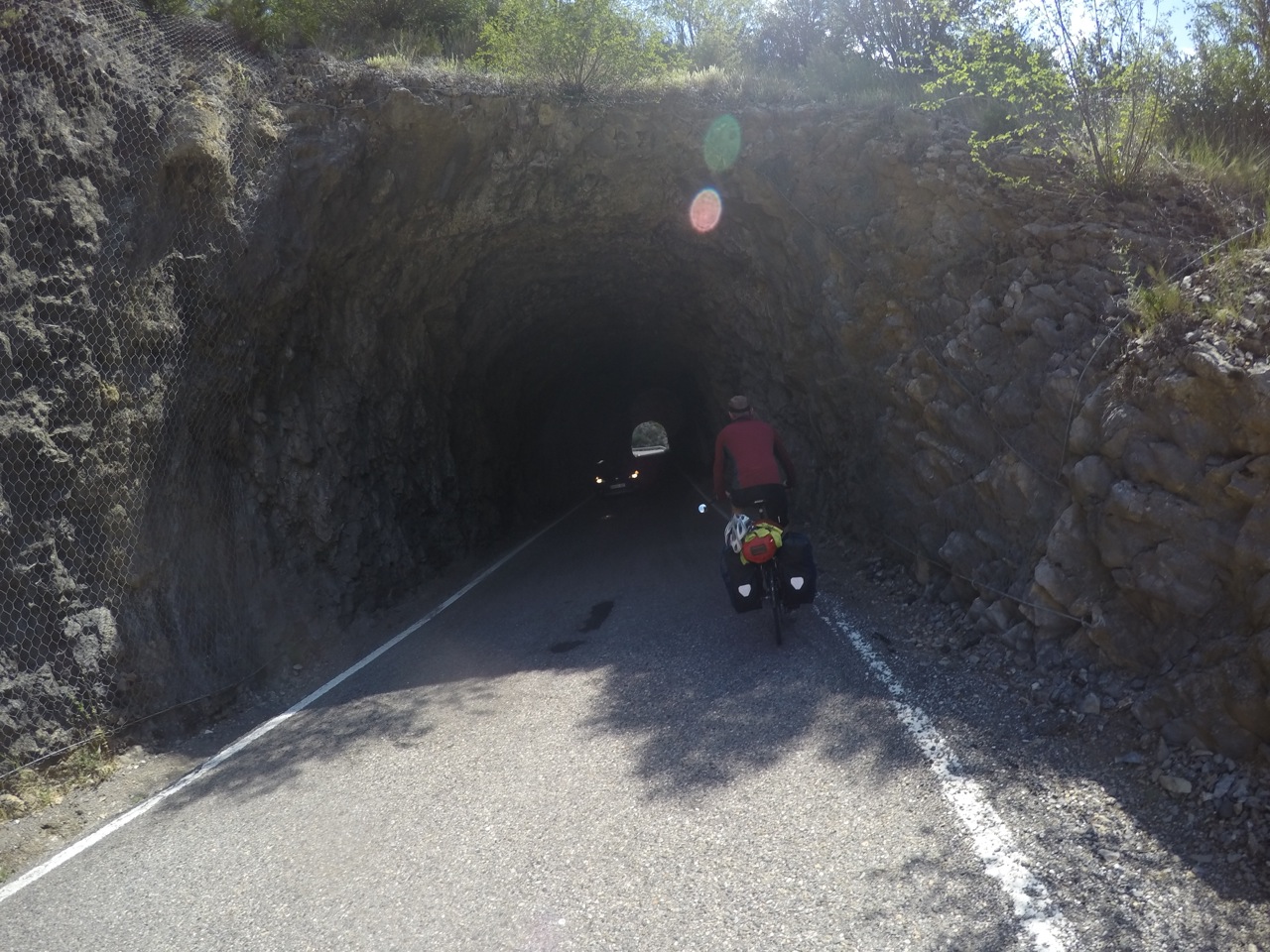
We stopped for lunch at the top of the dam and enjoyed two-day matured hummus with bread, followed by choccie digestives topped with raspberry jam. Mmmmm! We were then faced with our first tunnel of the day. We went through it, escaping into daylight just before a lorry trundled past. We decided that for all future tunnels we would take the longer but hopefully quieter and safer detours around the side of the lake. This soon paid off as we found ourselves the kings of the road with epic views opening before us, while the rest of those poor schmucks enjoyed fluorescent lighting and carbon monoxide. As we got to the entrance of the biggest tunnel on our route we found to our dismay that the road around was closed off with barriers. However we decided that falling rocks and landslides were less hazardous than speeding lorries so we squeezed through the barriers and made our way around. We were rewarded with a lovely long quiet ride past some stunning scenery. There were a few rocks on the road, but we escaped unharmed.

Tunnels are for losers!

Tunnels are for losers!

Once we turned east away from the river the road started to climb really steeply. It was narrow, quiet, beautiful and hot! The tunnels (with no convenient alternative roads this time) were small and a little disquieting, given the occasional motorbike convoys that sped past.

Awesome riding

Awesome riding

I don't wanna!

I don’t wanna!

After an hour’s climbing we reached the edge of the Muntanya d’Alinya Reserve, marked with this rather unobtrusive sign. Hurrah!

We're in!

We’re in!

As we continued up the road a car pulled over and the lady inside asked “Anna and Dave?”. Er, yes….

Silvia works at the project and she had been told by her colleague Susanna who we’ve been emailing that we would arrive tomorrow. She was unperturbed by the early arrival however, and we stood in the road introducing ourselves and hearing a little about the reserve. She said she was heading off for the afternoon, but gave us directions to the Project’s Education Centre and said we could just chill out there for the rest of the day. Sweet! So off we went, musing on how everything just seems to work out in Spain!

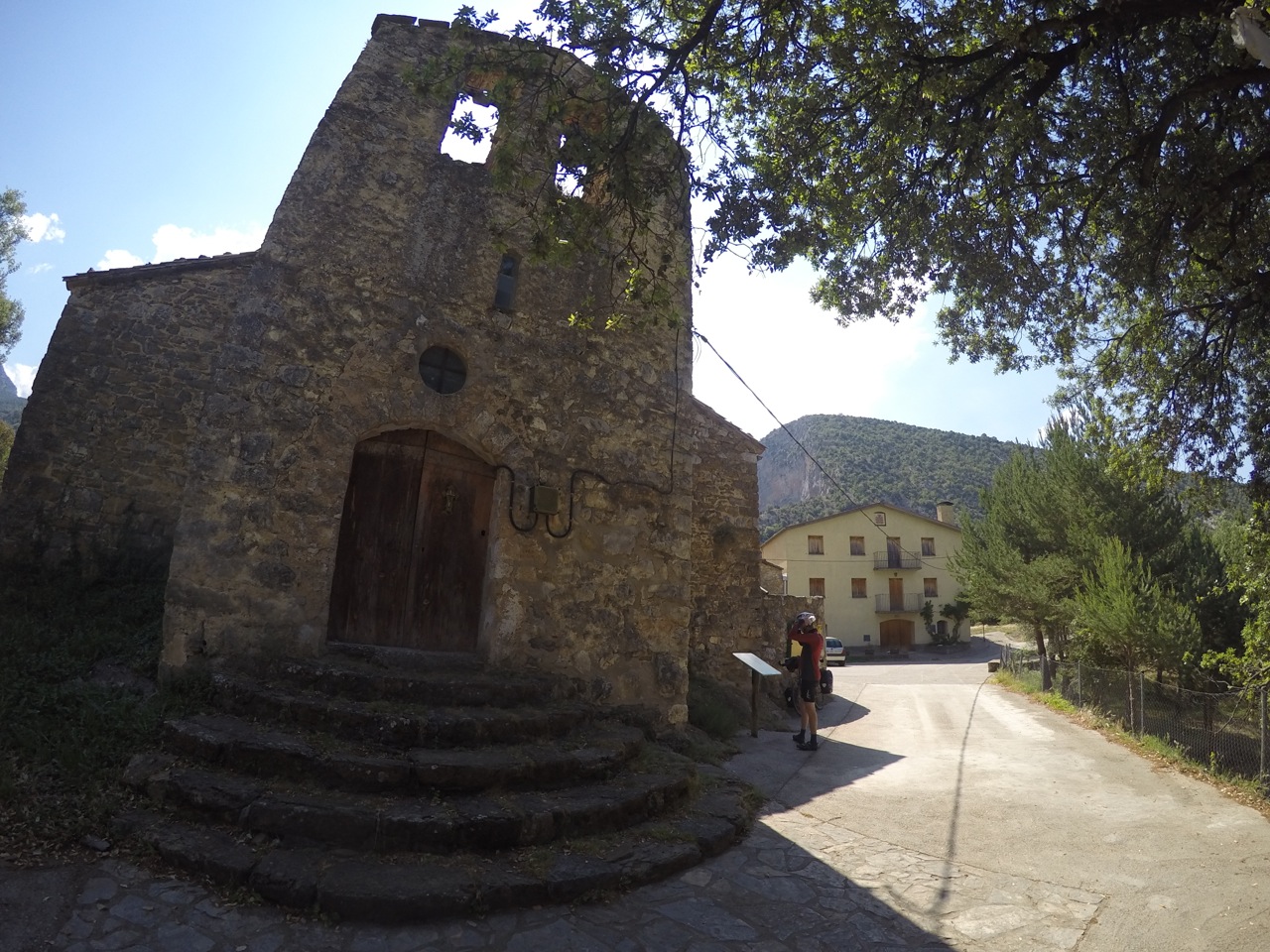
A little further on we stopped to eat, finding ourselves sitting on the steps of an 11th century church. As you do!

How old??

How old??

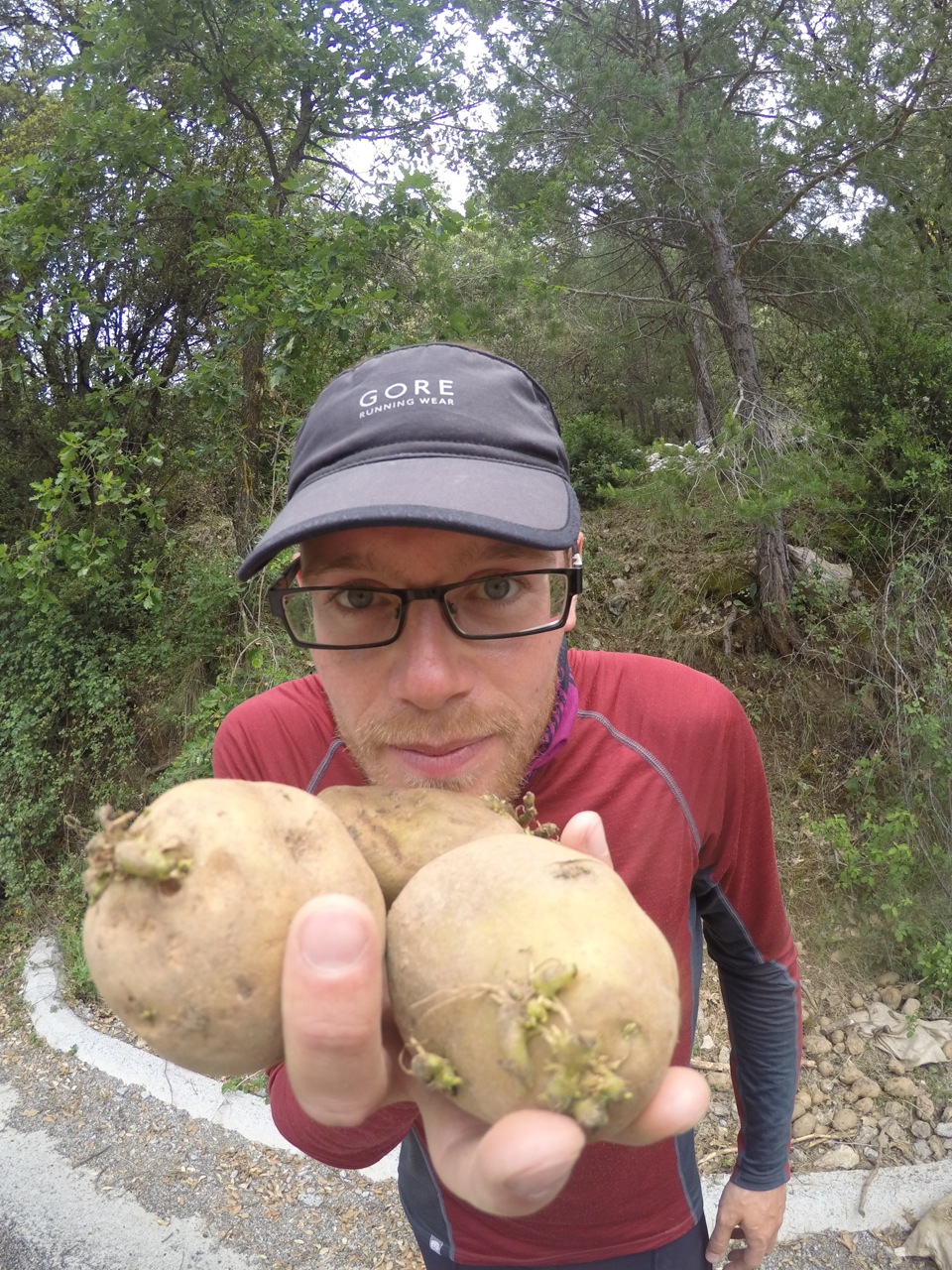
A few more grinding uphill miles and we arrived at the village of Alinya, where the Project has its Visitor Centre. The Education Centre where we were staying was only another 500 m or so as the crow flies, but most of it was upwards so it too us another half hour to get there. On the way we found a bag of potatoes in the road and snaffled a few for dinner. Beggars can’t be choosers!

Fry 'em, mash 'em, put 'em in a stew!.

Fry ’em, mash ’em, put ’em in a stew!.

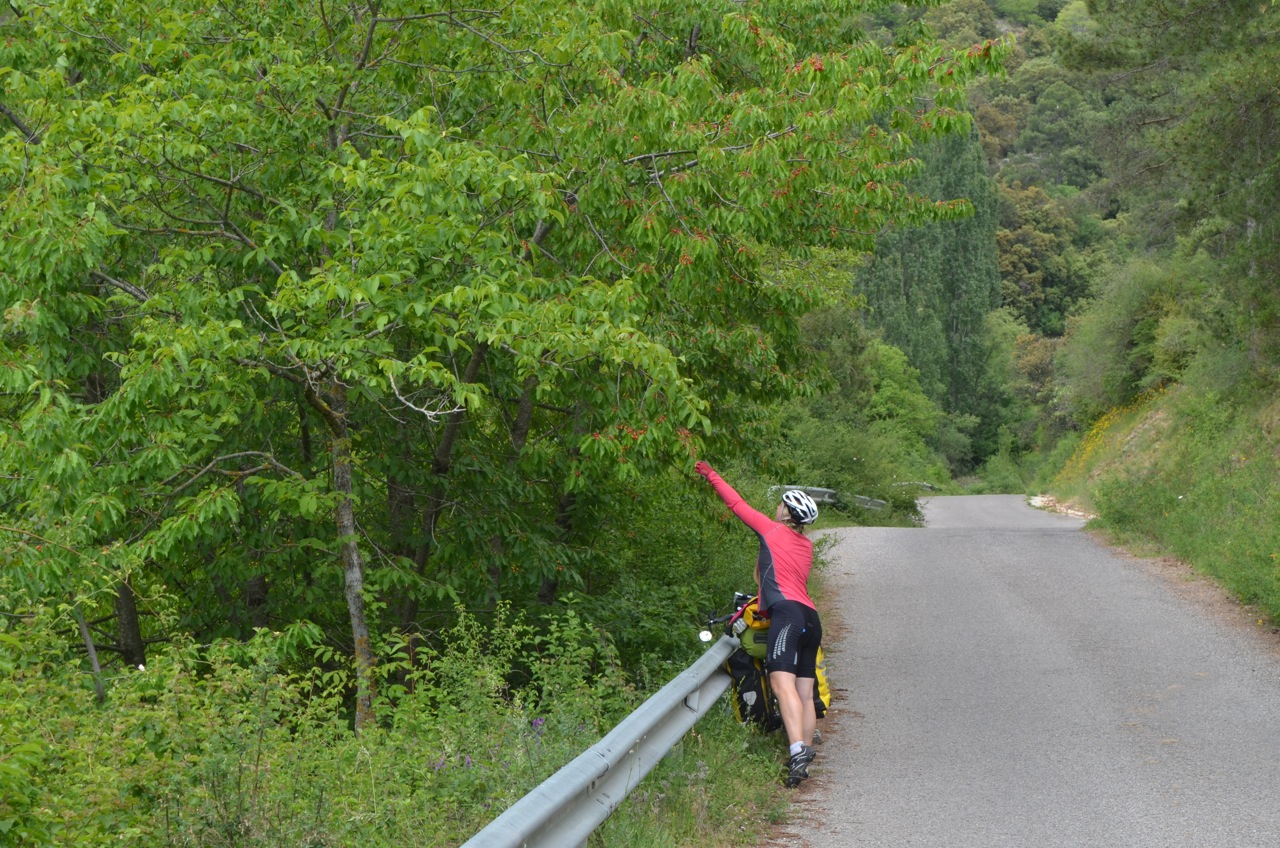
We also went past some wild cherry trees pregnant with red delicious fruit. This made Anna happy!

So many cherries

So many cherries

Happy Heslop

Happy Heslop

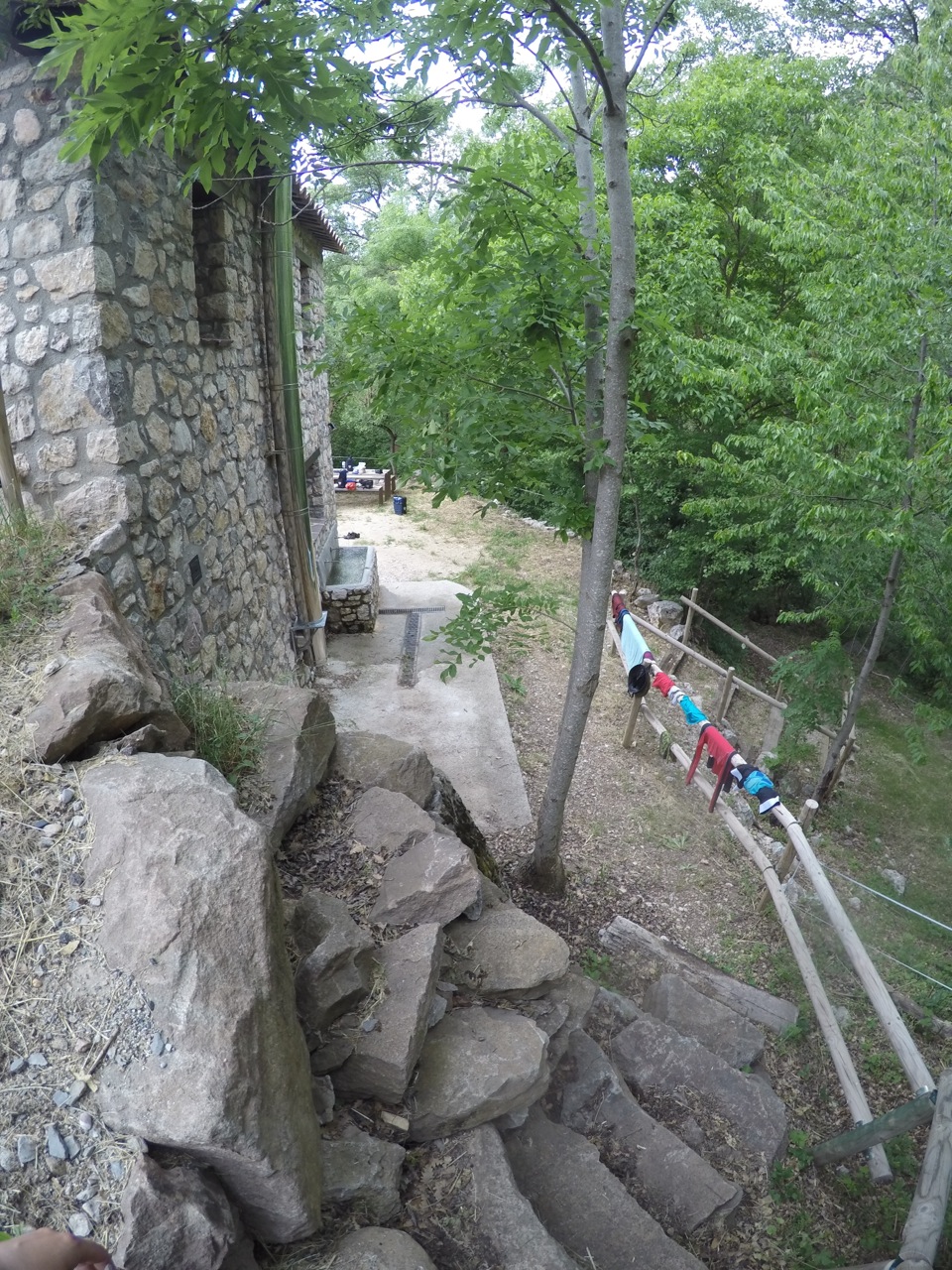
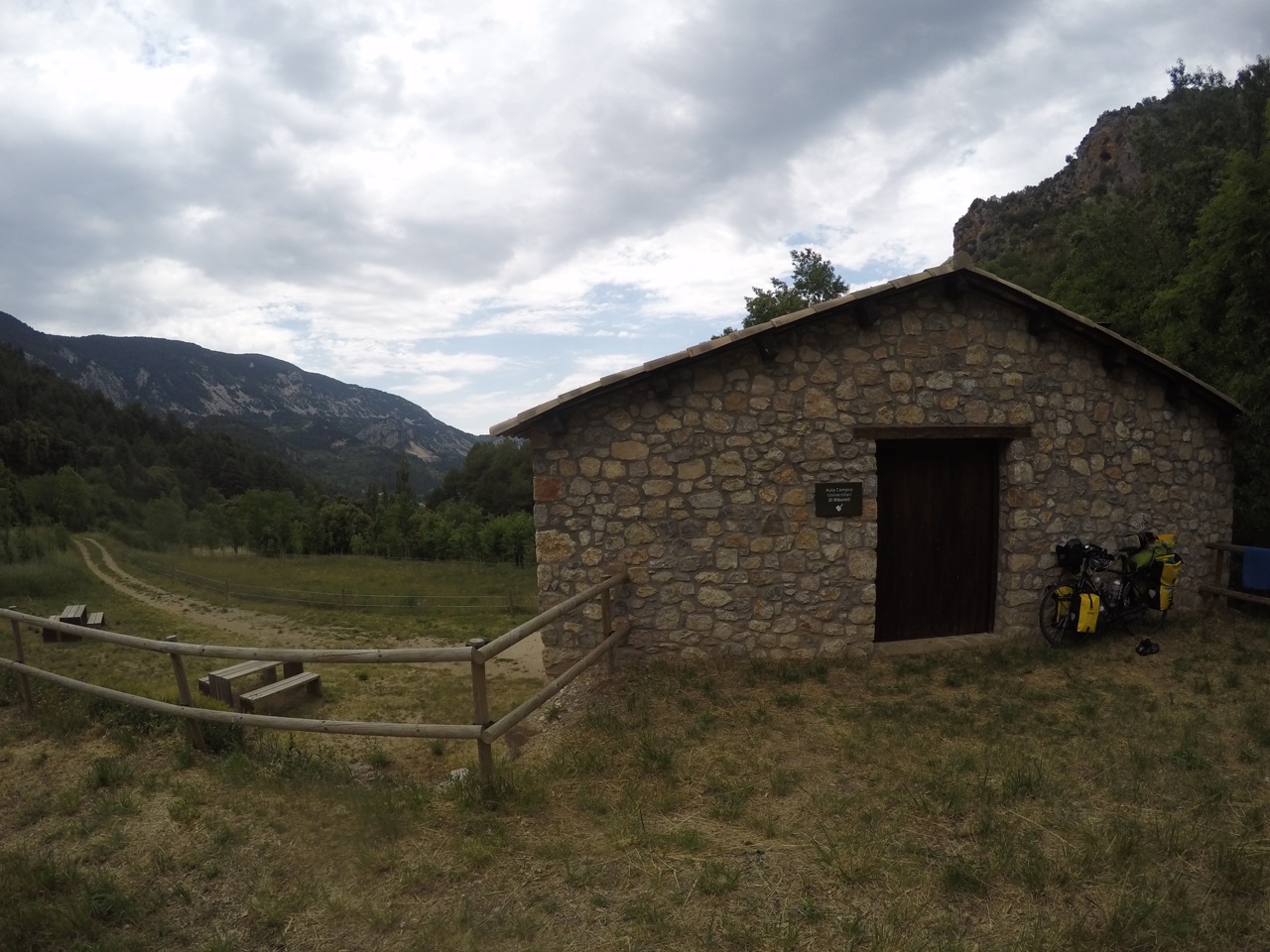
The Education Centre is totally sweet, two floors with crystal clear mountain water piped inside, a space age composting toilet with a poo conveyor belt (I can’t get over that), a FRIDGE (WOOHOO) and two comfy sofa beds.

Home for the week

Home for the week

Hanging out

Hanging out

We had a wash and did laundry and soon afterwards Silvia came back. She said we could stay at the centre for the whole week if we liked (yes please) and then took us down to introduce us to Lluis, the owner of the restaurant, and part-time village taxi service. She said that Xavier, the Project’s Co-ordinator would come by the restaurant later on to introduce himself and let us know what we might be able to help with.

We decided to have dinner at the restaurant as well, and we were just finishing when Xavier arrived. He was eating too, so we stayed on and chatted about the Reserve, his own conservation experience, what we hoped to get from being here, and what we could do. It turns out that there is a group of students here this week from the University of Lleida, so we can attend some of the lectures and field trips they are doing, as well as doing some planting and maintenance in the forests, and helping out with a photography day for the vultures next week. Can’t wait!

– Dave
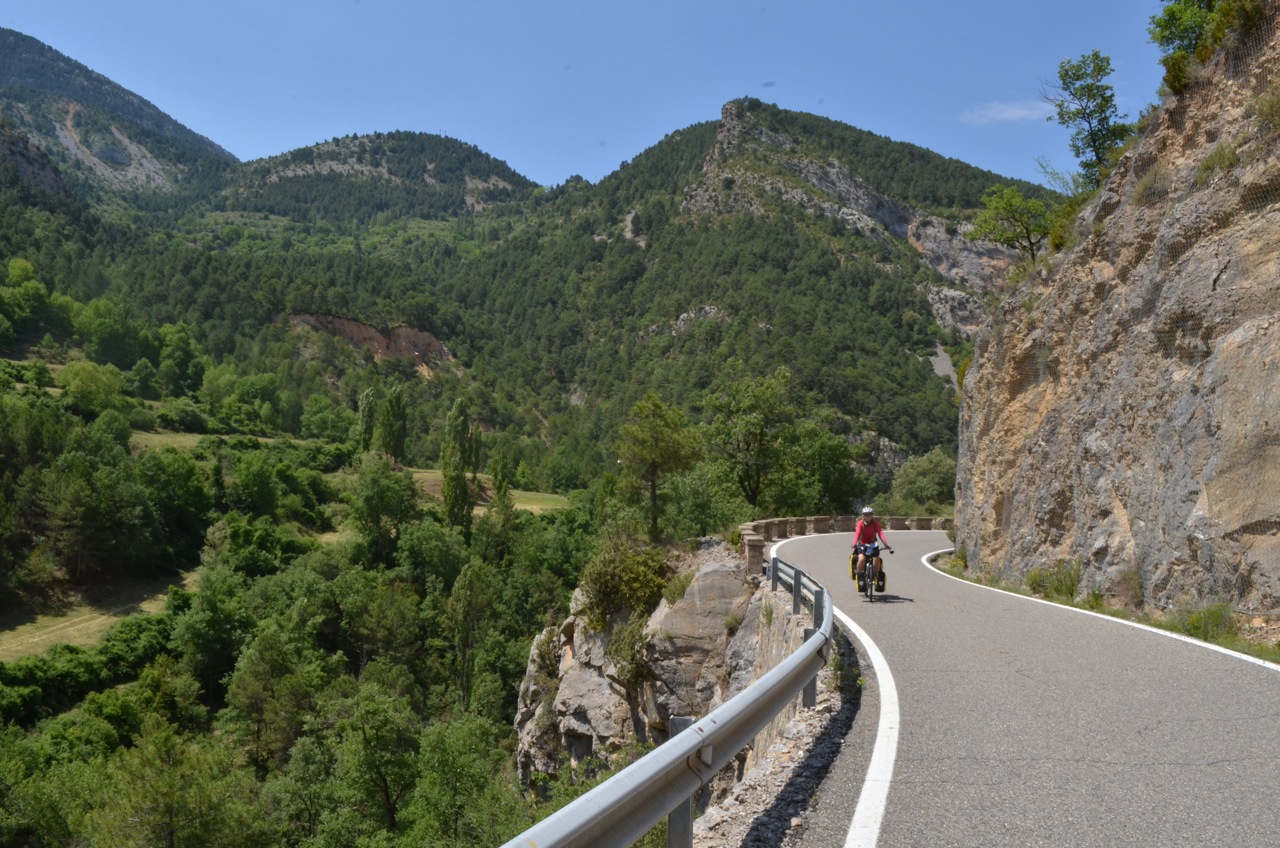
Day 30 – Ride, siesta, ride

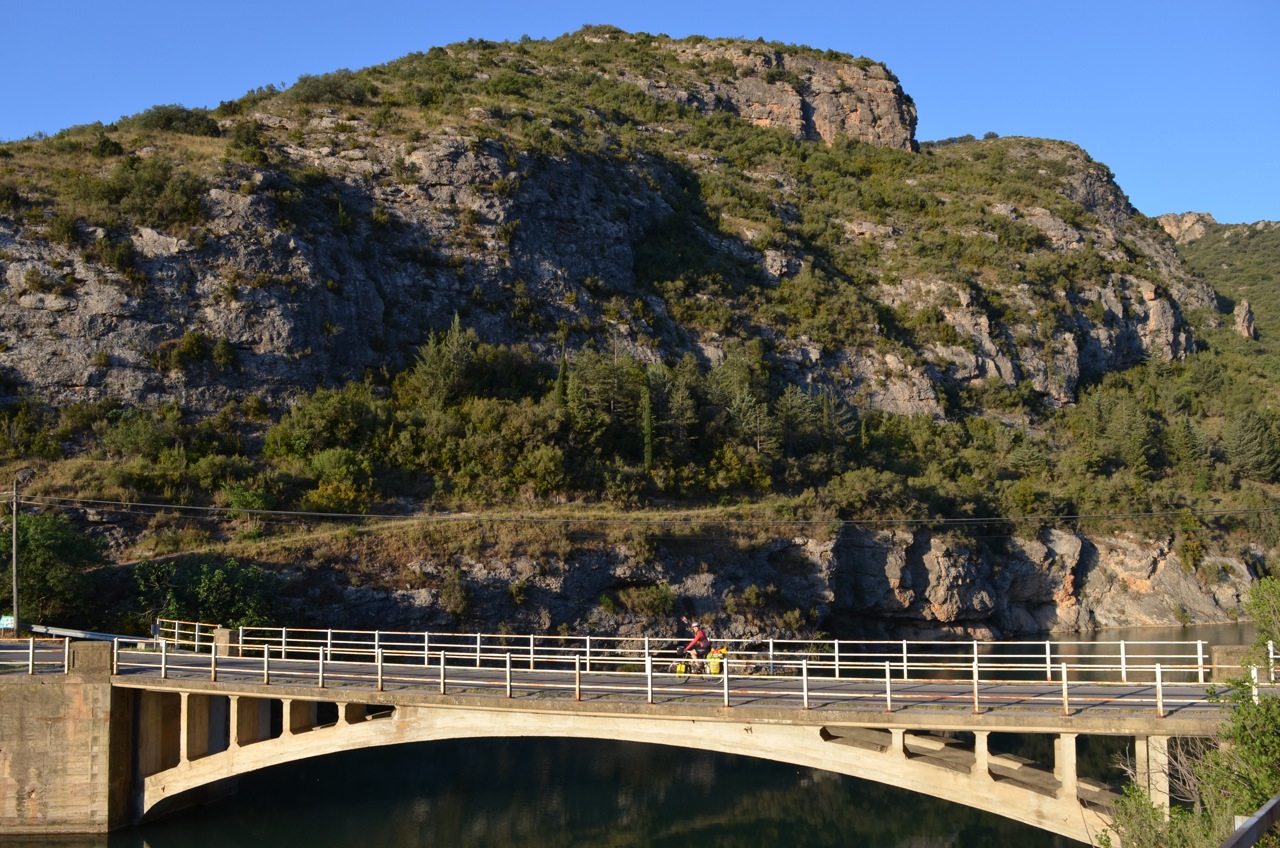
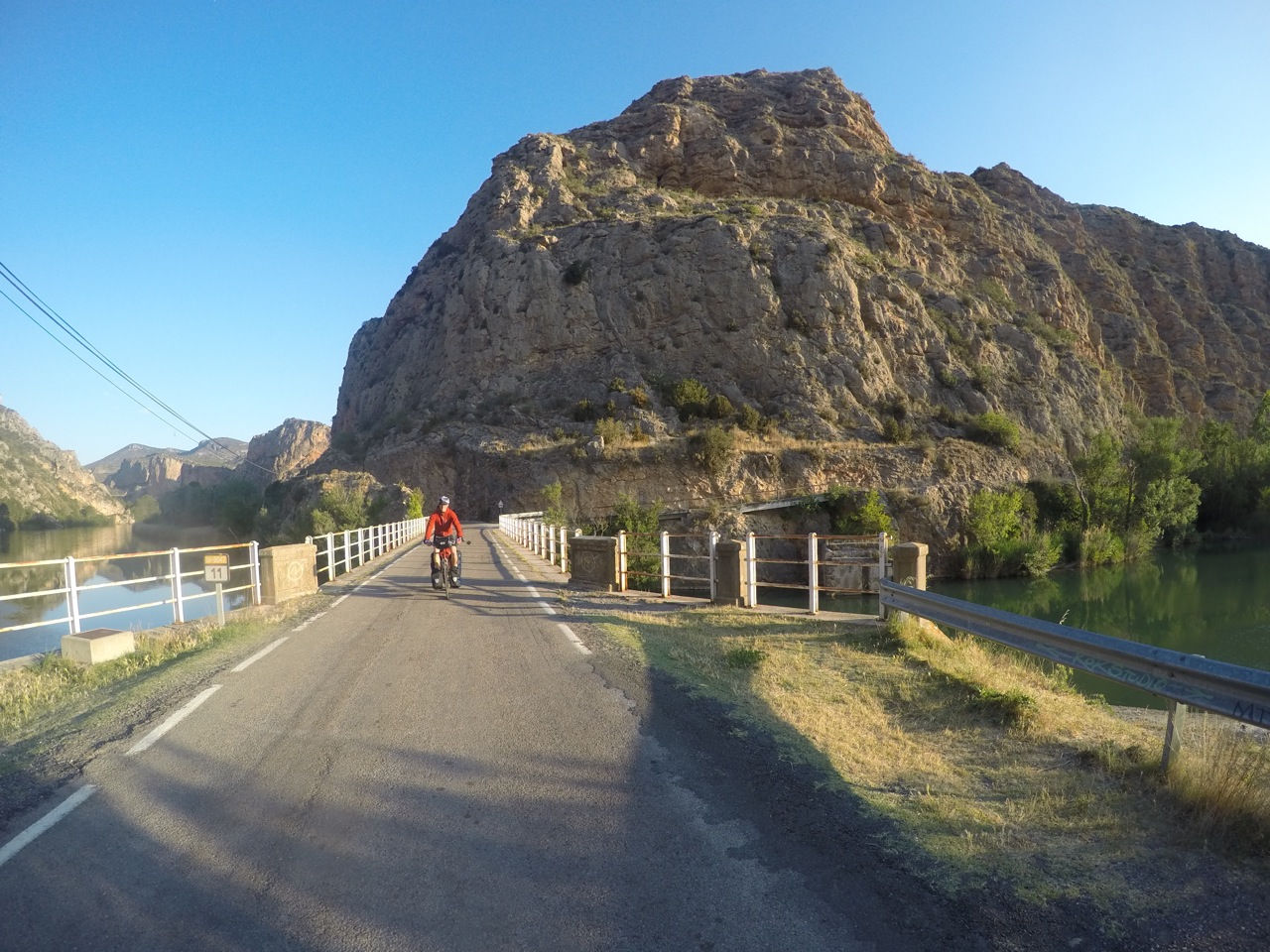
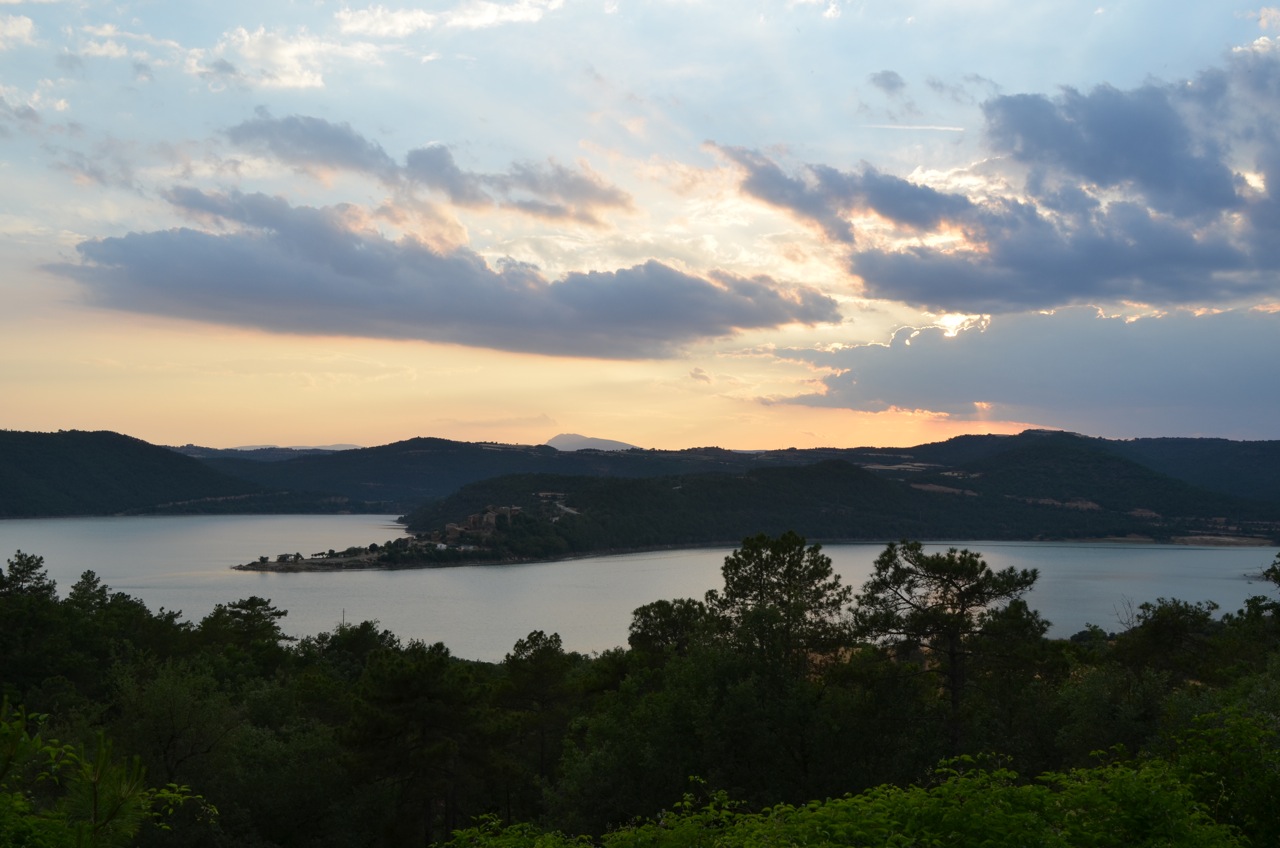
We packed up at a very unsociable hour but we weren’t the only ones disturbing the peace – the birds were already up and making themselves heard! After a quick breakfast of fruit and yoghurt, we were on the road again. Our route took us a little way into the mountains then back out again through farmland towards the town of Ponts. We had a lovely first few kilometers as the sun came up, soaking in the mountain views along a lake.

Bridge crossing

Bridge crossing

Morning mountains

Morning mountains

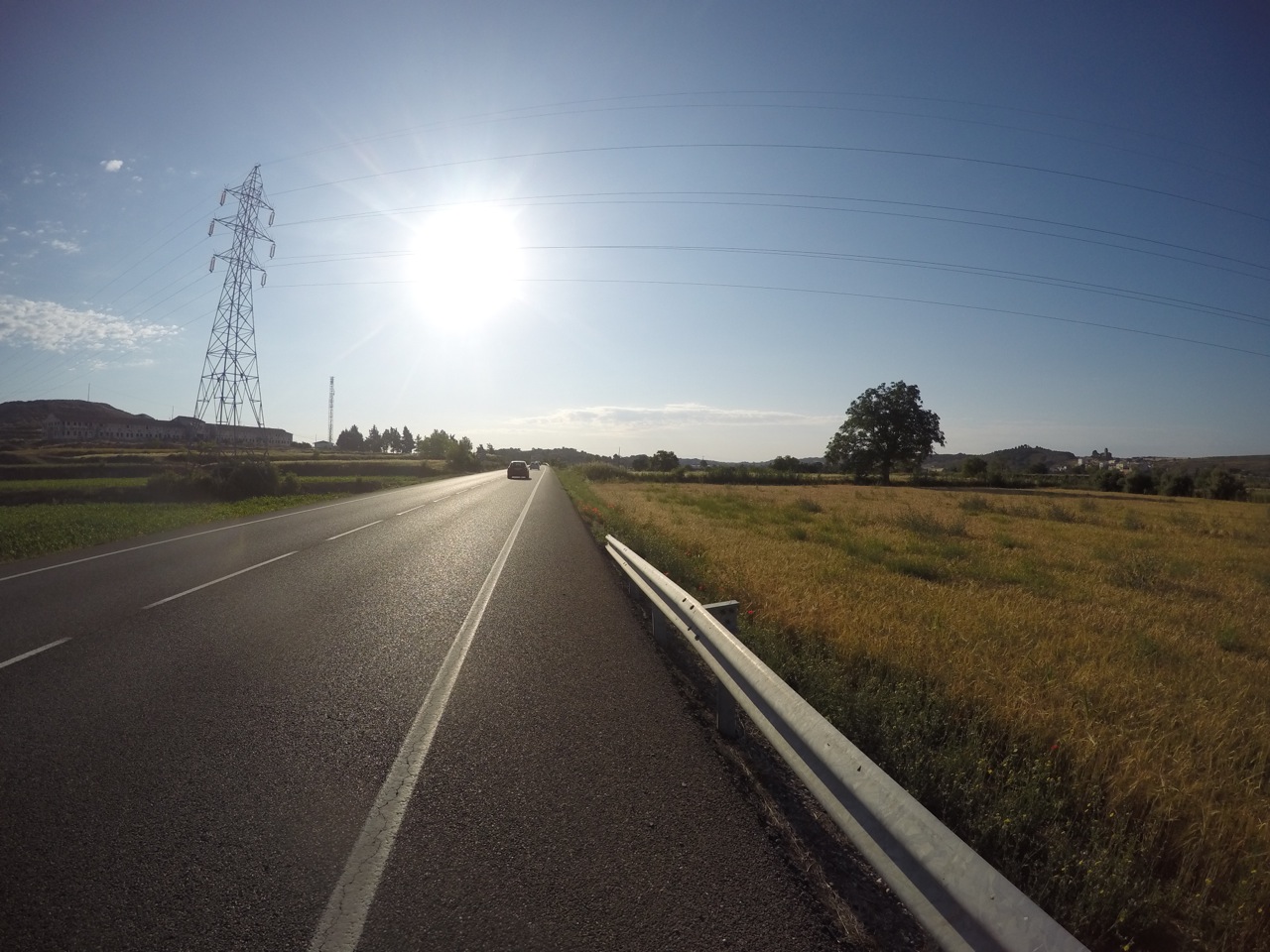
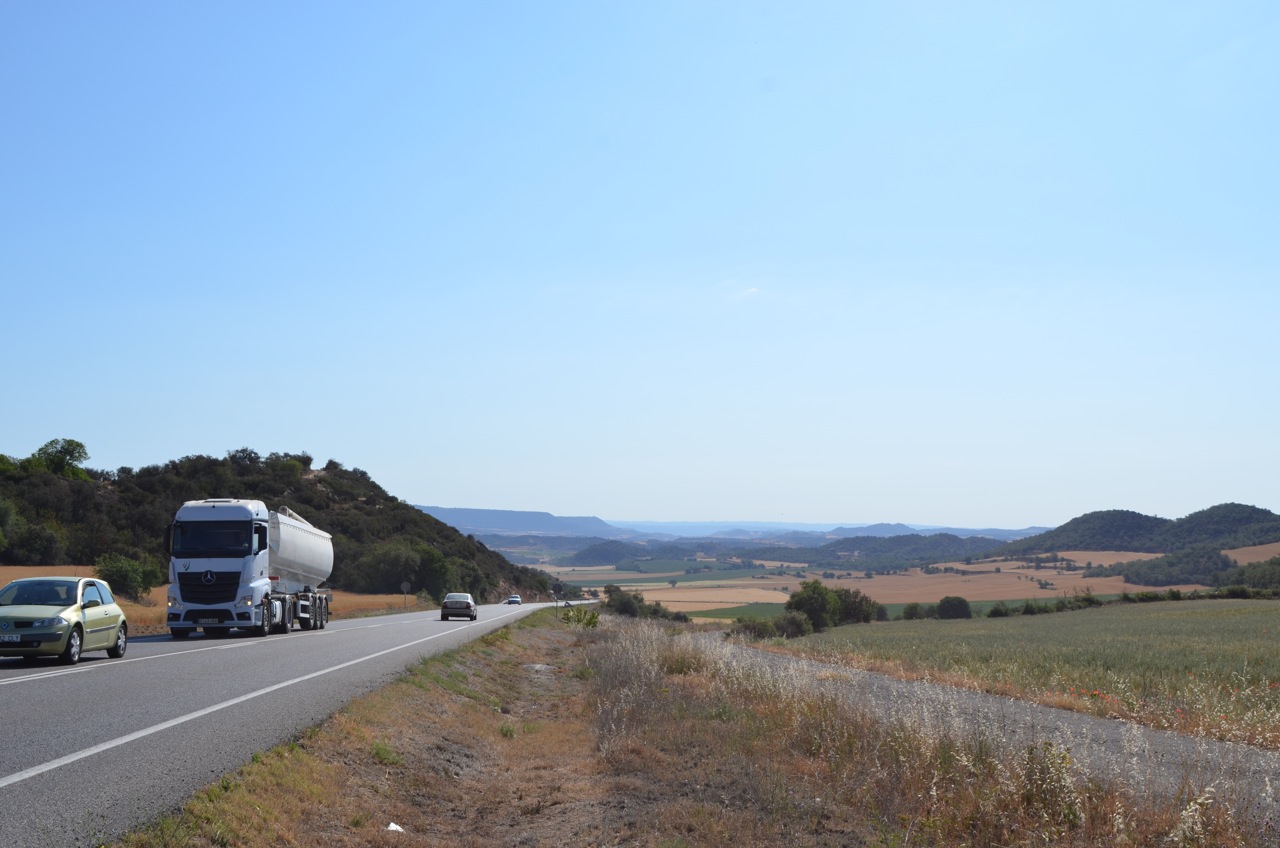
Then we had to leave the lovely mountain road and were taken up and down through fields on the shoulder of the well-used C-13. The truck drivers were considerate but it still didn’t feel all that safe. The scenery was a bit dull but we made good time and (after a short section of steep uphill) arrived in a village for second breakfast.

Our view for the morning

Our view for the morning

We carried on through the fields, saw corn being harvested, smelled barns full of pigs and chickens and were very sad to see an injured snake writhing around in the road after being hit by a car.

Hint of mountain... and a few lorries!

To the mountains!

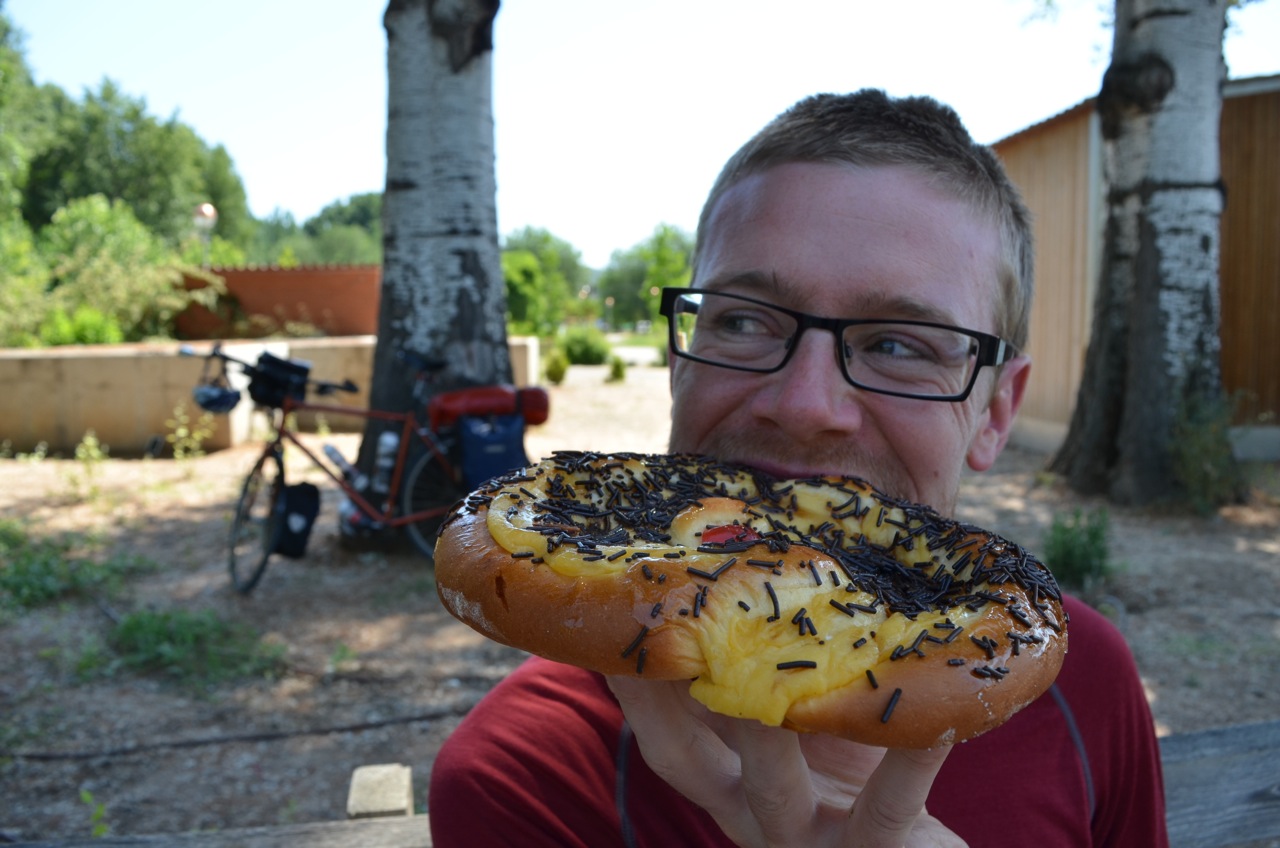
As we approached Ponts, the mountains were back on the horizon and we rode into town around 11am having done 50 km. First stop was the bakery (of course!).  We took our giant pastries to the park and settled down to spend the hot afternoon in the shade.  Dave was just lamenting his tiny roll of belly (we’ve been eating rather well on this trip) when he unpacked his pastry and tucked in…

I'll burn this off, right?

I’ll burn this off in no time, right?

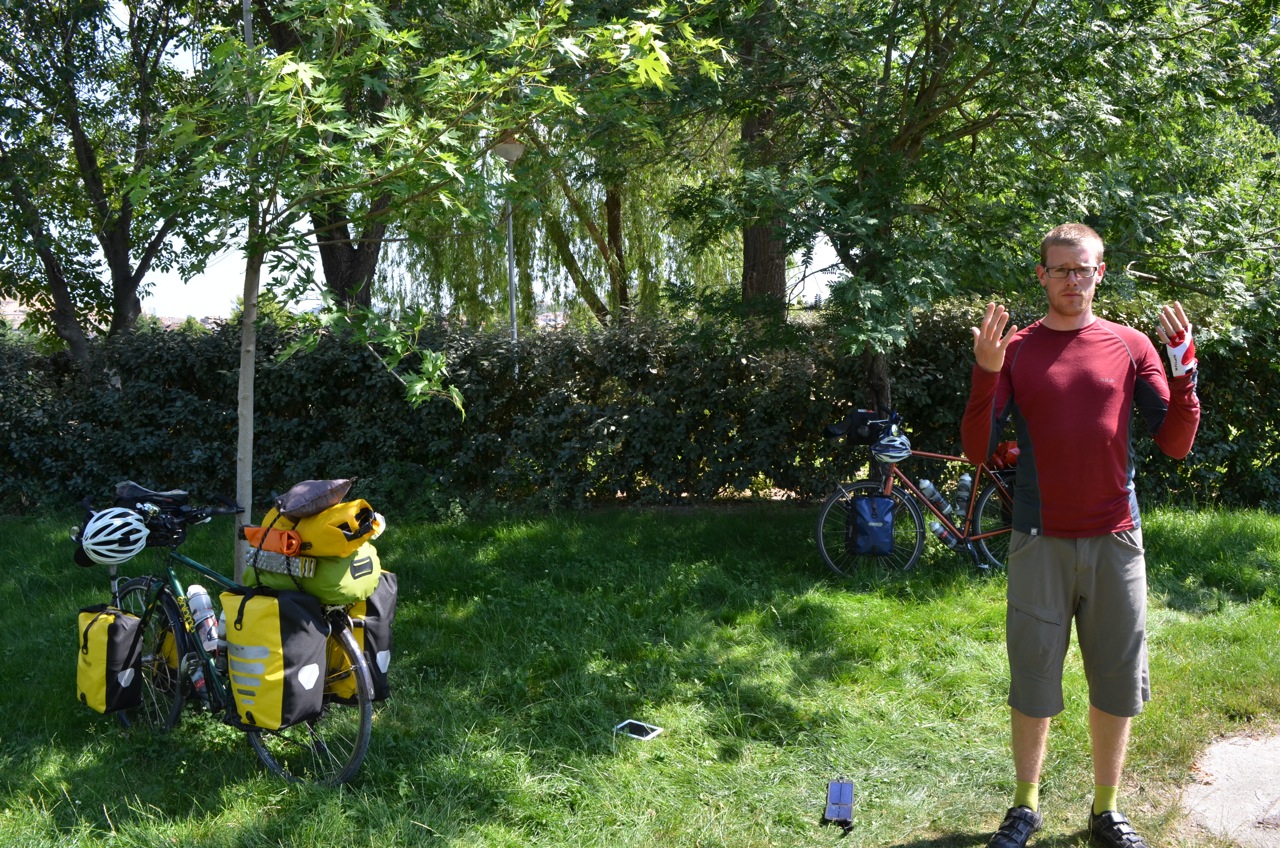
After lunch, Dave realised that one of his new gloves was missing! Nooo! We looked around the park and he rode back to the bakery but there was no sign of it. He was pretty annoyed with himself, having had them for less than 24 hours.

Sad hands

Sad hands

I did some yoga whilst he was searching, then we did a class together once he’d calmed down a bit! Then we discovered the free park wifi and hung out there a bit longer.

We got an email from the organiser at the next project saying that we could go along, hurray! We will be there tomorrow afternoon, it’s only another 55 km.

Just chill in

Just chillin

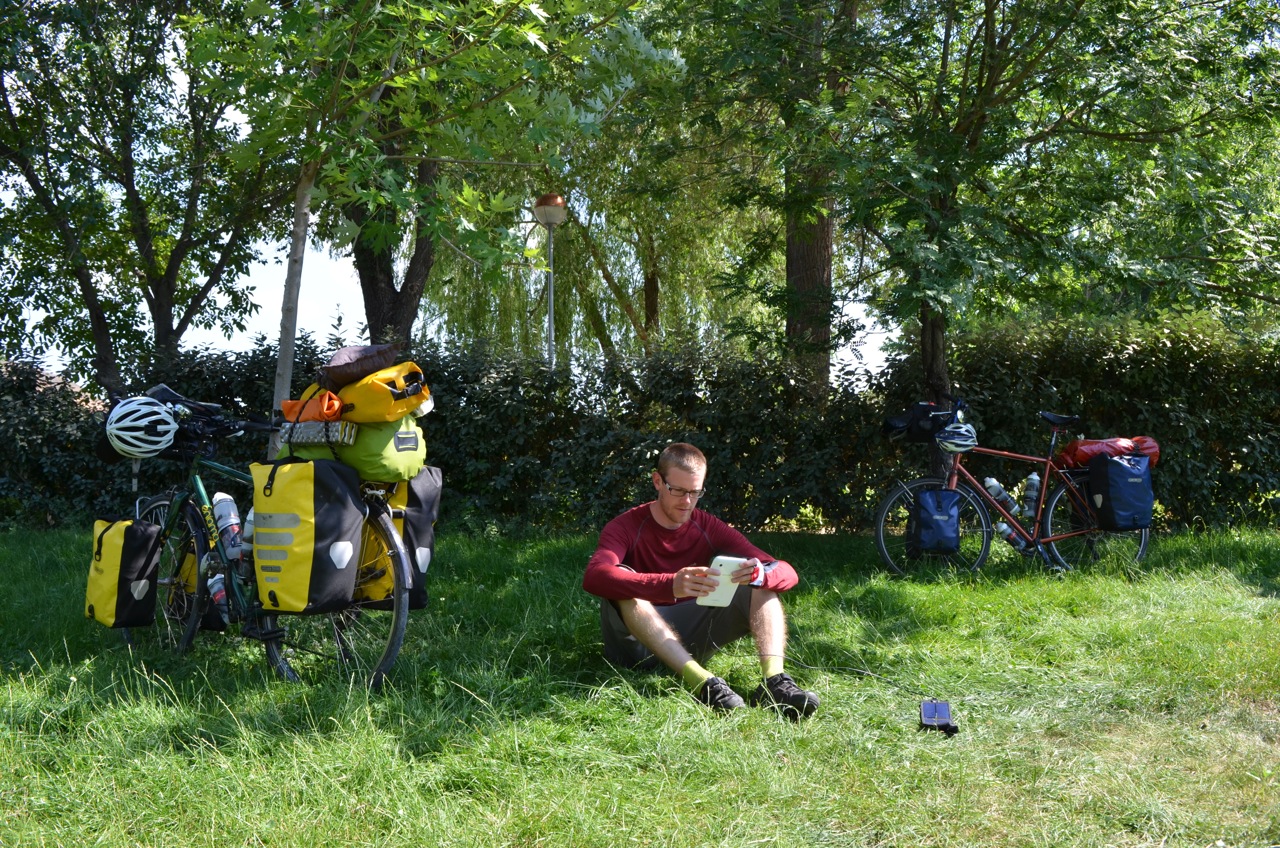
Once the hottest part of the day had passed, we packed up and headed to the supermarket, which opened for its afternoon slot at 5pm. We restocked, cooked a disappointing dinner and set off for another evening ride. On our way out of town, we saw another tourer! A local man who was out from Girona for a one week trip. We had a chat and he headed to the park for some stealth camping whilst we rode on.

It was still hot as we climbed up the steep hill out of town. The road was still quite busy but the traffic was good to us. We were heading for a big lake on the map to find a wild camping spot.

Evening light over the river

Evening light over the river

The double riding day is really nice, we get to ride in the morning and evening with a long break in the middle. The only downside is feeling extra sweaty and gross! The possibility of finding a wild camping spot with no running water was plaguing us on our way up the hills. So when we saw a petrol station ahead, we pulled in to ask if there were showers… yes!

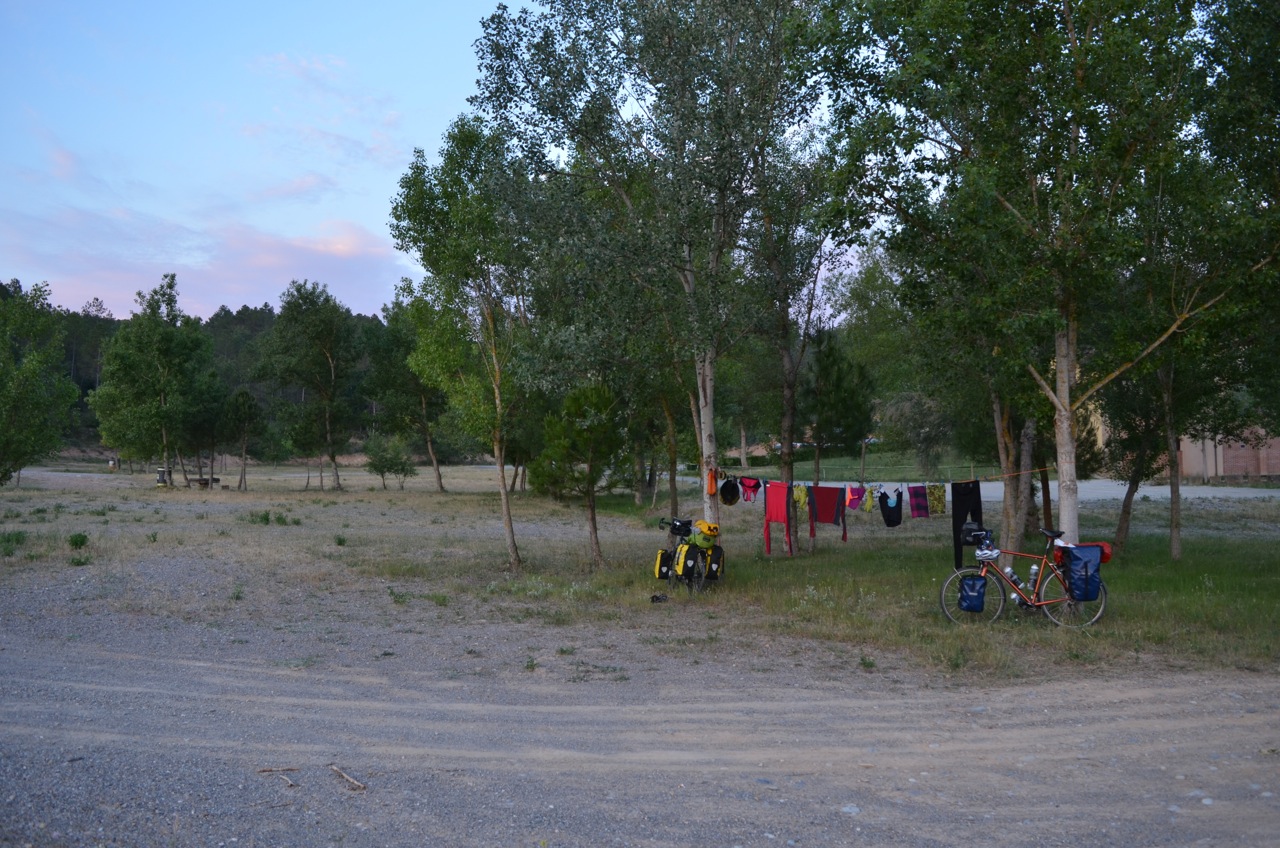
By the time we’d both showered and done laundry, it was 9:30 and the sun was down. Behind the petrol station and its car park was a big area of open space and trees and a few picnic tables. There was also the start of a walking and cycling trail, and no signs that said ‘no camping’… looks promising. It wasn’t exactly scenic, the ground was pretty scrubby and there were a few piles of rubble around, but beggars can’t be choosers. We mooched around as it got darker, picked a spot, hung up our laundry, had dinner and then pitched the tent just after 10pm. The moon was coming up, full and bright and big.

Our not-so-wild camping spot!

Our not-so-wild camping spot!

We settled down for the night and were just dozing off when we heard a car come down the track towards the pile of rubble about 50m from our tent. What are they doing in an empty car park at midnight?!

We heard someone get out the car, walk around a bit, then start digging. Digging! Clearly whoever it is has murdered someone and is burying the body right here. Then they’re going to notice that we saw them and kill and bury us too. There is no other rational explanation.

We were both pretty nervous but didn’t know what to do so just lay there peeking out at the headlights and listening for noises. After a while, the car drove around to the other side of the place and parked up there for a bit, making some banging noises. Then off it went and parked at the garage, where the lights were off for the night.

And so Dave went to sleep. And didn’t even wake up when he drove back down half an hour later, headlights shining right into the tent, and parked somewhere else, did something else, then left again.

Not sure I slept very much… and how I will hate that 5:45 alarm!

– Anna

Balaguer – rest and restock

We slept well again – and woke up late. We decided we would stay here at the well equipped but very expensive Camping La Noguera for two nights so we could get a few chores done today and get an early start tomorrow, instead of starting late and having a hot ride today. So we had brekkie and did our laundry at the campsite sinks – even the PJs got a wash! We also needed to check in with Yvonne at Rewilding Europe. We came to Catalonia to visit two projects in the Pyrenees, but Yvonne has been liaising with them for us, and she’s been out of the office for a week so we didn’t know if we could just turn up or not. So we sent her an email and asked if we could have a chat sometime today.

After writing up the blog from yesterday, at about 1pm Anna had a sudden sugar crash and it turned into a terrible day. We really needed to go into town (about 10 km away) for food and to get some kit, but Anna couldn’t face it. I think eventually when I said I would go on my own, FOMO got the better of her and she resignedly got her stuff together. Just before we left we got an email from Yvonne to say she could talk to us at 3 pm. It was 2.20 at this point – so we had to get into town pretty fast. Luckily once we set off the breeze cheered Anna up a bit and we made good time into Balaguer, arriving at 2.45.

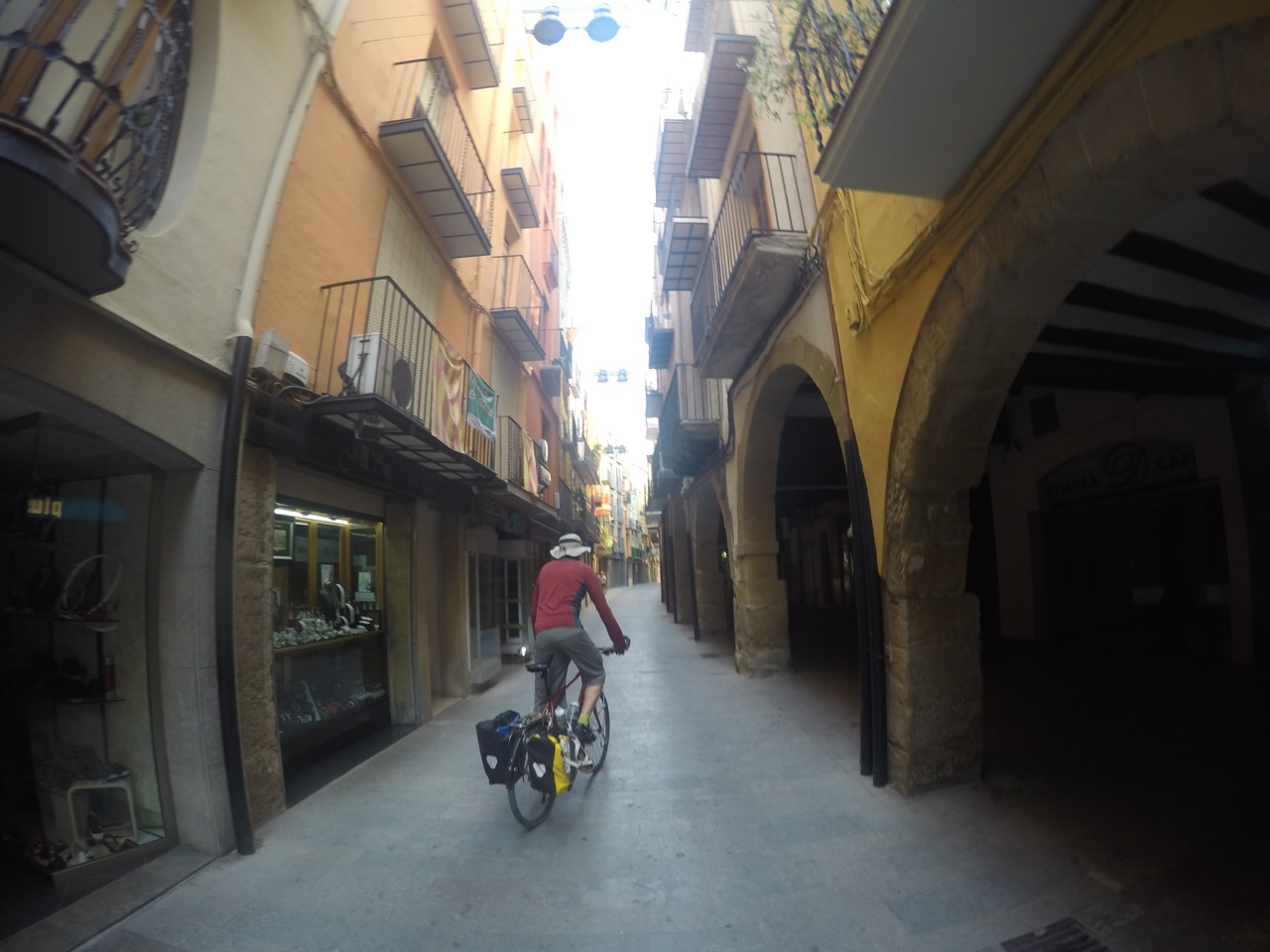
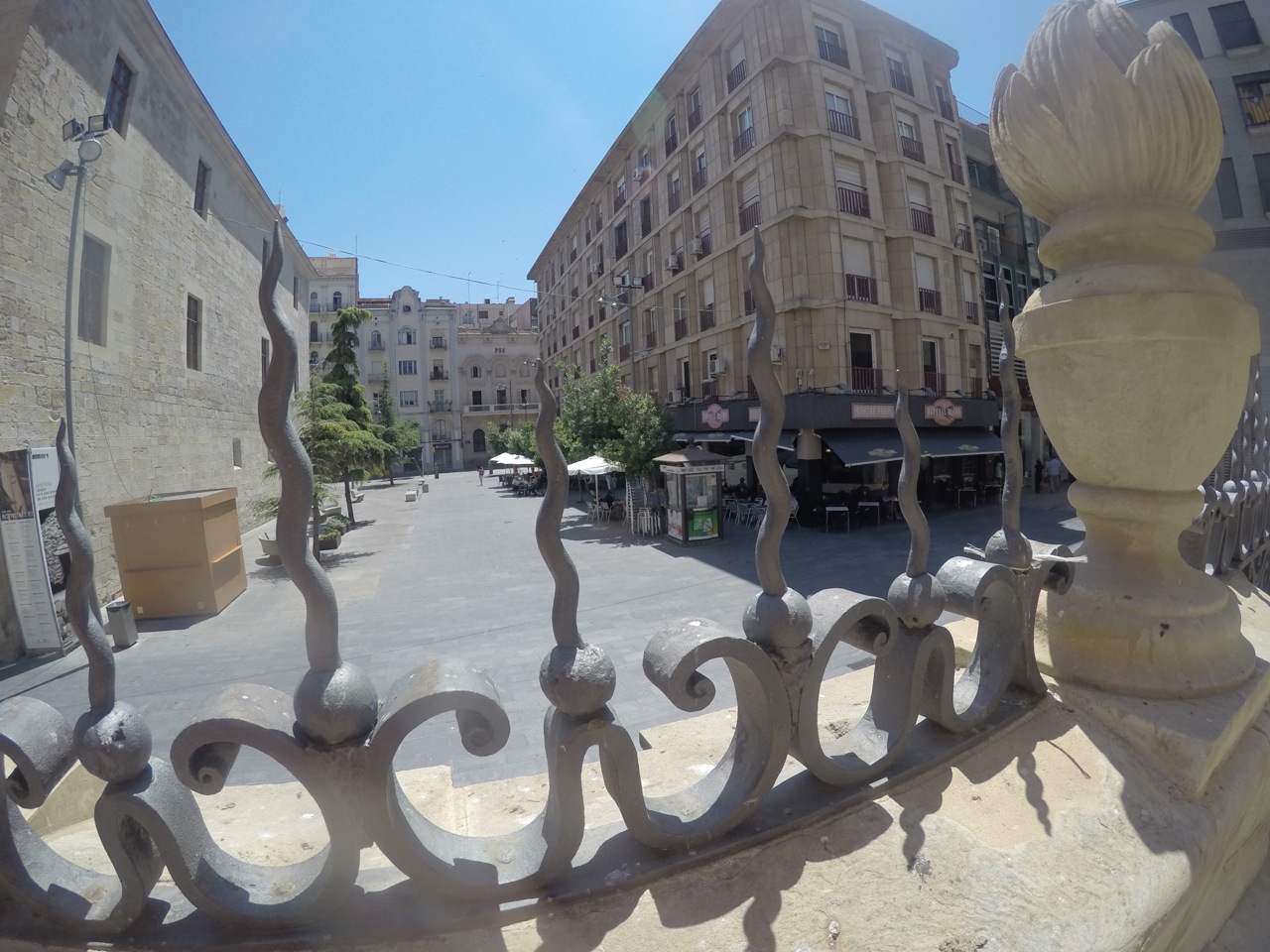
The narrow old town streets of Belaguer

The narrow old town streets of Balaguer

We found a café and logged on just in time to chat to Yvonne. We found out that at least one Pyrenean project, La Muntanya D’Alinya, is keen for us to visit, which is great! Yvonne is going to send through contact details and the address so we can plan our onward route. Feels good to be sure we definitely have a reason to be here!

After chatting to Yvonne we went to the supermarket to get some food – the budget has been suffering a lot in the last few days – it’s much more expensive here than in Galicia and Portugal. Hopefully we can find a way to get the costs down! Anyway we went for delicious picnic lunch in the shade of a white birch tree by the river and watched some ducklings bobbing about on the water with their mum, and a solitary heron stalking the weir in search of careless fish.

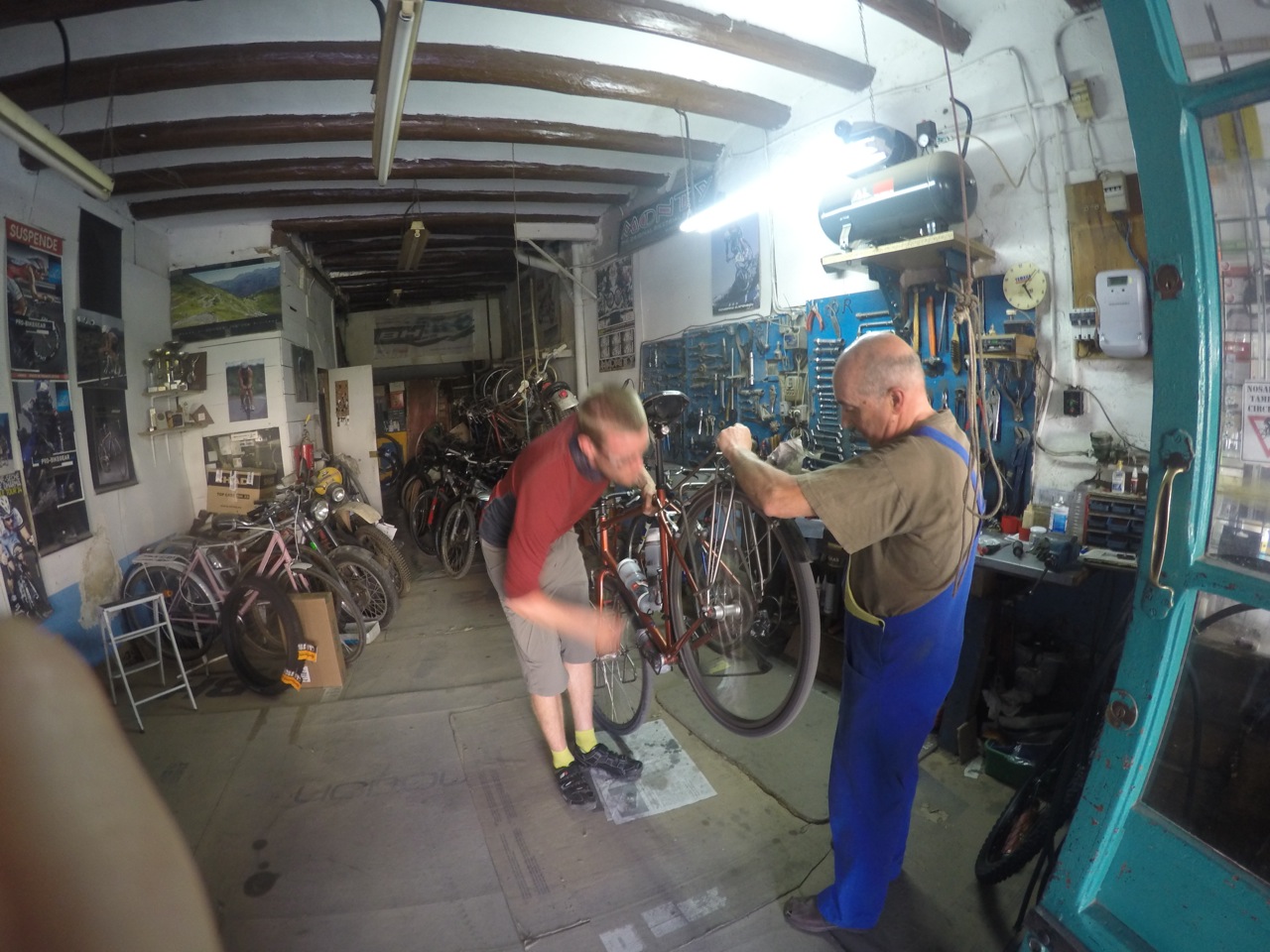
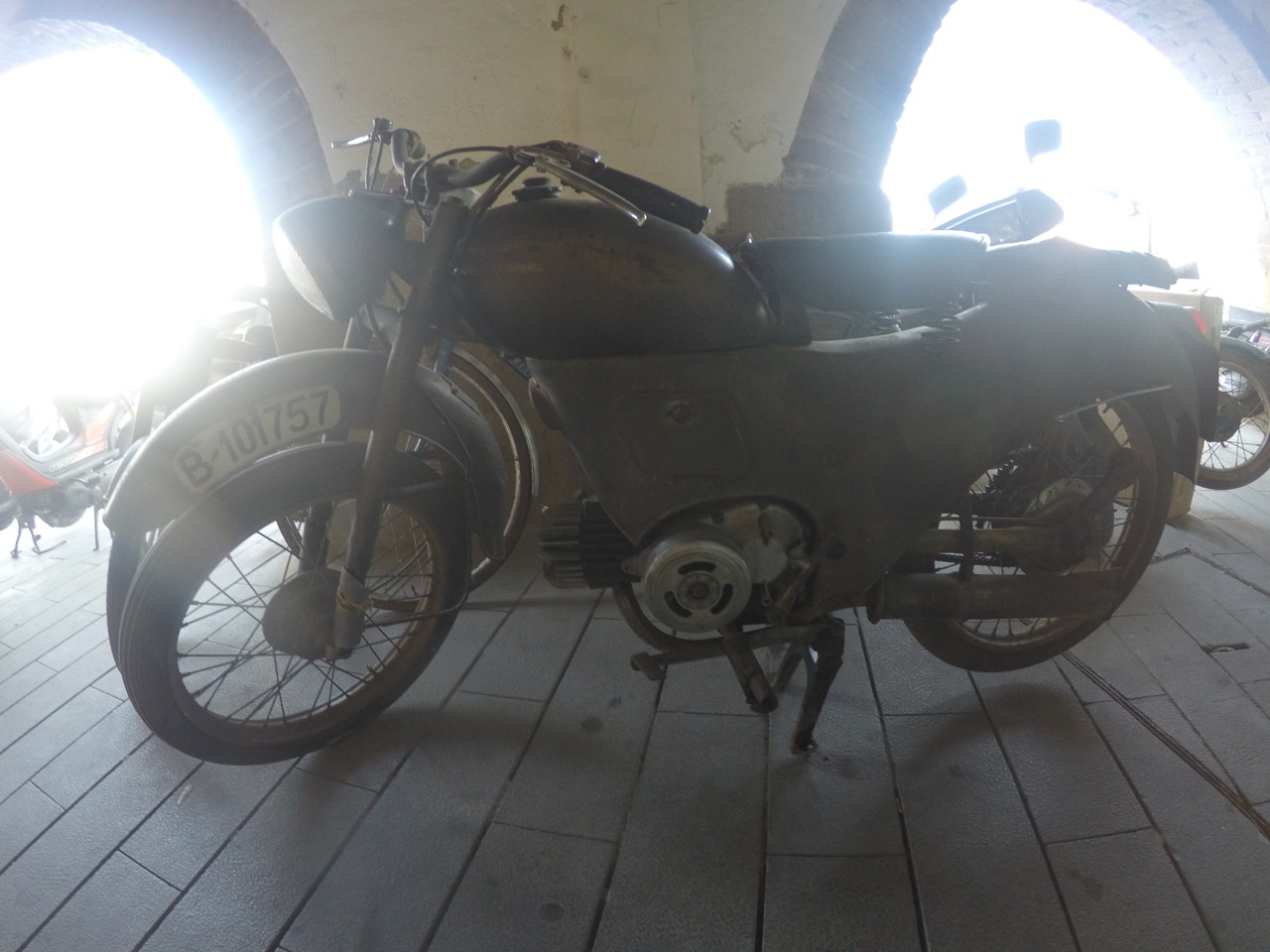
Sated, we went in search of a bike shop. We needed cycling gloves for me (I stupidly lost one out of an open pannier while doing some ridiculous climb in Portugal a few weeks ago), chain lube and an expert to look at my gear cassette, which has been alarmingly failing to freewheel of late. We amazingly found an open bike shop (it’s still a fiesta here) and got the gloves and lube with minimal fuss. Now, to explain a stuck cassette to a guy who I didn’t share a language with….. With a lot of pointing and odd words of Spanish thrown in we eventually reached an understanding and he advised my to lube the hub for a few days. I’ll see how it goes. The guy was great, he also tuned my gears for free – I think he thought that’s what the problem was in the first place before I explained clearly with my expert Spanish and pointing. The shop was amazing, bikes and bits of bikes and tools all over the place, and a few ancient motorcycles outside – I think he does them too!

I'm sure I helped a bit

I’m sure I helped a bit

A piece of history

A piece of history

Chores done we headed home, uphill but with the wind behind us, found a shady bit by the tent and enjoyed second lunch at 6pm!

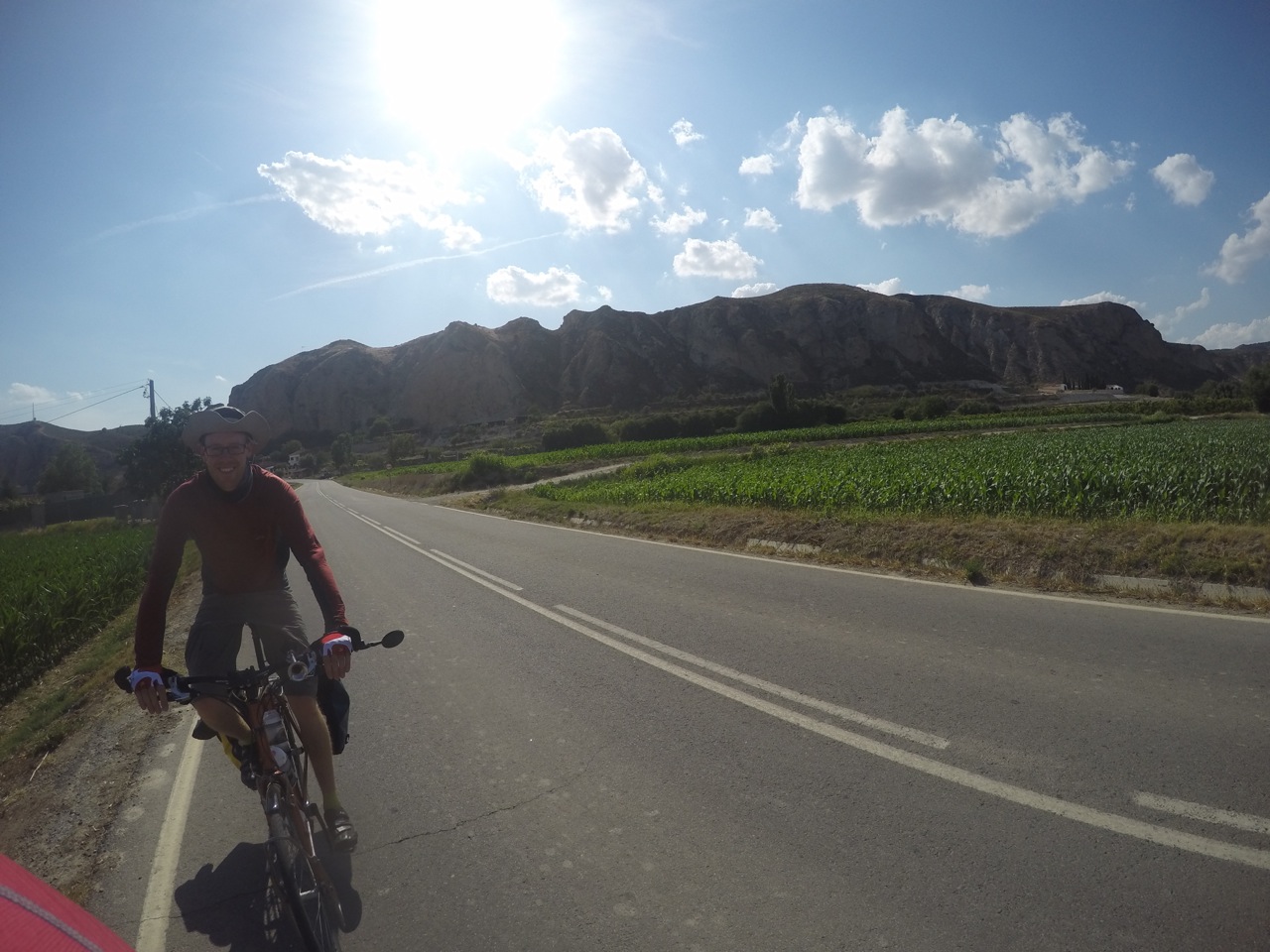
Lovely afternoon ride home

Lovely afternoon ride home

Now all that remains is to do laundry again, contact the rewilding project, check emails (I’m supposed to be buying a flat today and have no idea if it’s gone through, argh!), plan the route for tomorrow and pack away so we can get away early tomorrow. Easy!

– Dave
Day 29 – Evening ride

We got up late after our late night and planned to resupply in town before riding out in the evening.  But once again, our plans were scuppered by the fiesta day.  All the shops were shut!  We sat outside the closed Decathlon and used their free wifi, wondering what to do with ourselves.  We decided we’d leave town that evening without our supplies and save the shopping for Barcelona (by which time there will probably be another fiesta).  So we headed into town for lunch.

Outside the Lleida cathedral

Cafe outside the Lleida cathedral

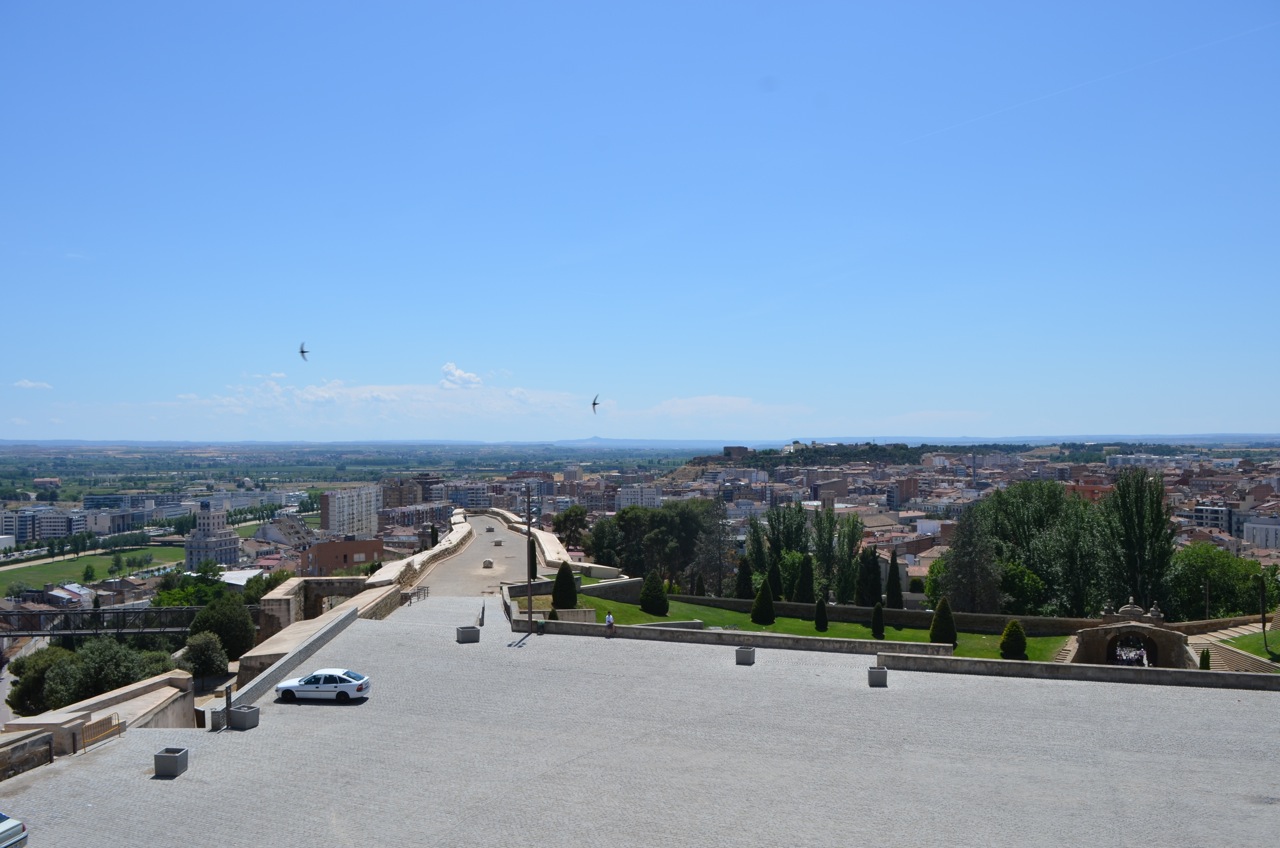
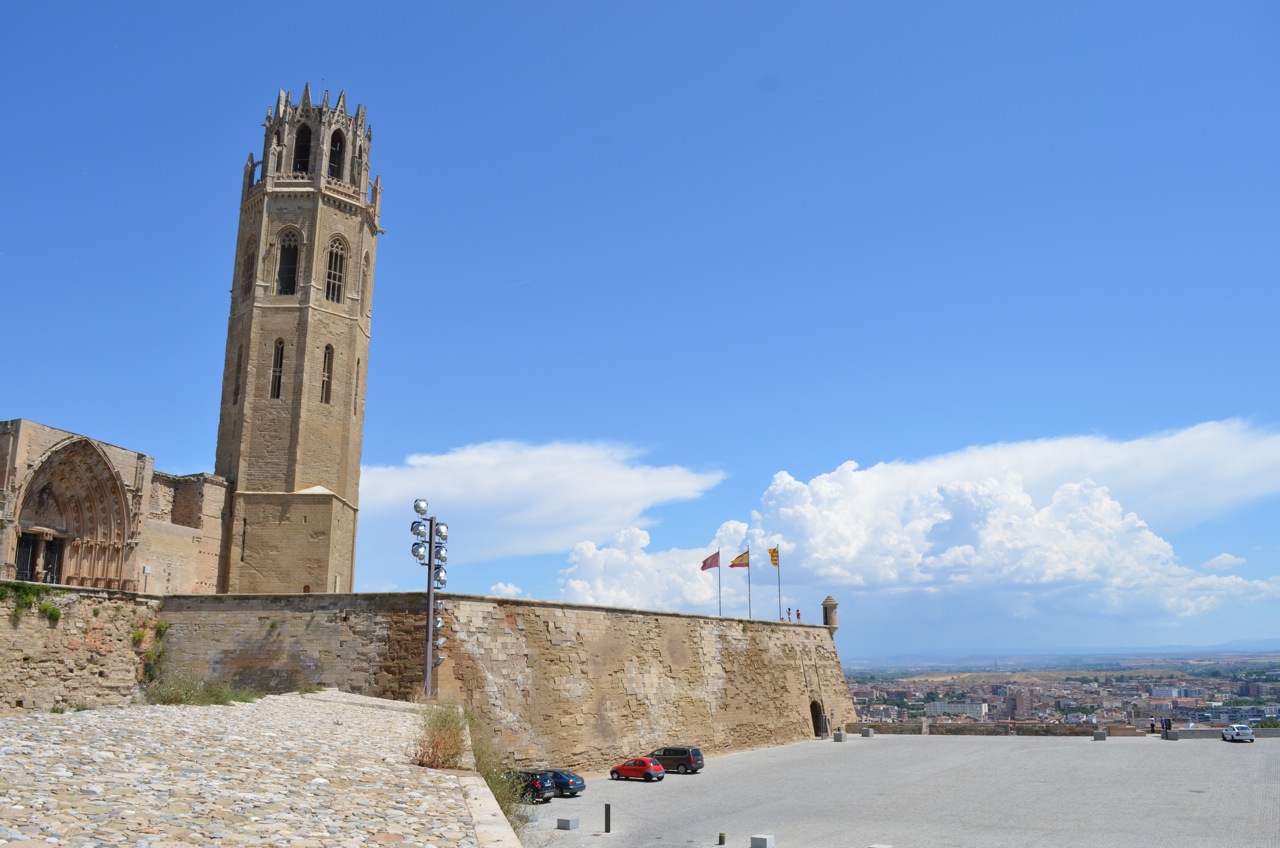
There was a nice vibe in Lleida, a gorgeous sunny Sunday holiday with people milling around and a fair on in the town park.  We went through a slightly rough part of town that reminded us of Peckham and everyone was chilling out in the street with some music on.  Then we went to the historic centre to have a look at the castle and cathedral on the hill.  It was so warm though, we moved pretty slowly!

Lleida from the top

Lleida from the top

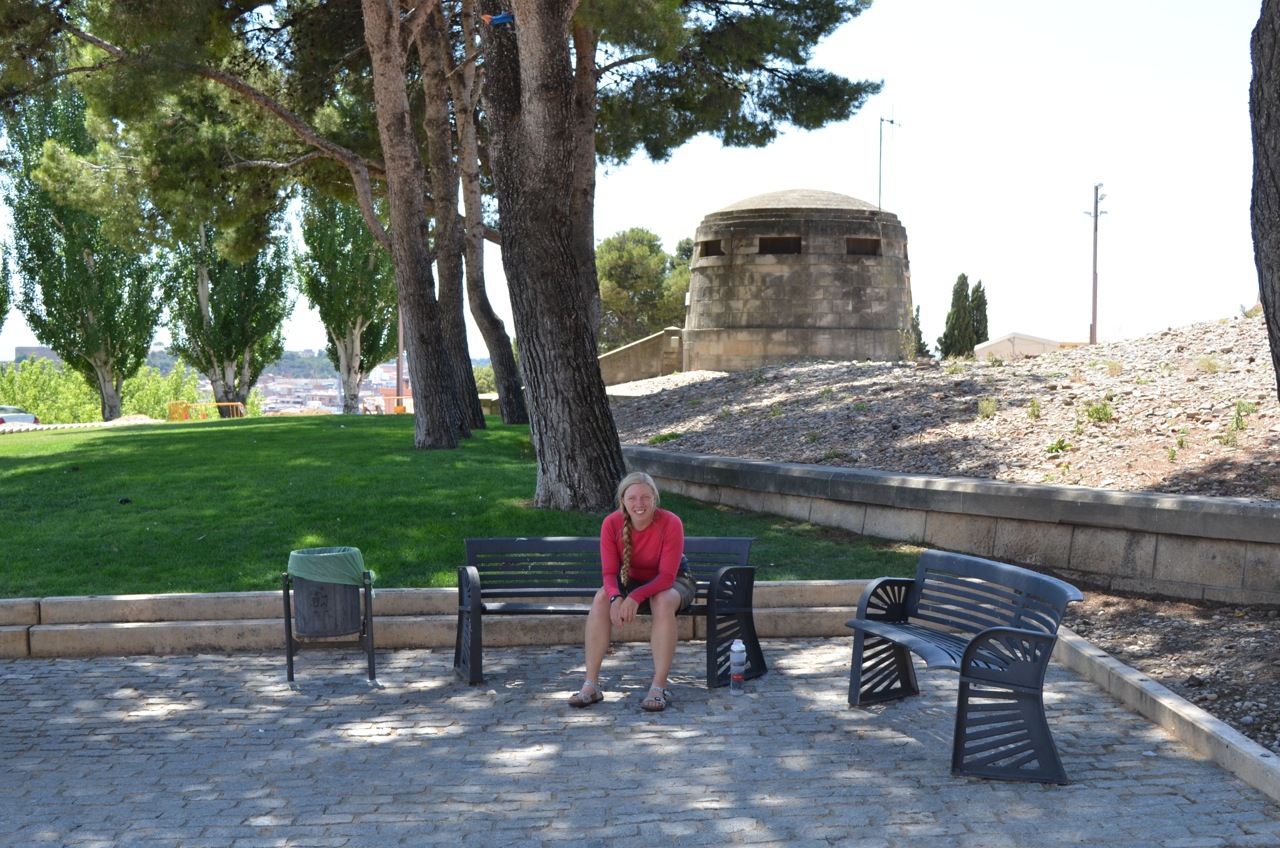
Not moving very fast

Not moving very fast

Cathedral by the castle

Cathedral by the castle

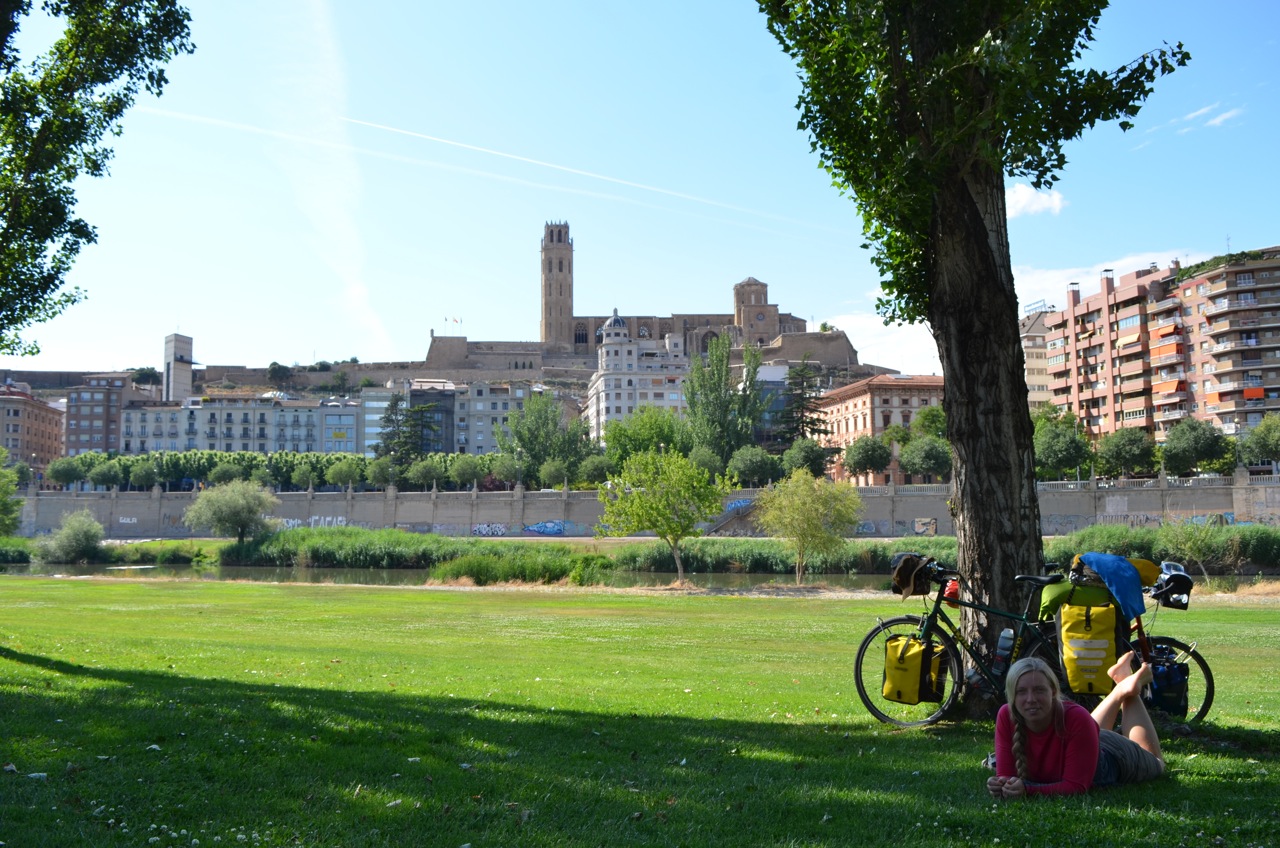
Park siesta

Park siesta

After a mooch and finding an open shop (hurrah!), we went to sit in the park before finding a cafe for first dinner.  Then, rather unusually, we hit the road at 7:30pm.  With only 36 km to do, we thought we should make it before dark.

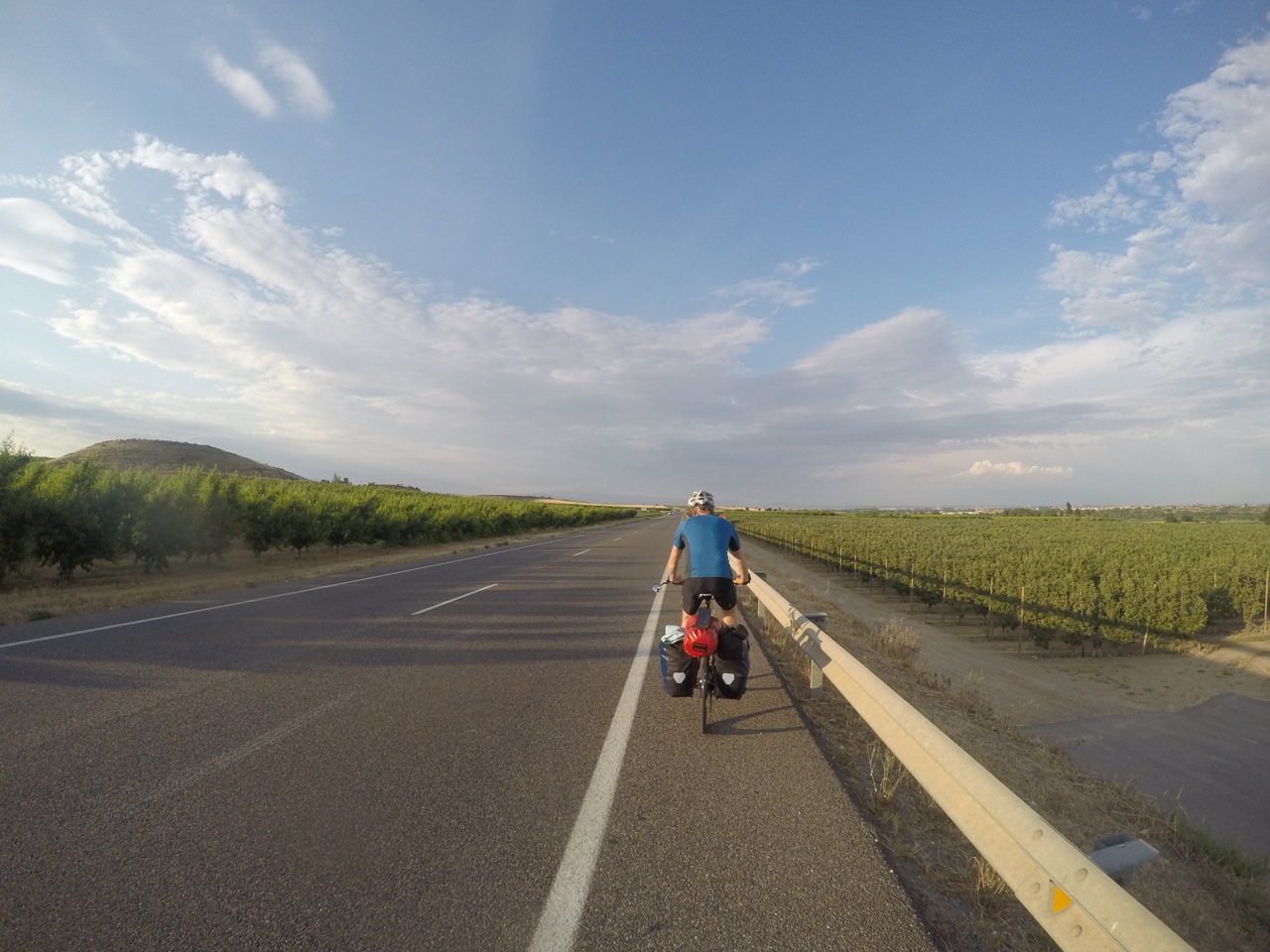
It was still very warm but the edge was taken off the sun’s rays as it started to sink low in the sky.  It was a beautiful ride through fields, although there was more traffic than we’ve become used to.  There was also a lot of roadkill, which we don’t normally see.  We saw a stoat-like animal, a hedgehog and a huge swollen boar, looking like it was fit to burst at any moment!  Ride past, quick!

Through fields

Through fields

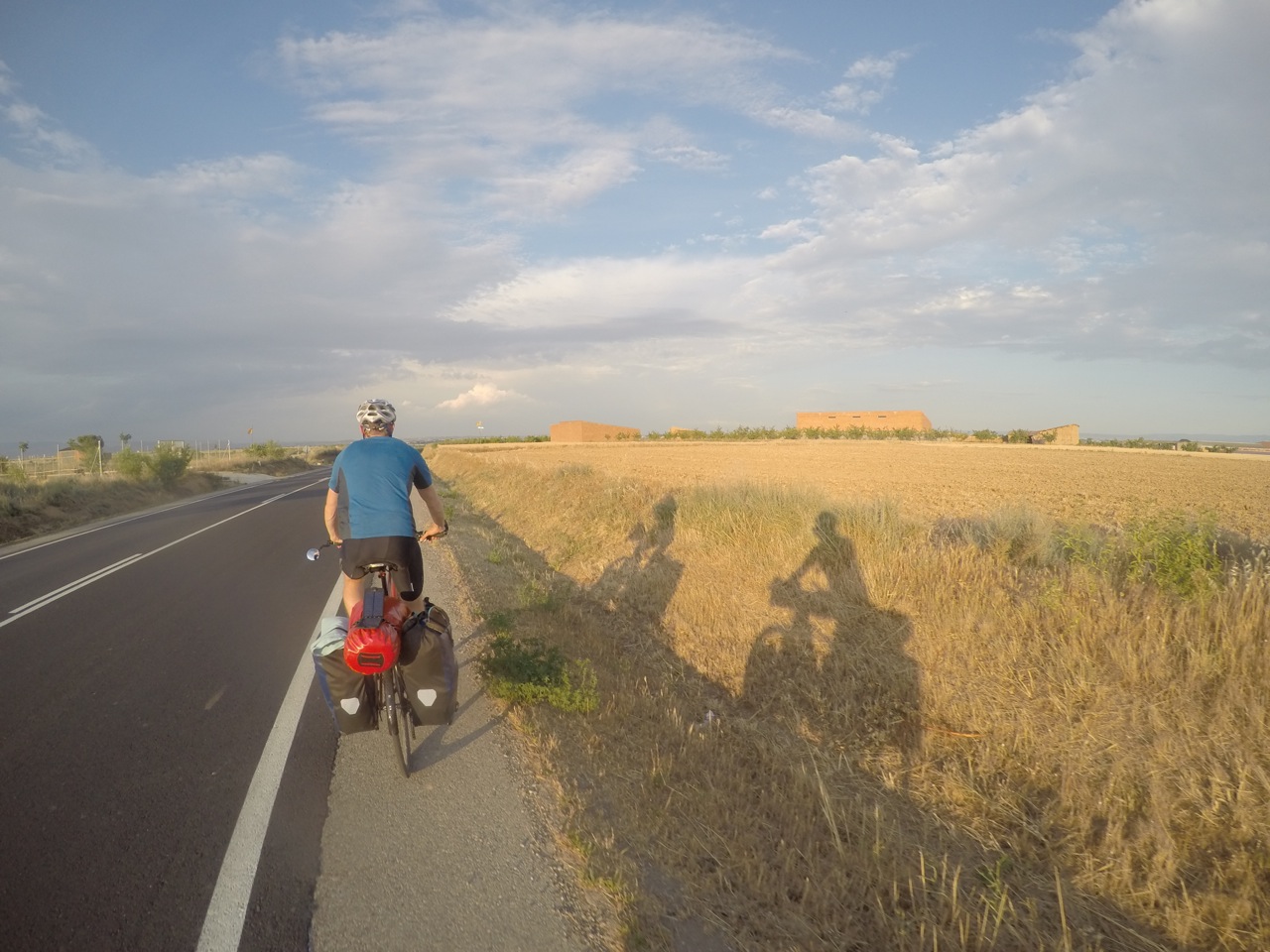
Long shadows

Long shadows

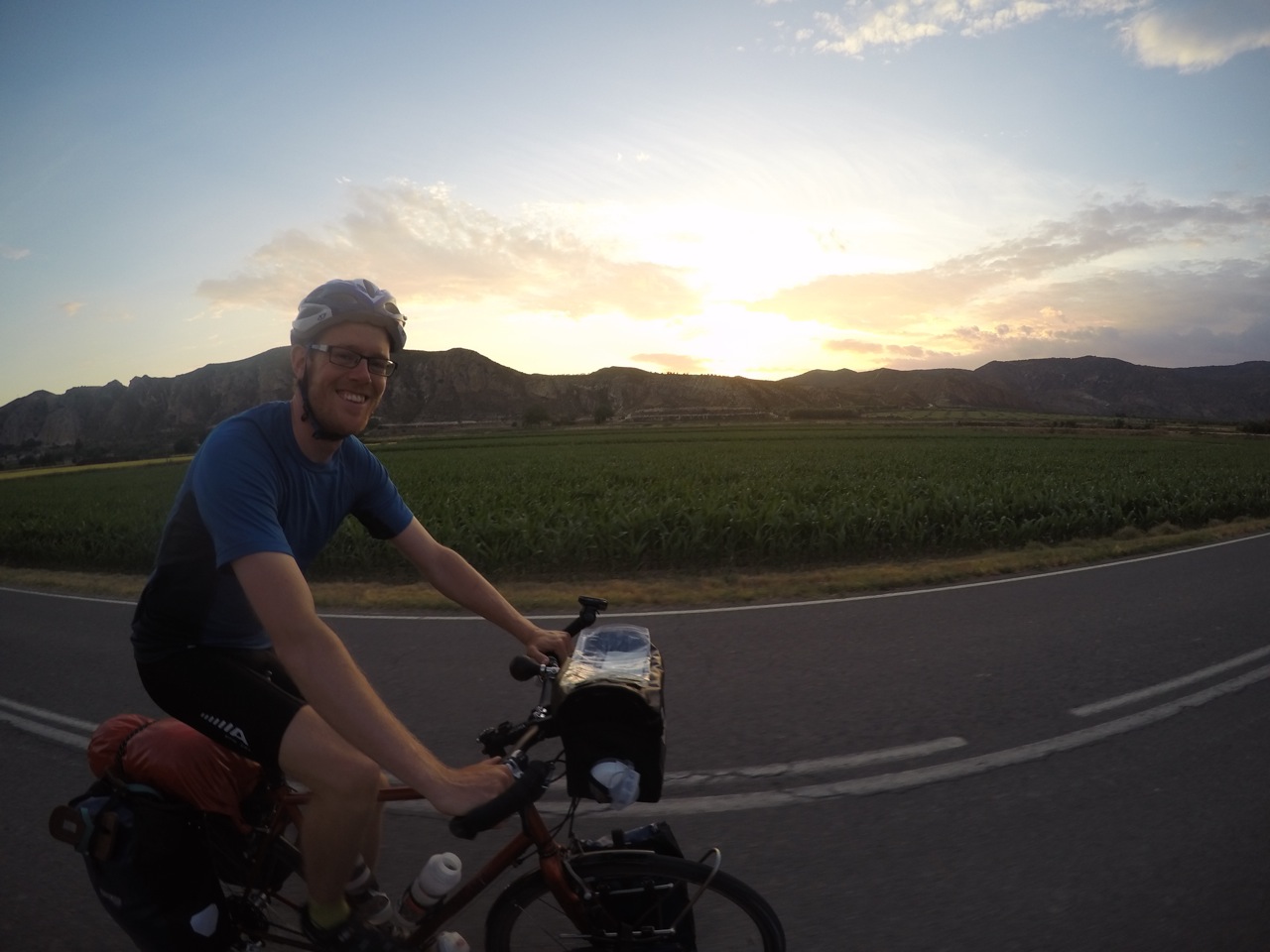
We rode through the lovely town of Balaguer then off the main road onto a minor road that was heading for the mountains!  Luckily our campsite for the night was just before the first of the hills but we enjoyed riding towards them as the sun set and the sky turned orange and pink.  We had a stiff headwind by this point and were pretty glad when we saw a sign for the campsite in 1km!

Dave at sundown
Dave at sundown
At about 9:30pm we pulled into the campsite, ate tortilla in baguette, pitched up and showered.  What a lovely evening ride!  Time for a glug of Mario’s wine and then bed.

In the night, I woke up and contemplated getting up for the toilet.  We’d left the outside door open so I was looking out of the tent from inside when I saw something walk past – is that a lynx?!  Or maybe a genet!  It was definitely a massive cat with a long fluffy tail and pointy ears….

We looked it up this morning and it was most likely a wild cat, which is very exciting!  I’ve never seen one of those before.
– Anna