To Chur!

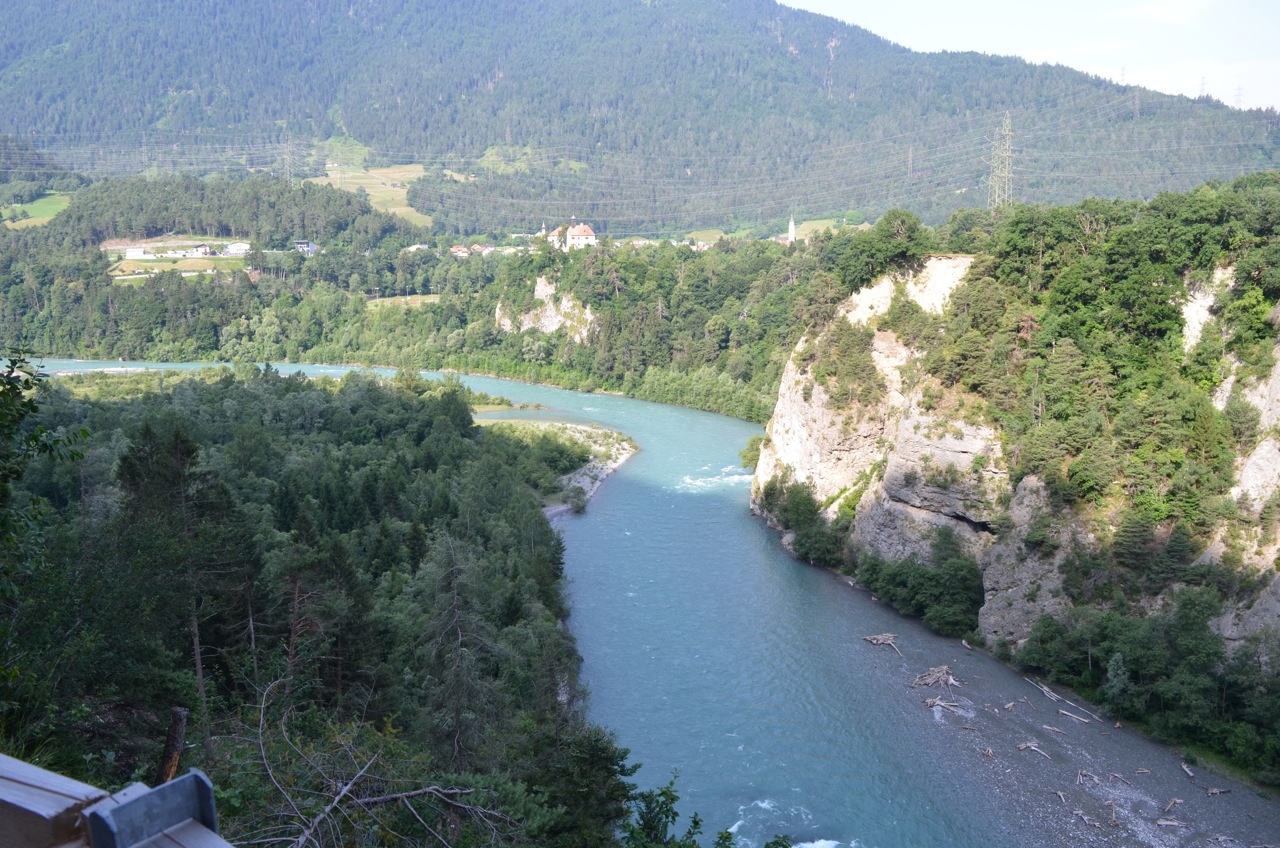
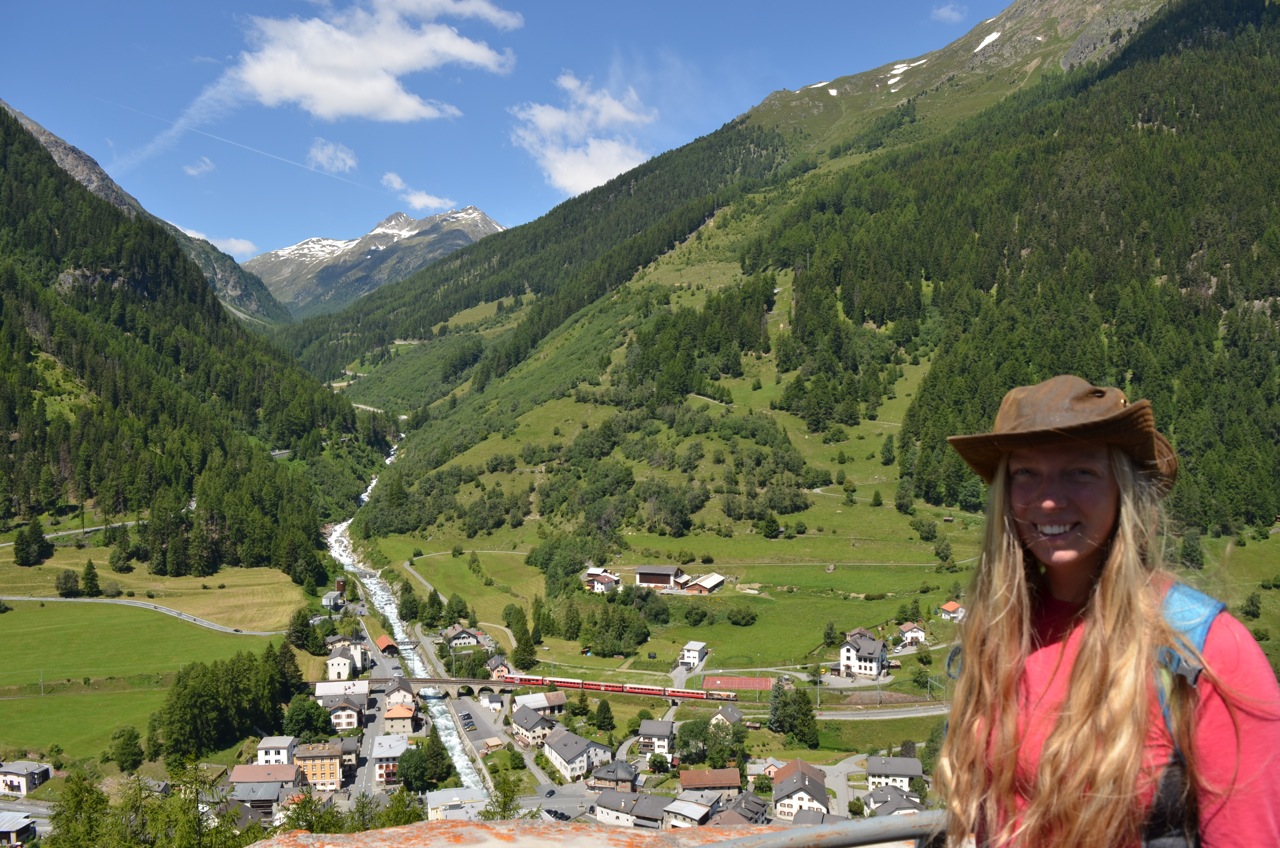
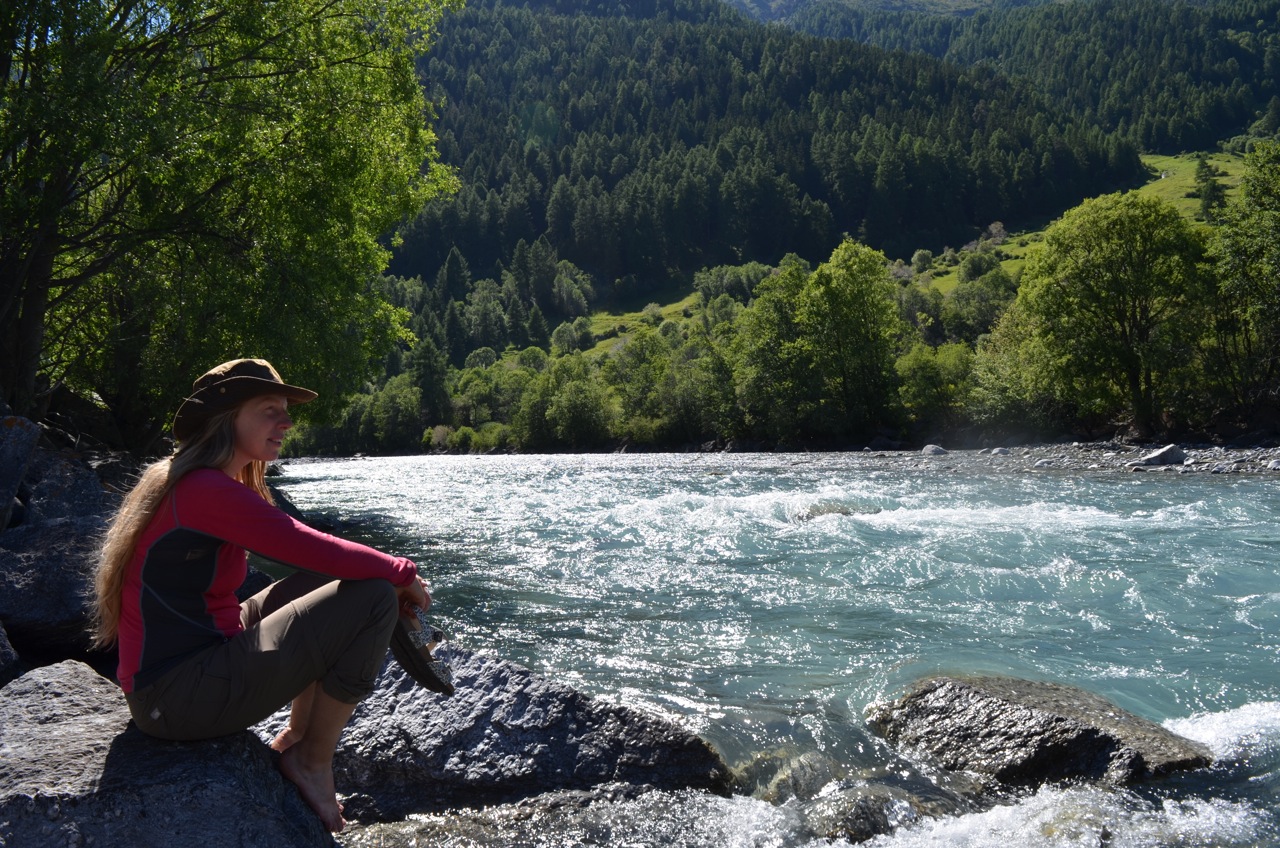
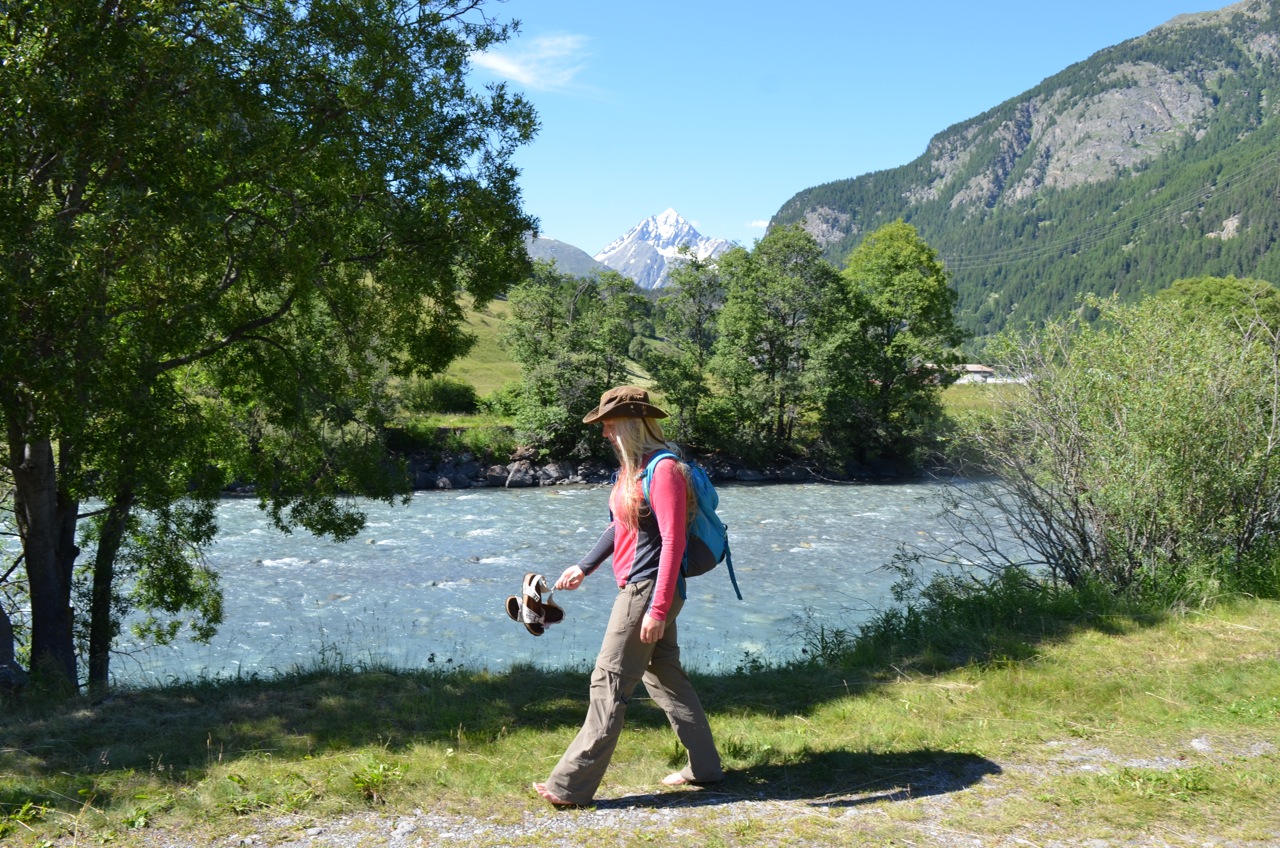
After yesterday’s exertions we got up at 7, way later than we we should have done! We left the campsite and followed the Hinterrhein north to where it meets the Vorderrhein and becomes the unadulterated, undiluted Rhein at  Reichenau. We followed a cycle path, and it was great to be out of the traffic, although there was the odd bit of agricultural equipment to avoid. The path wound up and down the valley on one side of the river, with occasional enticing views of the opal blue water.
A bridge over the Hinterrhein

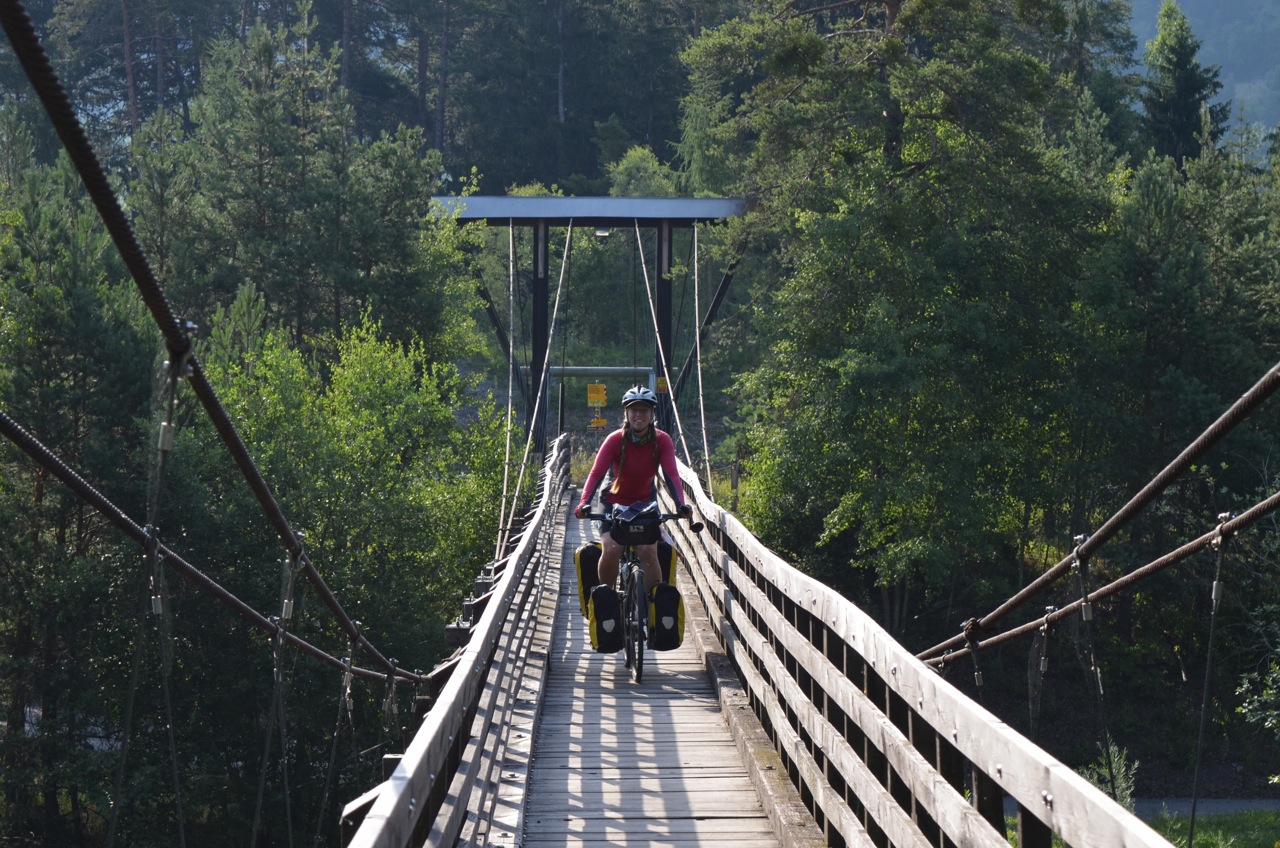
A wobbly bridge over the Hinterrhein

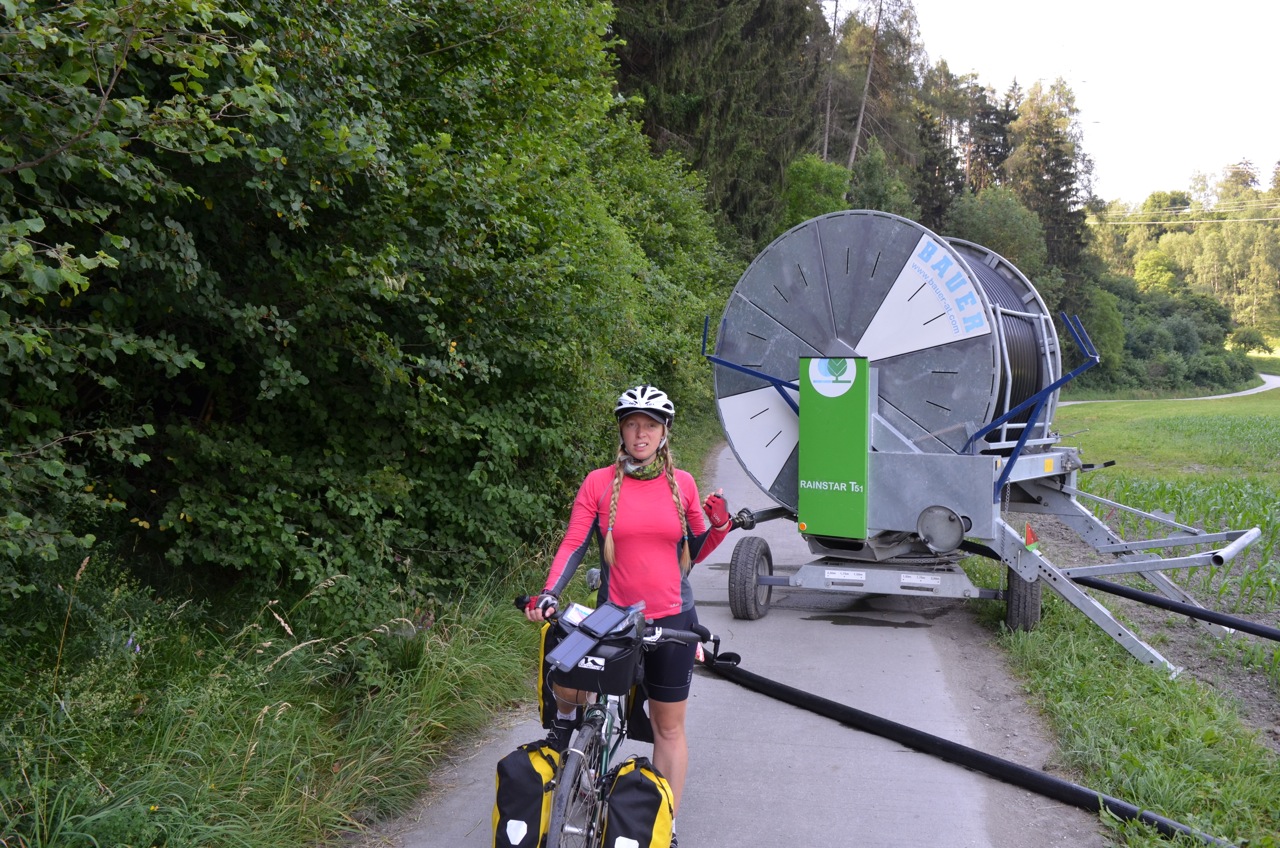
Traffic calming

Traffic calming

Relaxing ride

Relaxing ride

Hello Rhein!

Hello Rhein!

Chur is apparently the oldest town in Switzerland. We found the old town and had lunch on the steps of a church when we couldn’t find a shady bench. A cheeky sparrow made off with its own body weight in cheese rind. We felt that Chur maybe had more to offer than our tired, hot brains could appreciate!

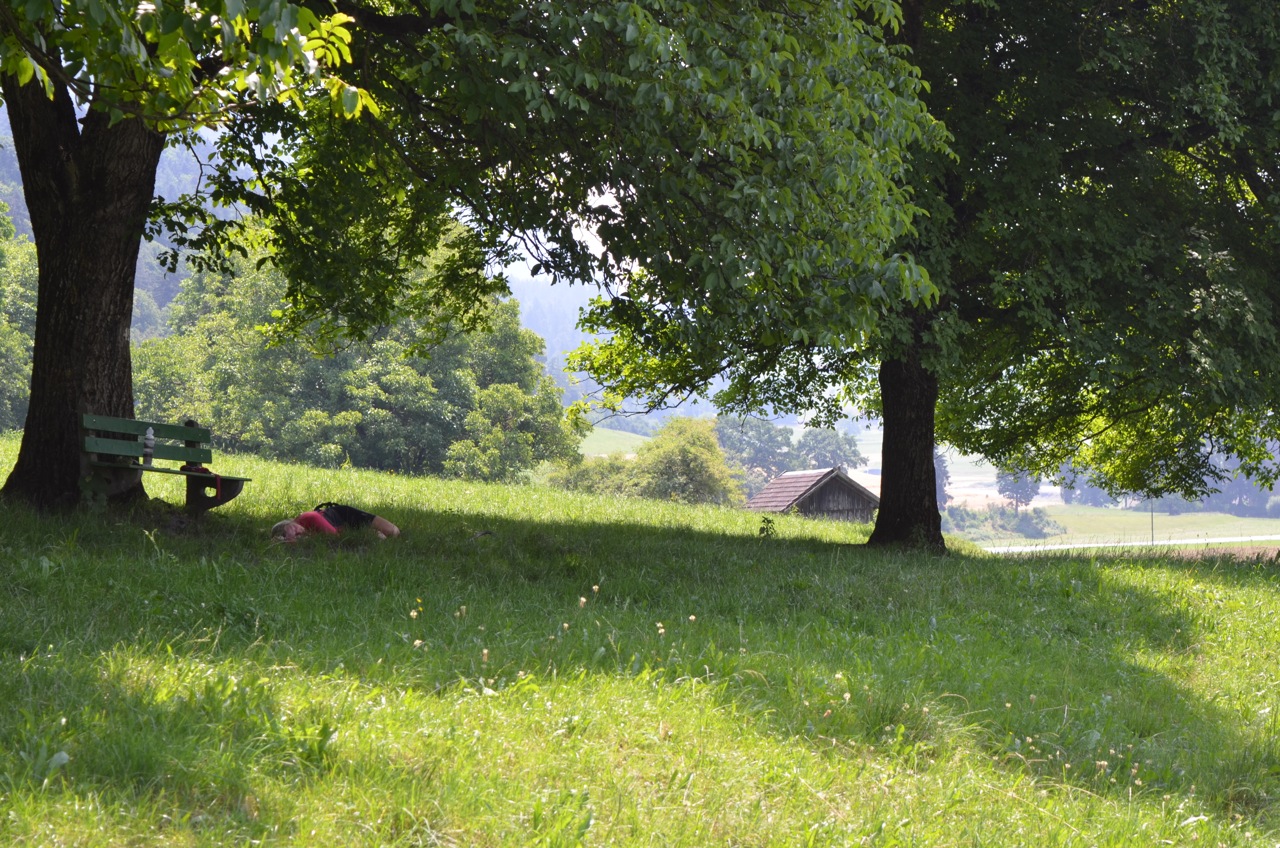
The detour into Chur meant more delay, and by the time we got going again it was 12, and we’d only covered 20 km. We carried on along old roads and cycle paths,  sometimes alongside the Rhein, sometimes quite far away, but always blissfully clear of the main road. By 1pm however, things had got too hot, and we sought respite on a shady bench under a tree.
Nap time!

Nap time!

Nap over, Anna spotted a campsite just 1.5 km away, so we slogged over there, hot, moody and in need of a shower. Once we turned up we splurged our stuff over about three pitches and the campsite manager was obliged to tell us off because another couple wanted to park their massive caravan in the shade. We reorganised our stuff, obviously making sure we remained out of the sunshine. Pah, caravanners!

When we went to pay, the manager apologised for asking us to sort our stuff out, and from then on was super nice.He undercharging for our tent, bending the rules slightly (very un-Germanic apparently) to let us have wifi and chatting with us about music.
After dinner we were just getting ready for bed when another cycle-tourer turned up. He’s done a circular route today, doing both the Albulapass, which we did yesterday AND the Flüelepass near to Zernez. He’s done almost 3,000 metres of climbing today, and about 140 km! He’s on a three-day tour from his home on the German side of Lake Constance, and he’s certainly getting his money’s worth! Oh, did I mention he’s a grandfather? Made us feel pretty weedy!
We got into the tent and it was immediately too hot for Anna. After a while she went outside with no sleeping bag. Hope she survives the mozzies!
 – Dave

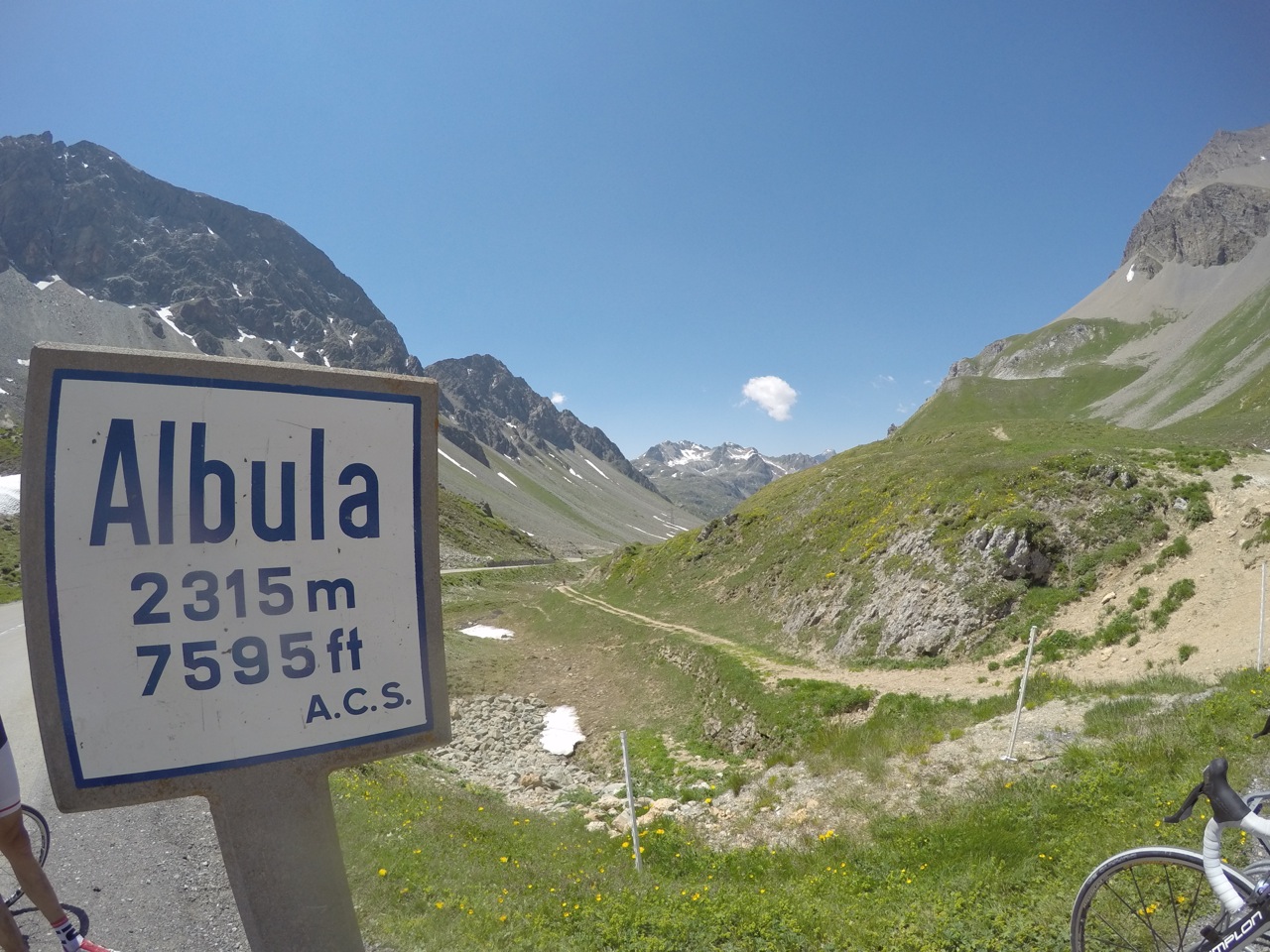
Albulapass 2315m

Last night we were pretty late to bed after getting back from our long walk and preparing for today. We weren’t sure how far we’d get on our first day back on the bikes!
This morning we packed up slower than usual after 10 days off, then went to the office to drop Ruedi’s stuff back. We got to see some familiar faces and said our thank-yous and goodbyes before hitting the road. It’s been a truly wonderful visit to the Swiss National Park, filled with fabulous scenery and exceptional people. We could easily have stayed longer, but the road awaits!
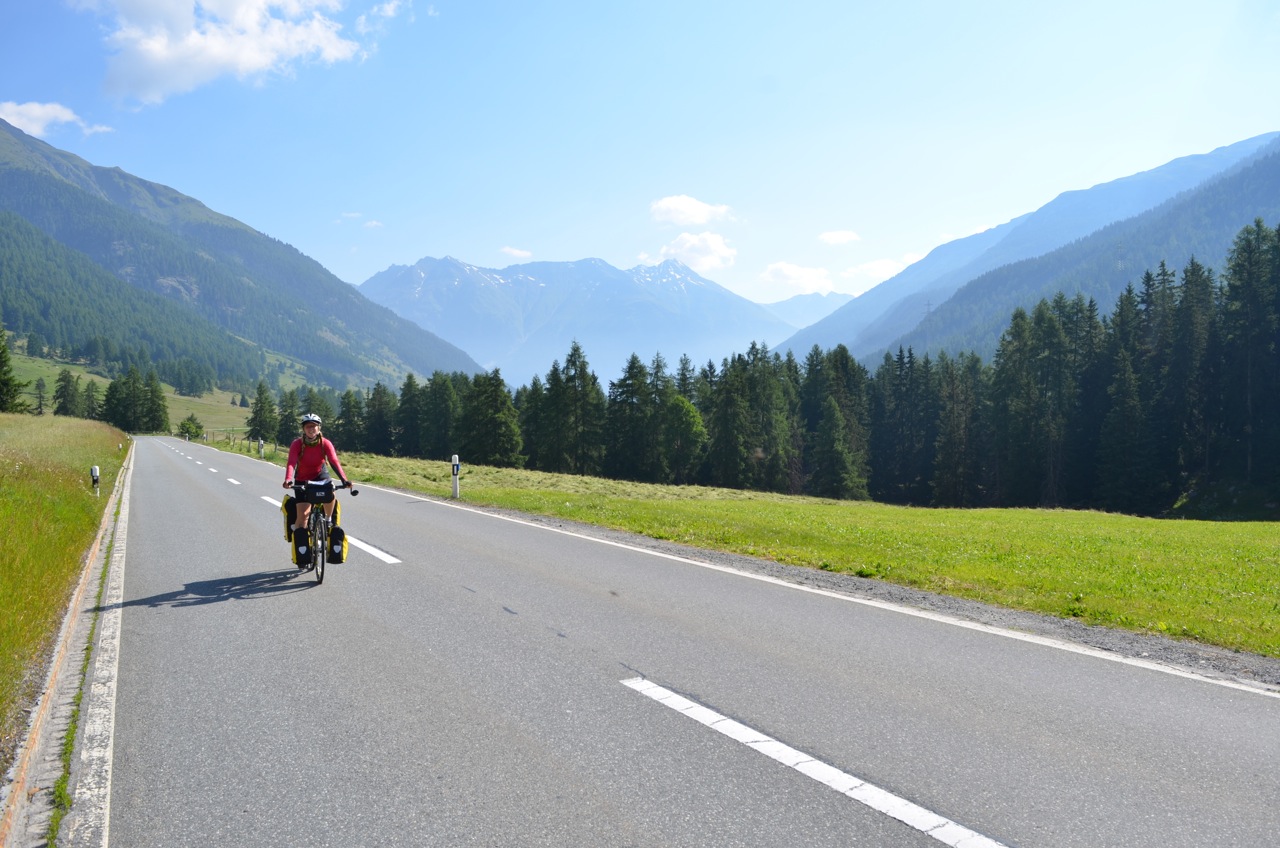
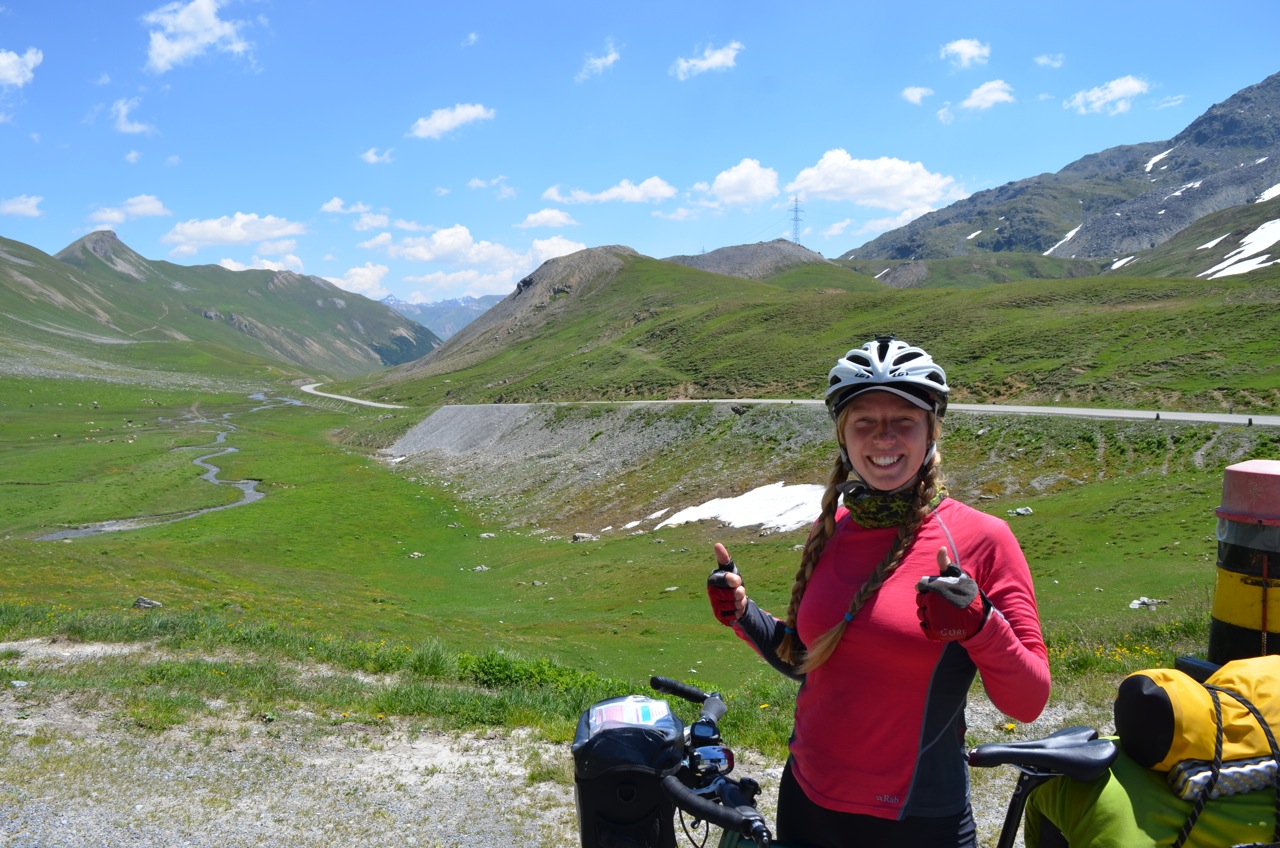
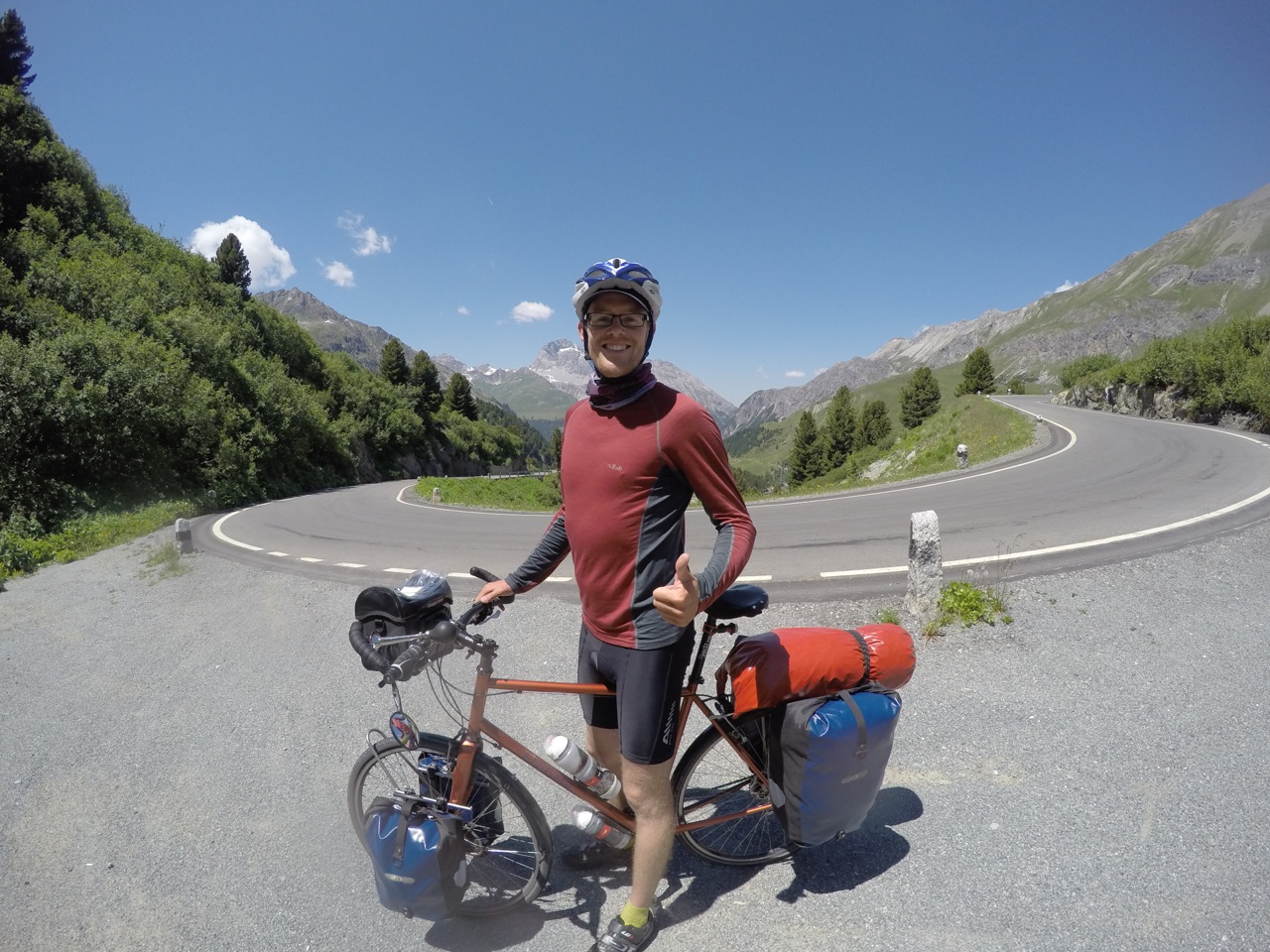
It was 9am by the time we were off, a glorious morning and getting warm already. We took the main road instead of the cycle route (to save time, uphills and punctures!), but it wasn’t too busy so we were okay. It was uphill the 20km to Le Punt where the pass started, but mostly it wasn’t too steep. Usually the morning is great for riding because there isn’t much wind. But the flies were out in force and I was longing for a headwind about 5km in! We were chugging up slowly, sweating a lot, and they were swarming. I’ve never experienced anything like it. There were just more and more flies until I had a huge cloud around me and 20 horrible flies crawling on each glove, sucking up the sweat mopped from my brow. When the swarm got really big, a few flew into my nose and mouth, which was fairly distressing. I pulled over and ran around to try and shed them but it was no good! Why doesn’t Dave have a swarm on him? That’s not fair!
Eventually there was a short downhill section, which saved me from tears and kept them behind me for a while. Then we came down a short steep hill into Le Punt and stopped for a break fly-free. Ahh, sweet relief!
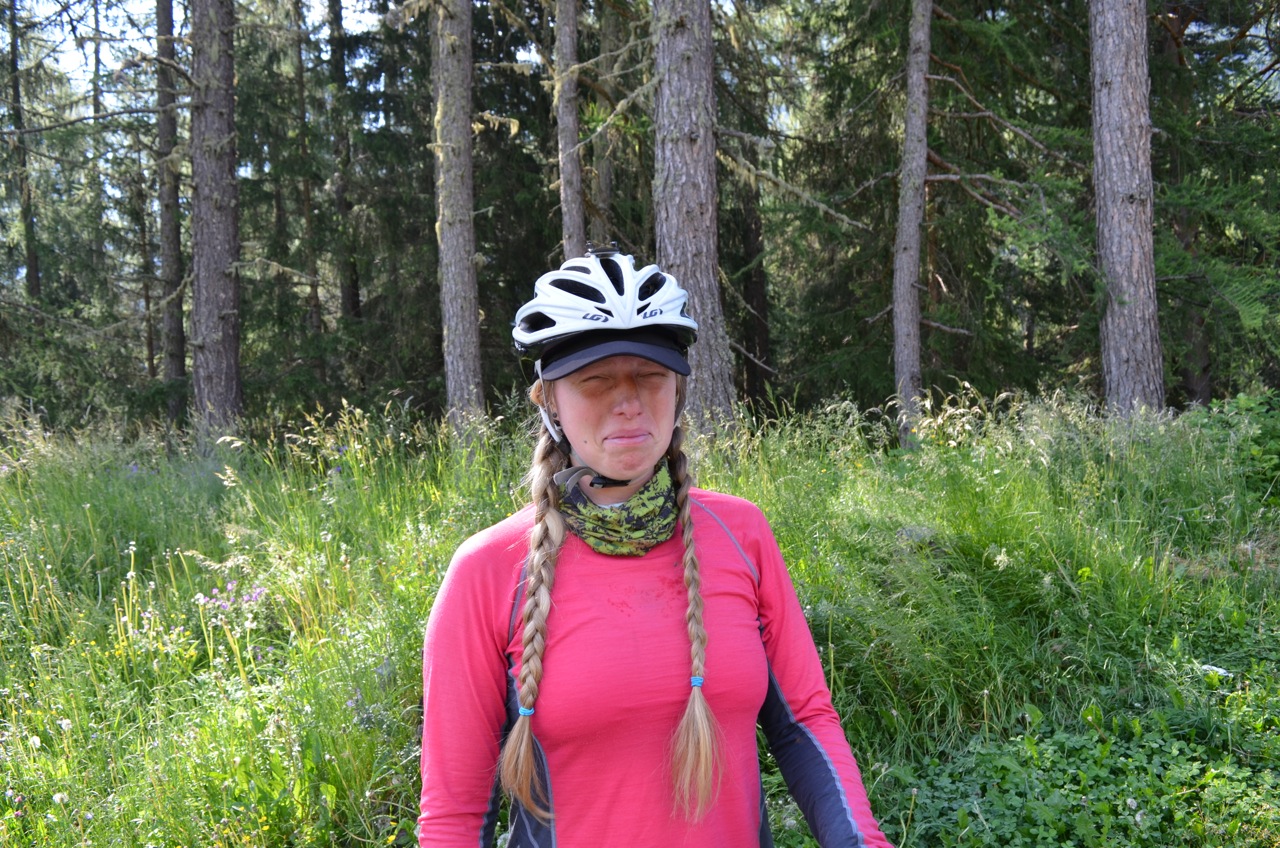
This is how unhappy I look under a swarm of flies (which may actually be vampires given their absence in the photo)
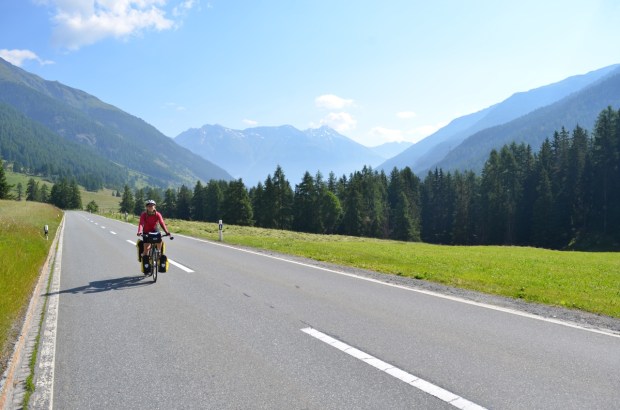
This is how unhappy I look under a swarm of flies (which may actually be vampires given their absence in the photo)

Up the valley from Zernez to Le Punt

Up the valley from Zernez to Le Punt

We’d contemplated staying at a campsite here to rest the legs ahead of the pass, but we were both feeling surprisingly okay and decided to go for it. The sign at the bottom said we’d gain 625m in 9km. Here goes!
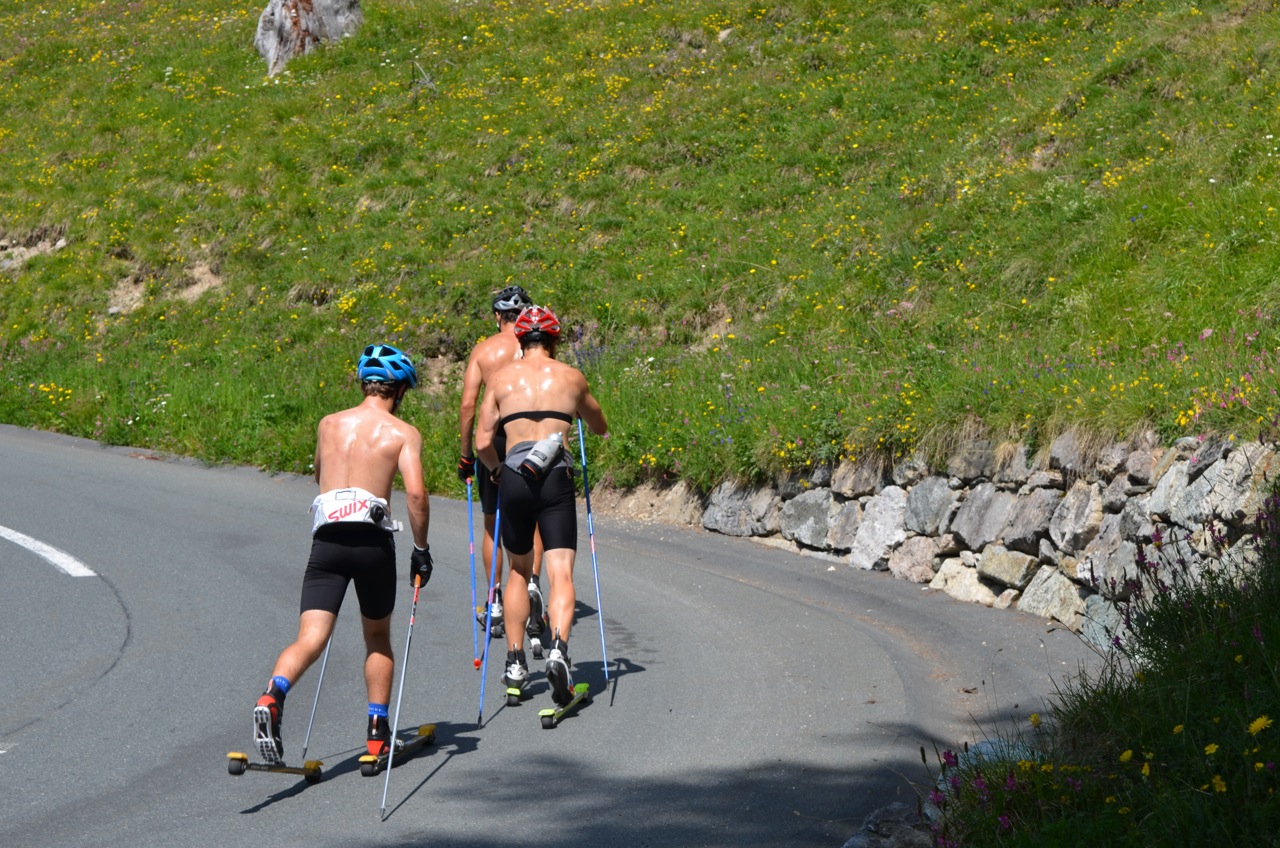
As we set off up the road out of the village, we were greeted by a mountainside with a road wiggling up the front of it. Granny gear engaged, we started tackling the beast. It was breezy down the bottom and we quickly gained height for good views of the valley. The pass was pretty busy with cyclists, a few cars and even some summer cross country skiers, using one-way wheels to ‘ski’ up the hill in the sun!
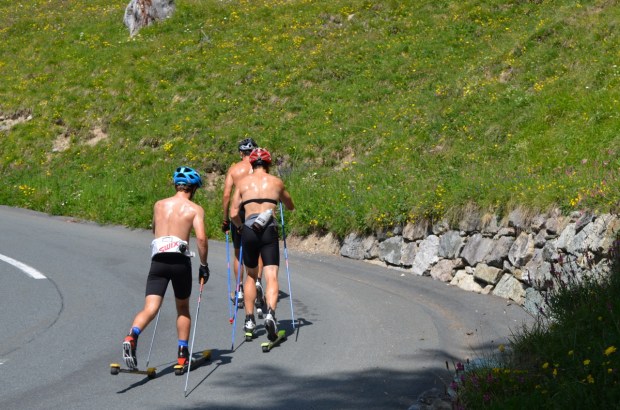
Summer skiing

Summer skiing anyone?

A little further up, we were in more of a valley and the breeze was no more. The flies started to gather and there was nothing I could do to stop them. I might just have been able to enjoy the long, slow hot uphill. But a long, slow hot uphill covered in flies was too much. At one point I was running out of tolerance for them crawling their nasty little legs all over me and felt a lump start to build in my throat as I tried to make it to where Dave was waiting. Thankfully it was breezy where he stopped, and with the help of some wafting, we managed to get rid of the bastards. Ha! Sandwich please!
Happily the breeze was with us for the day then and there were no more horrible fly swarms. We slogged our way to the top, crossed the watershed and from there on, we were heading downstream.
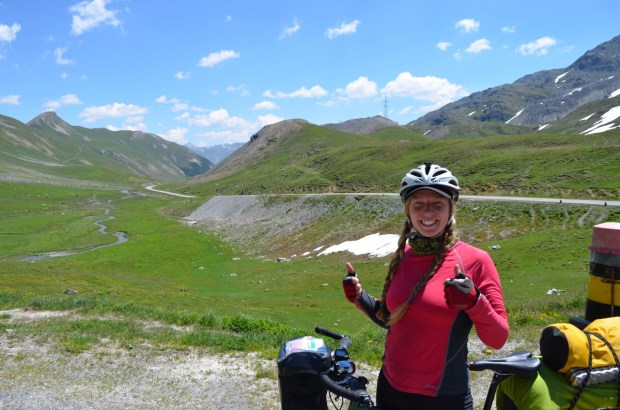
Watershed moment

Watershed moment

Albulapass summit

Albulapass summit

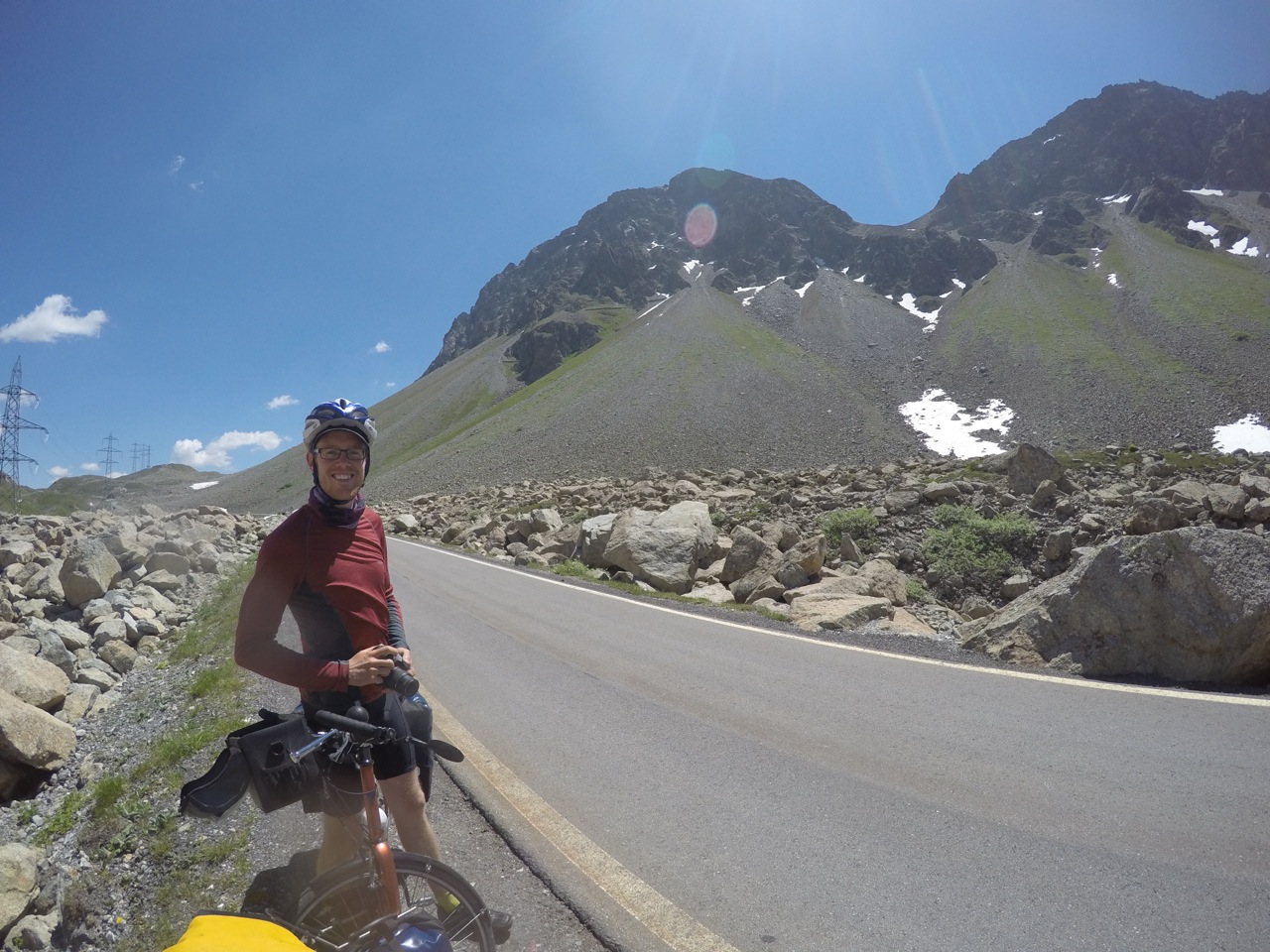
We were well above the tree line at the top of the pass at 2315m. There were rocky peaks on either side, scree slopes, waterfalls, meadows and some cows. Then as we started to come down, we passed huge scree and talus slopes, rocks strewn all over the place. Only the ones that had been on the road had been moved away, so we could see where rockfalls had taken place.
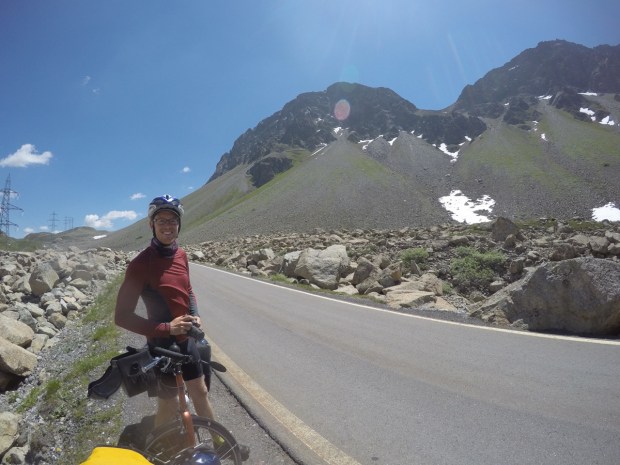
Dave in the rockfall zone

Dave in the rockfall zone

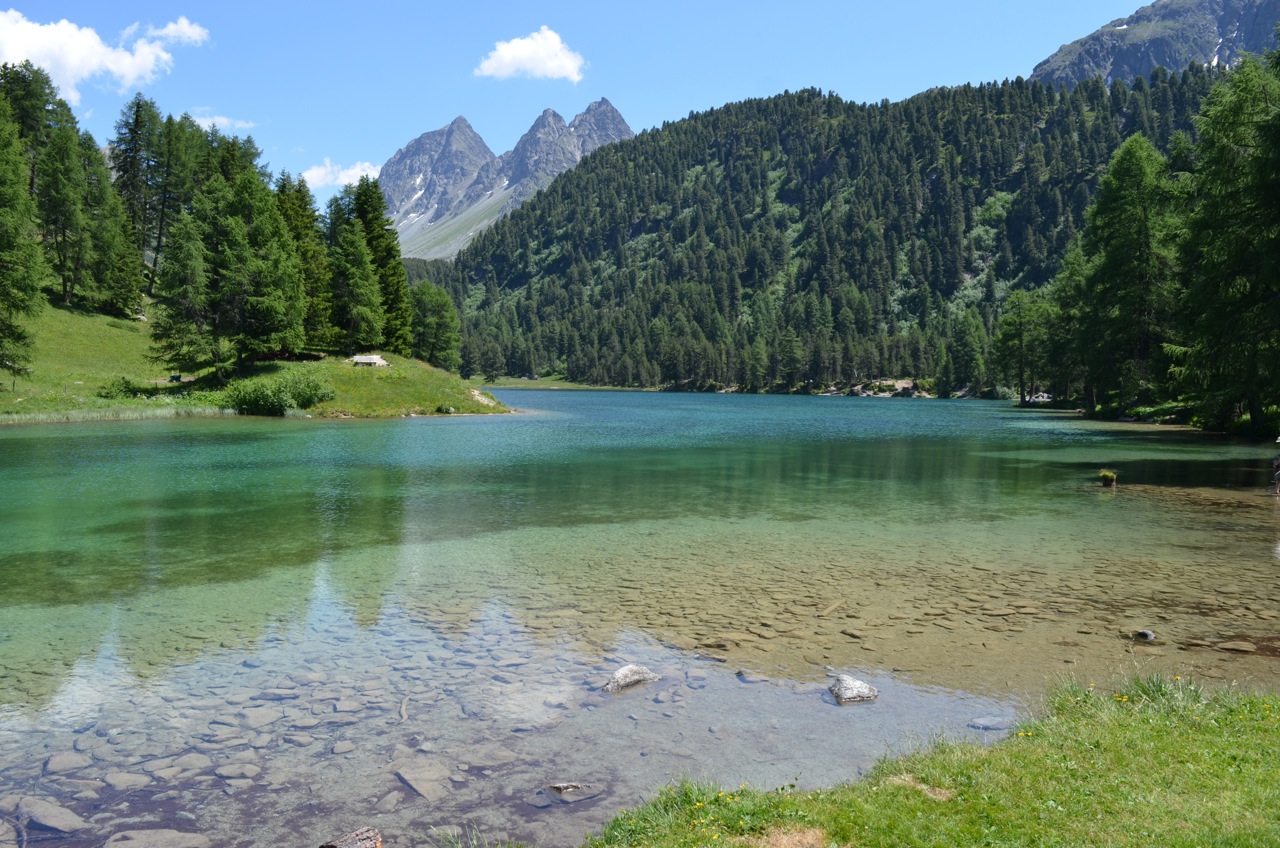
Down a bit further and we found ourselves in a beautiful green valley. Alpine meadows in the high areas, some emerald green lakes in the valley and lush forests lower down. We zoomed through the scenery and passed lots of puffing cyclists on their way up. Then we were approaching a large lake, clear turquoise surrounded by forested peaks. We pulled over by the lake, propped the bikes up and found ourselves a lovely lunch spot.
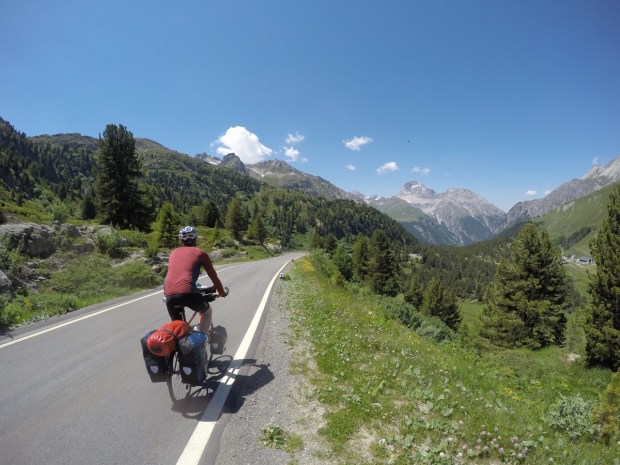
Down the other side
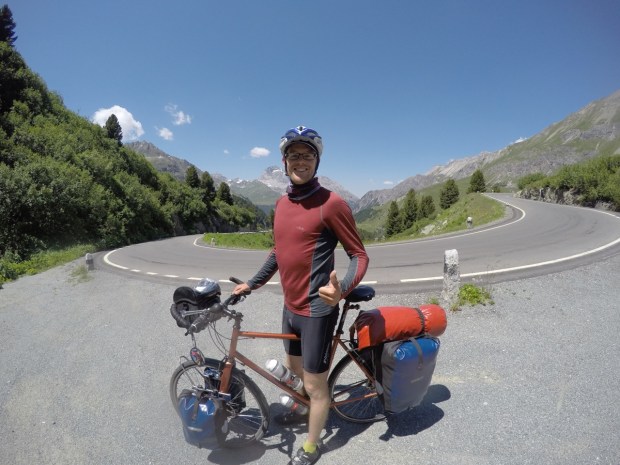
Down the other side

Switchbacks are more fun on the way down

Switchbacks are more fun on the way down

Lakeside lunch spot

Lakeside lunch spot

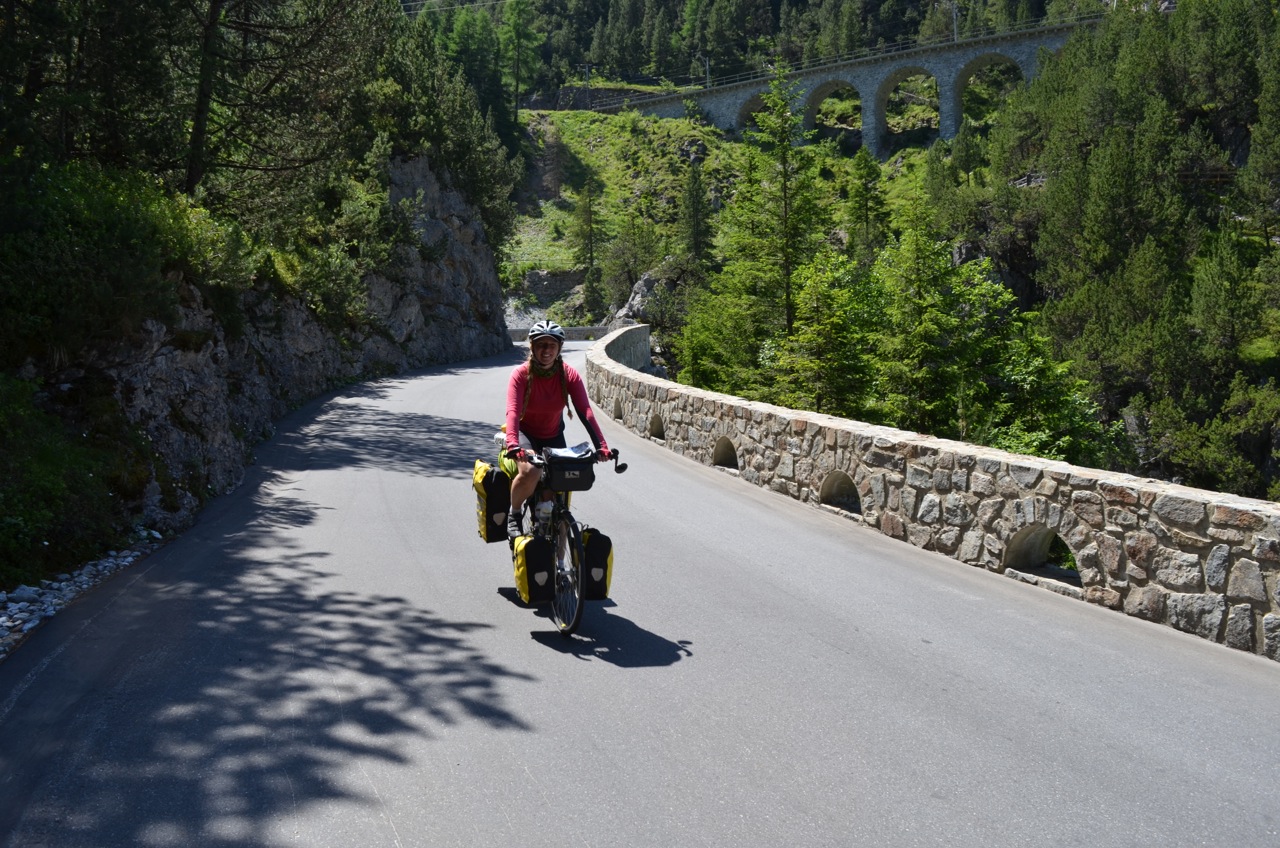
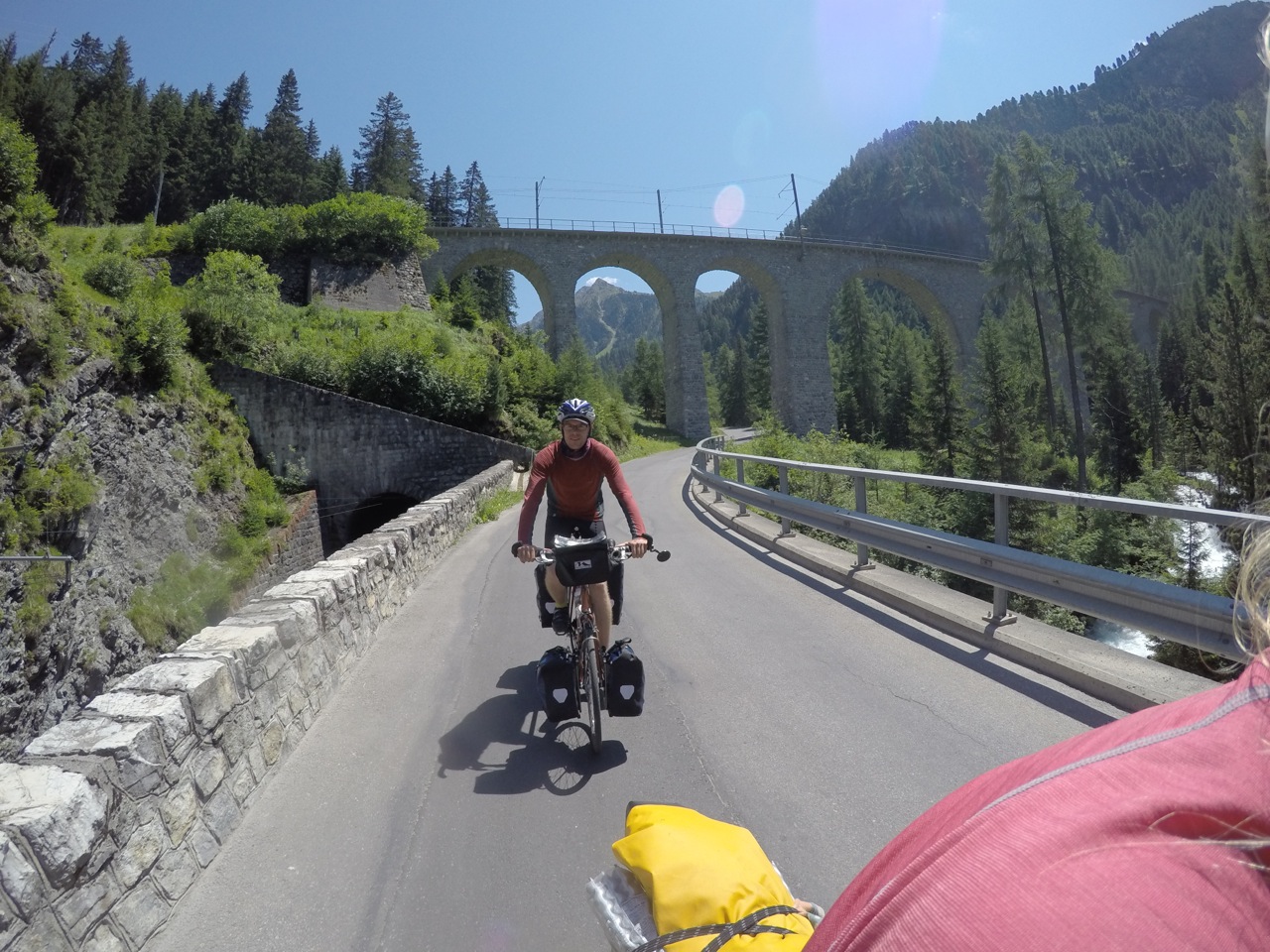
After lunch the road carried on steeply down through larch forests and tourist areas. There was even a railway going alongside us! After a section of roadworks, a big truck tailgaited us before he could overtake precariously, then stop in front of us and make us wait. But some more beautiful scenery and free-wheeling cheered us up again.
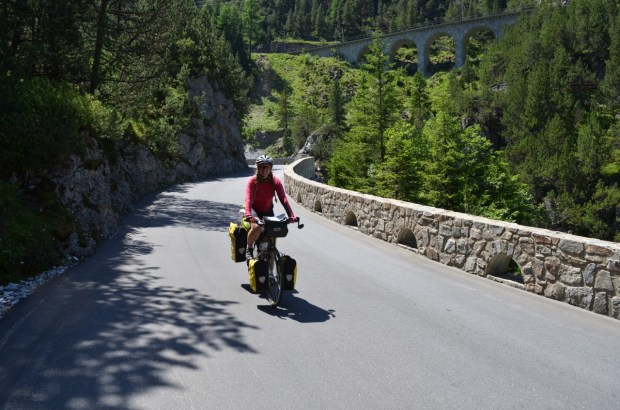
Going down
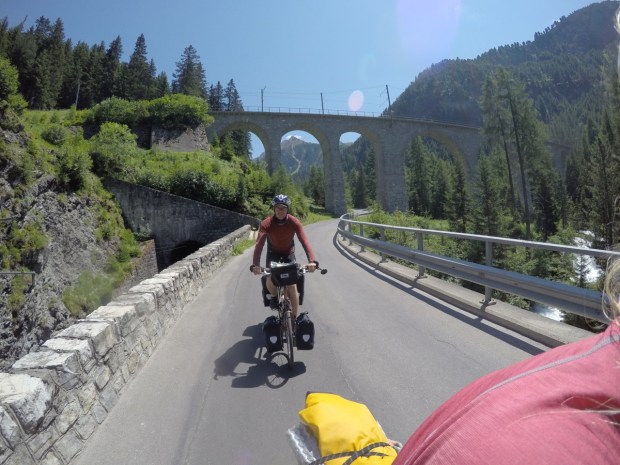
Going down

Under the railway

Under the railway

Wow, it's hot when you stop!

Wow, it’s hot when you stop!

It was getting warmer the lower we went and by now we were pretty toasty! We stopped for water and second suncream applications. Then our uninterrupted downhill section was over and we found ourselves going up a little bit between villages. I was feeling tired and the oppressive heat wasn’t helping. A few more uphill sections later and I asked Dave if we could stop at the next campsite we came across. He agreed (possibly reluctantly) but it was another 5km or so before we saw a sign. We followed it into the village, up a mega steep hill for 500m.  It was the smallest campsite I’ve ever seen! And distinctly lacking in shade. Hmm. We had a nice chat with two of the guests who were staying there whilst working on an alp. Then we decided we didn’t want to stay in the miniature shadeless campsite and sped back down the hill to rejoin the main road and go uphill again towards Thusis.
It was another 15km to the next campsite and I wasn’t really up for it, but there was no way there but to ride. We sped down, chugged up, sped down, repeat. Then there was a little sign with a bicycle and an arrow pointing off the main road, uphill on a side road. I wonder what that means? We sped past it downhill and I saw a little blue sign indicating that a tunnel was coming up. Uh oh! But it said 150m. “It’s okay,” I shouted over my shoulder “Only a short one!” And we zoomed downhill towards it. We could see a truck coming up behind us, but he’d seen us and didn’t seem in a hurry to overtake. Then, as we entered the mouth of the dark tunnel at 40kph, I saw a sign that said ‘Tunnel 985m’. Oh crap. I guess it meant 150m to the tunnel!
No going back now! We were plunged into the darkness, totally unprepared with no lights and no way onto the pavement. The only thing to do was to pedal as fast as possible and hope that the truck didn’t try to overtake. Pedal, pedal, pedal, until we could feel the warmth of the outside approaching and were met with light at the other end! We pulled over, gave the truck driver a thankful thumbs up and took a moment to compose ourselves.
The map told us that 4 more tunnels were coming up and only the last one had an alternative route. So we mounted the lights, had a biscuit and set off down the mountain again. On the whole, it went pretty well. We only got shouted at once for not being on the pavement (which was too narrow for bikes with luggage) and most of the drivers were considerate. The last tunnel was only for cars and we took the quiet side road around it instead, arriving into Thusis tired but triumphant.
One last section of cycle path, then a narrow wooden bridge across a fast flowing river and we arrived at the campsite. It had tall Scots pine trees providing dappled shade, lovely new facilities, a cheery, friendly owner and (most importantly), showers and wifi were included. Bliss.
It was still incredibly hot and even after a cool shower, I was too zoned out to do anything. Dave pitched the tent then I made dinner and we ate before the sun finally set around 8pm. I took the time to ease my muscle soreness with some yoga whilst Dave had some laptop time. He found out that the river that we crossed just before the campsite joins the Rhein! Hurray! All downhill from here then, right?
Then we got ready for bed. But even with the tent doors open, it was too hot to sleep and we lay there feeling clammy until about 11pm when it was cool enough to contemplate getting into a sleeping bag liner. Hoping the heatwave passes soon!
– Anna
Macun lakes

We wanted to a do another big walk before leaving the Park, so we decided to climb up to the Macun basin. This is a large cirque at the top of a mountain above Zernez. A cirque is a circular depression at the head of a valley which is carved out by a glacier.

As promised, Ruedi picked us up in Zernez at 7.30 and drove us up the gravel track that forms the start of the trail for about 15 minutes. On the way we had really interesting chat about the park, and conservation.

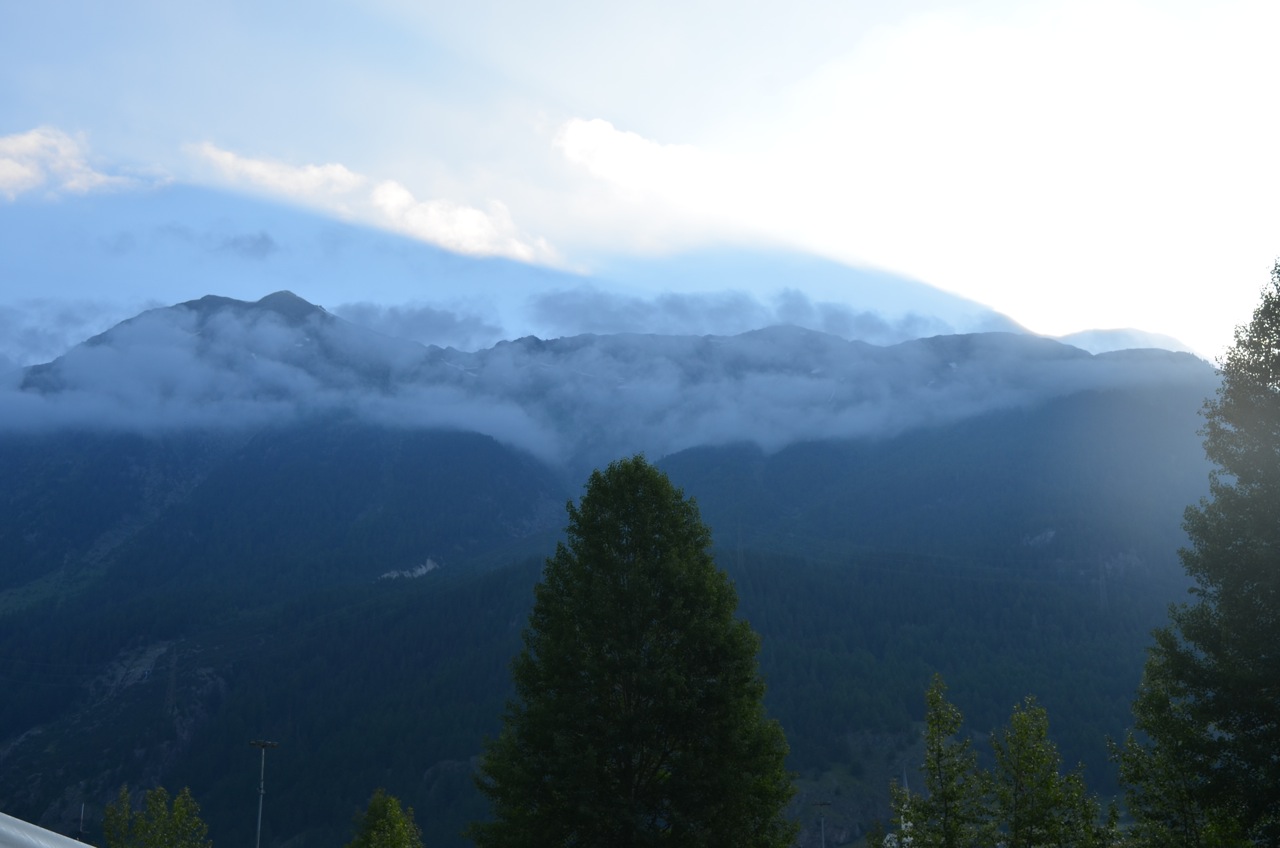
Morning view of the mountain from Zernez

Morning view of the mountain from Zernez

We found out that the reason we haven’t seen any clear cutting in Switzerland is that it’s not allowed. You are only allowed to cut single trees or small groups within a larger forest. The weight of felled trees must not exceed the weight of new trees that grow per year, so Switzerland’s forests should remain stable, and beautiful! Anna asked if that means Switzerland is a net importer of wood, but apparently not, it is a net exporter.

We mentioned again that there are no big predators in the National Park, so the deer are able to to browse the young trees with no fear of predation. This probably means that the forest is recovering slower than it would do if the deer were more stressed. Ruedi said that is true, but in the National Park they don’t like to think of the forest recovering, because that implies that there is a perfect state for it to be in. In fact, the forest cover has changed constantly during and before human history, and it will continue to do so. During the last ice age the majority of the park was covered with a huge glacier, and not much would have grown there at all. There is no right way for it to be. The deer and other browsers in the park maintain their habitat, and that’s fine. If wolves eventually make it back to the park, things will change, and that’s ok too.

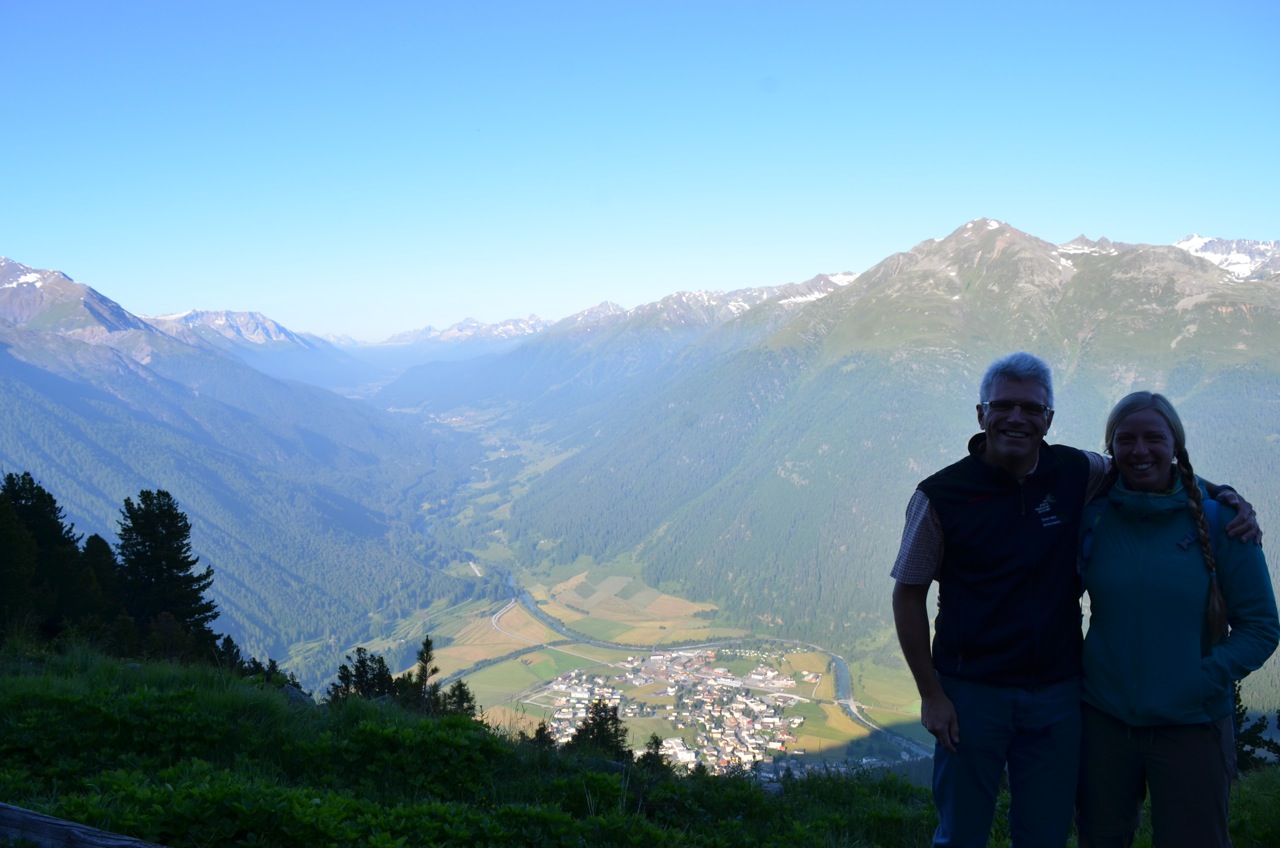
Once we reached the timberline we jumped out, and there was time for a quick photo before Ruedi had to go to work. That’s the last time we’ll see him (on this trip anyway), and we had to agree that he couldn’t have been more supportive of our trip. He’s made sure we’ve seen a lot of the park, met some of the team and had a glimpse of some really interesting projects. He lent us his own binoculars and telescope so we could have a chance to see the wildlife. He also arranged for us to spend a night in the park essentially for free when he found out we’re on a tight budget. What a guy!

Ruedi and Anna (Zernez in background)

Ruedi and Anna (Zernez in background)

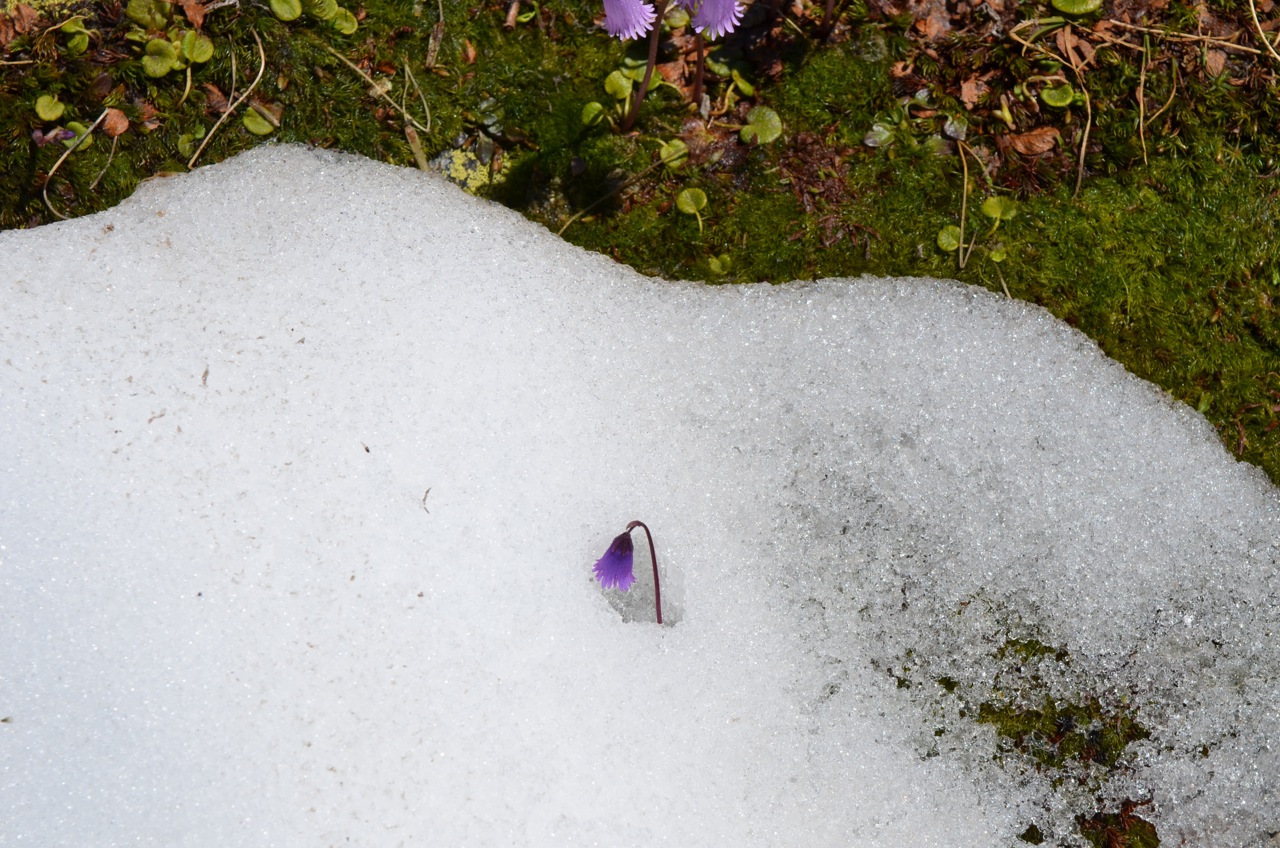
We got onto the footpath and walked up through the alpine meadow, in between the avalanche protection barriers. We heard marmots squeaking their warning calls into the cold morning air, and saw a chamois picking his way across the hillside. As we got higher we walked into the sunrise and immediately the chill was gone. Coats off! There was still some snow on the hill in pockets protected from the sun, and we had to carefully cross a few, kicking footholds with our boots.

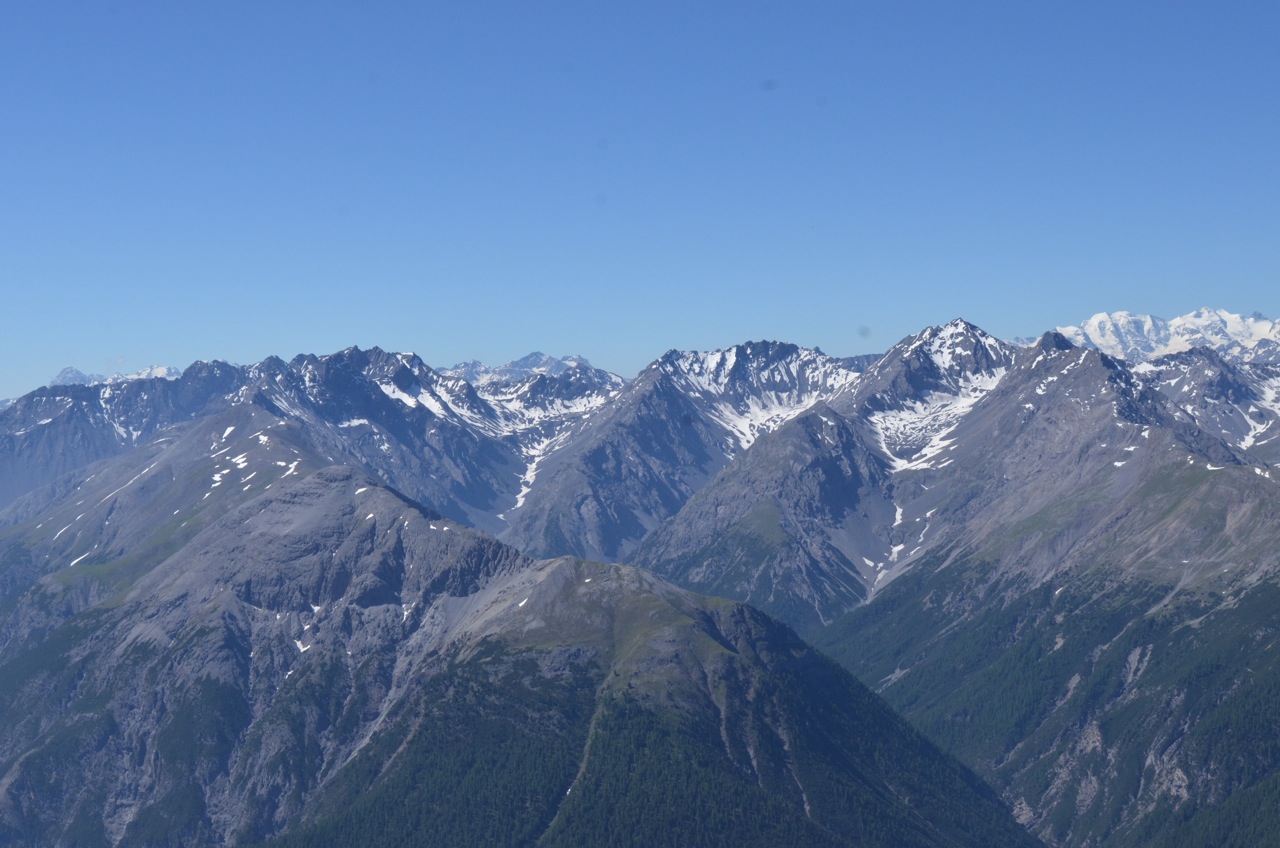
We walked out of the meadow and into the scree, and the view opened out in front of us. We could see most of the park spread out beneath us, Piz Quattervals in the distance, and the Cluozza valley where we spent the night a few days ago. Up and up through the scree, following the markings sprayed onto the rocks.

View across the park

View across the park

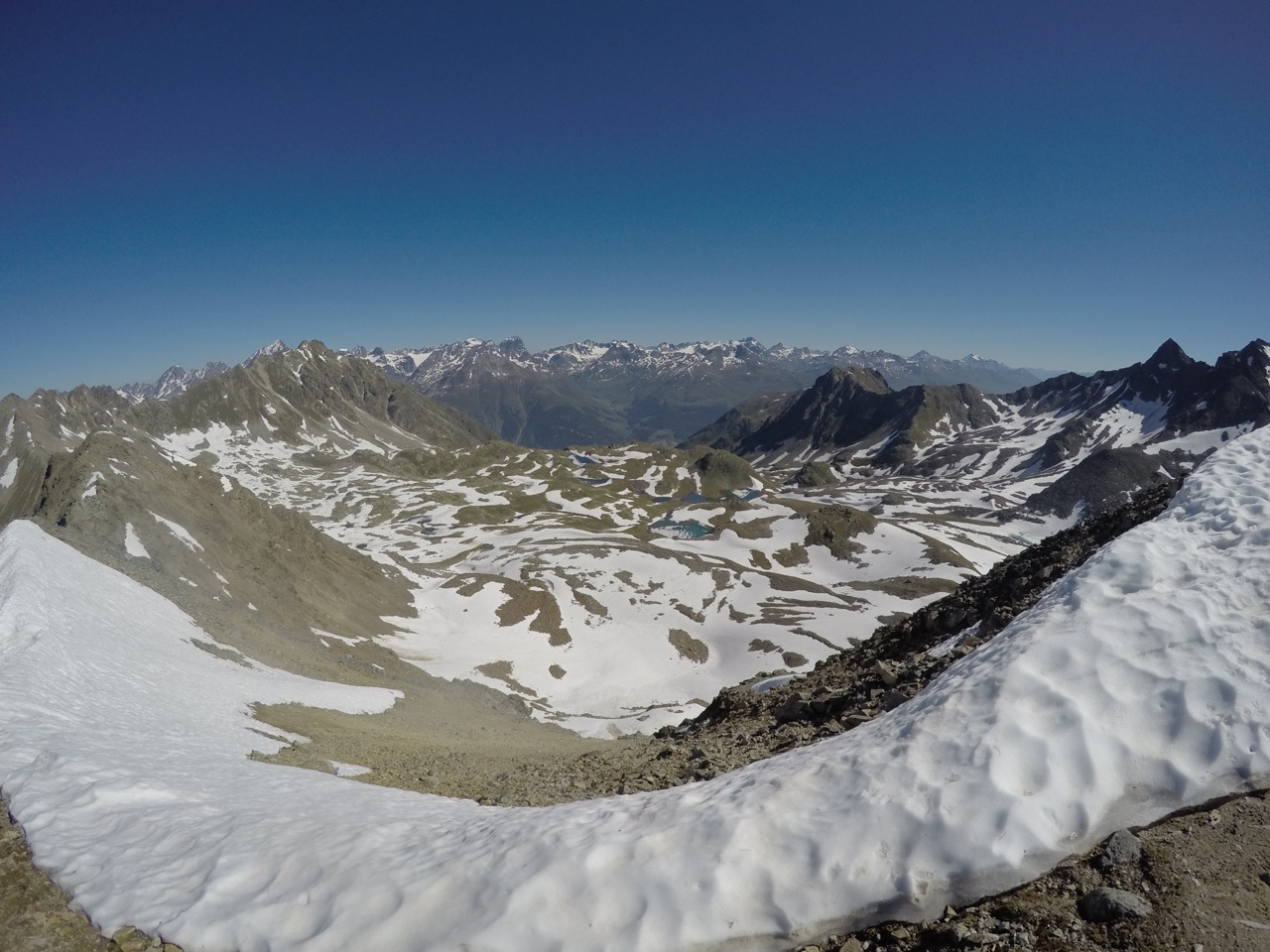
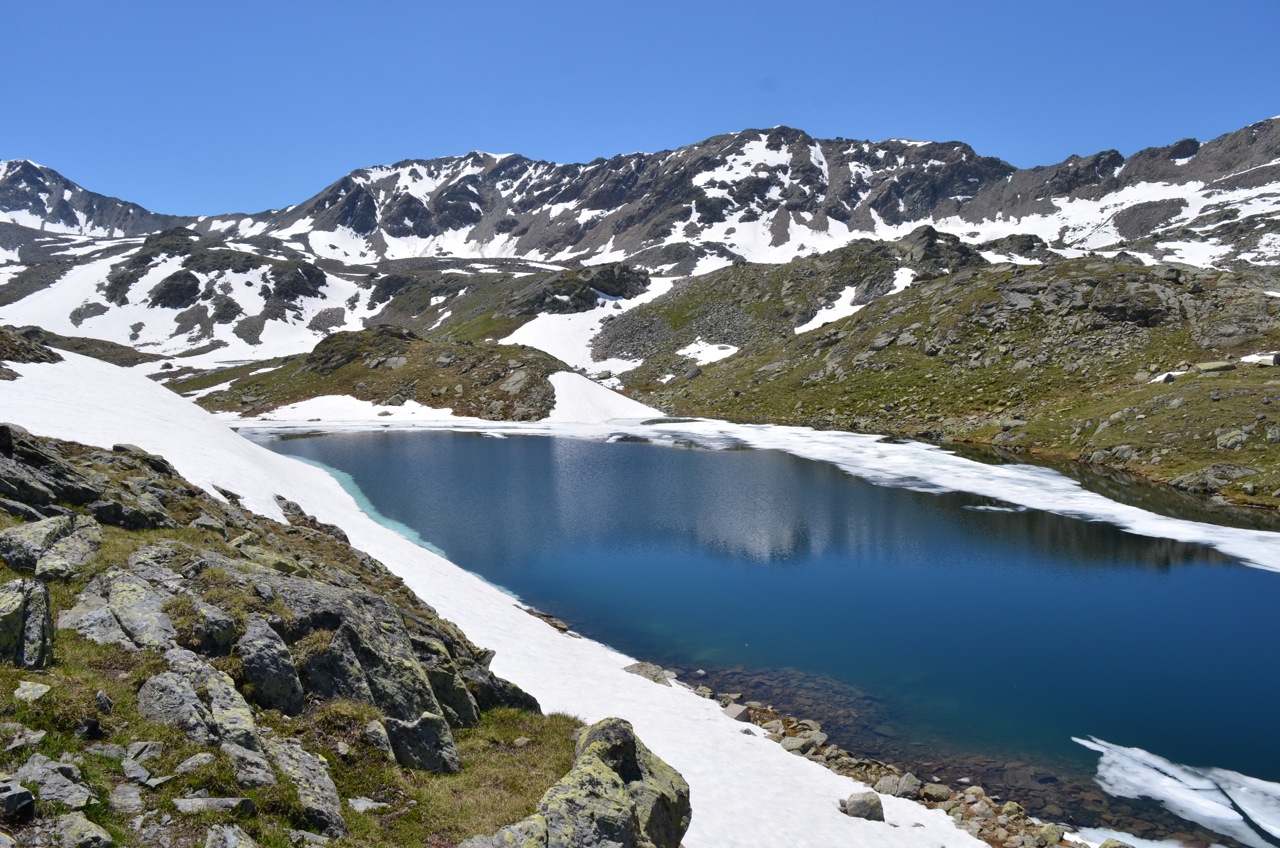
Eventually we reached the highest point on the rim of the cirque, Munt Baselgia at 2,945 m. As we looked into the cirque, with the scattered snow patches and the beautiful blue-turquiose lakes it was amazing the think of the whole basin, and the valleys around it filled with ice, and to think about the massive forces that carved out the basin as we saw it today.

Into the cirque

Into the cirque

We found a billy can wedged in a cairn, and opening it, found a visitor’s book inside. It was cool looking through the entries over the last few years, everyone seems to have been very happy with their walk! We added our own outburst of gratitude and excitement, and replaced the book for the next traveller.

Signing the guestbook

Signing the guestbook

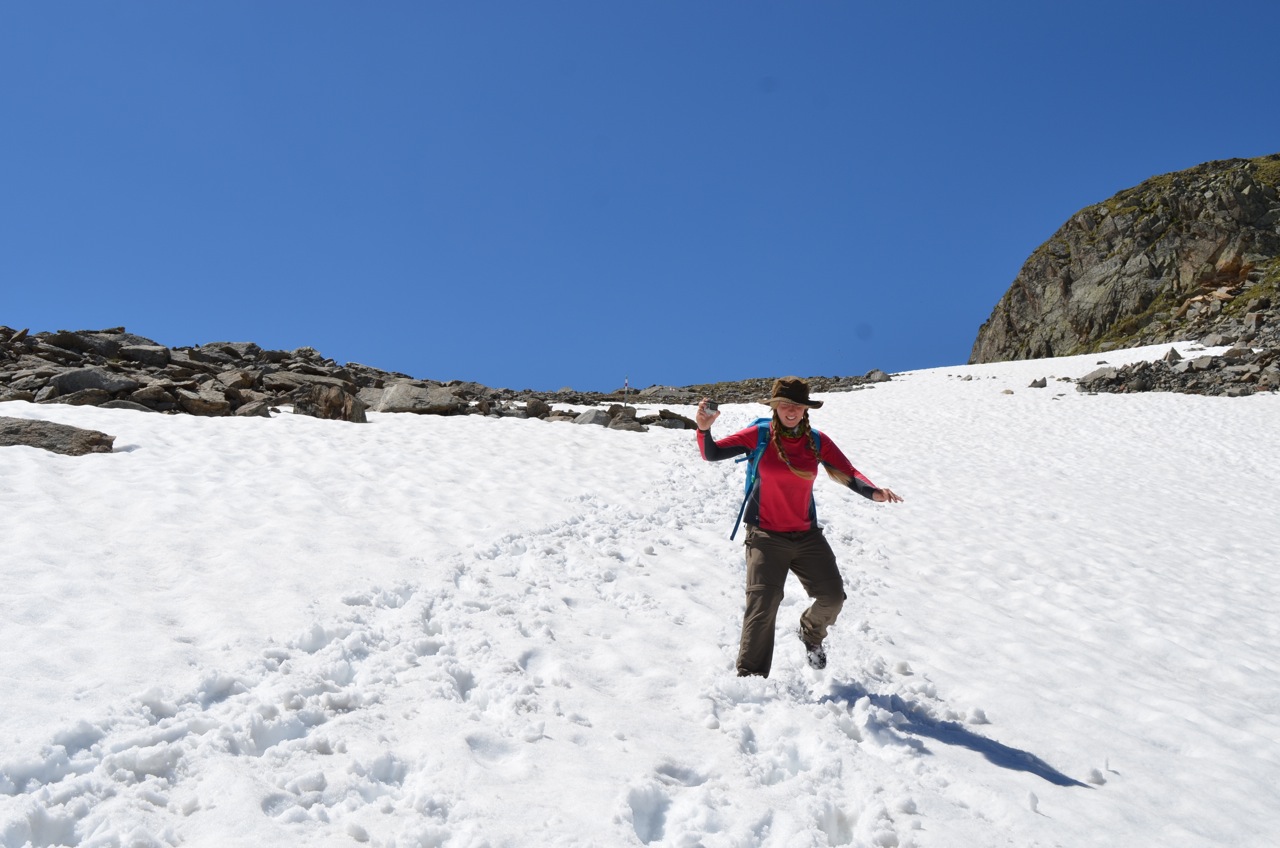
We headed down into the basin and before long we hit the first big patch of snow. It was wet and deep in places but we had fun half-skiing across it. We met a group of four Swiss, who were all retired, and making the most of it. They were part of a hiking club and they put us to shame with both their kit and their pace!

Across the snow field

Across the snow field

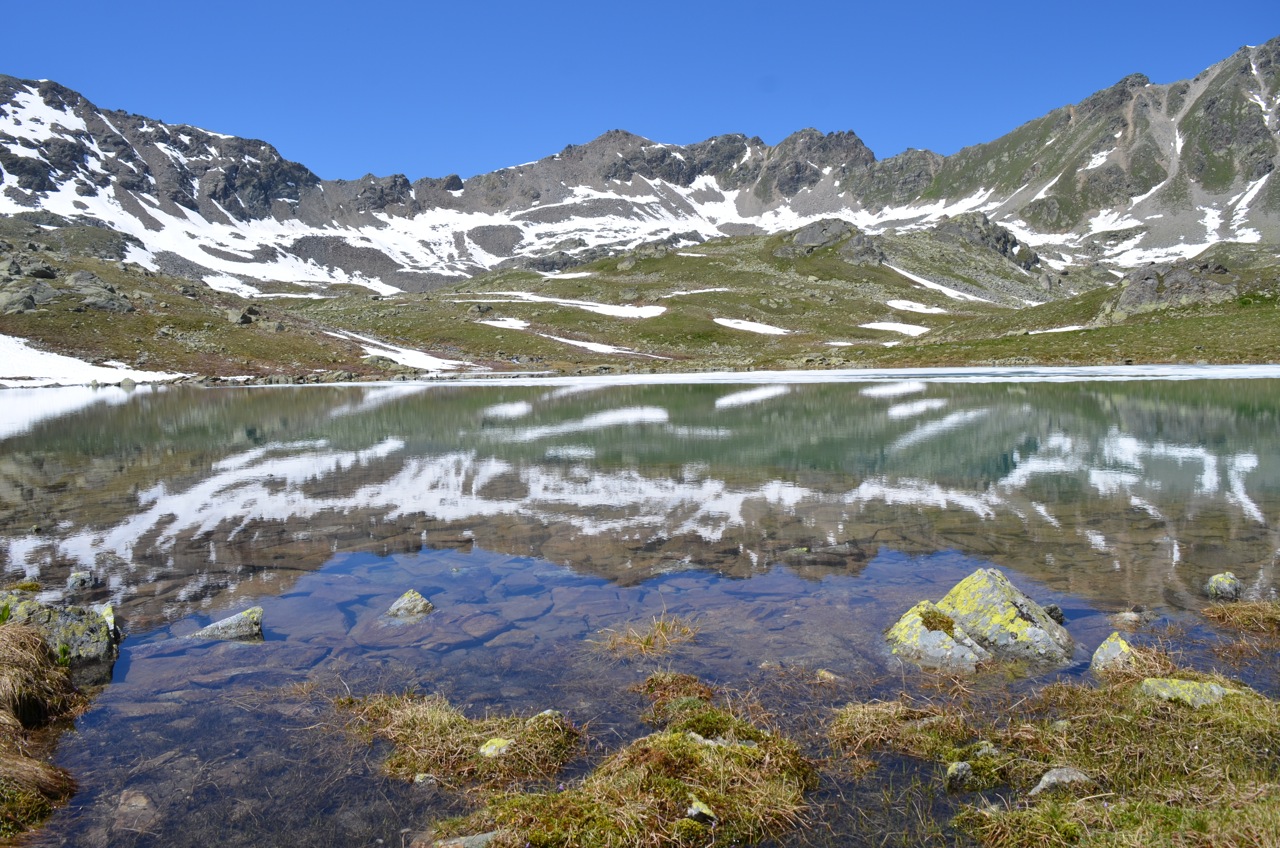
We stopped for lunch next to one of the lakes and swapped hiking stories (mostly about mosquitos and midges) with our Swiss friends.

Lunch stop lake

Lunch stop lake

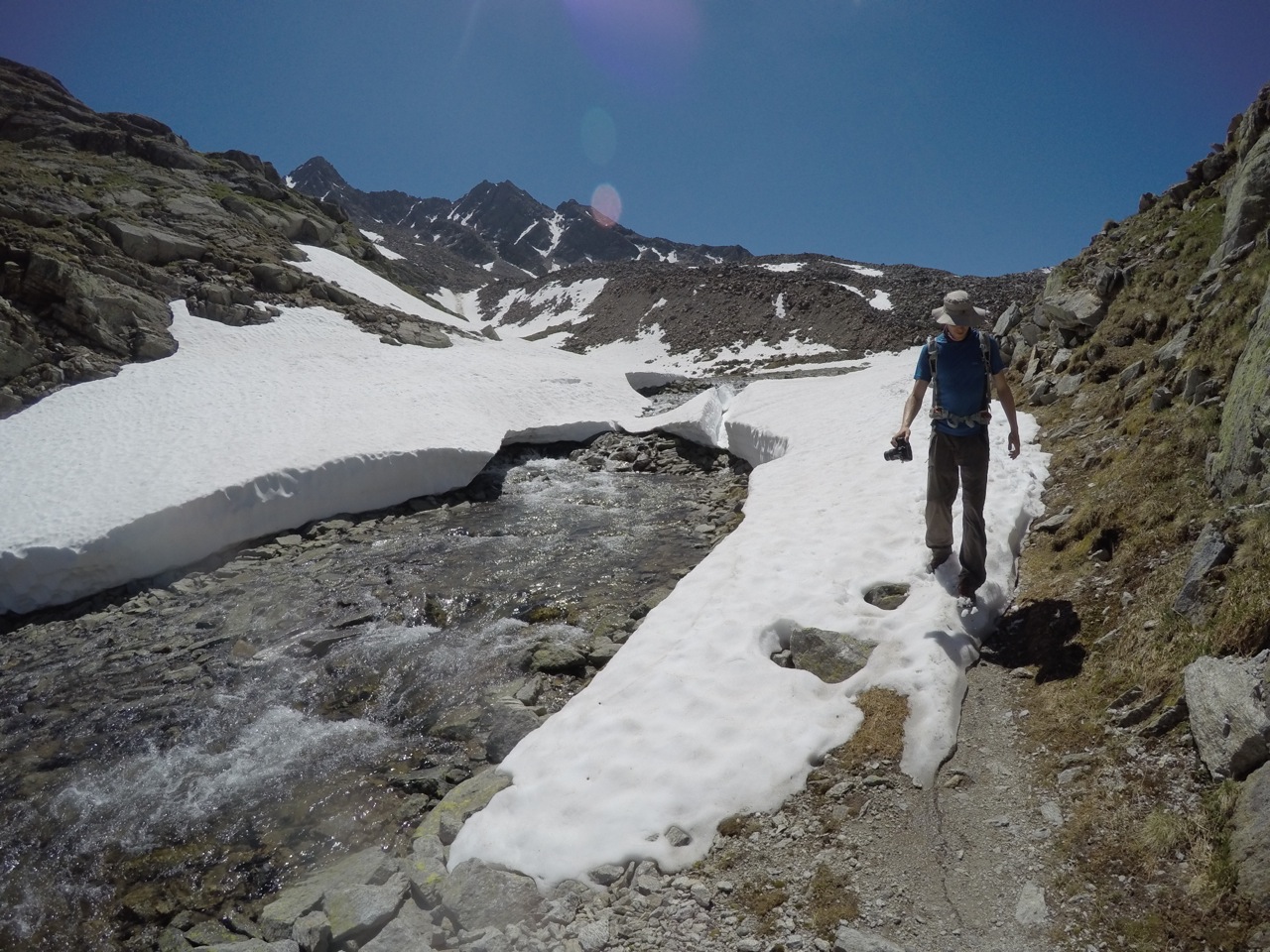
After lunch the trail split in two, with one option to go and see the “Dragon Lake”. Both paths rejoined later on. Anna stated quite confidently the direction we should go to see the lake, and, off guard, I assented. We walked past a lovely stream that was flowing out from under all the snow that was still hanging around on the higher parts of the basin.

Meltwater

Meltwater

As we got to a crossroads I realised that this was where the paths rejoined, and we’d actually gone the wrong way. D’oh! I was pretty annoyed with myself for falling for the Heslop “talk confidently and everyone will believe you” method AGAIN, and went charging off down the other path to see the Dragon Lake. Poor old Anna trailing along behind, not enjoying the extra climb we had to do. Once we got there Anna waited at one end of the lake while I went to the other end to get a photo of the lake with the glacier on the other side of the valley in the distance. In the end it wasn’t as good as the one that Anna took from her end, but I did have a lot of fun skiing down a particularly steep bit of snow, so it wasn’t wasted trip.

Dragon Lake from one end

Dragon Lake from Anna’s end

Pushing through the snow

Pushing through the snow

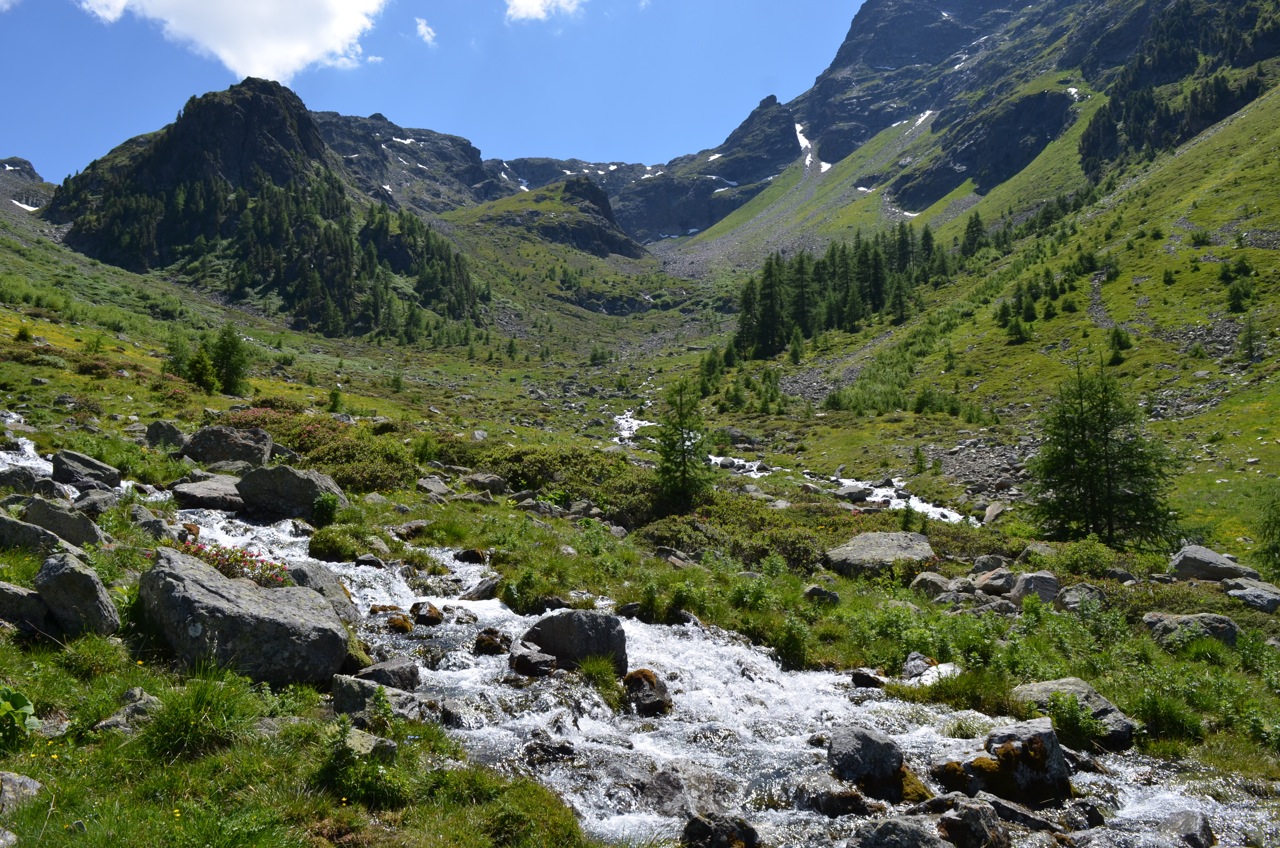
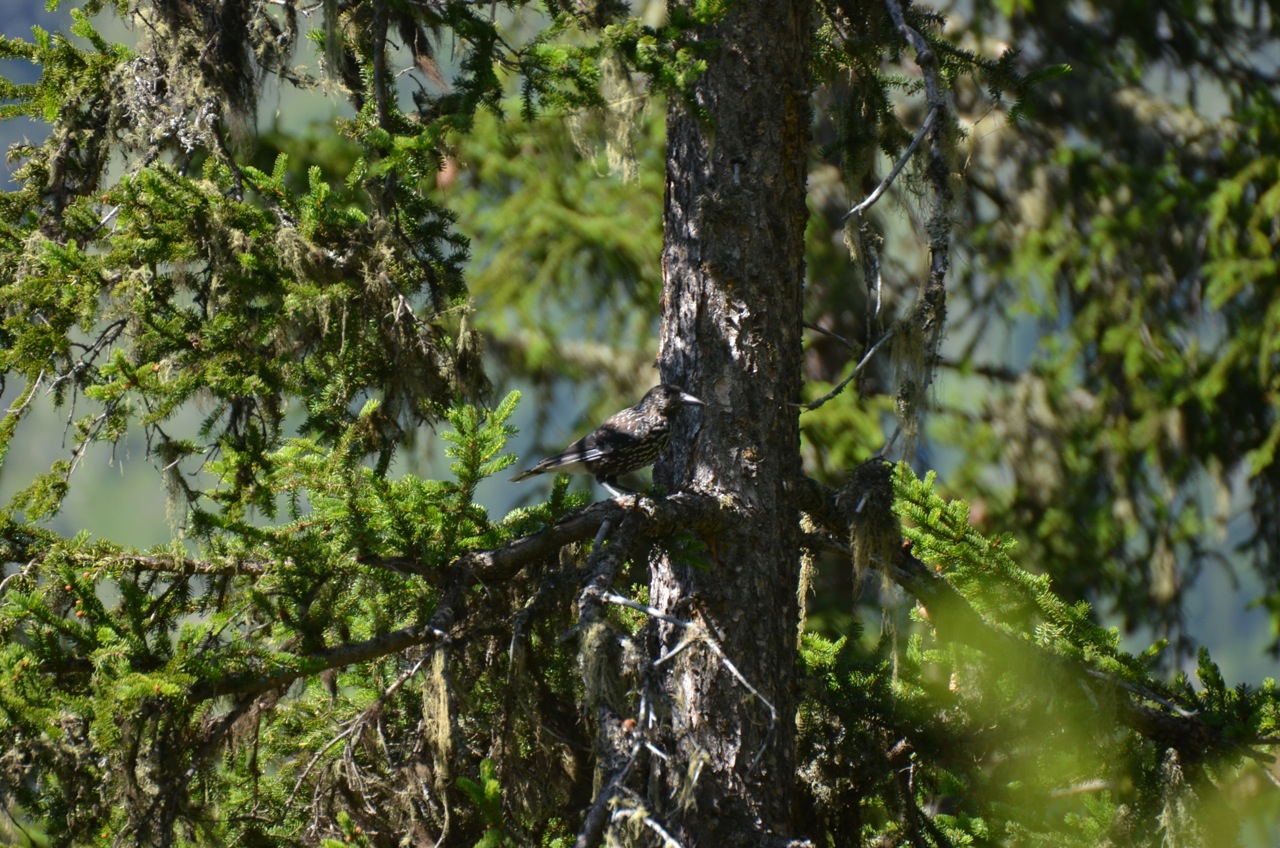
Reunited, Anna and I hiked out over the lip (the lower wall) of the basin into the massive glacial valley behind it. It was a looooong way down, over scree at first, then through flower-filled meadows and finally into the forest. We were checking for ibex all the way down, but sadly no luck. The views were spectacular though, and we were so glad we’d decided to go. On the way down through the forest we saw loads of nutcracker, and thankfully one of them stayed still enough to get a photo!

Alipne meadow in the valley

Alipne meadow in the valley

Nutcracker!

Nutcracker!

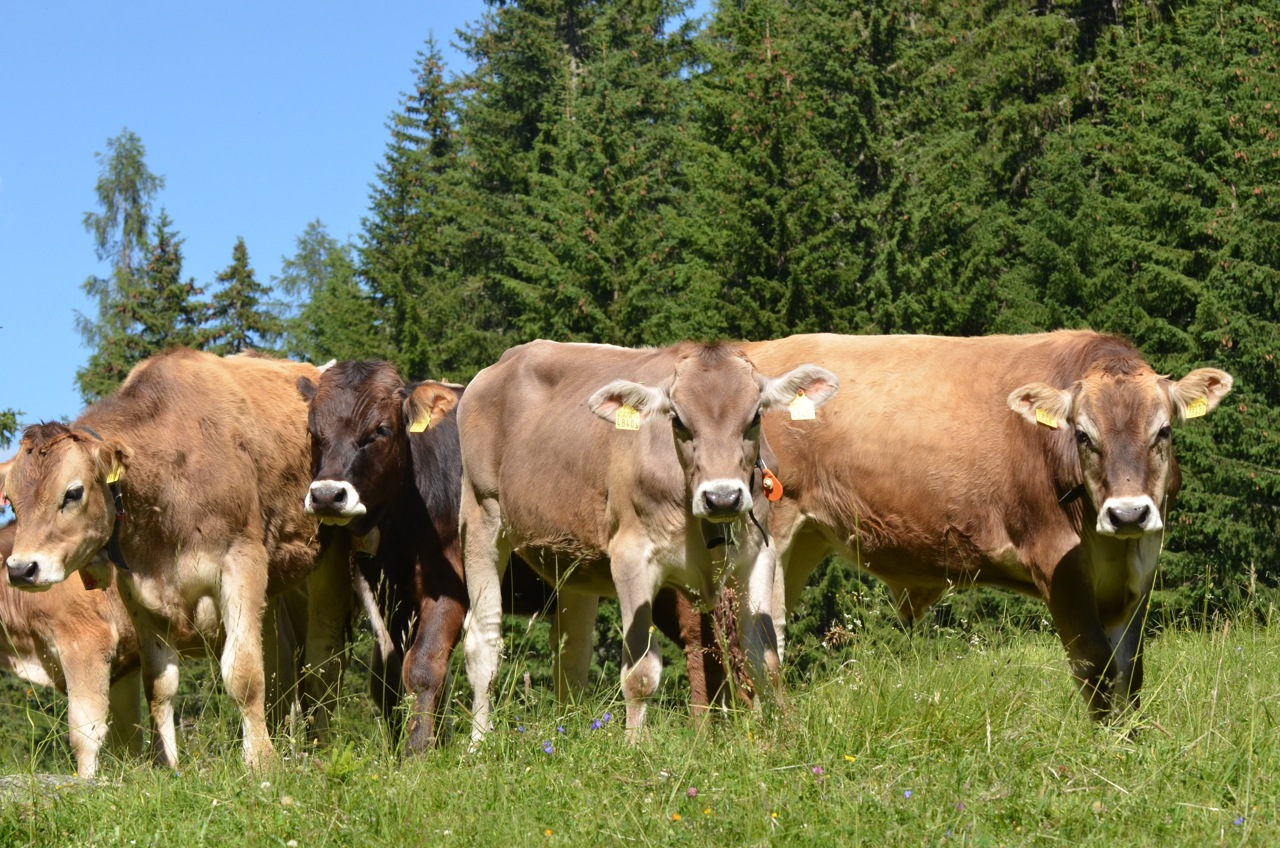
We also walked through an Alp, the cows either wanted feeding or wanted to kill us, we’re not sure.

Curious cows

Curious cows

We got into the town of Lavin and rushed to the train station for the train back to Zernez. We couldn’t decide the quickest way to the station, so we asked in a shop. The lady gave Anna very, very detailed directions. After which, Anna asked what time the next train to Zernez was. The answer? “Er, now”. Ah well, so we missed that one! We bought some melon in the shop and went up to the station to feast while we waited an hour for the next train. We decided it was pretty good though, we couldn’t do anything, so we didn’t have to feel bad about being lazy!

When the train arrived we took the short ride home, went to the shops and went back to cook dinner. We’re leaving Zernez and the National Park behind tomorrow as we cycle over the Albula Pass towards Chur. There we will pick up the River Rhine, which we will follow all the way to the Netherlands. Apparently it’s going to be hot tomorrow and we have to climb about 700 m up the pass so we want to get an early night and beat the heat!

– Dave

Anthill hunting

Today we met Ruedi and the researchers at 7:30am and headed to the park to look for anthills. Anita knew what she wanted, but it took Dave and I a while to work it out.  Sounds like it’s tricky being an ant expert!

“Hey Anita, here’s an ant nest!”. “Hmm, that one is not so good. Too small.”

“Hey Anita, here’s an ant nest!”. “Hmm, that one is not so good. Not enough larch trees around.”

“Hey Anita, here’s an ant nest!”. “Hmm, that one is not so good. The forest is too dense.”

“Hey Anita, here’s an ant nest!”. “Hmm, that one is not so good. It looks like they are abandoning it.”

“Hey Anita, here’s an ant nest!”. “Hmm, that one is no good. Wrong species of ant.”

“Hey Anita, here’s an ant nest!”. “Hmm, that one is not so good. Too close to the trail.”

The hypothesis for the project involves the ants preferring certain tree species over others, so the nest has to be in an area where there are at least larch and spruce. The drone can’t fly well in a dense forest, so it has to be a bit open. There need to be a lot of ants to spot on the trees and branches, so it has to be a big nest. The nest needs to remain in use for the duration of the project, so if there are plants growing in it, it’s probably going to be abandoned soon and therefore won’t be any good. And finally, if it’s too close to the trail, the presence of the trail may have unknown impacts on the behaviour and those factors need to be excluded, so it can’t be used either.

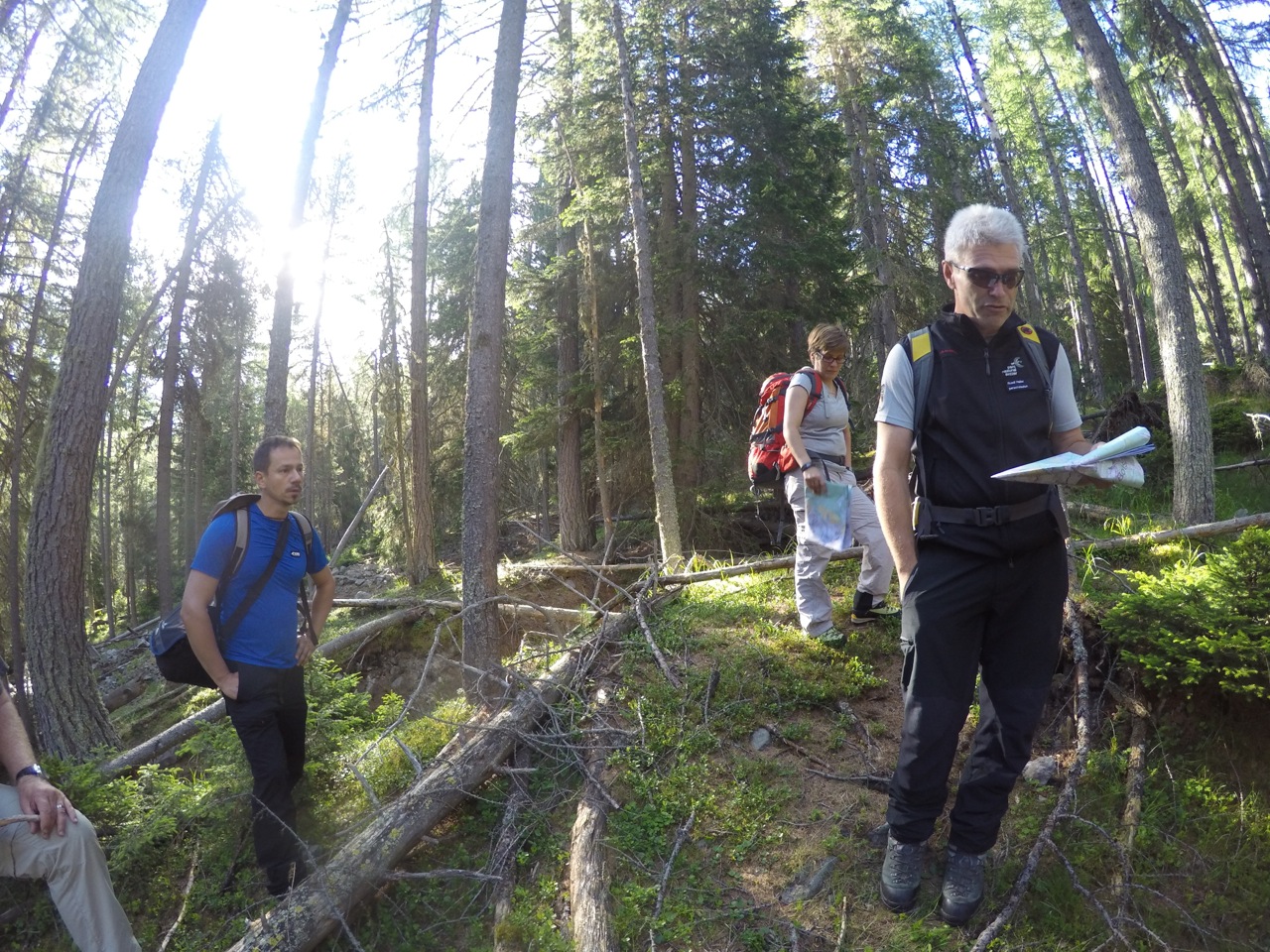
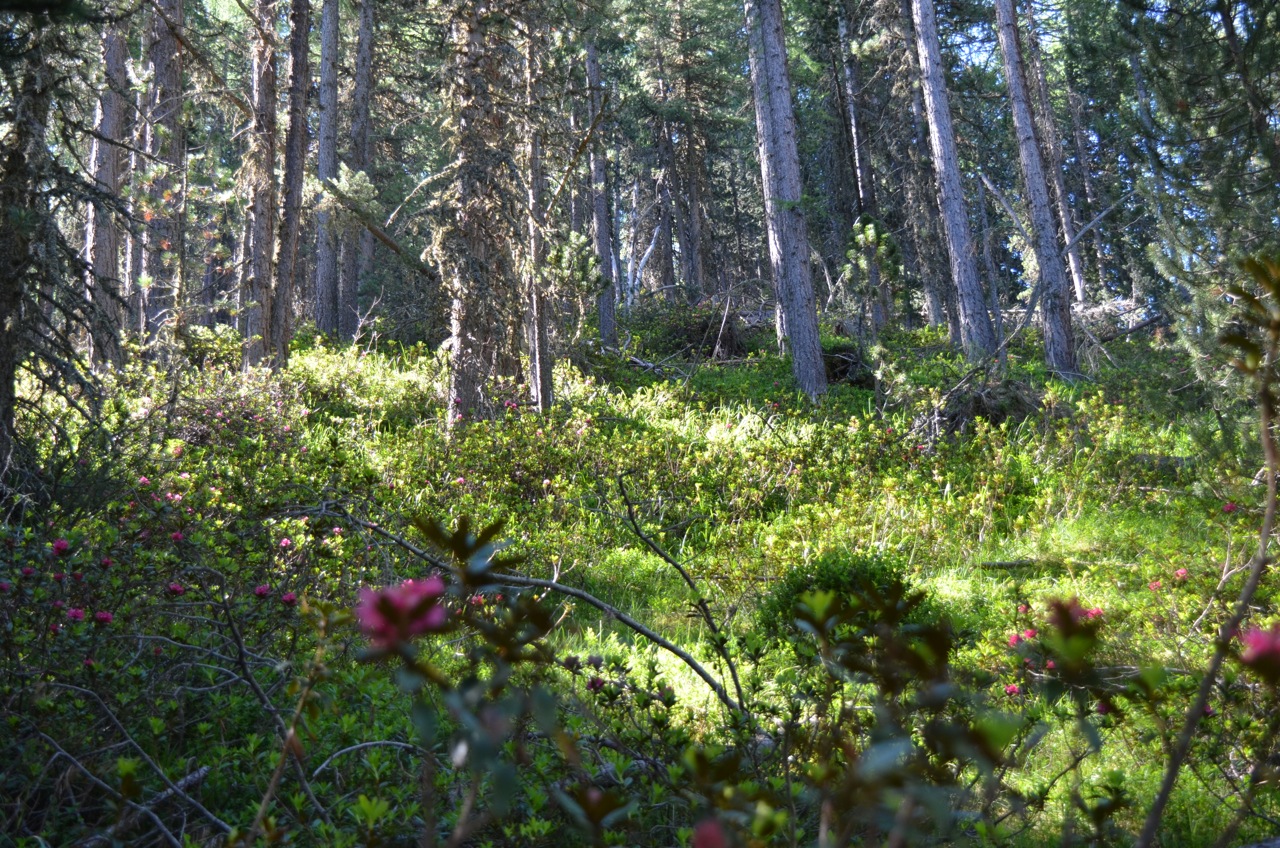
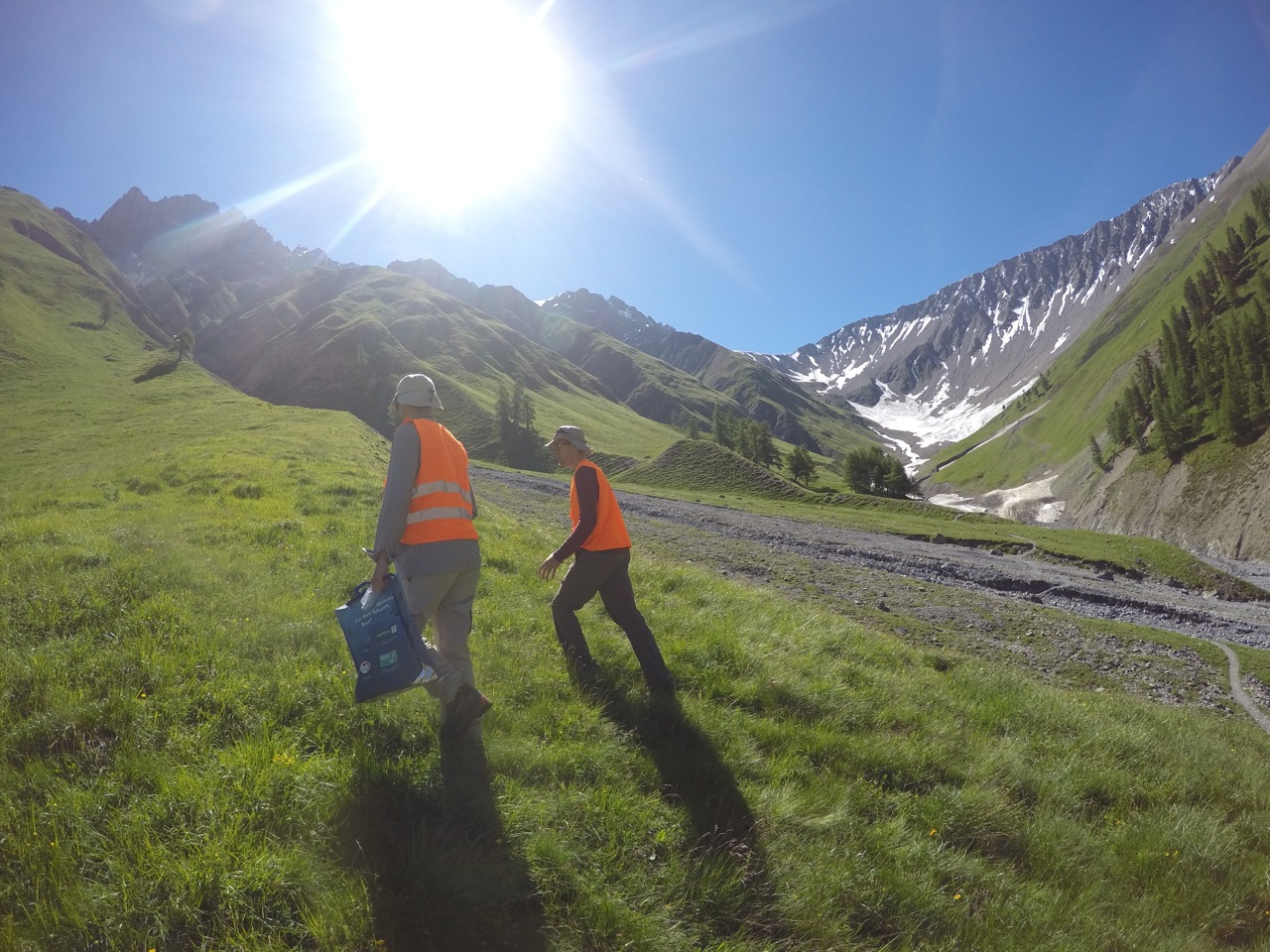
We headed out on the trail, Ruedi armed with a map of tree types (which the team had made on a previous project!).  Then we’d leave the trail and spread out, walking off-road across moss, fallen trees and lots of blueberry plants in search of ants and their homes.  When we found a suitable ant mound, Ruedi took a waypoint on the GPS and noted down the location.

Which way boss?

Which way boss?

Off the trail

Off the trail

This one might be big enough

This one might be big enough

Off-roading gets tricky

Off-roading gets tricky

On the way, we all had some interesting chats.  The two post-graduate research interns Judith and Thomas are from Germany, so I managed to speak German for a day without having to constantly ask people to repeat things (I’m not very good with the Swiss accent!).  Anita told us all about the ants on the way, and Dave talked to Martin a lot about conservation and the concept of wilderness, which was really interesting.  It’s great when you get to chat to someone about those things who really knows what they’re talking about!

Ruedi also told me and Dave a story about the nutcracker.  The little black and white bird is the emblem of the National Park, but it hasn’t always been so beloved!  In the early 1960s, some people in Switzerland (outside the National Park) hunted the nutcrackers because they saw that they ate the nuts of the pine trees and they wanted to protect the forest.  In the late 1960s, it was realised that the birds don’t just eat the seeds, they also help to plant them!  They stash seeds for the winter but only use 80-90% of their stash, leaving the rest to germinate.  So the nutcracker is now a reminder that we don’t always know what we’re doing when we meddle with nature.  In the National Park, there have been 100 years without human interference for this reason (oh, except the reintroduction of the bearded vulture, which is doing well here now).

At lunchtime we left the forest and rested under the sun by an old Alp.  We watched a few deer on the hill and Ruedi made us teas and coffees to go with our sarnies.

Out of the forest for lunch

Out of the forest for lunch

After lunch, we headed back into the forest to keep on looking.  On one section, we all gathered together to mark a suitable nest and Ruedi realised Dave was missing!  I called him for a while, then we heard Ruedi’s phone ringing.  Directions were given and we met up again at the next trail.  “Sorry guys!”

On the last section of trail, we saw a lot of comically shaped spruce trees.  Ruedi told us these had been browsed by deer, but they were doing just fine.  Once they manage to get out of reach, they shoot upwards and grow up to be healthy.

Ruedi with a browsed spruce that has made its escape!

Ruedi with a browsed spruce that has made its escape!

After walking around in a lot of lovely forests, we eventually had about 20 suitable nests identified. Almost all the nests were spotted by Martin, so I’m not sure Dave and I helped much, but it was an interesting day out and a nice walk with plenty of food for thought.

When we got back to Zernez, we were chatting to Ruedi about the next few days.  He was telling us about a really interesting project on Friday when they’re going to flood the valley using the dam, in the hope of recreating natural floods in the future.  So now of course we want to stay until Friday, but we really should leave on Thursday!

We also discussed a walk we intend to do tomorrow, to a cirque at 2,900 m.  Ruedi said it’s a long day out (about 9 hours) with 1500 m of up, and 1500m back down.  “Have you ever done that before?”… Erm, no…  “Then I think it’s better for you if I drive you in the car to the tree line.”  After a short debate we decided to take his advice and his kind offer.  Thanks Ruedi!  Looking forward to tomorrow.

– Anna
Antcam!

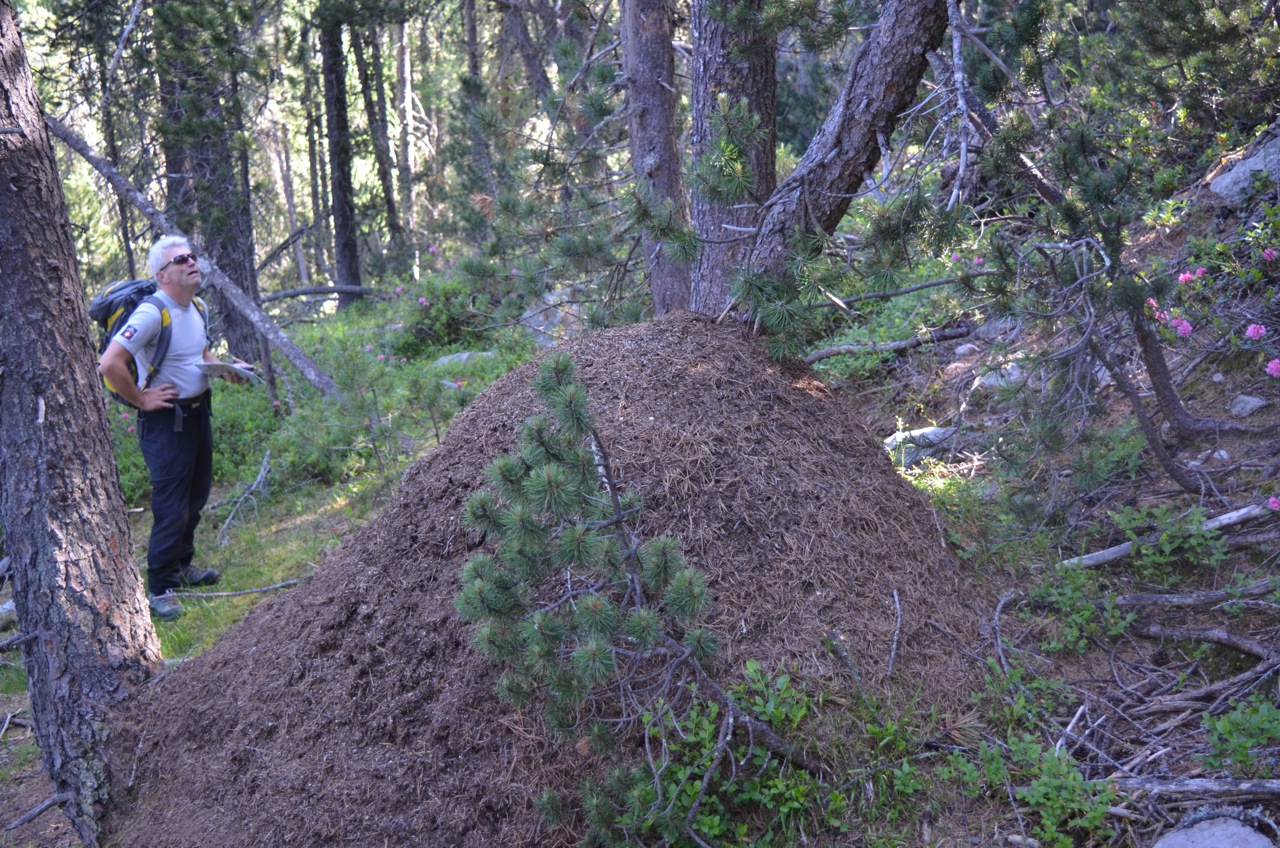
Today we had a look at the genesis of a really interesting project. It’s all about ants. There are loads of massive anthills in the National Park, created by the unassuming wood ant. Just for accuracy there are six species of wood ant in the park, but I have no idea which ones we were looking at!

The ants create trails across the ground in the park, and they also climb the trees. It’s known that they prefer to climb the taller trees, and that they milk the aphids that pierce the trees and suck out the sap. No-one knows why they always pick the taller trees, and no-one knows exactly what the ants do while they’re up there – it’s hard to record without disturbing them. So a team from the Swiss Federal Institute for Forest, Snow and Landscape Research WSL has decided to try to find out by using a drone to film the ants in the treetops. A company called Flyability that produces a special drone called “Gimball” wants to partner with the researchers to help prove their idea in the field.

Gimball is a drone that is encased in a carbon-fibre cage with flexible joins. A big problem with using drones for close contact work is the blades. These are usually made of carbon-fibre and rotate at very high velocity, meaning they tend to shatter on impact with other objects. Gimball’s rotor blades are safe within its cage though, so it can happily move around in enclosed spaces and bump into things without turning into a nail-bomb. Groovy! This makes it good for search and rescue work, and for inspections of pipework and other industrial equipment.

The purpose of today was to test out Gimball in the National Park to see if the idea flies. Sorry. We were picked up by Ruedi, and the three of us plus Michel and Stephano from Flyability, and Reudi’s son Florian (who is on school holidays) headed out to the park. There we met Martin and Anita who are researchers at WSL, and Thomas and Judith who have just finished their Masters projects and are taking on a summer internship working for WSL.

We all headed into the woods, enjoying the open spruce, pine and larch forest around us. We went to a spot Martin and Anita have previously worked at, and where ant-runs are well established. Michel and Stefano, step forward! Michel flew the drone, while Stefano operated the camera. There was a bit of setting up time, and then with a loud whirr, Gimball took to the skies.

Gimball!

Gimball!

Batteries included

Batteries included

Unfortunately there was a bit more wind out in the park than in your average factory, so control of the drone proved tricky. It was fun to watch though, the drone whizzing around all over the place, Michel managing to get it under control for a few seconds before it randomly shot off across the woods again.

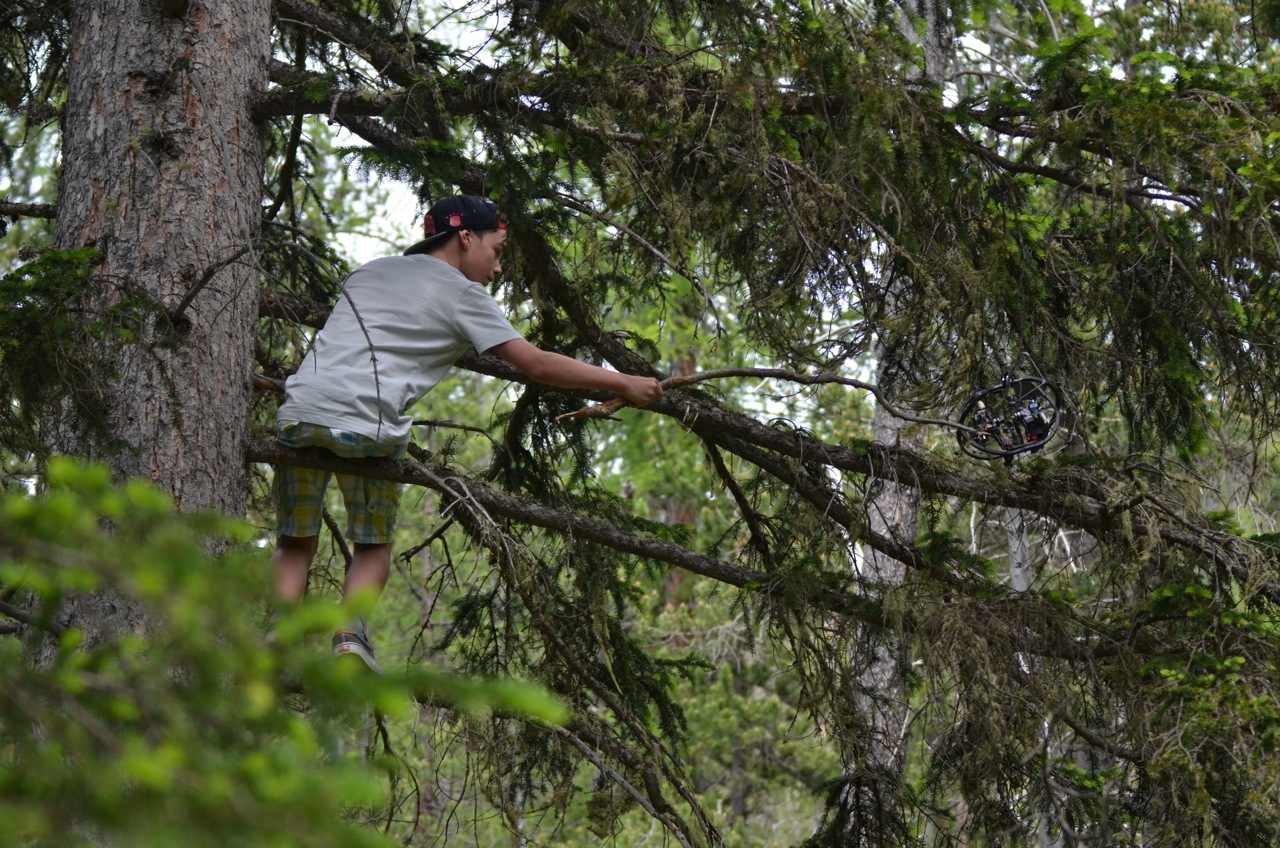
It kept us entertained for an hour or so before eventually getting stuck in a spruce tree. Luckily, Florian enthusiastically offered to climb the tree and poked Gimball into Reudi’s waiting arms with a stick.

Florian takes care of business

Florian takes care of business

After that, there was time for one more flight (which to be fair was quite controlled) before the last battery ran low and we drove back to the office to look at our footage.

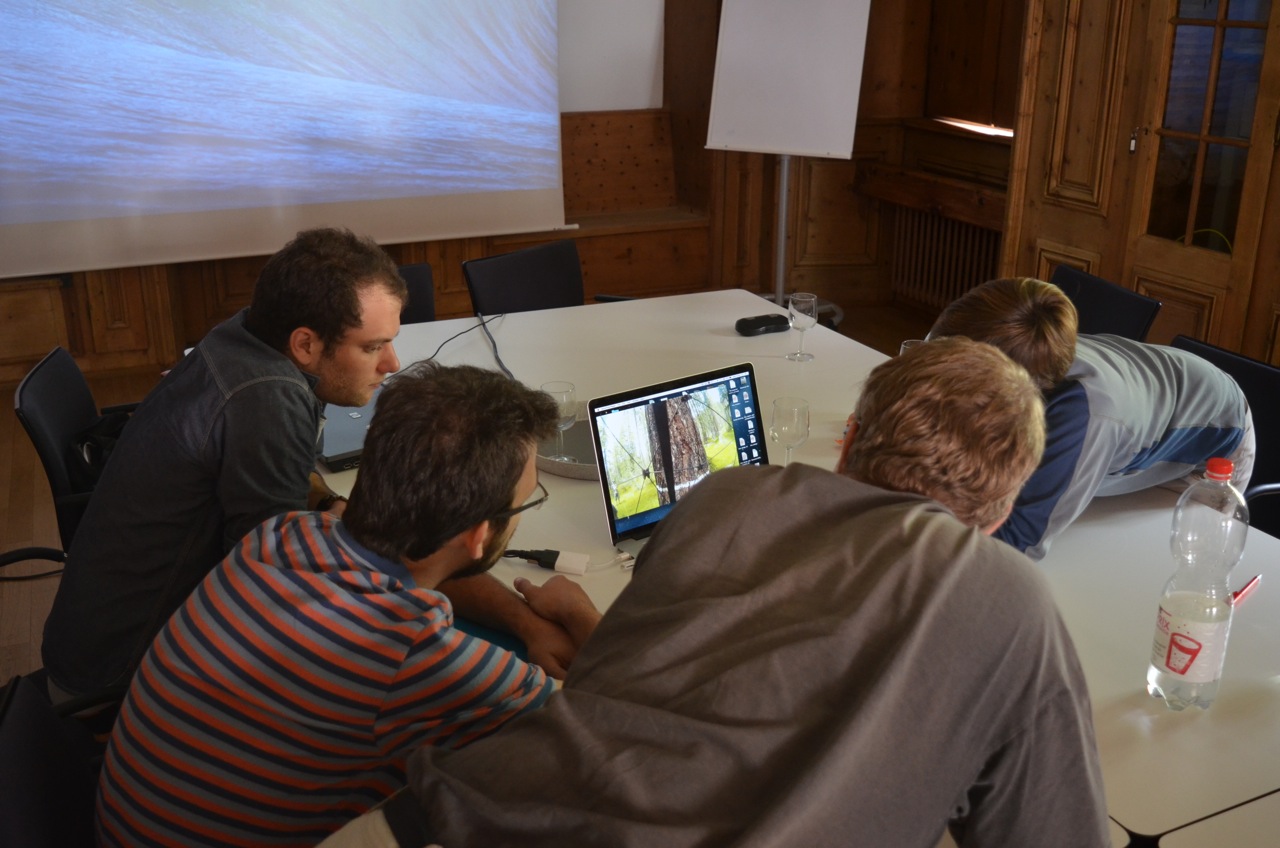
It was actually pretty good; when Gimball had managed to stick close to a tree for a while we saw glorious HD footage of the bark. No ants though. We thought that when you watch the ants in person, it’s really the movement you see. They are pretty well camouflaged when they’re standing still. And with the movement of the camera and the cage it was pretty hard to distinguish from anything that might be moving on the tree.

Looking at the data

Looking at the data

Ants are hard to see!

Ants are hard to see!

To prove it we headed out again to do some filming of ants moving on the trees while holding gimbal steady at ground level. Sure enough the ants showed up this time, showing that it was the movement of the camera and the cage spoiling the view.

While we were out, Ruedi pointed out an ant hill that is know to be over 100 years old, as it shows up in photos from when the park was established in 1914.

100 year old anthill

100 year old ant hill

Armed with the new knowledge, the researchers and the Flyability team went back to their hotel to discuss ants and cameras over dinner, while Reudi drove us back to the campsite, remarking, “Well, now you know what real research looks like. It doesn’t work and you have to go back and think about it again”. True enough. Tomorrow we’re going to go out with Reudi and the WSL guys to find new spots that would be good to film, track and generally mess about with ants. Good excuse for another walk in the National Park!

– Dave

Sunday stroll

On Saturday, we had a chore day at camp. Route planning, emails and fixing my slow puncture.

For Sunday, Ruedi had recommended that we cycle along the valley to the next town, then hike a trail up a 3,400m peak (although not all the way to the top!) for amazing views and possible ibex sightings. We debated doing the recommended route, we debated going up a different mountain and then I said I decided that I wasn’t up to going up any mountains at all. Dave really wanted to go but didn’t want to part ways for the day, so settled for a valley walk with me. And kept reminding me of that fact! But we had a nice day in the end.

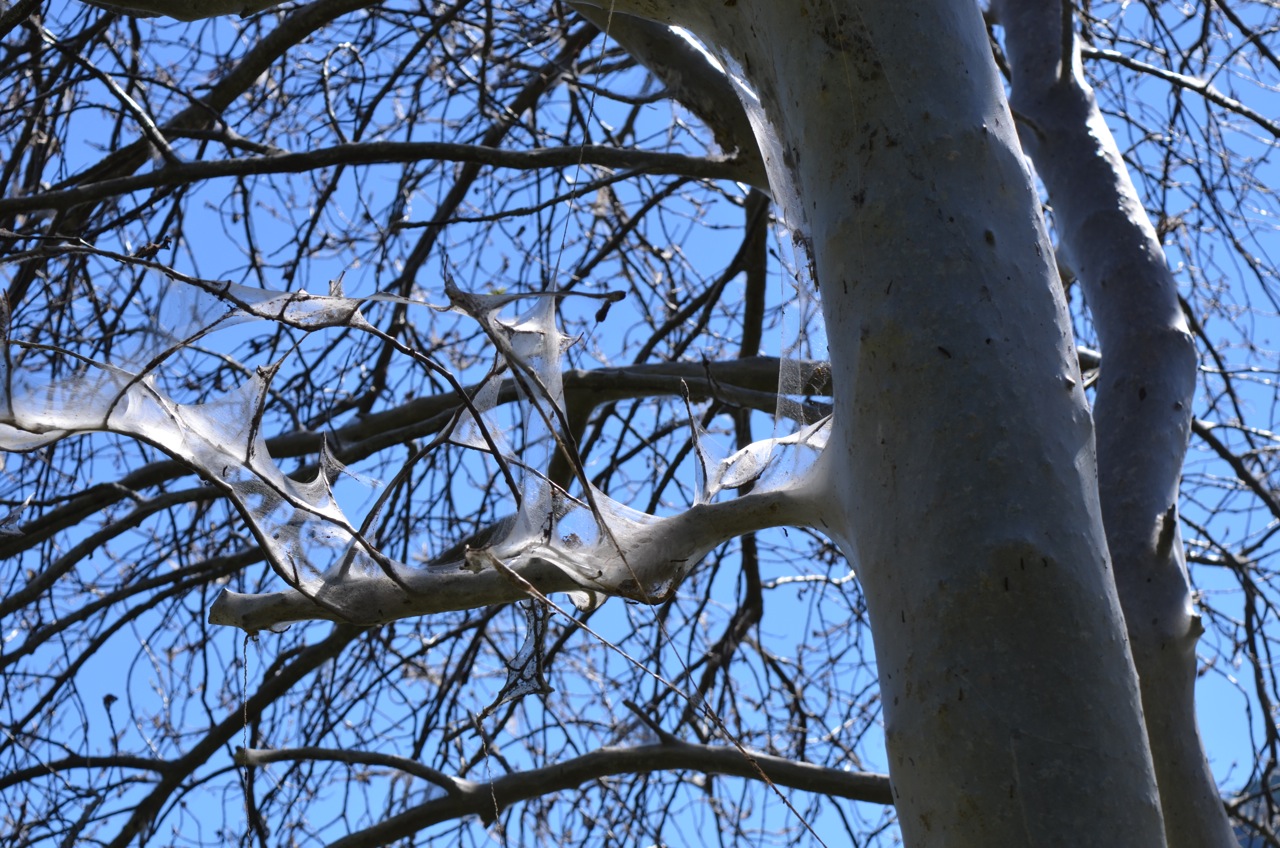
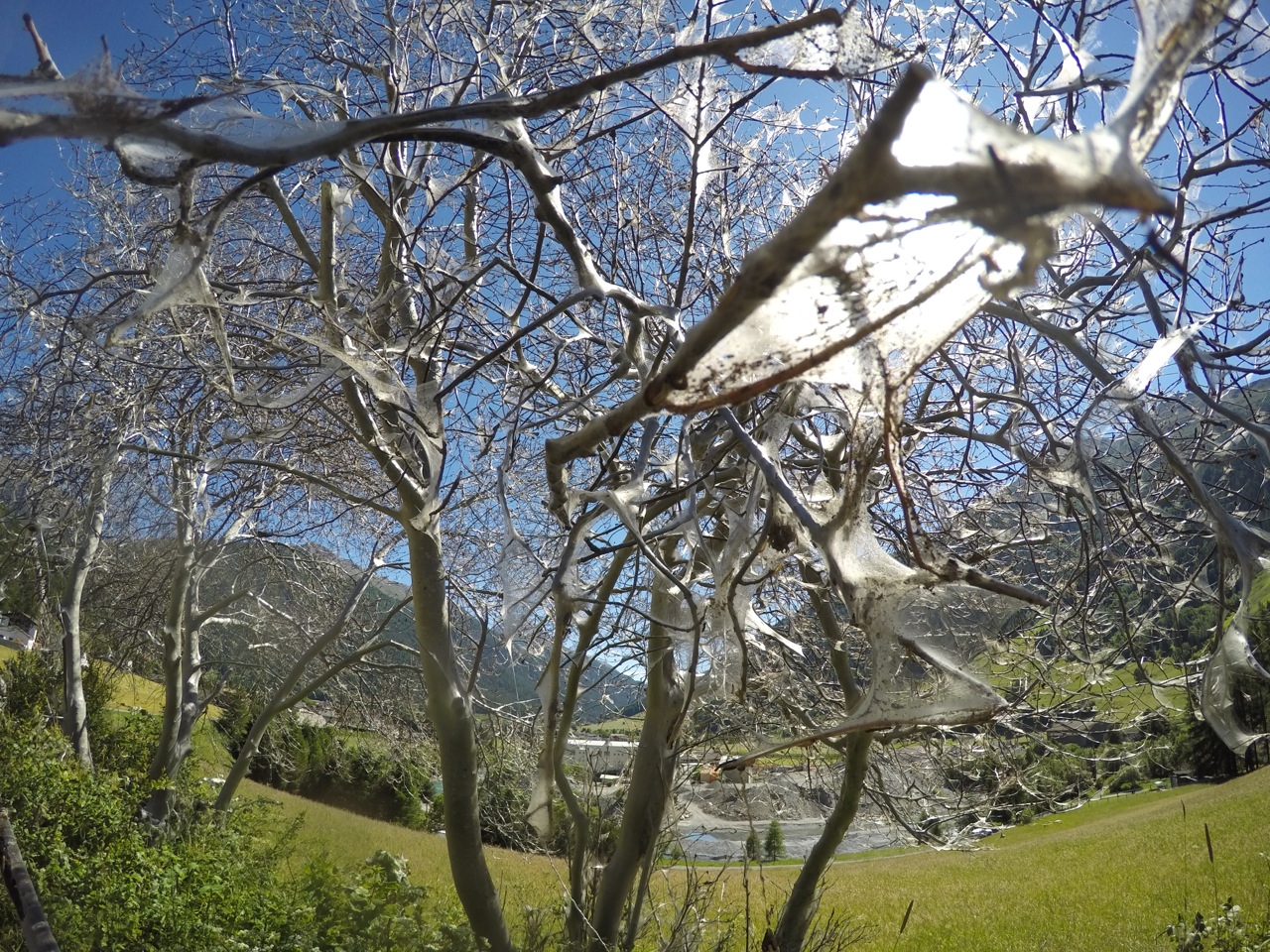
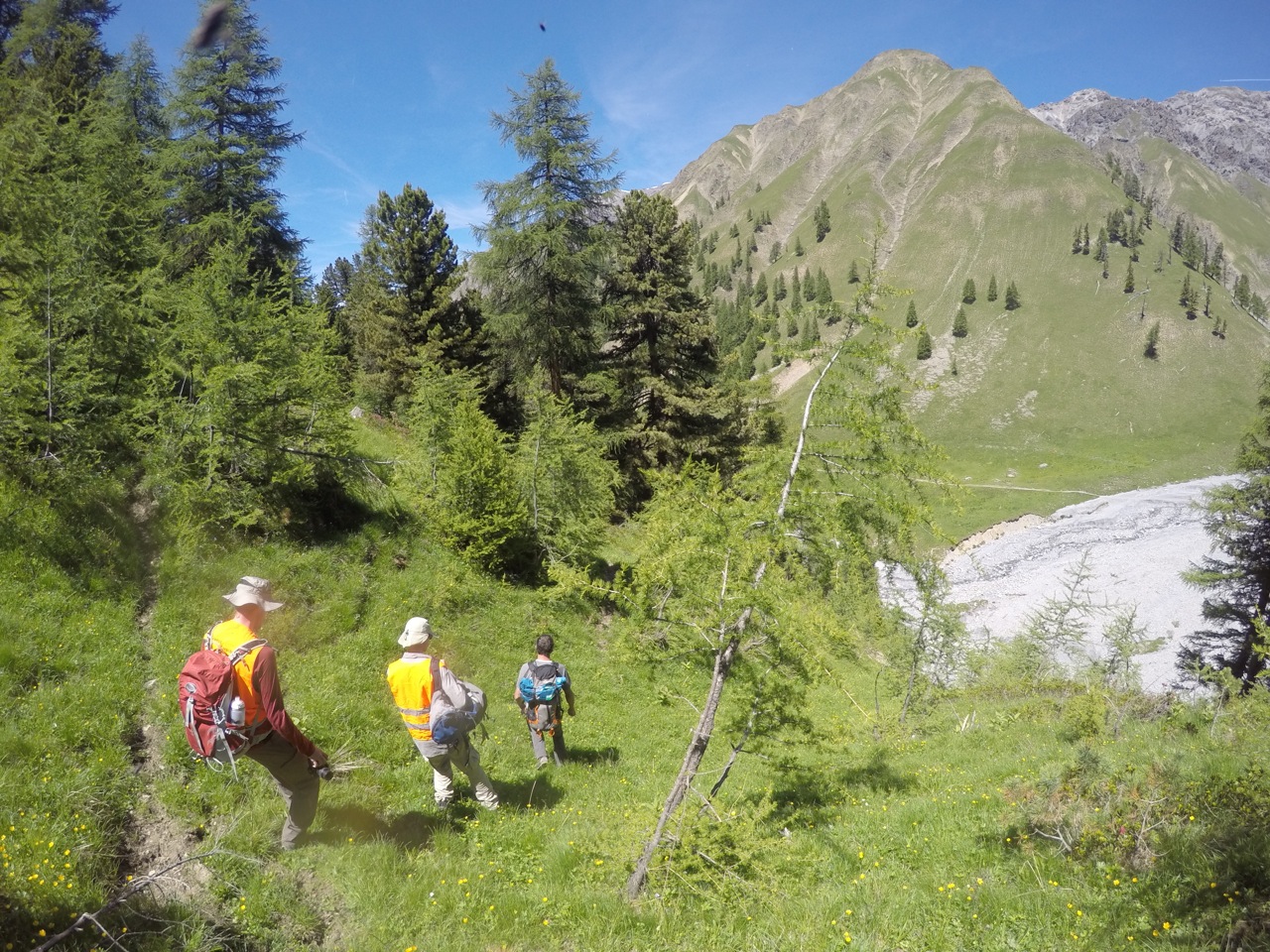
We headed out along a trail, leaving Zernez along the river. We saw lots of trees covered in spooky webbing and saw thousands of little caterpillars weaving and munching. Apparently they’re tent caterpillars, commonly called web worms. They can eat whole trees bare (the ones we saw had no leaves at all), but the trees should survive one bad year if they are left alone the following season.

Web worms

Web worms

They're everywhere!

They’re everywhere!

We could hear the pumping drum and bass of the festival and were worried we were in for a noisy walk. It did get louder, but the festival was only 1km or so from the town, so we were soon watching them from across the river, bouncing to the beat in the sun. Then we carried on past with just the sound of the rushing river and racing motorbikes.

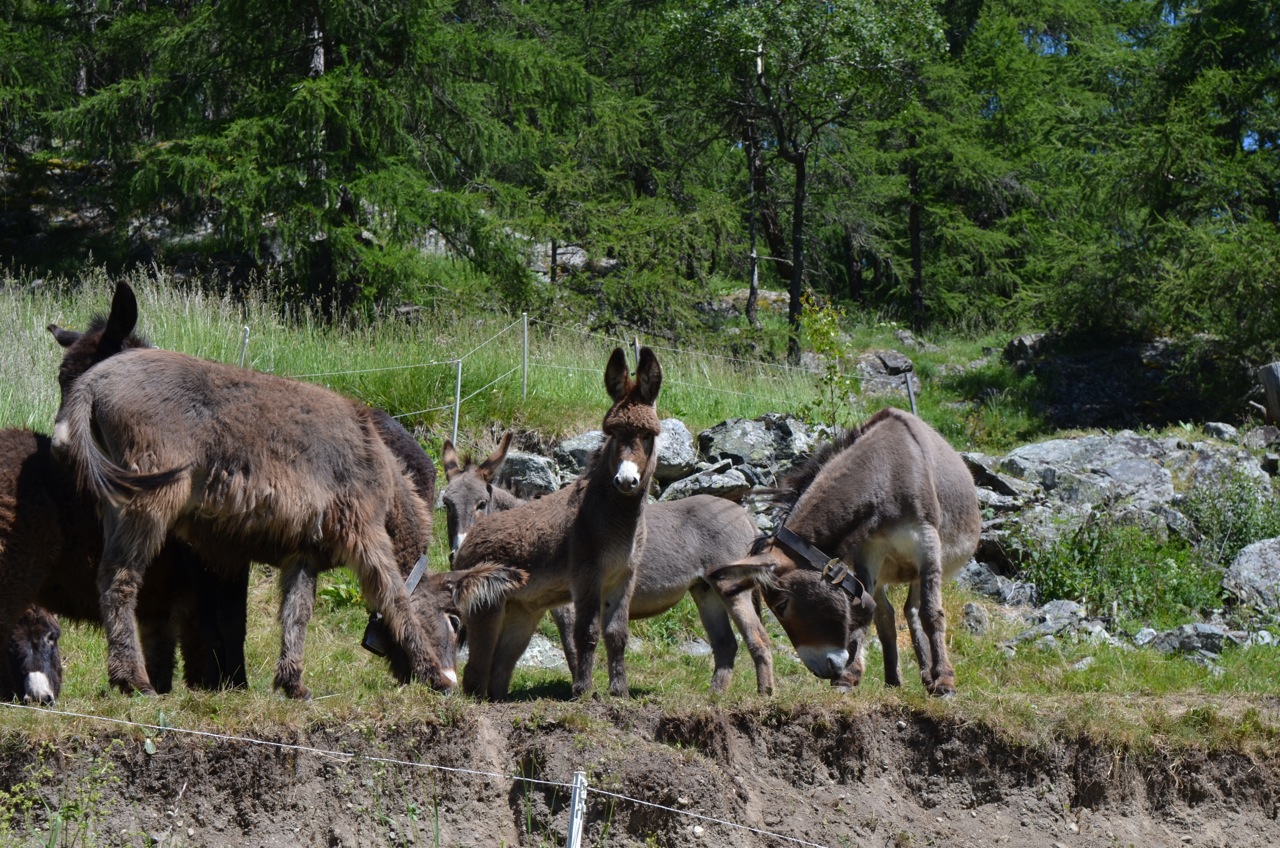
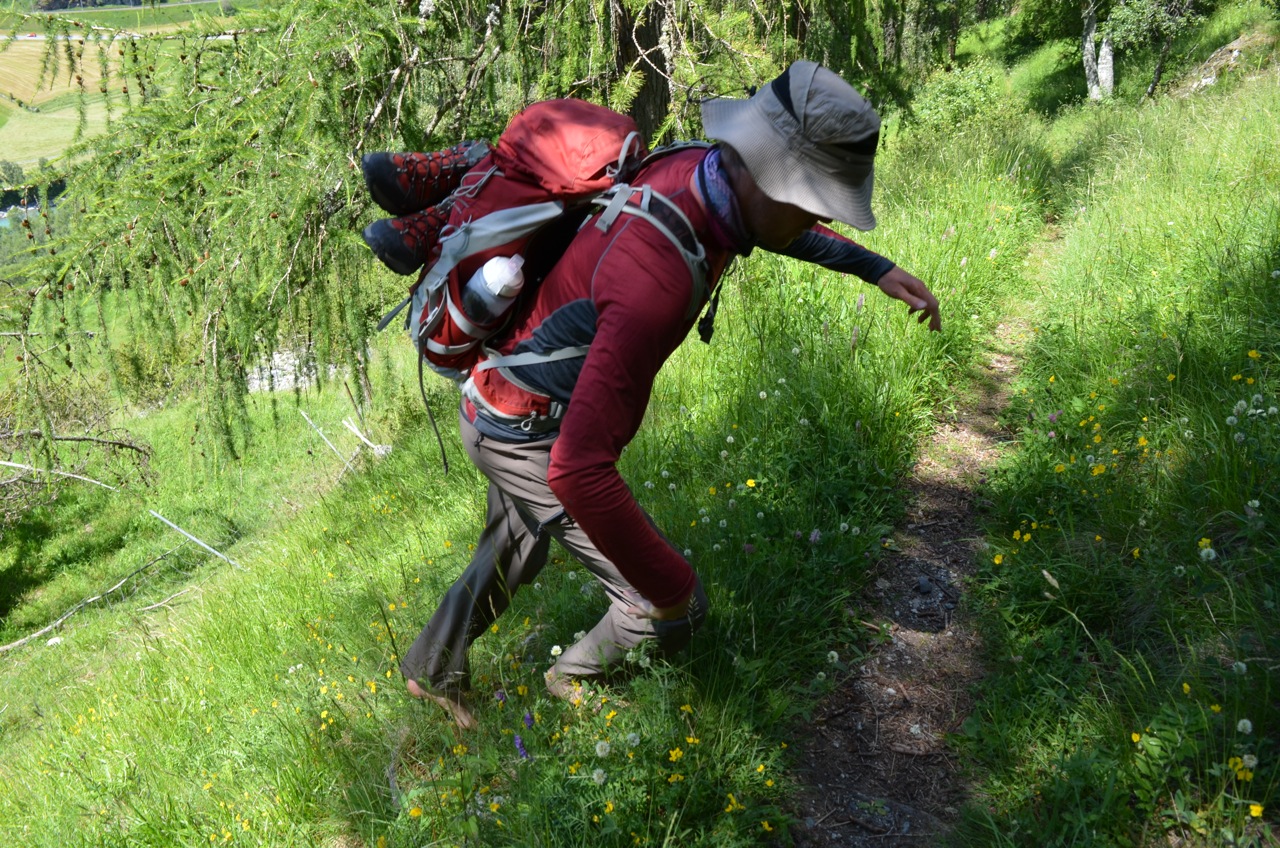
Along we went past wildflowers and forests towards the town of Susch, when we spotted a fort on a little hill next to the town. There was a path off to the right that wasn’t signed, but looked like it might go there… so off we went. We’d been walking barefoot for a bit but the trail here was rocky and I put my sandals back on, but Dave persevered and we wound our way slowly uphill along the track. We passed some donkeys, including this little guy with his bowl cut! Then the track went to the front door of a house and we were suddenly without a trail. The sheep were looking at us from the shade of the trees and we could see the fort on the top of the hill but no path to get there but sheep tracks. We zig zagged our way along sheep trails, across the field and over the fence to find another track that took us to the fort.

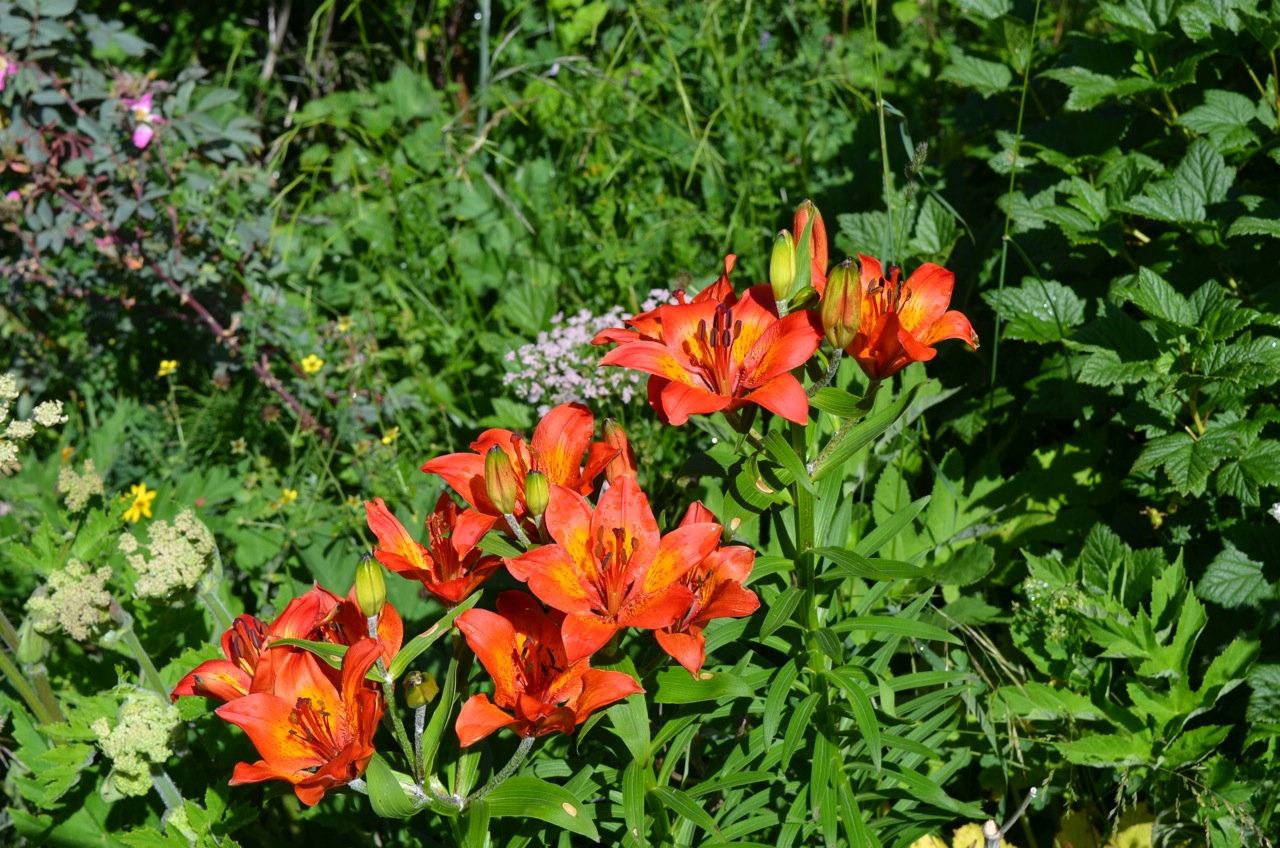
Lovely wildflowers

Lovely wildflowers

Cute little donkey

Cute little donkey

We found the trail again!

We found the trail again!

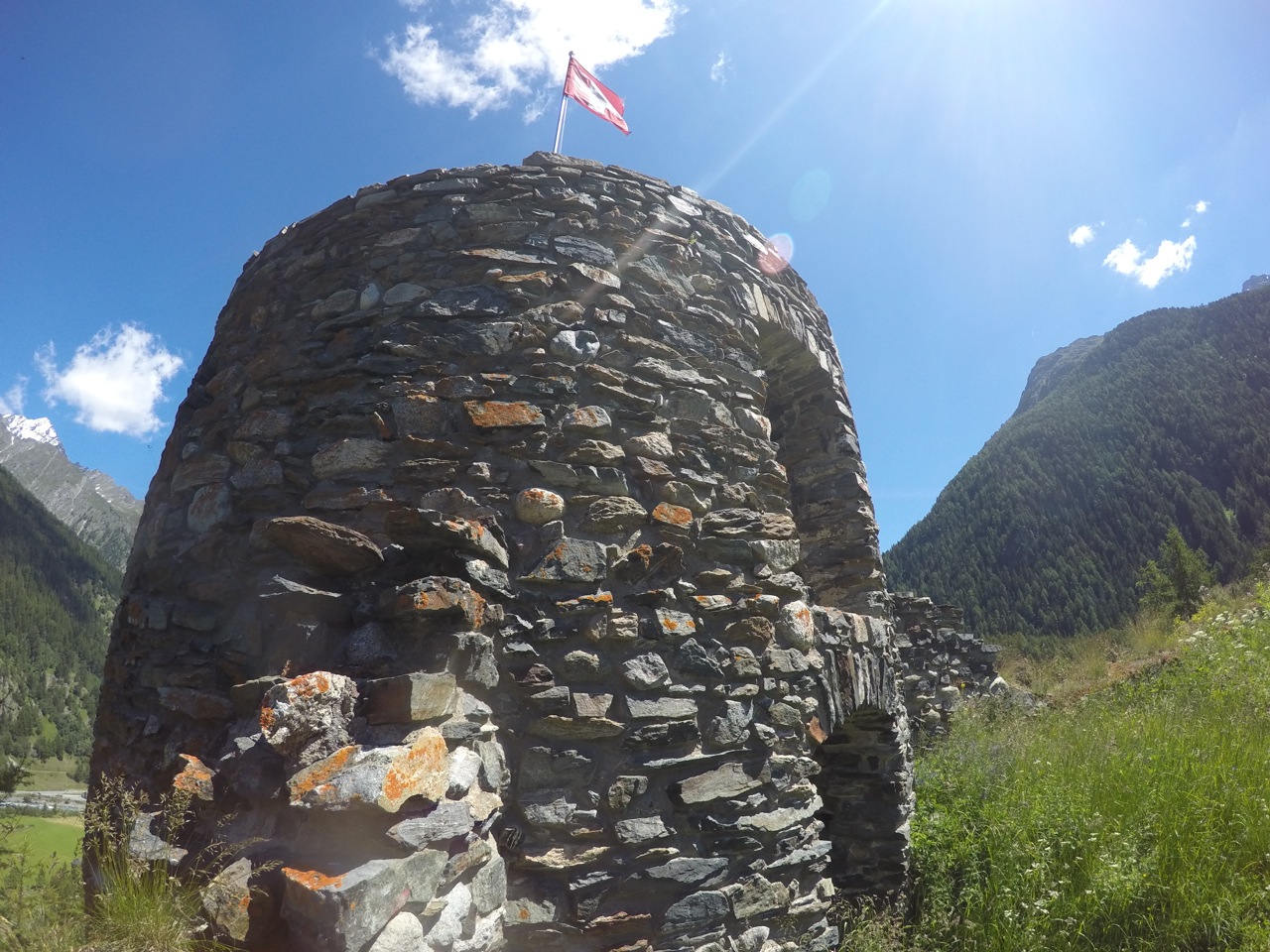
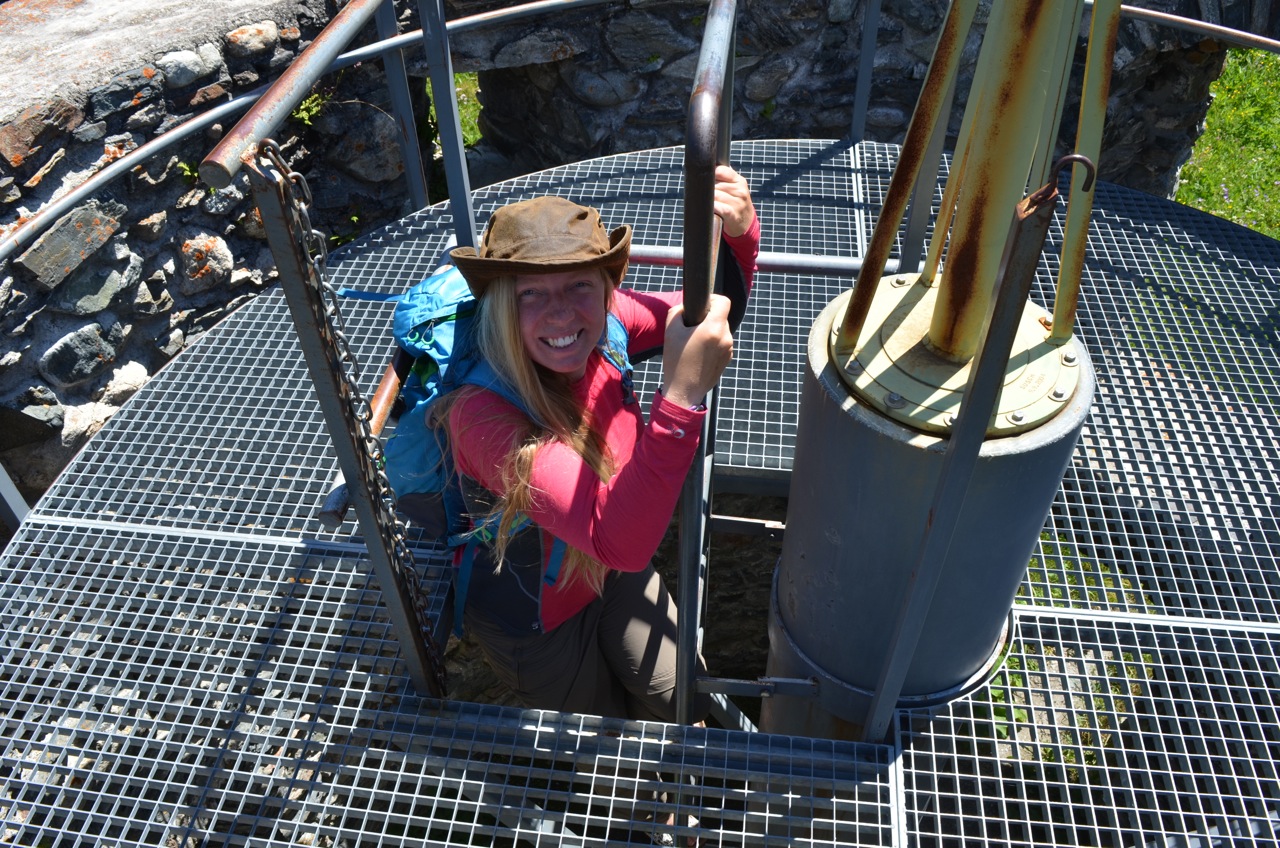
Fortezza Rohan was built in 1635 during a 30-year war with the Austrians and the Spanish. At the end of the war, it was abandoned. The walls are still standing and the tower has been restored with a viewing gallery.

Fortezza Rohan

Fortezza Rohan

Up to the viewing gallery - bit of a squeeze!

Up to the viewing gallery – bit of a squeeze!

Overlooking Susch

Overlooking Susch

We sat on top of the fort and debated what we might do once our rewilding cycle tour comes to an end! Winter ski season, maybe?

On the way back, we followed the proper trail through the pretty village of Susch and back to Zernez along the river. It was a beautiful day and a lovely evening and we enjoyed ticking some jobs of the list after dinner. I even got an hour of yoga in before bed, finishing as the sky turned purple and an aeroplane made an orange vapour trail flying into the setting sun.

Back towards camp, cooling off by the river

Back towards camp, cooling off by the river

Stroll back to camp

Stroll back to camp

– Anna
Poo Picking (for science!)

At 7:30am we were outside the admin castle, as promised.  Just after 8am we set off with Lukas and Nikoline to head into the park and help with some research.  Lukas is getting back into biology after spending several years building up a business teaching people how to kayak and trail run.  Nikoline is working here permanently helping all the researchers.

As we drove down the road, we learned that we were going to be collecting poo today.  It will be analysed for stress hormones for a research project into food availability and stress.

We parked up and met Leah, a research student.  The five of us set off up the trail to the alp hut, where we’d been to fix the solar panel a few days before.  Lukas was keen to get up there, so we set off at quite a pace and arrived in good time.

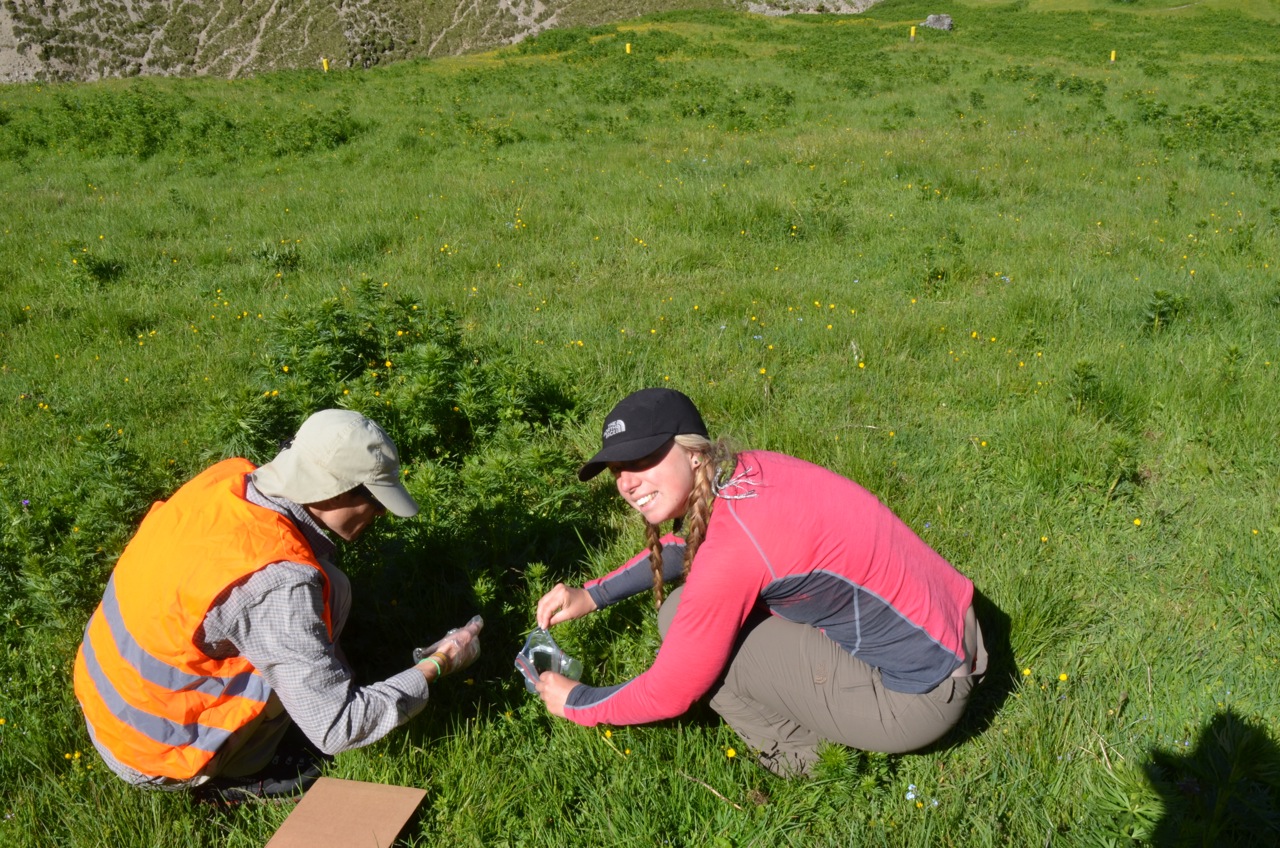
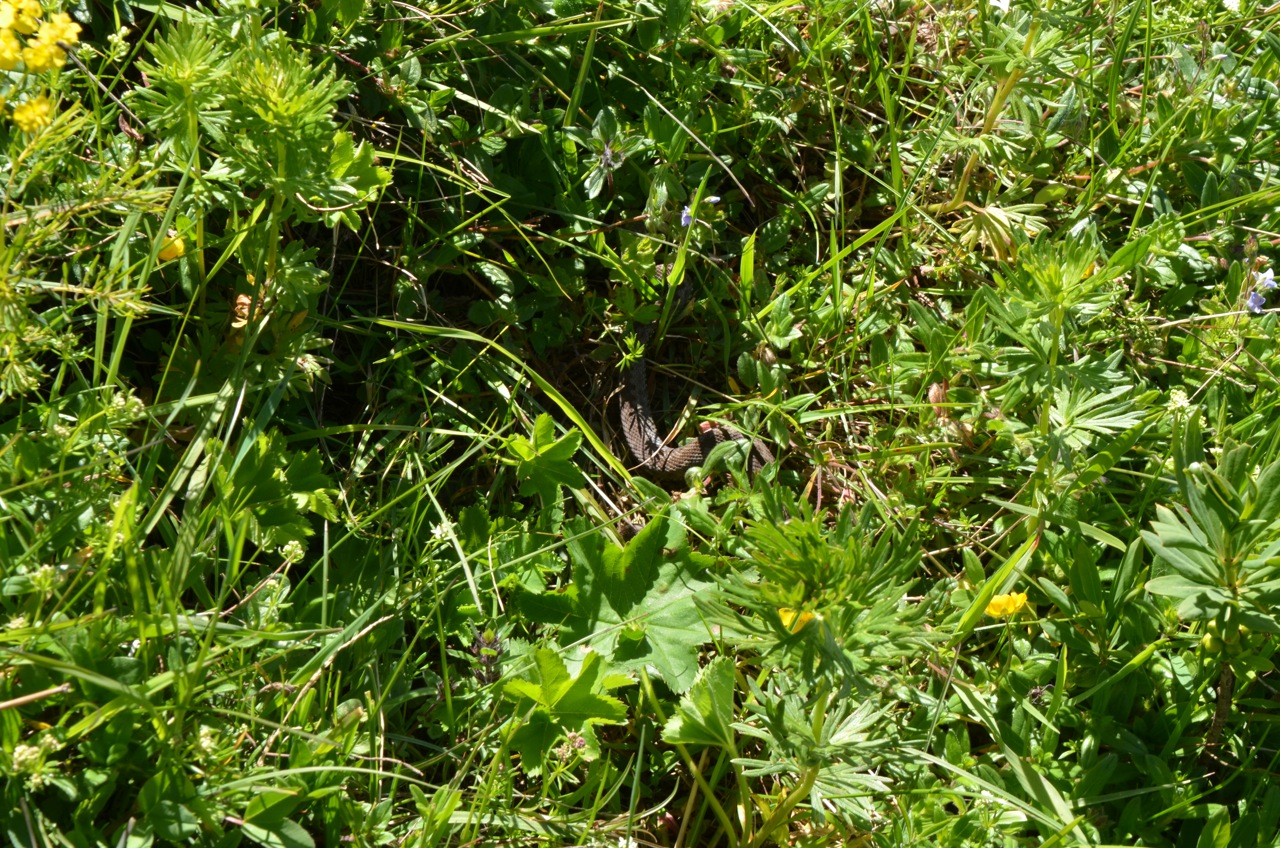
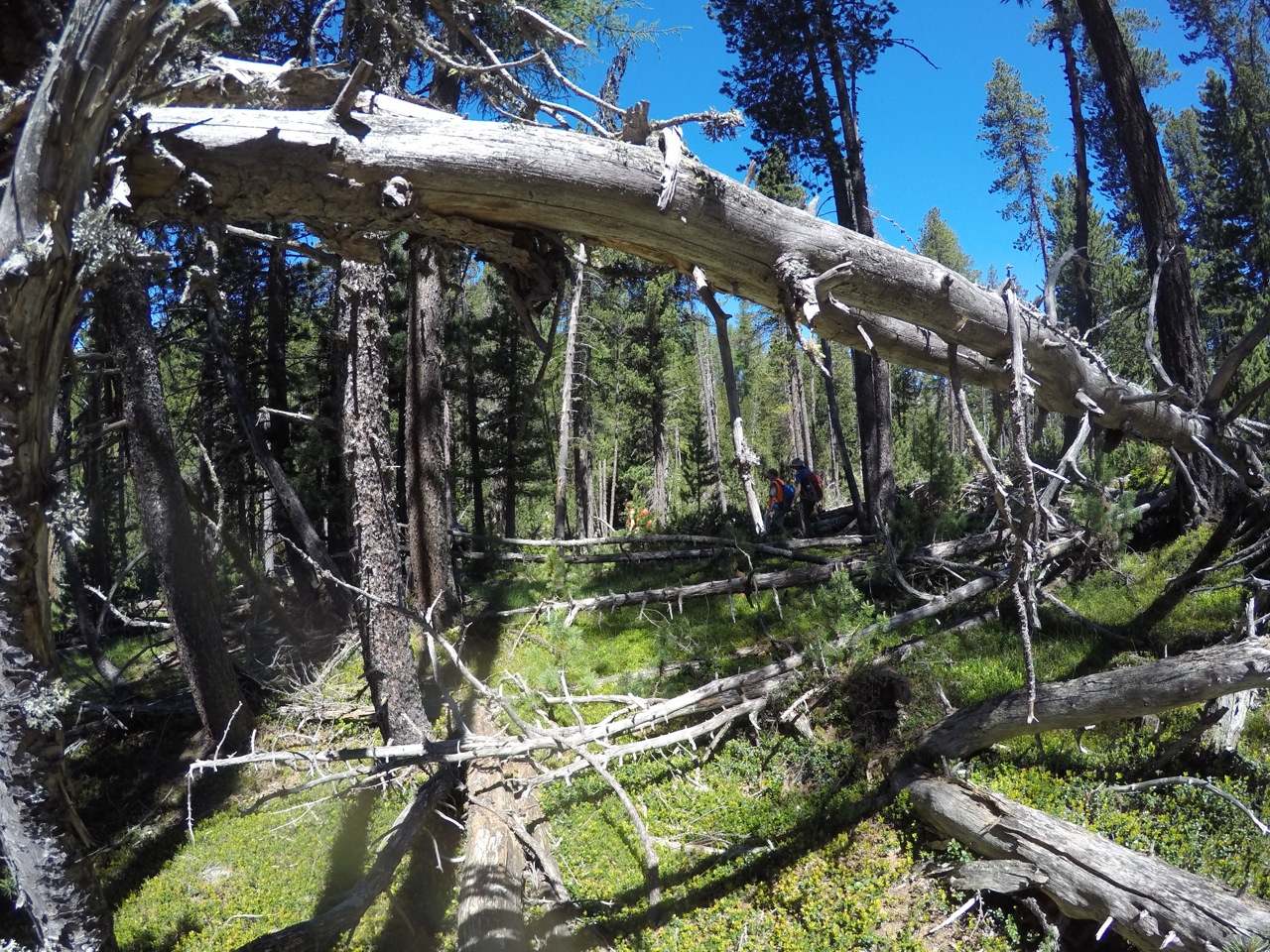
Now we were to walk back and forth up the slope, looking for fresh scats.  When we found a nice fresh wet one, we were to put it in a ziplock bag and label it.  Once we had 15 bags of poo, we were done.  It took quite a while to find 15 fresh ones, walking back and forth and up and down in the hot sunshine.  But we made it!  And I even came across a common viper that Dave managed to snap mid-escape.

Dave and Nikoline looking for poo

Dave and Nikoline looking for poo

Found some!  Bag it up.

Found some! Bag it up.

Glimpse of the common viper

Glimpse of the common viper

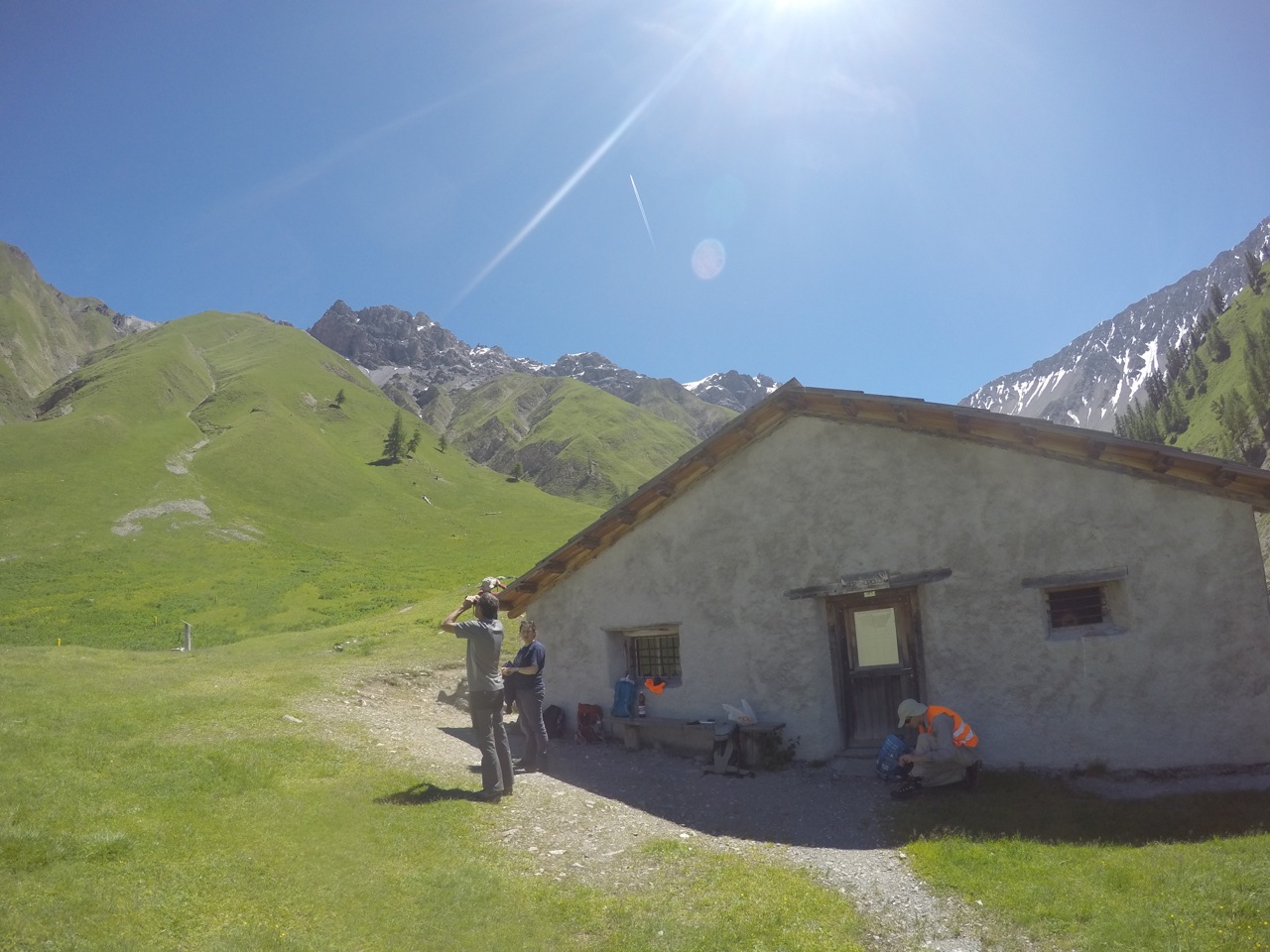
Then we sat outside the alp hut for lunch and watched some female Ibex and a herd of deer on the faraway slopes.

Lunch at the alp

Lunch at the alp

After lunch, we hiked back up to the camera and solar panel on the other side of the river to fix the cable to the ground with pegs.  Why we didn’t just do this when we were up there the other day, I’m not sure.  But it was nice in the end because we got to walk back on the other side of the river, where we hadn’t been before – and in the shade of the trees!

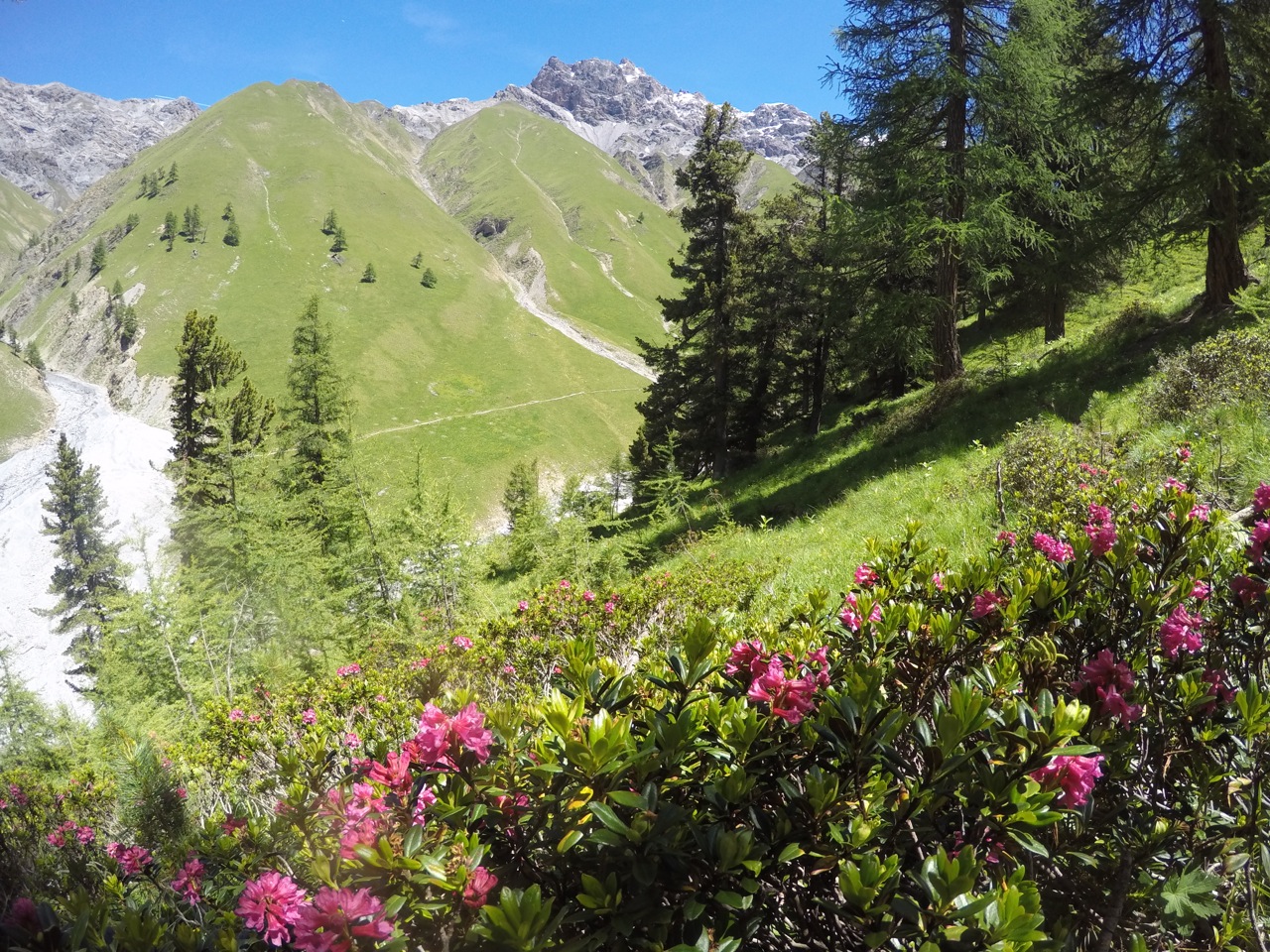
Alpine flowers

Alpine flowers

Steep descent

Steep descent

Off the trail

Off the trail

I was feeling pretty tired on the way back, my legs complaining about cycling up here then hiking for four days straight.  But we were back to the car reasonably early and headed back to the office.

After another visit to the shop to get dinner things, we returned to the campsite for showers.  Ruedi met us there at 5pm whilst his children were doing activities in town.  We organised the next few days here and chatted about the park before he had to head off.

By the time we’d made dinner, eaten and Dave had chatted to his family, it was bedtime. I am so tired!  Glad we’ve got a day off tomorrow, I think I need it.

– Anna
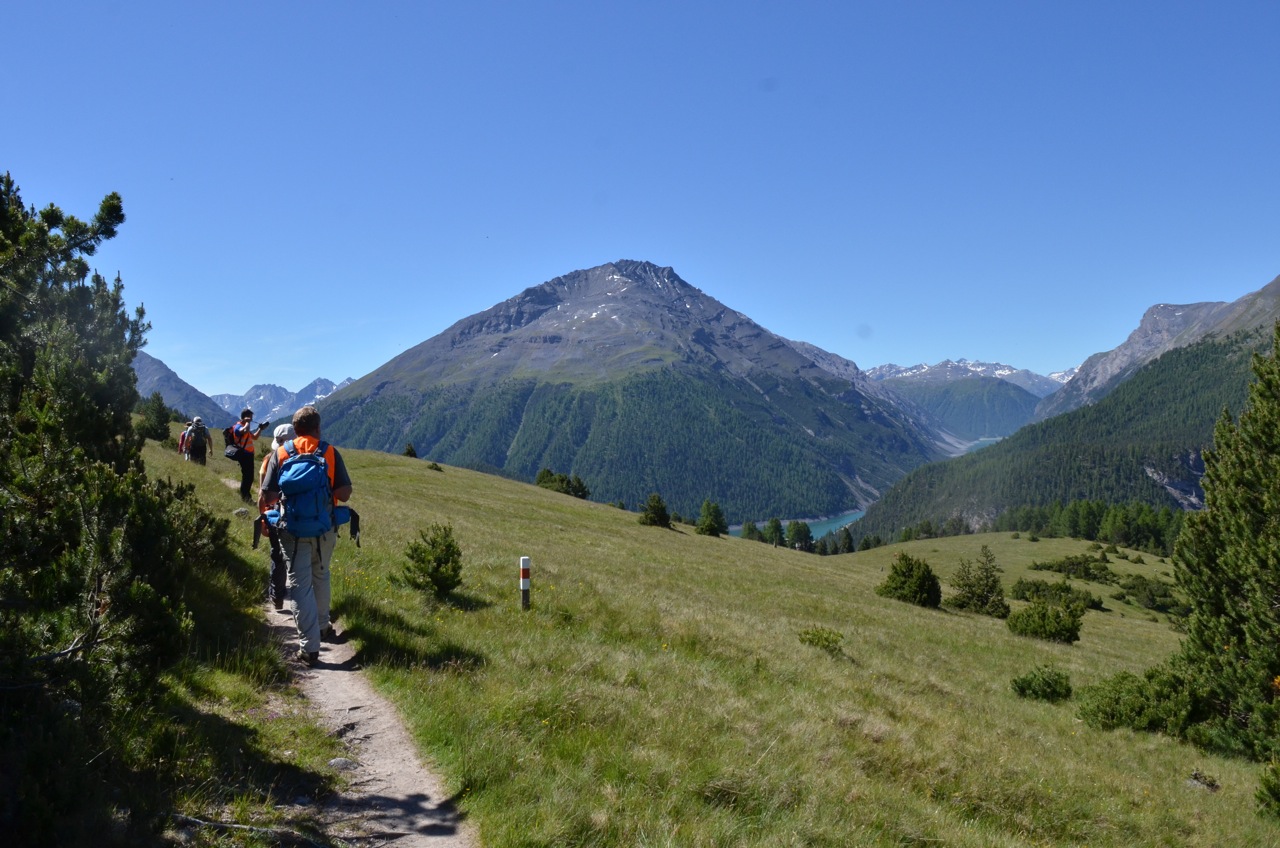
Over the Murter saddle

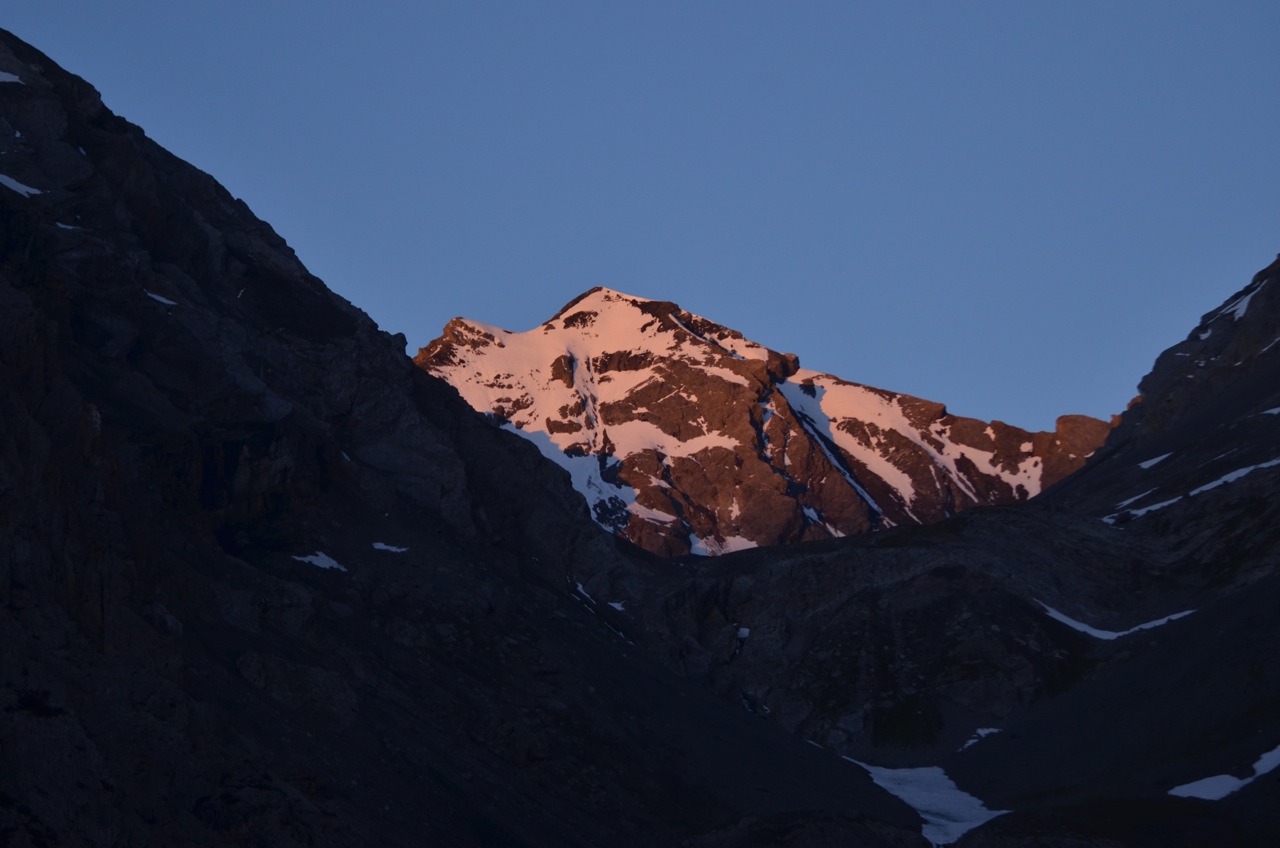
We wanted to get an early start today to maximise our chances of seeing some wildlife. We got up at 4.55 and enjoyed a tasty breakfast in the hut. We were joined by two mountaineers who were planning to climb Piz Quattervals, which towers at the end of the Cluozza valley and is the highest peak you can climb in the Swiss National Park. The sun was already bathing the peak in a pink glow as we ate, although it wouldn’t reach our side of the valley for several hours.

Sunrise on Piz Quattervals

Sunrise on Piz Quattervals

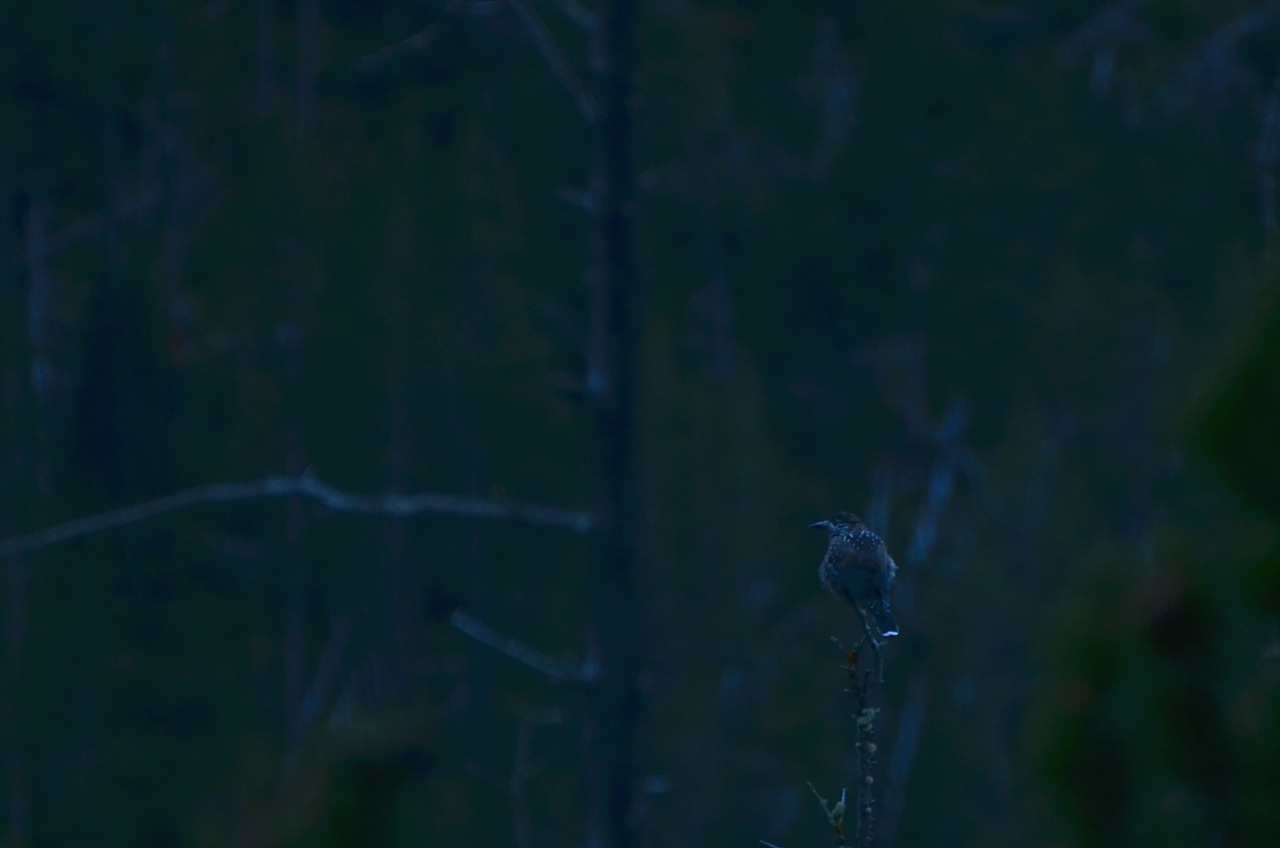
We wished the intrepid explorers a safe climb, and headed off up the valley. We climbed through the forest in the dawn light, with the air fresh on our faces. We heard a nutcracker in the trees, and Anna was quick enough to get this photo, which we lightened a bit so you can see it!
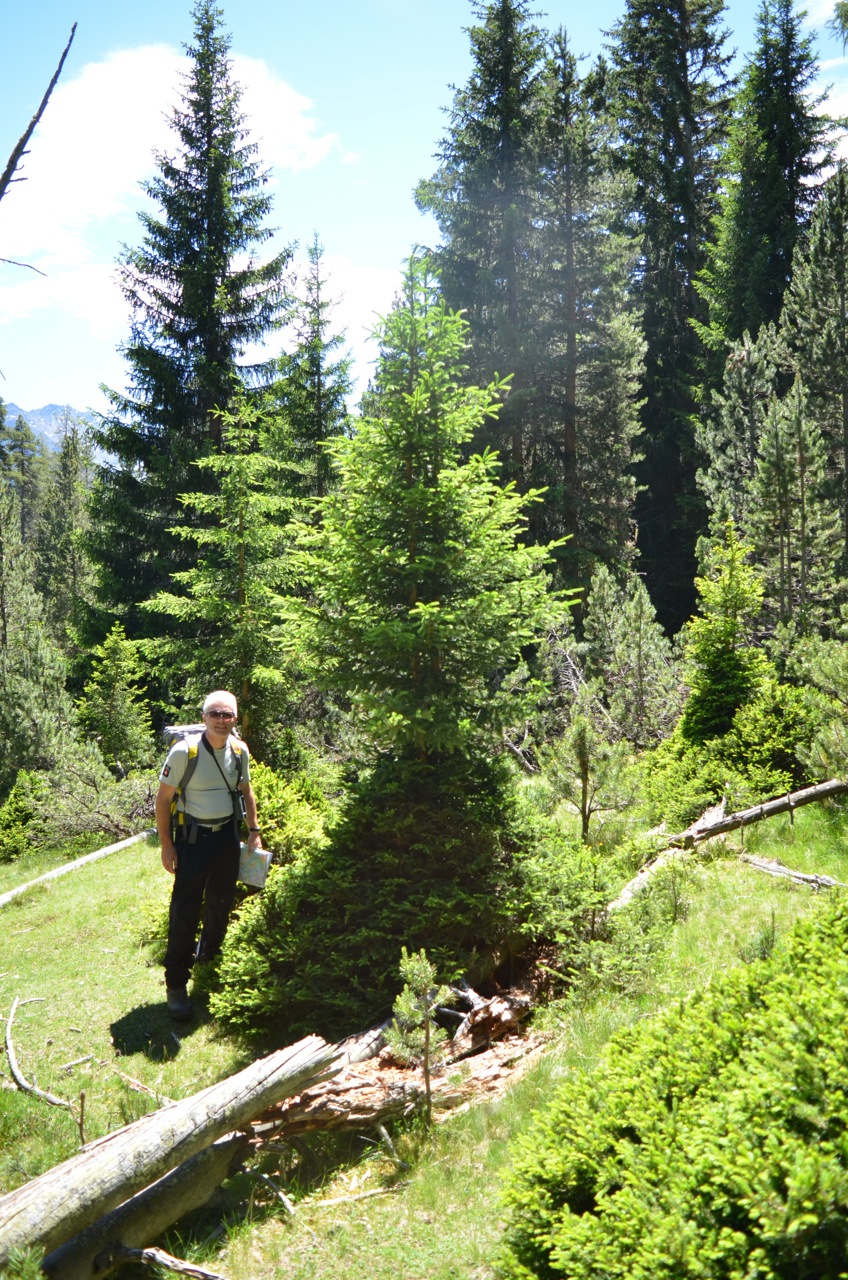
Nutcracker

Nutcracker

As we came out of the forest we could hear the whistling alarm calls of the Marmots telling each other we were there. They were wary, but usually at least one stayed outside the burrow to keep an eye on us, while the others scampered to safety.

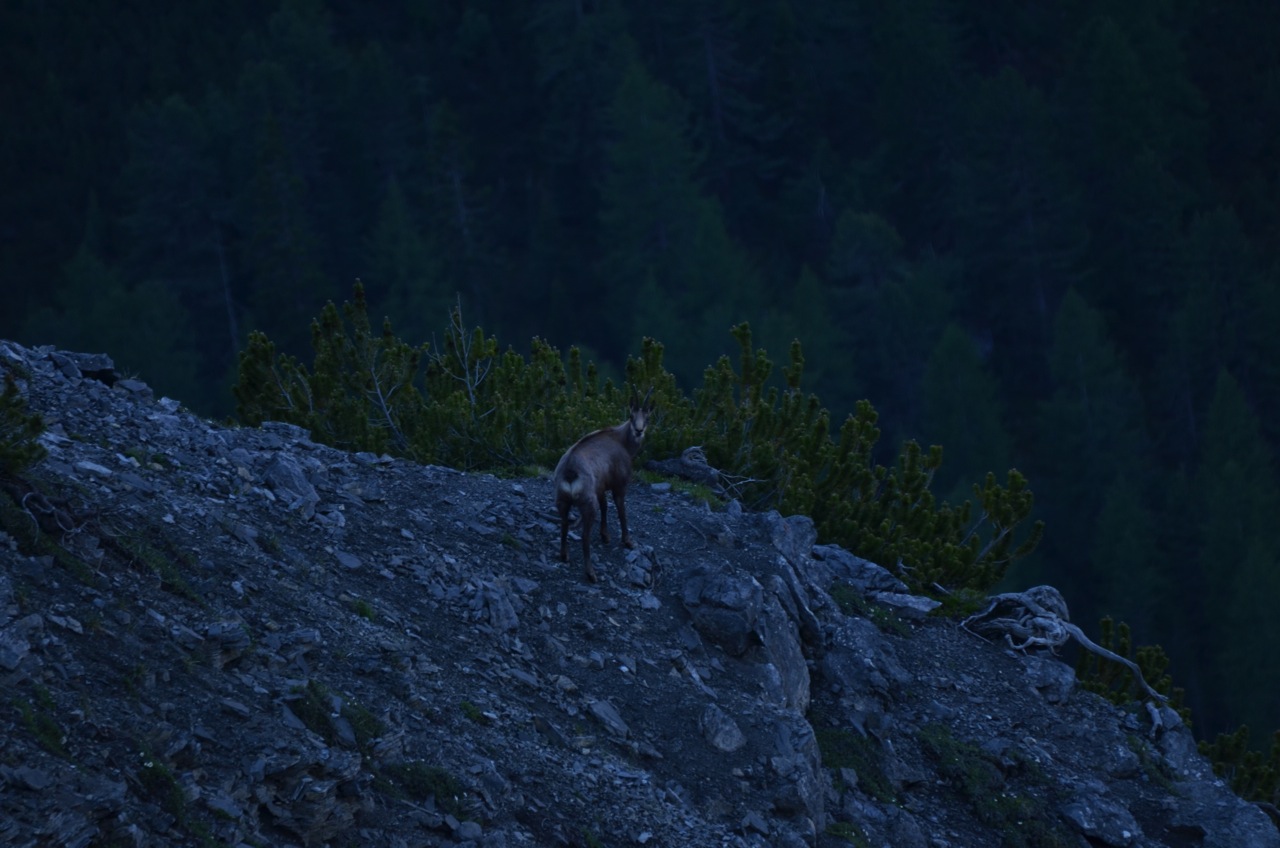
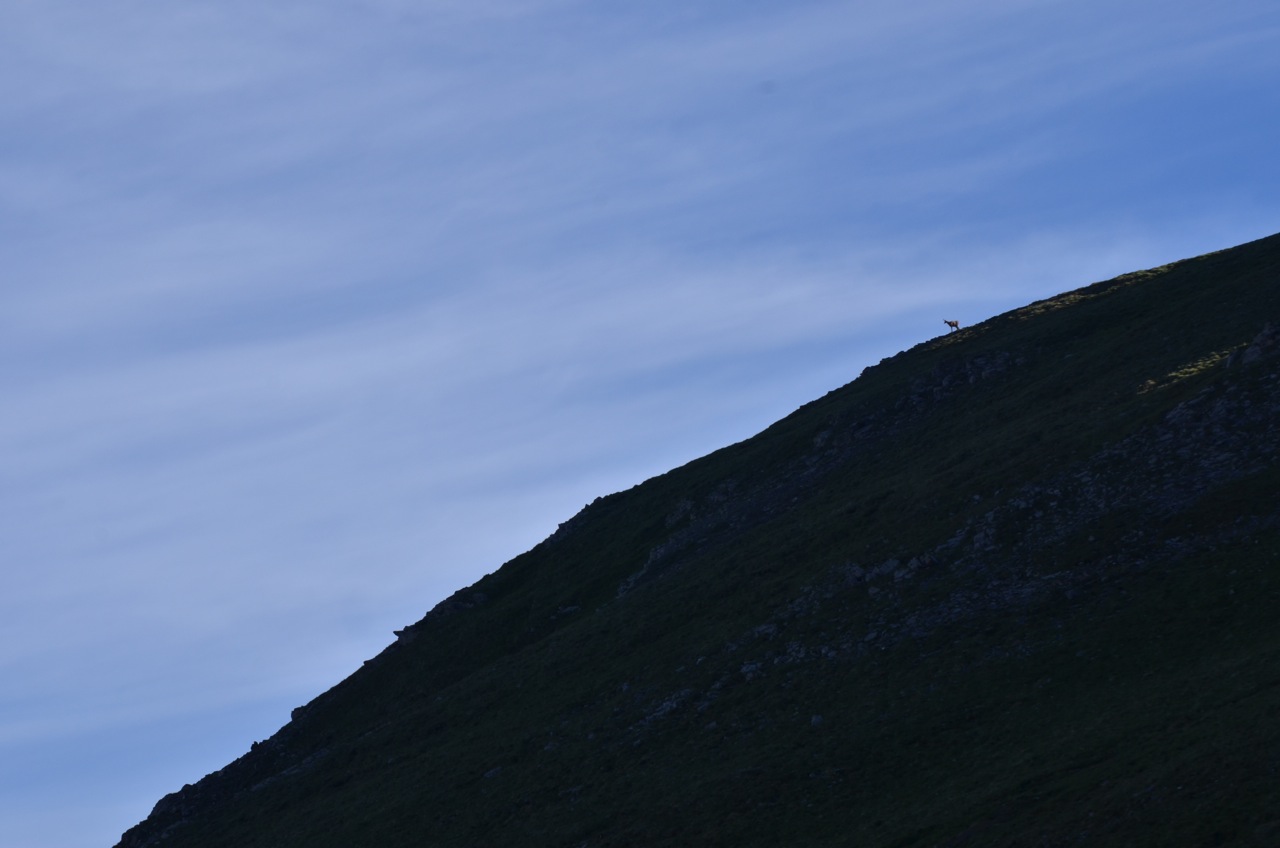
As we came over a ridge we found ourselves face to face with a Chamois, who seemed surprised to see us, and stood staring for a while before nimbly making his escape around the hillside.

Chamois surprise

Chamois surprise

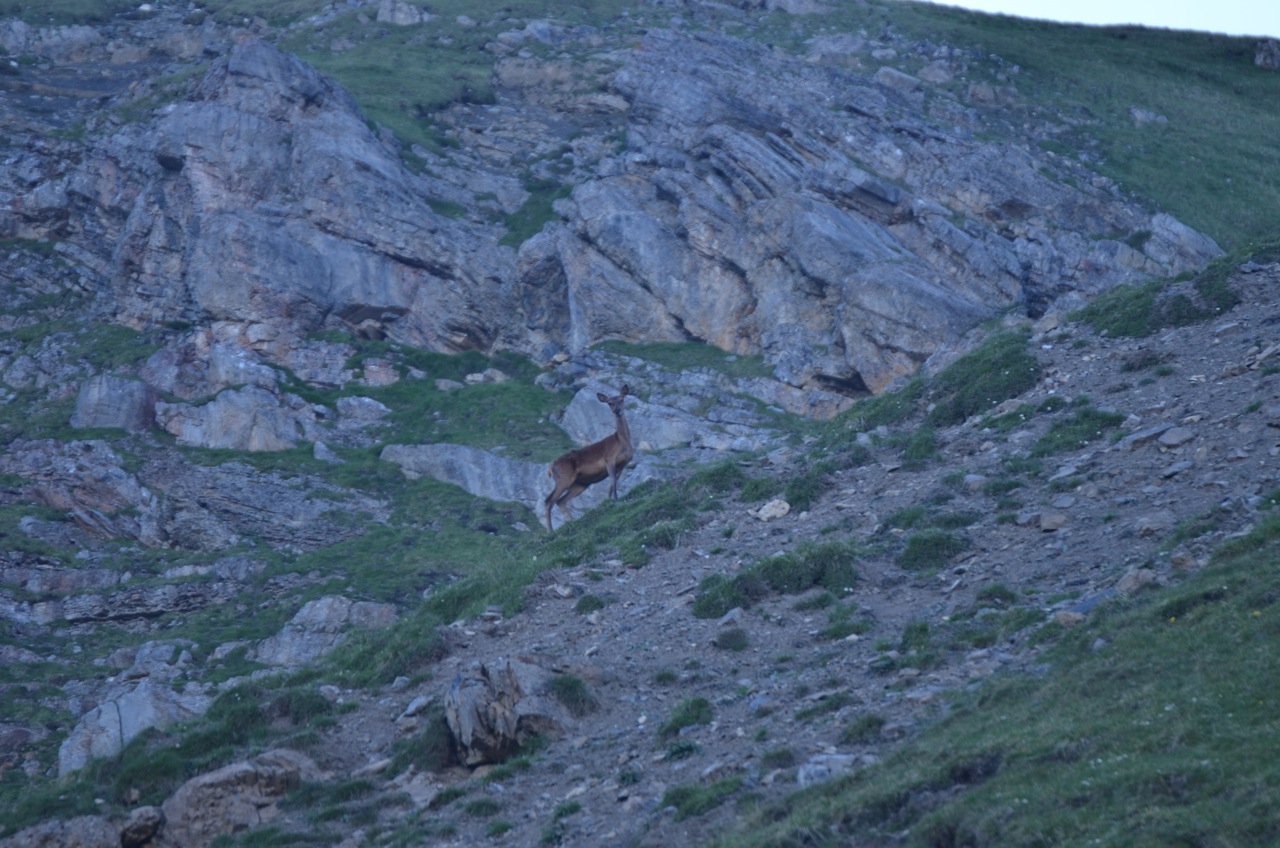
We could see red deer and chamois along the top of the ridge we were climbing up to, and we also spotted a young deer quite close by before it too made its escape.

Red deer

Red deer

Chamois surveying the valley

Chamois surveying the valley

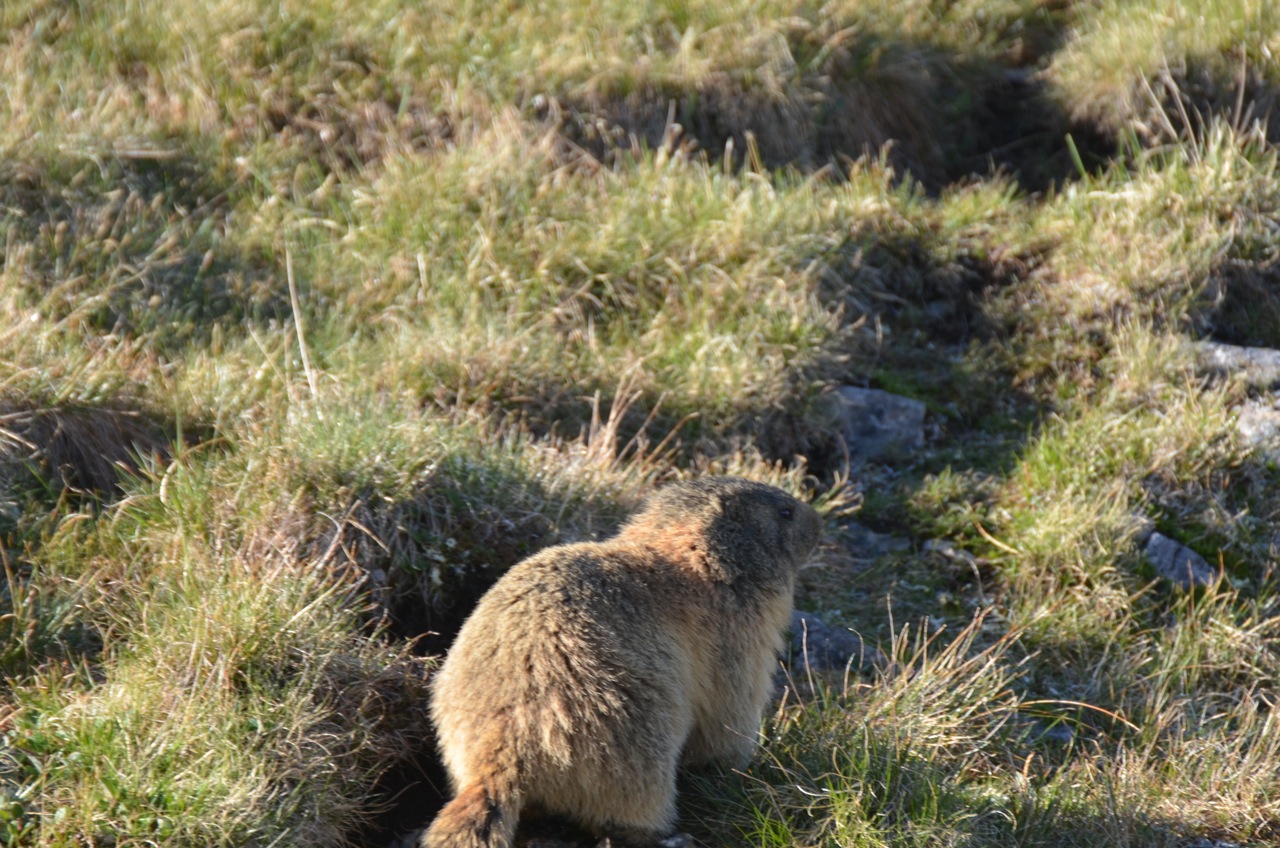
We got to the saddle as the sun was starting to light up the eastern slope of the valley we’d just ascended. We stumbled across a marmot very close in front of us. He knew we were there but seemed more interested in watching the valley in front of him than worrying about us.

Marmot - not bothered

So fluffy!

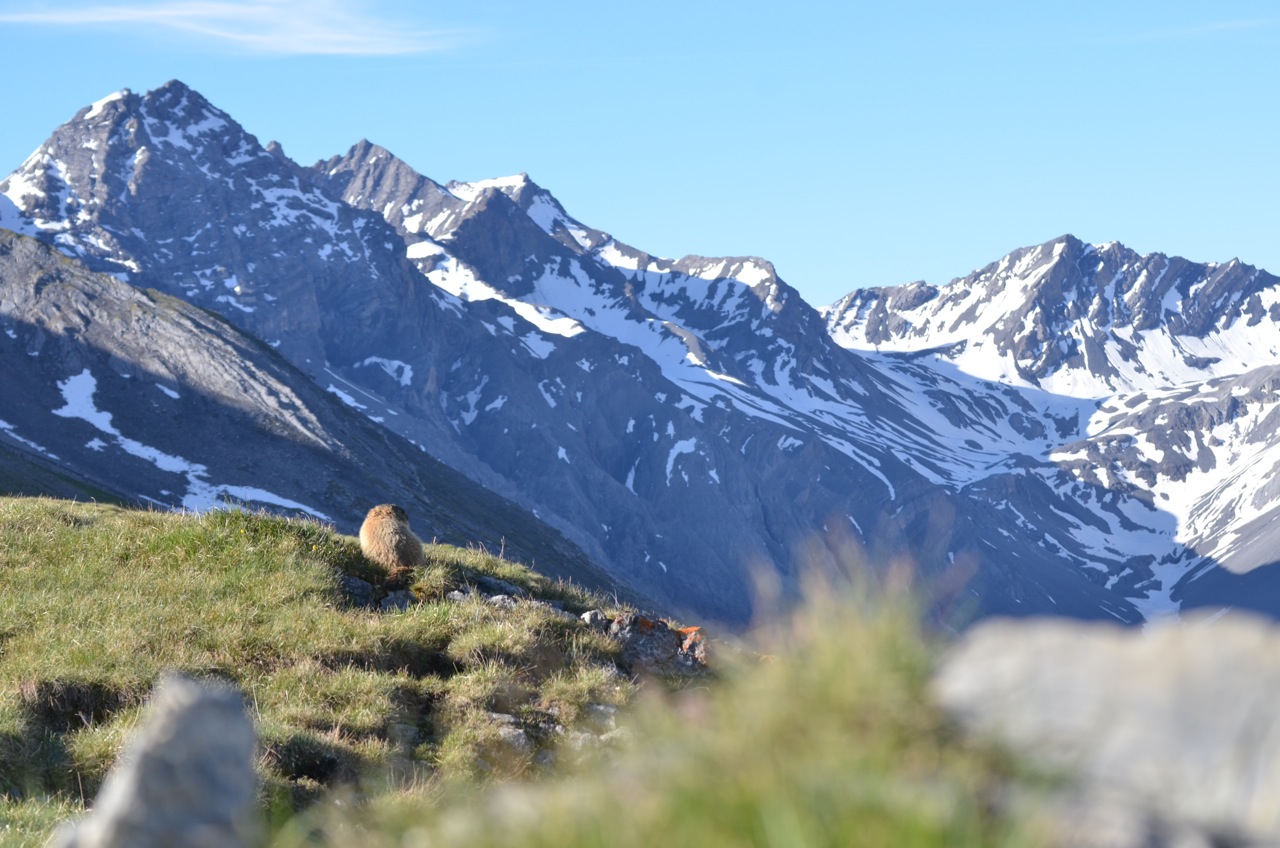
Marmot scanning the valley

Marmot scanning the valley

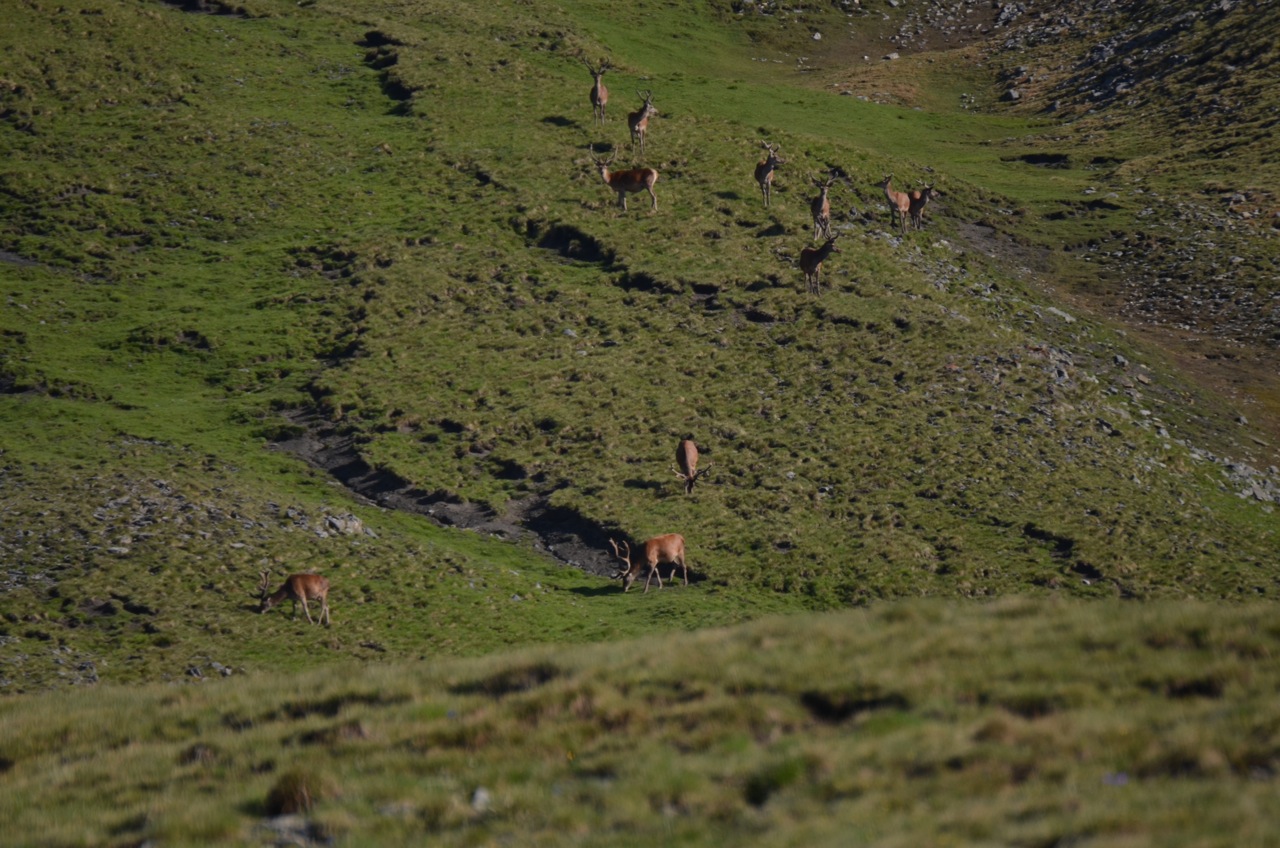
We’d taken our time getting to the top so we decided to see if we could spot the mountaineers on Piz Quattervals, who had said they would take about three hours to do the ascent. We focused the binoculars and – there they were, just above the snowline! We decided this was a good excuse to have something to eat and hang around until they go to the top. In the meantime we enjoyed the wildlife. There were red deer on the slope facing us, wary even at a distance.

Red deer herd

Red deer herd

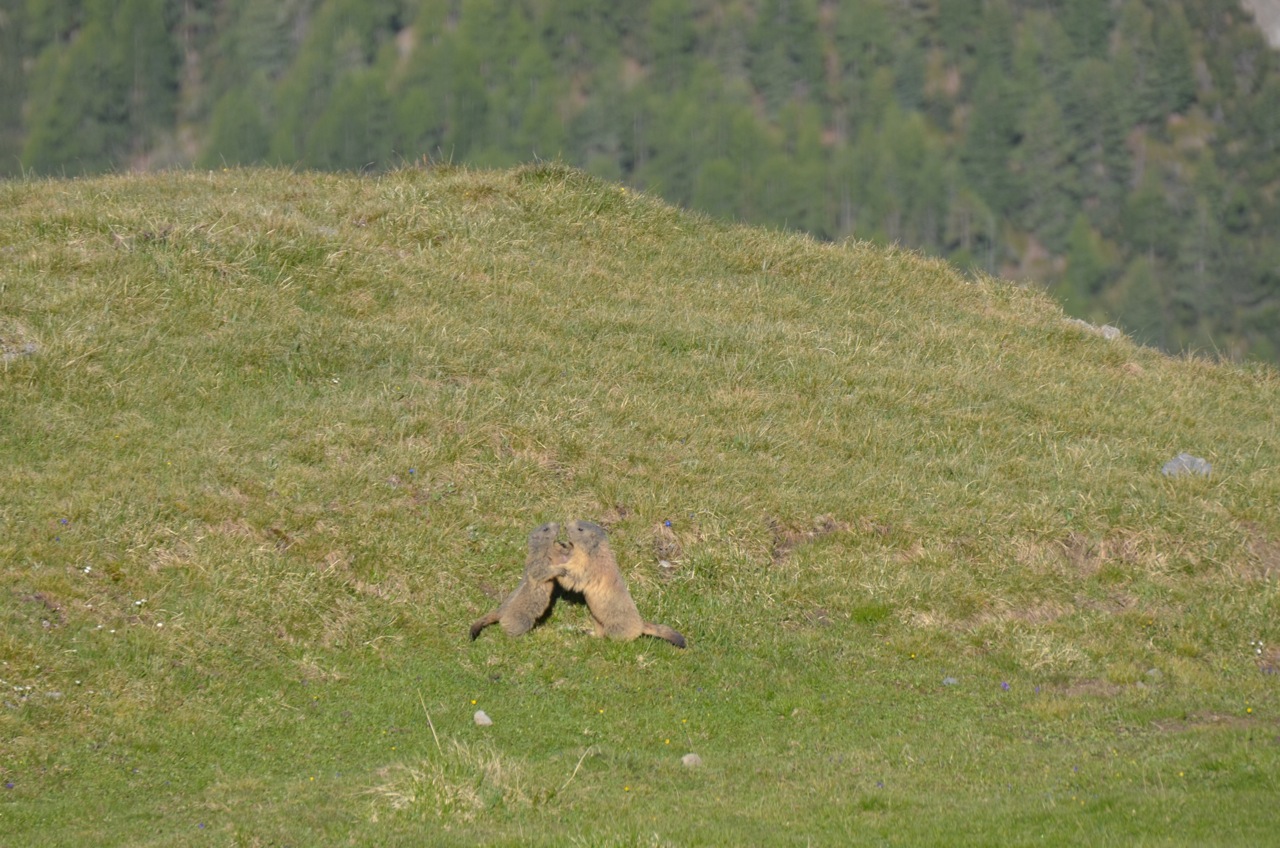
Just then we spotted a small marmot approach larger one and start pawing at it. The larger individual turned round and we were treated to a marmot duel. It looked similar to an elephant seal fight, but with less tearing of flesh and bad feeling. Afterwards things seemed pretty friendly again.

Fight! (or play, we don't know)

Fight! (or play, we don’t know)

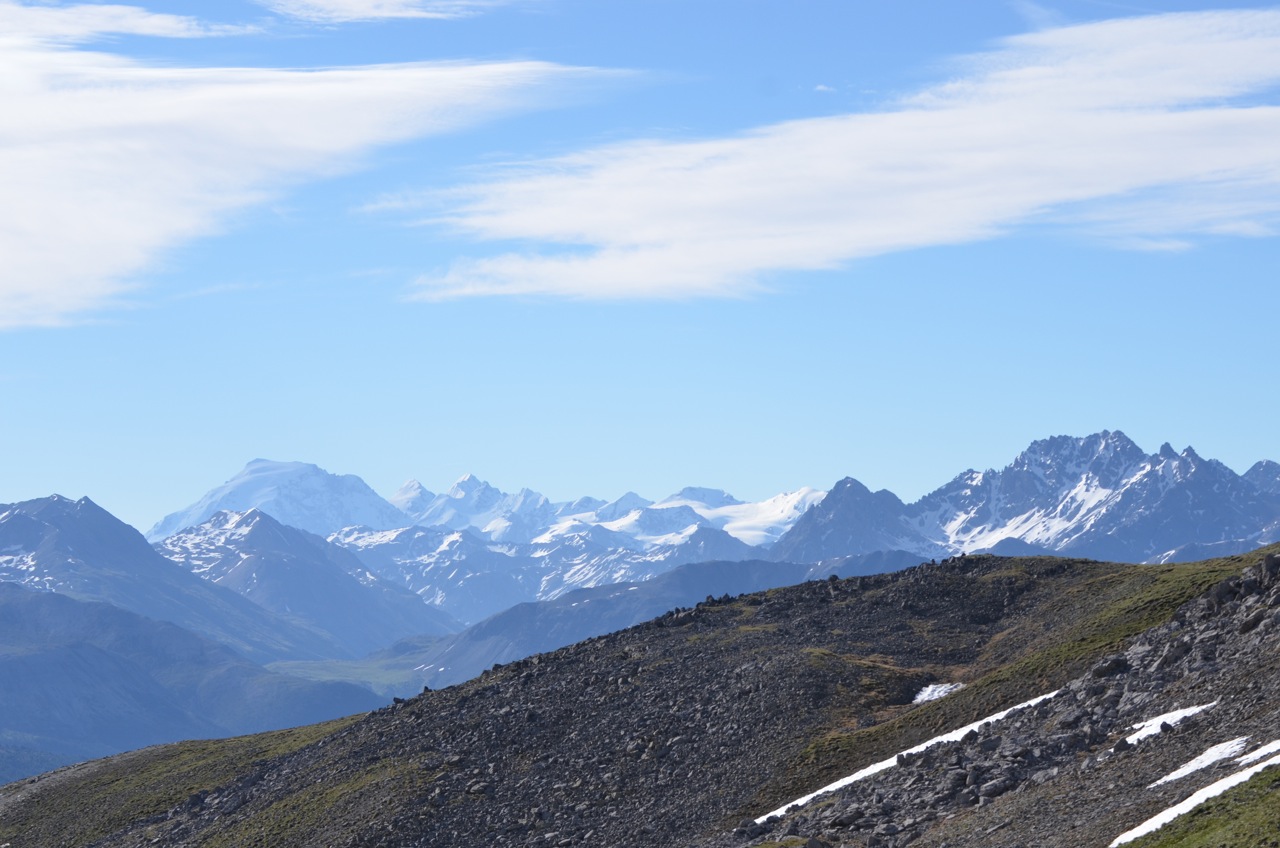
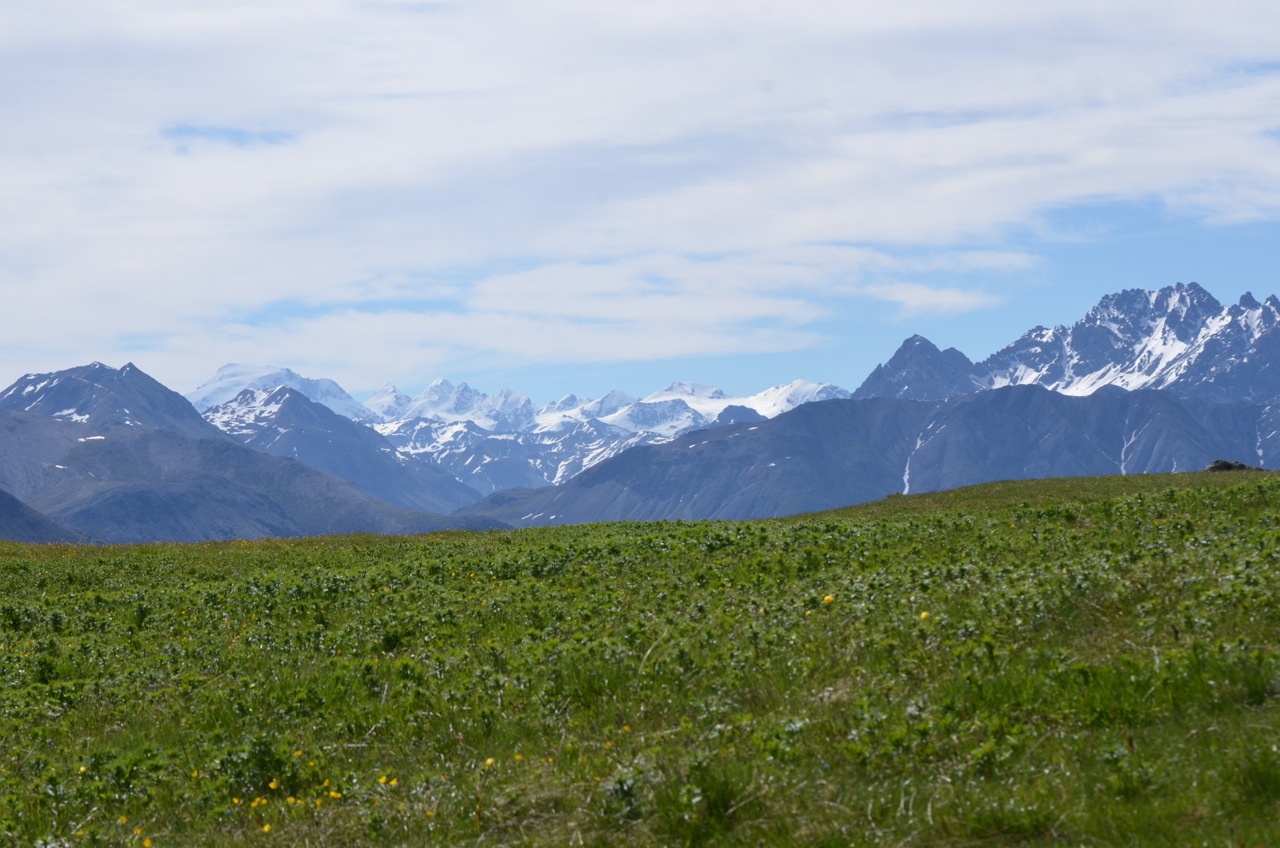
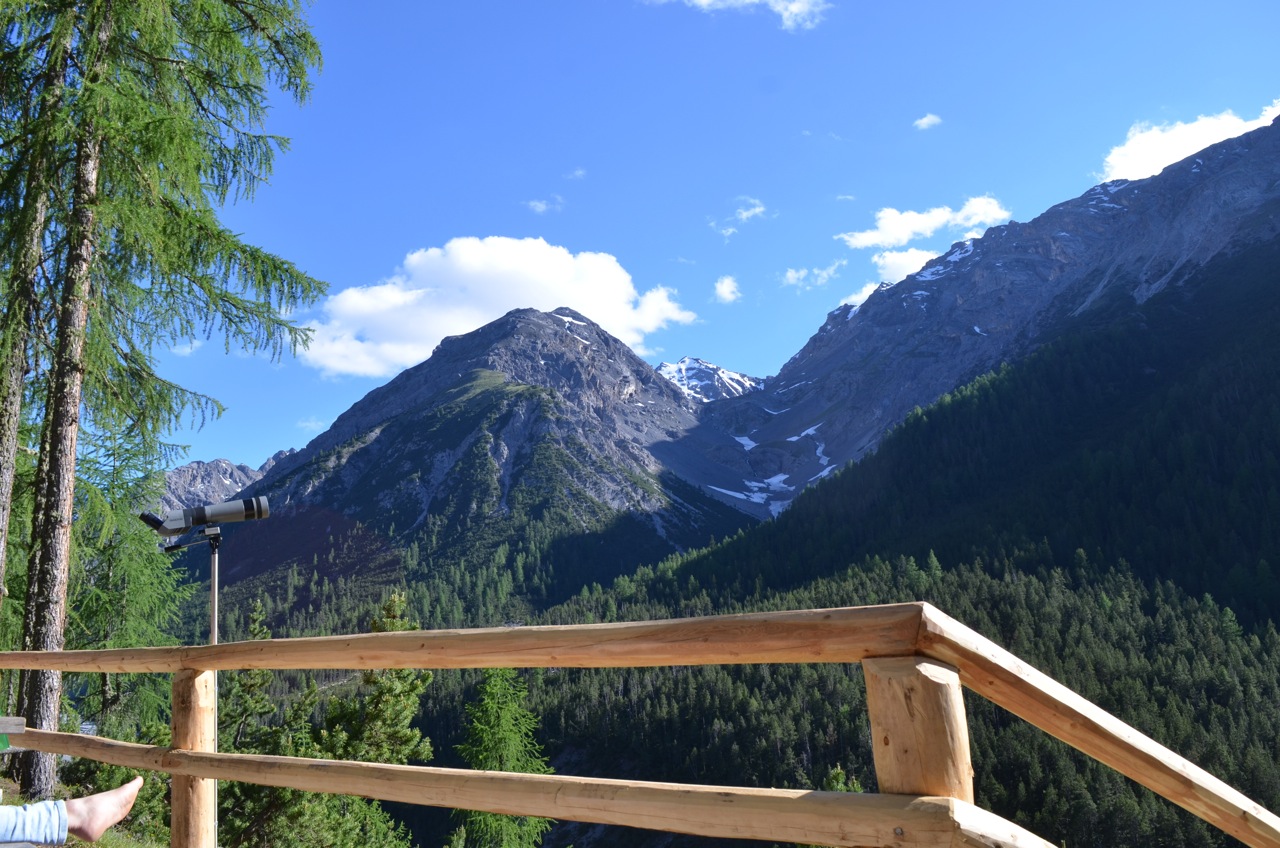
We hung around and enjoyed the views of the Val Cluozza we’d just climbed, as well as the panorama to the southwest.

Enjoying the view

Enjoying the view

The view

The view

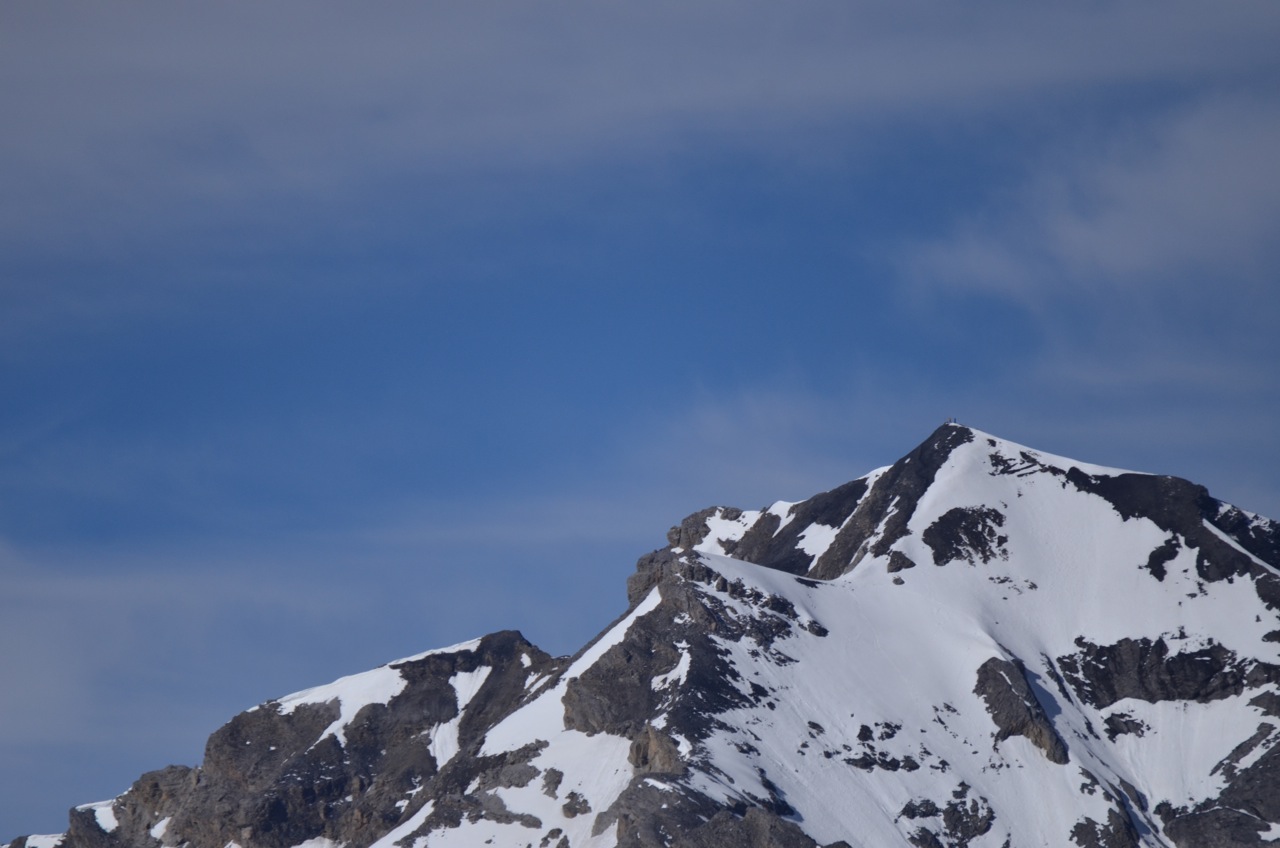
After a while we checked on our climbing friends again, and they had made it! They were miles away up the valley but we reckoned that through the binoculars we could see them taking photos of each other. Fair play to them!

They made it!

They made it (see the tiny dots on the top?)

A wider view of the mountain for context

A wider view of the mountain for context – they climbed the right hand valley

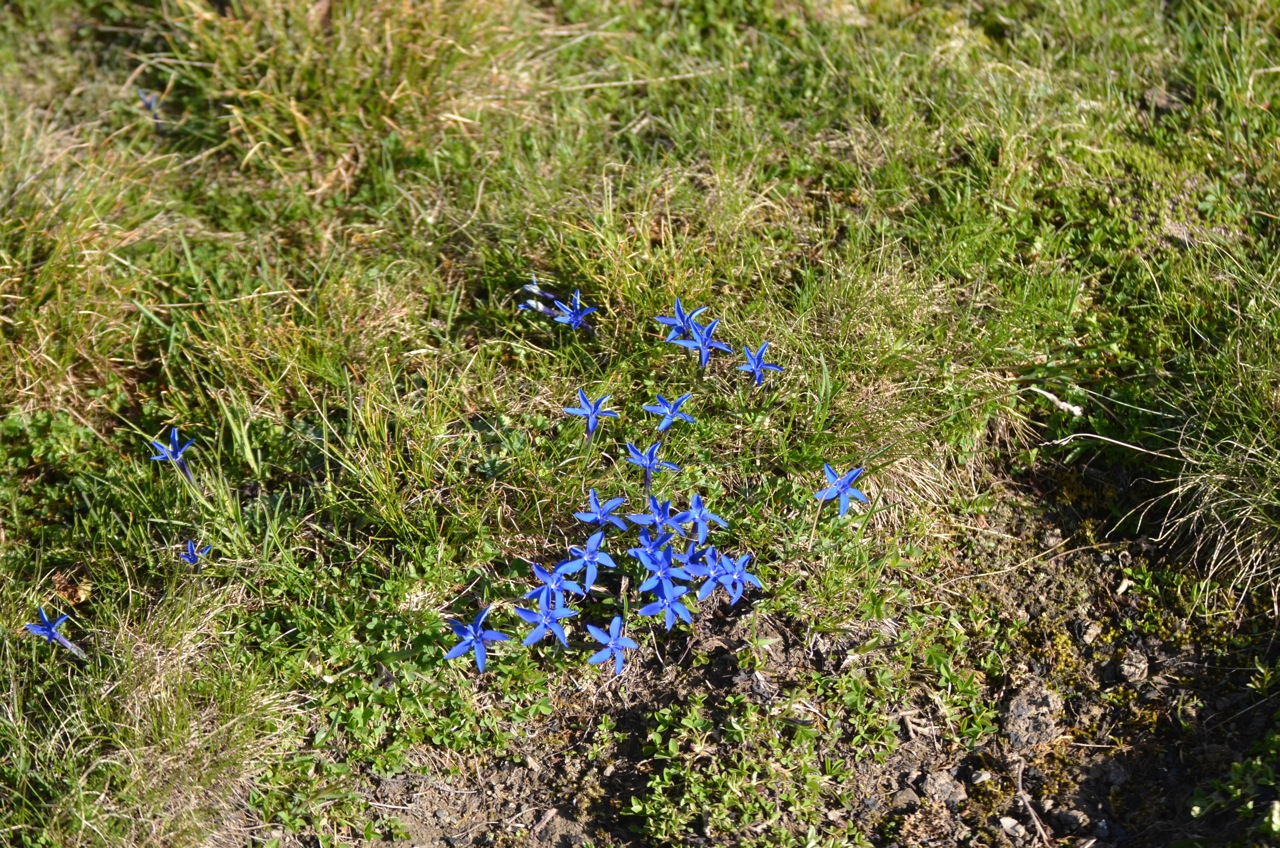
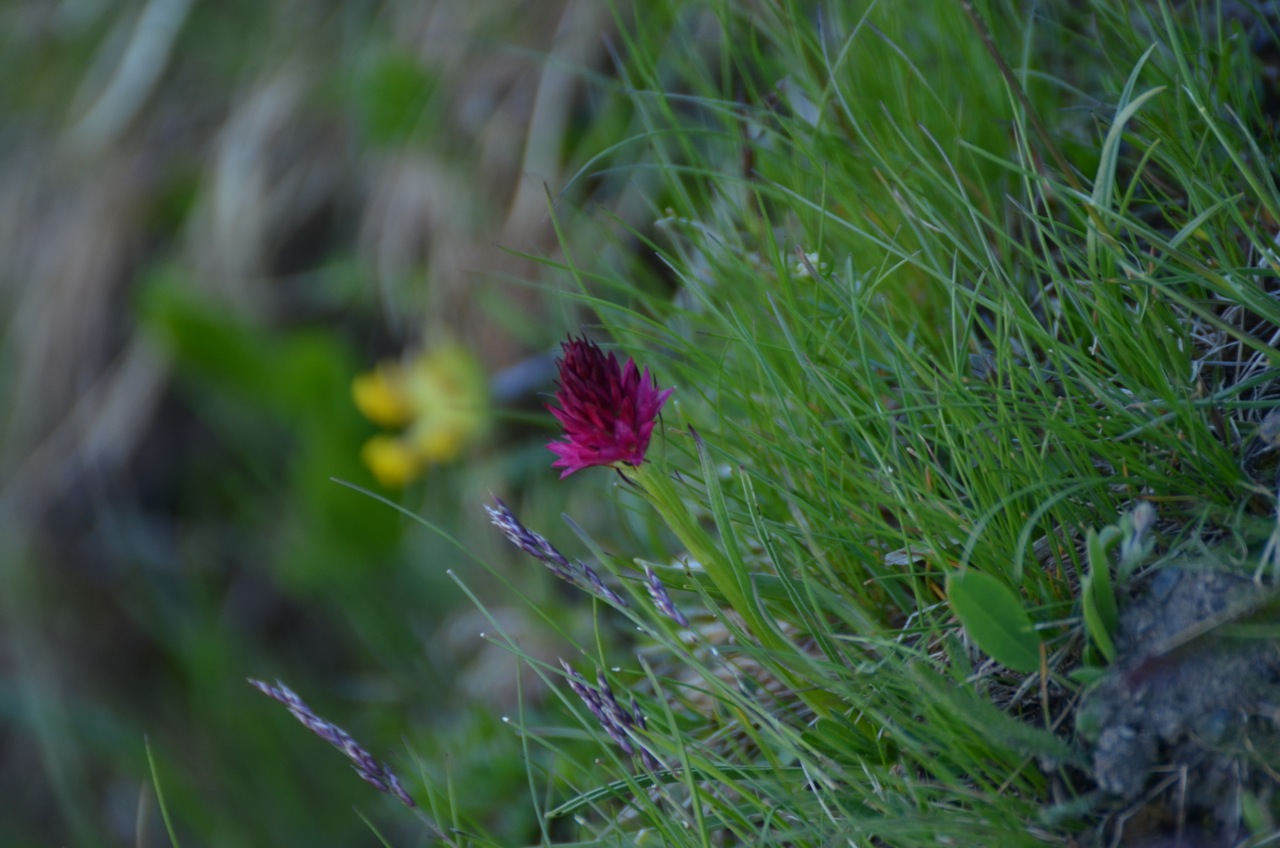
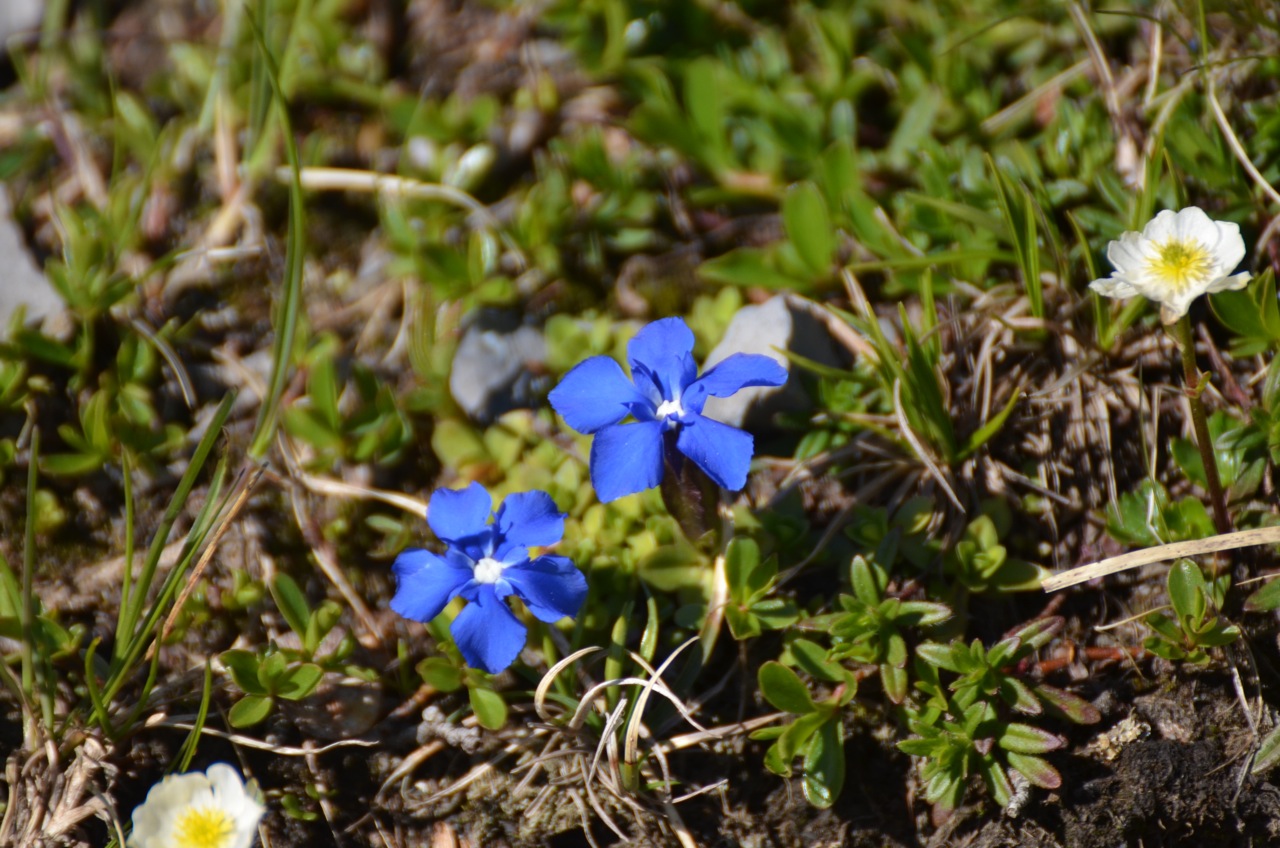
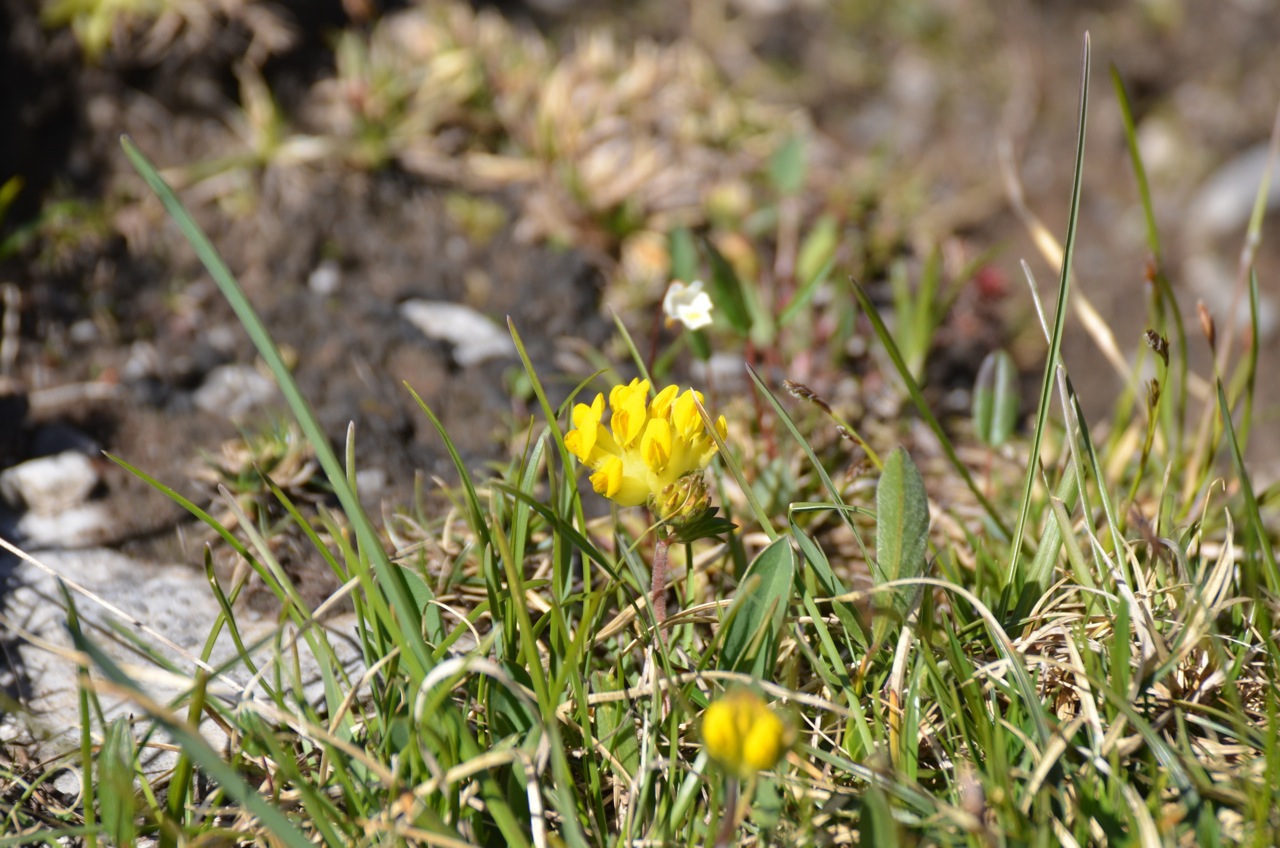
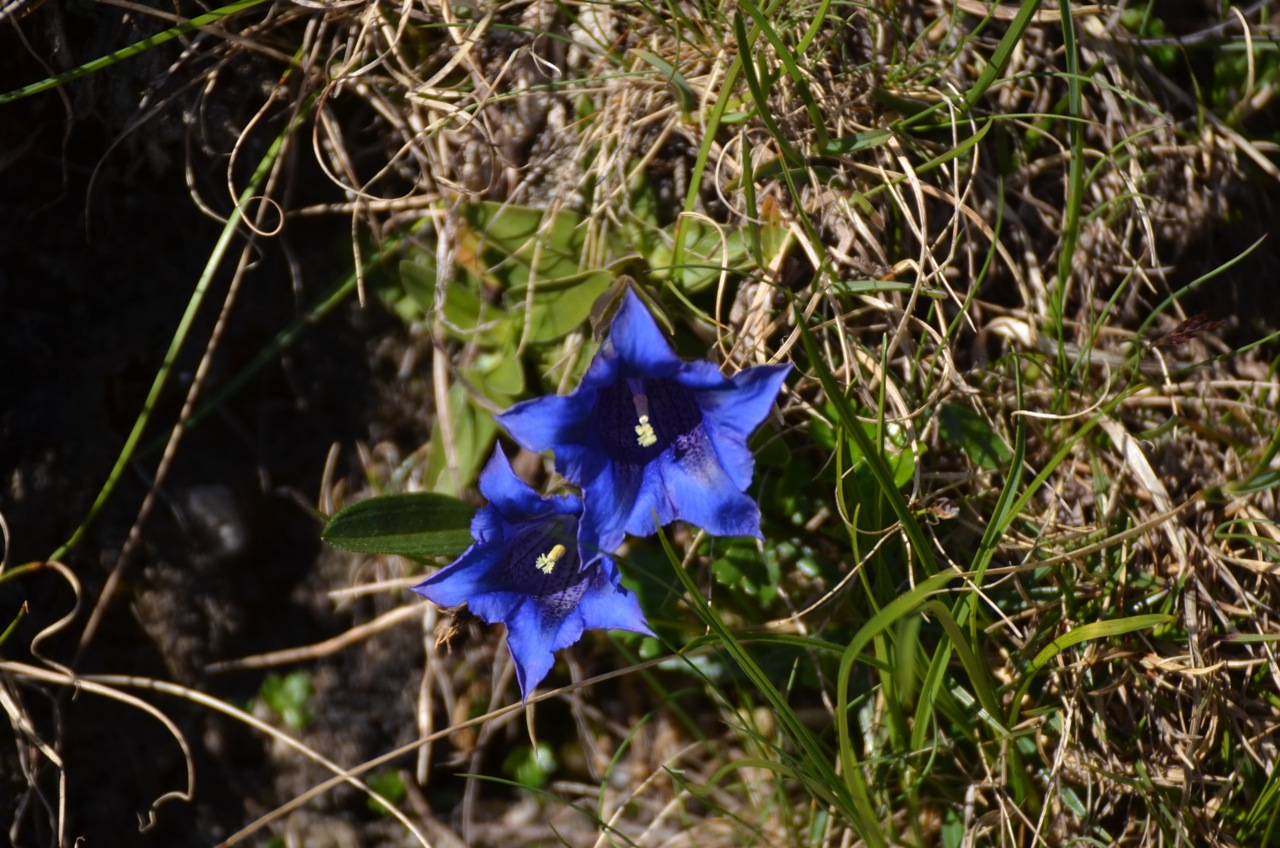
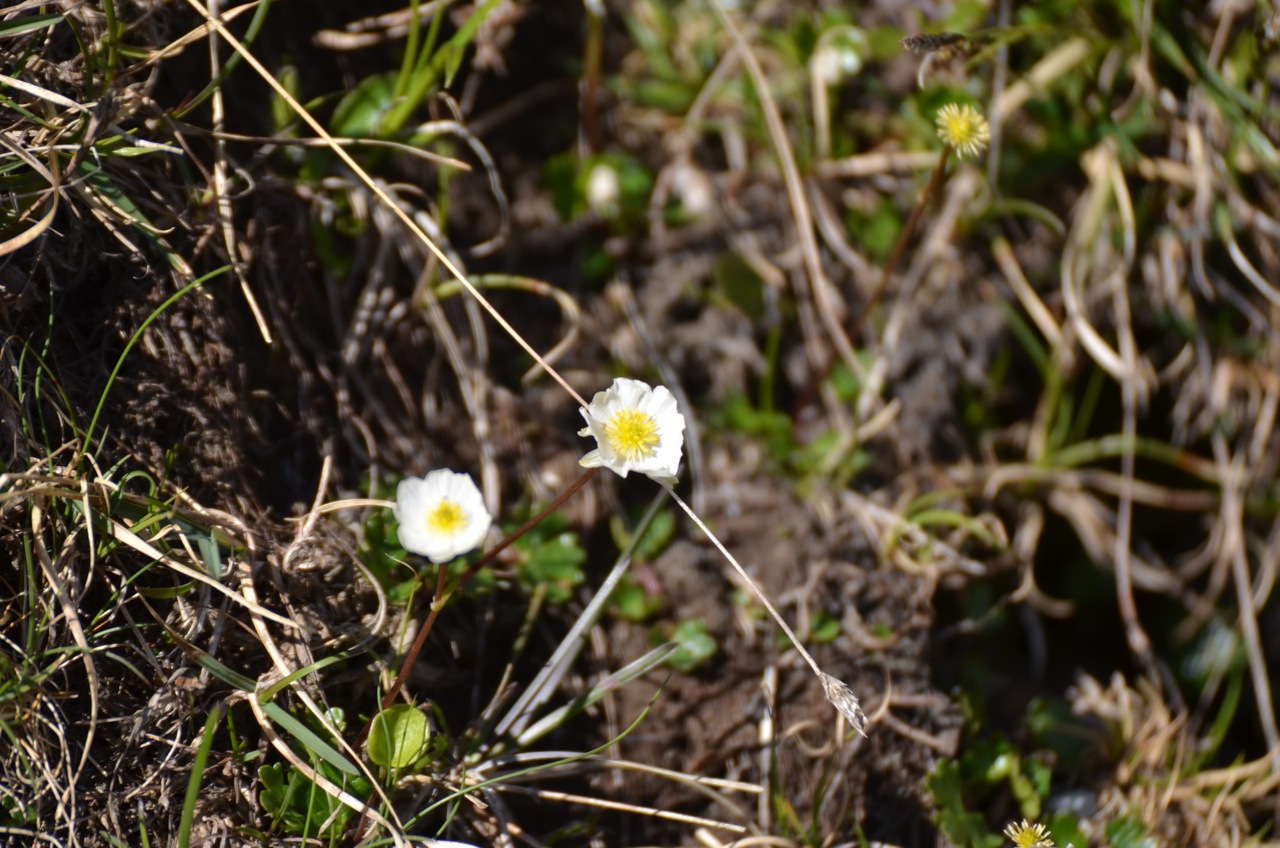
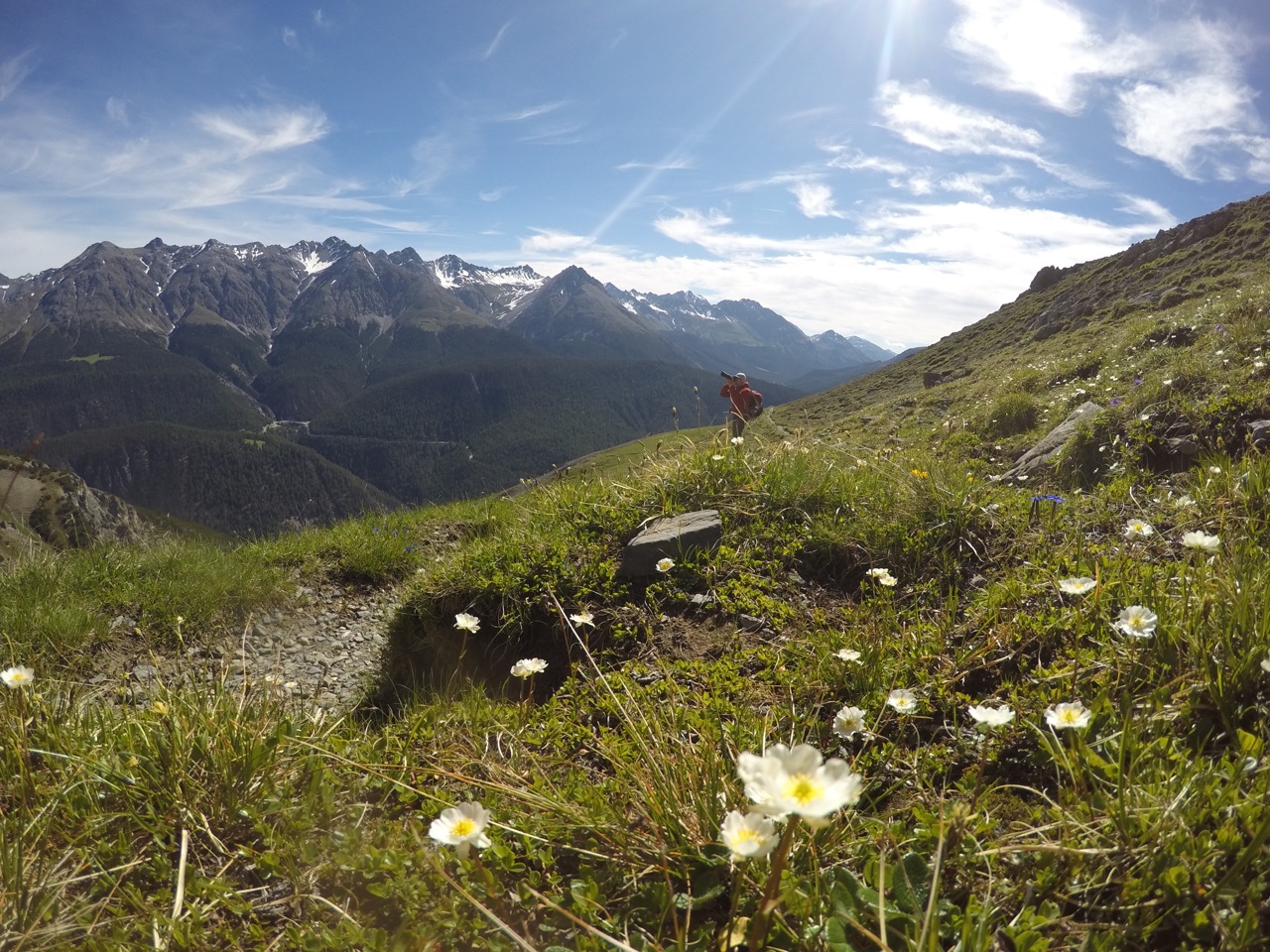
Reluctantly we headed down the mountain, enjoying the many wildflowers that dotted the alpine meadow (for descriptions see here). Anna also enjoyed wearing my new ski mitts that I bought in San Moritz. I figured at least they would be hard to lose!
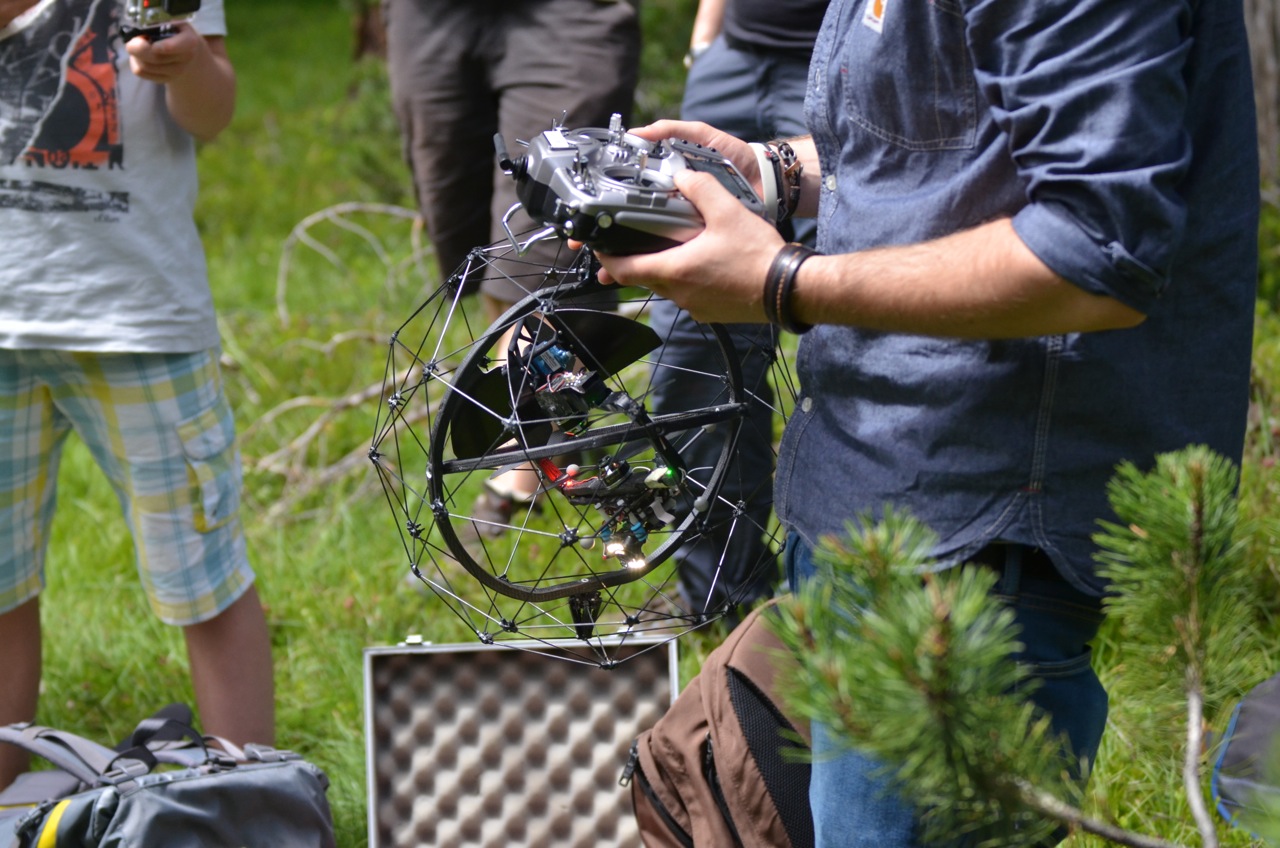
Mmmmm, so cosy!

Mmmmm, so cosy!

Flowers

Flowers

More flowers

More flowers

Even more flowers

Even more flowers

Yet more flowers

Yet more flowers

How many flowers are there??

How many flowers are there??

OK, that's all the flowers

OK, that’s all the flowers

Haha, I lied! But this one has mountains too.

Haha, I lied! But this one has mountains too.

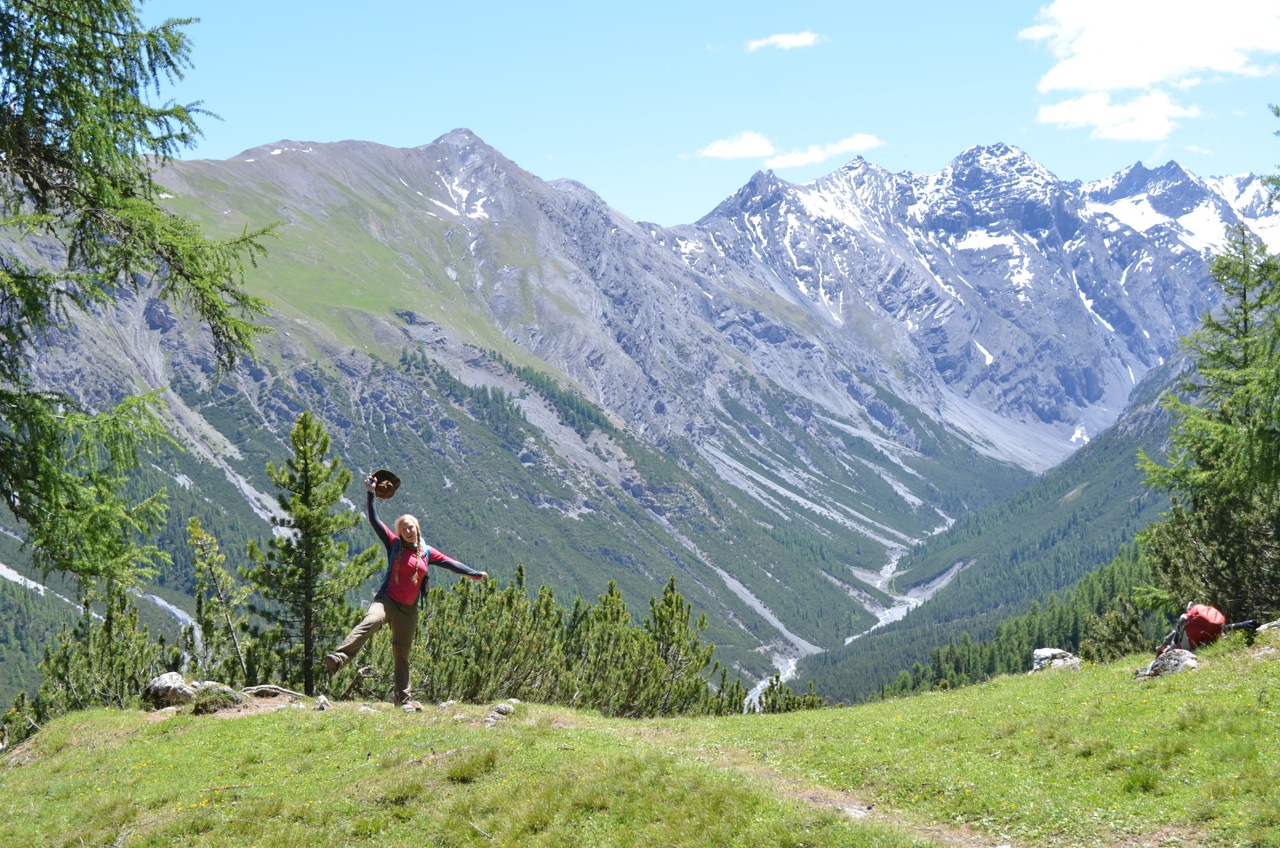
The view on the way down

The view on the way down

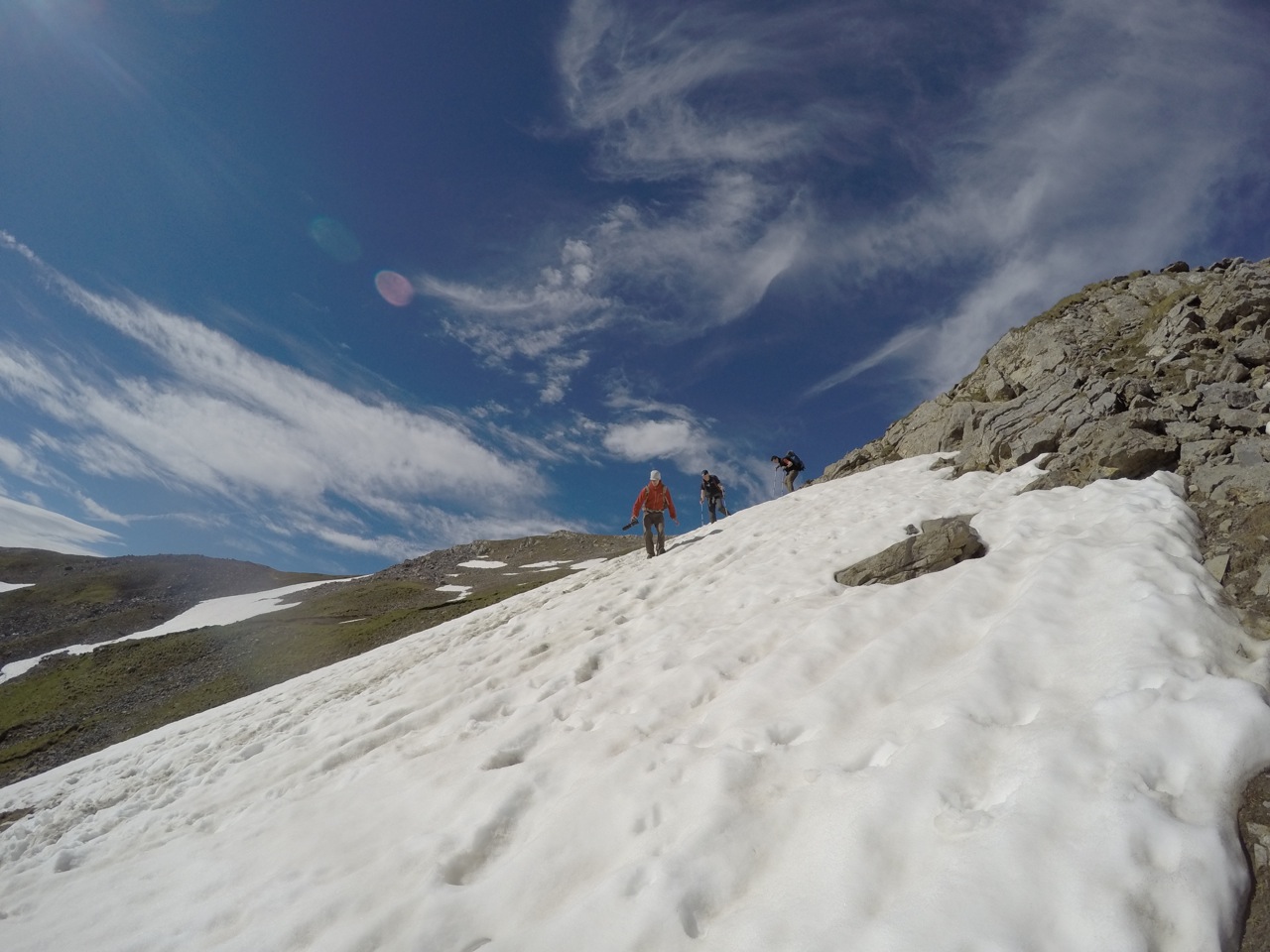
On the way down we crossed a small area of snow that is still lying on the path. It wasn’t anything but Anna took a photo and I think it looks cool, so here it is.
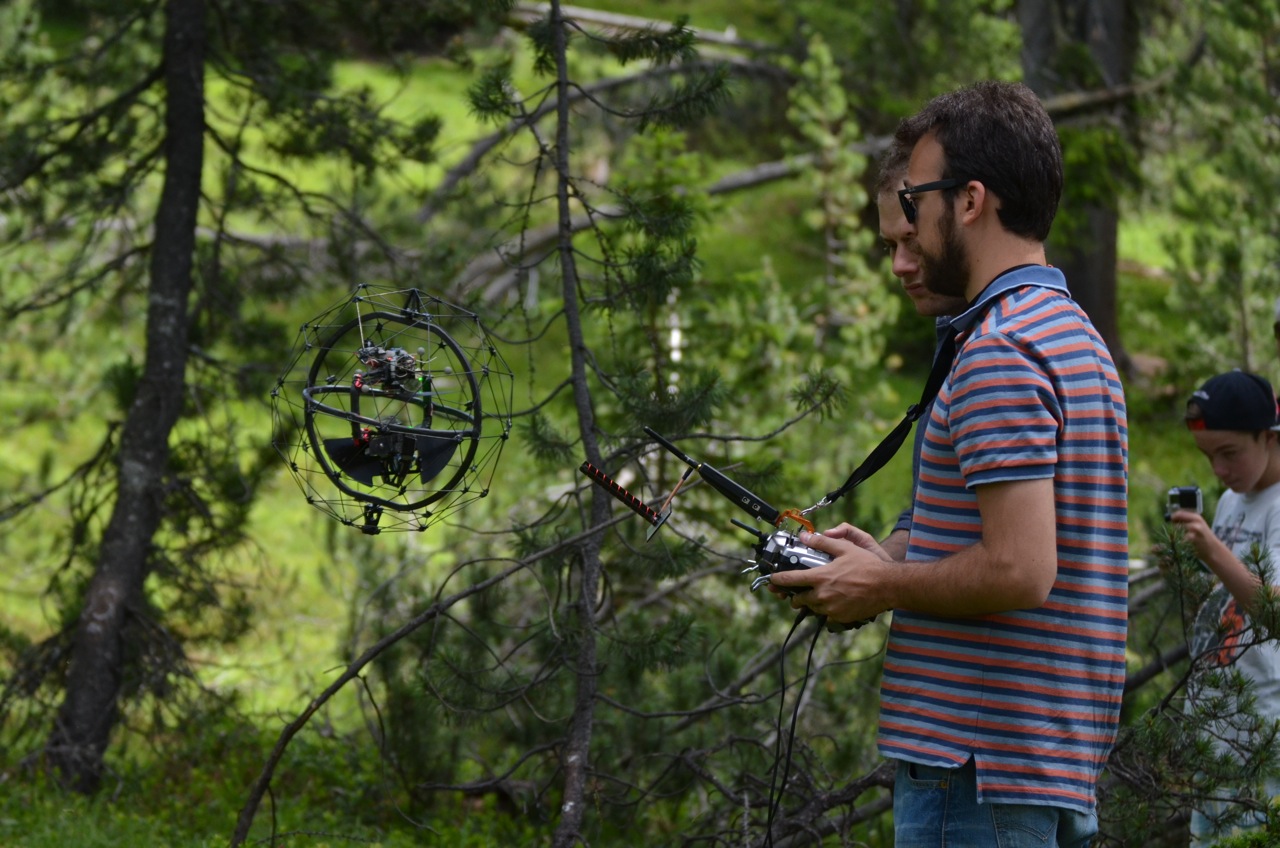
Snow field!!

Snow field!!

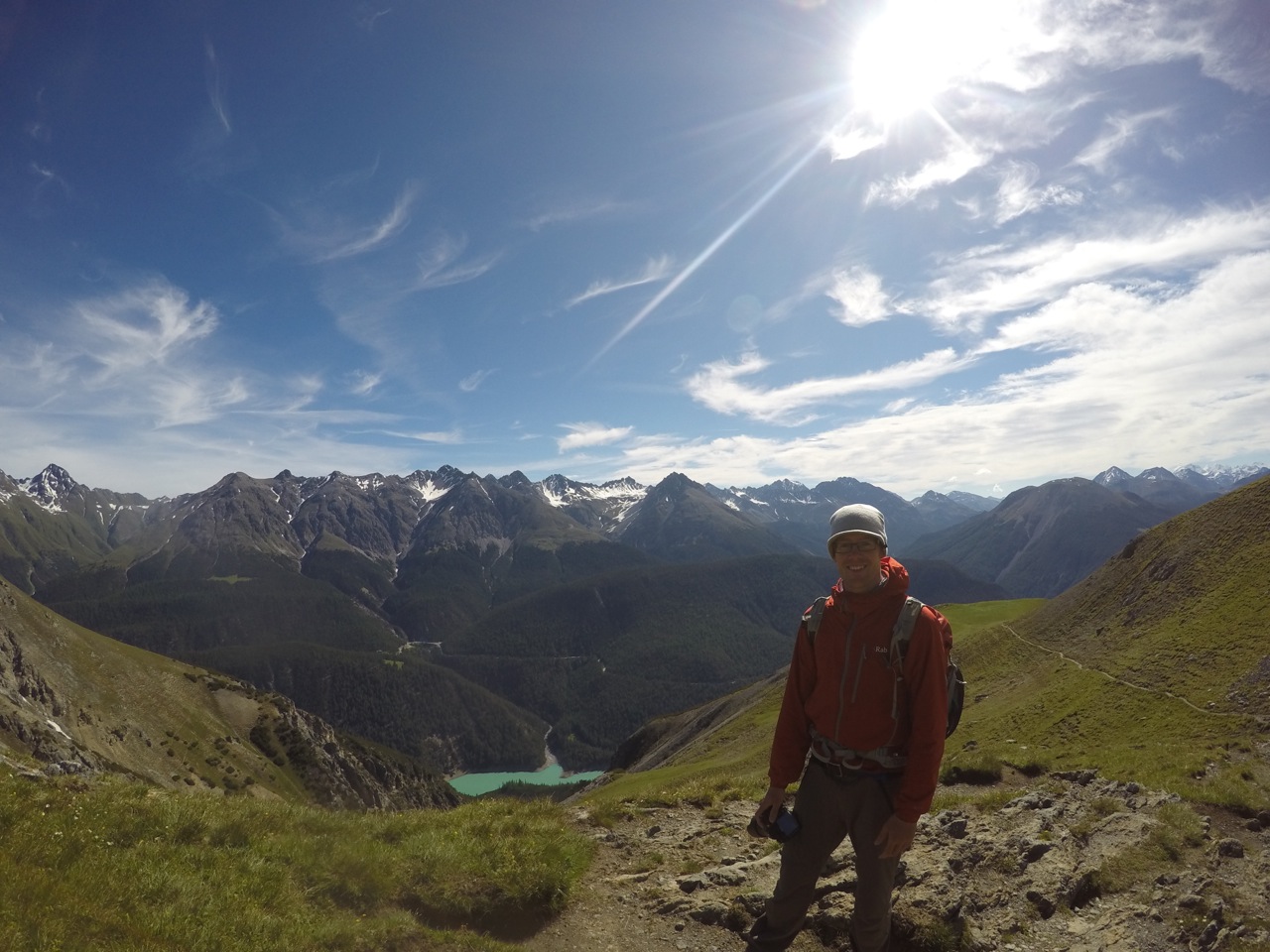
A little while later we could see the turquoise waters of Lake Spol in the floor of the next valley.

Turquoise lake

Lake Spol

We headed down the long winding path towards the valley floor until we found ourselves in a wooded meadow close to one of the exits from the trail. It was only 1 pm though, so we decided to add another few kilometres onto our walk. The next trail followed the valley floor upriver, so we went up and down, crossing the small valleys created by the tributaries of the main river. Anna was teaching me German as we went, and the afternoon passed quickly. Eventually we got to a bridge and crossed, at which point we reached the sting in the tail, a 200 m climb to reach a ridge, which we would cross to get to the road. It was hard work after such an early start, but the woods were beautiful, mixed pine and larch.

Finally we crested the ridge and made our way down to the road. We waited a little while for the bus and took the 20 minute (and 16 franc!) drive back to Zernez. We came back from the campsite showers to find a note from Ruedi in one of our hiking boots. It says to be at the office at 7.30 am tomorrow if we want to help out with some more fieldwork. Can’t wait!

– Dave

Hike to Cluozza

Today we were heading to the mountain hut. Ruedi had informed us that it was about a 2.5 hour hike to the hut but we should spend longer on it to spot some wildlife. We needed to sort a few things out in the morning before we left, so we took it easy and got all our stuff together before heading to the Co-op. We stocked up on hiking food, paused on the edge of town for a snack, then headed onto the trail.

Meadows on the outskirts of town

Meadows on the outskirts of town

Across the meadows then straight away we were climbing, but thankfully we were in the forest and it was cooler in the shade. It was a beautiful trail up the side of the mountain and we followed the path towards a recommended viewpoint.

Overlooking the National Park

Overlooking the National Park

Zernez from the viewpoint

Zernez from the viewpoint

When we arrived at the viewpoint, we could see Zernez below us and the opposing mountains behind. We could also hear some loud music coming from the valley and spotted some festival tents with the binoculars. After lunch, we carried on up until we went around the side of the mountain for a view of the next valley. From there, we couldn’t hear the music or the road any more, just the breeze and the birds.

Through open forests

Through open forests

Glimpse of the mountains

Glimpse of the mountains

We got up to an area where the trees were growing close to the ground, curving up in a not very tree-like way at all. We later learned that this type of pine grows like that in snowy or avalanche-prone areas, so that it can bounce back after the snow is gone. Clever!

Avalanche proof pines

Avalanche-proof pines

After being overtaken by a hill-runner (rather him than me!), we stopped at a viewpoint overlooking the steep-sided valley. The gravelly river in the bottom full of melt water from the snow-topped mountains behind. We couldn’t see any animals from there but spotted the hut where we would be spending the night and the trail up the other side of the valley where we would be hiking tomorrow.

Overlooking the valley (tomorrow we go up the mountain on the left, through the grassy area on top)

Overlooking the valley (tomorrow we go up the mountain on the left, through the grassy area on top)

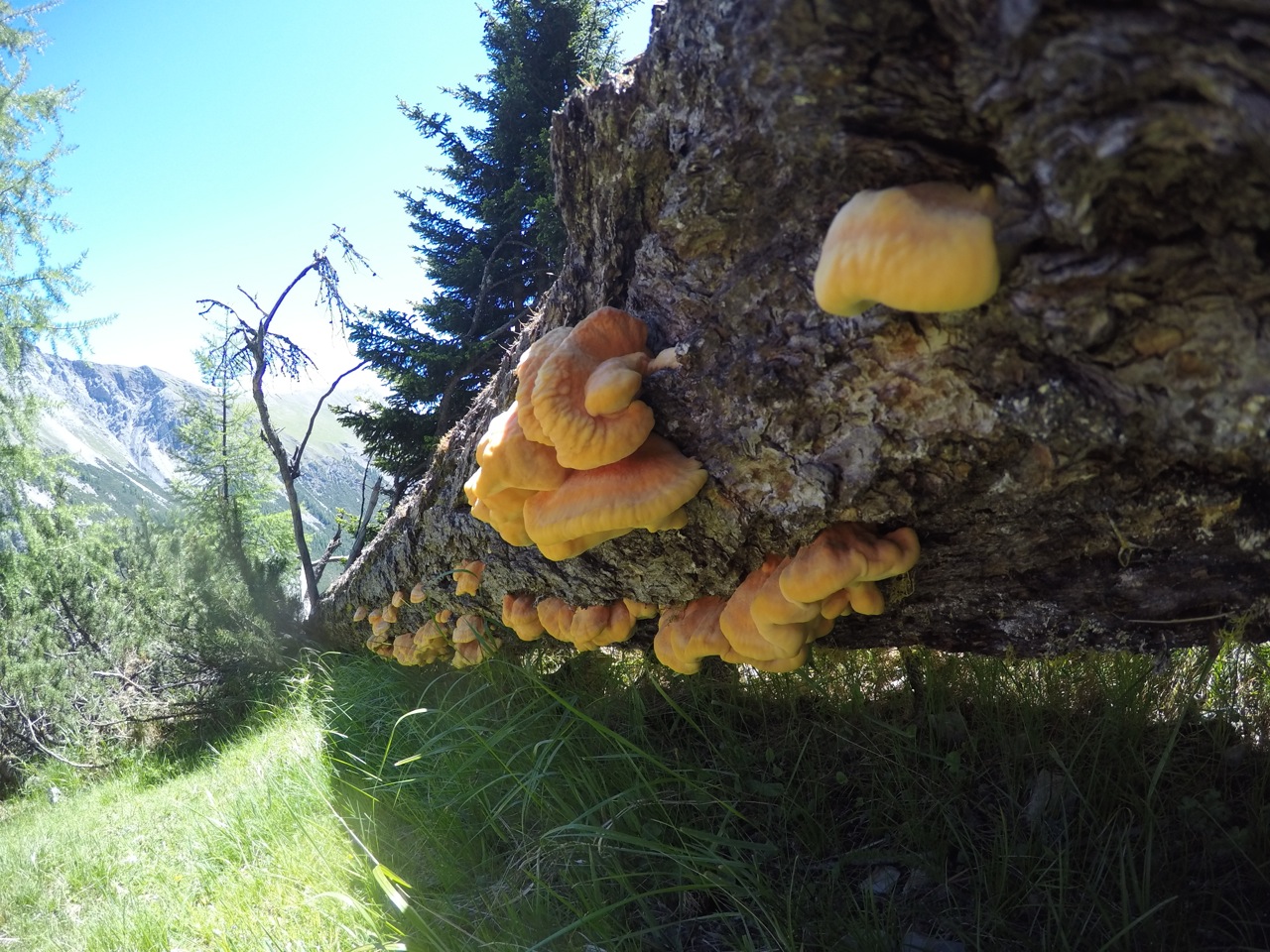
Dead tree gives life to mushrooms

Dead tree gives life to mushrooms

We had a lot of downhill to do now and tried not to hurt our knees on the steep descent. We realised the other day that we’re outside the EU now and don’t have any health insurance! But I’m sure we could ride to Germany on a twisted ankle…

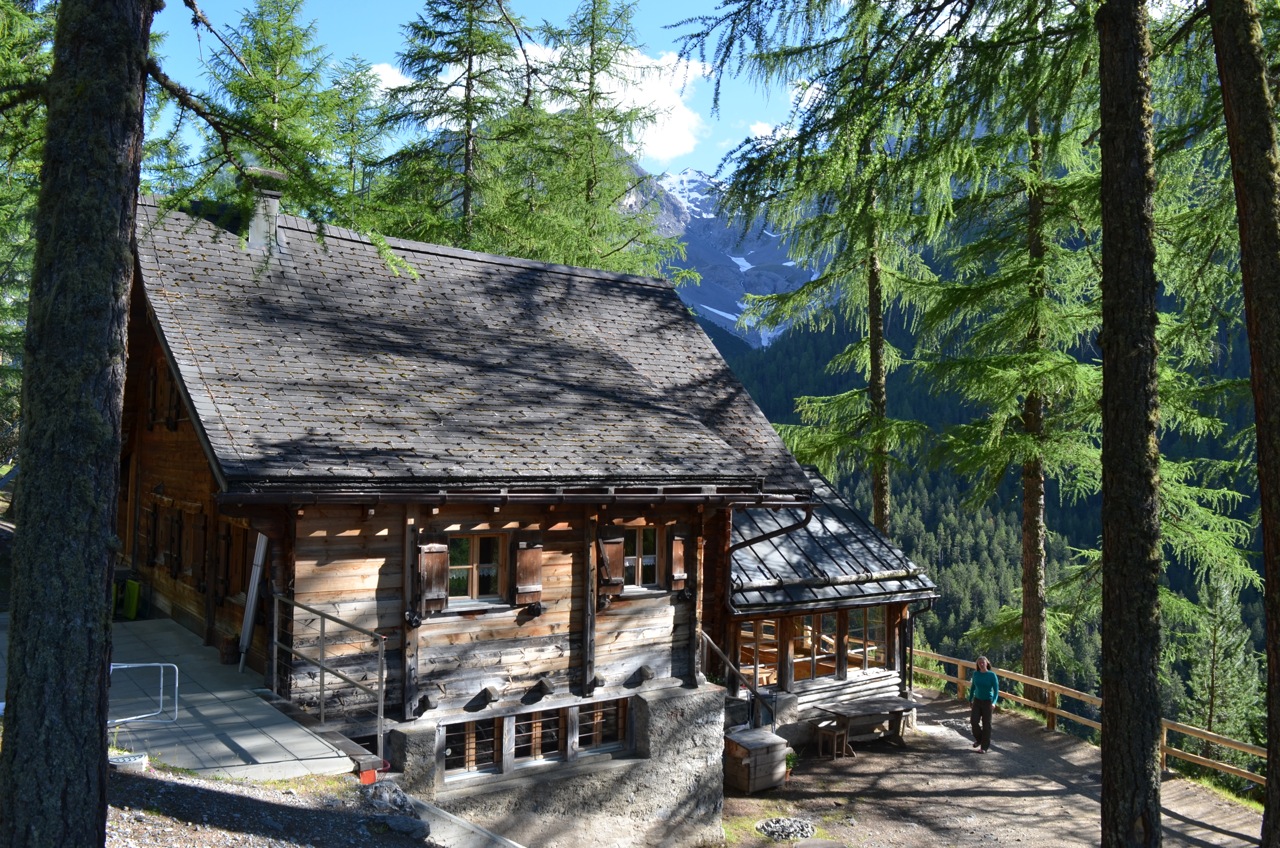
Once we got to the bottom, we crossed the river and headed back up a few switchbacks on the other side to reach the hut. When Ruedi said we would be staying at a mountain hut, I imagined a shack with some space for lying down, and some composting toilets. But no, this was a luxury mountain hut, a beautiful old wooden building with a modern kitchen where the chef was preparing dinner. And the toilets were flushing toilets! Where does it all go?

Hut Cluozza

Hut Cluozza

Viewing area outside the hut

Viewing area outside the hut

So we checked in and were showed to our huge dorm, which we only had to share with one other person tonight. Then we sat out on a picnic bench and made second lunch whilst scouring the mountain meadows for deer. There was still some time before dinner and we found a quiet area along the path to sit and I did some yoga whilst Dave caught up on some blogging. Then it was 6.30pm and we all gathered in the dining room to eat. We were sat at a big wooden table with a white-haired mountaineer, and two couples out hiking. They were Swiss except one of the blokes who was Argentinian, so we spoke mostly English together and shared stories of the day. The food was great, especially considering it arrives by helicopter – or on someone’s back! And we treated ourselves to a beer.

In the evening, we gathered outside overlooking the mountains and spotted red deer and chamoix through binoculars and a telescope. The chamoix were right on the top of the mountain, on a patch of snow in the late evening sunlight, jumping around and playing.

Just before bed, I got chatting to a German girl who works in the hut and she told us her experience of doing seasonal work in the Alps. At the moment, she does three weeks on, one week off at the hut, but it’s hard work! You have to get up at 6am and you don’t get to bed until after 9pm.  Oh, and your commute is a 2.5 hour hike!

We were all in need of some sleep by then and headed to bed, the alarm set for 4:55am.

– Anna
Introduction to the Swiss National Park

As instructed, we arrived at the Swiss National Park’s impressive offices at 8.30 this morning. Ruedi showed us into his office and told us about his plans for us over the next few days. He said that today we should visit the National Park Information Centre for a few hours, then in the afternoon we could help to check up on a piece of monitoring equipment in the south of the park. He also told us that the National Park will cover the cost for us to spend a night at Chamanna Cluozza, which is a log cabin within the park. This means that we will be able to do a two day trip inside the park tomorrow and Thursday. Thanks Ruedi! Then he gave us his own binoculars and telescope to use for the week. Er, thanks again Ruedi!
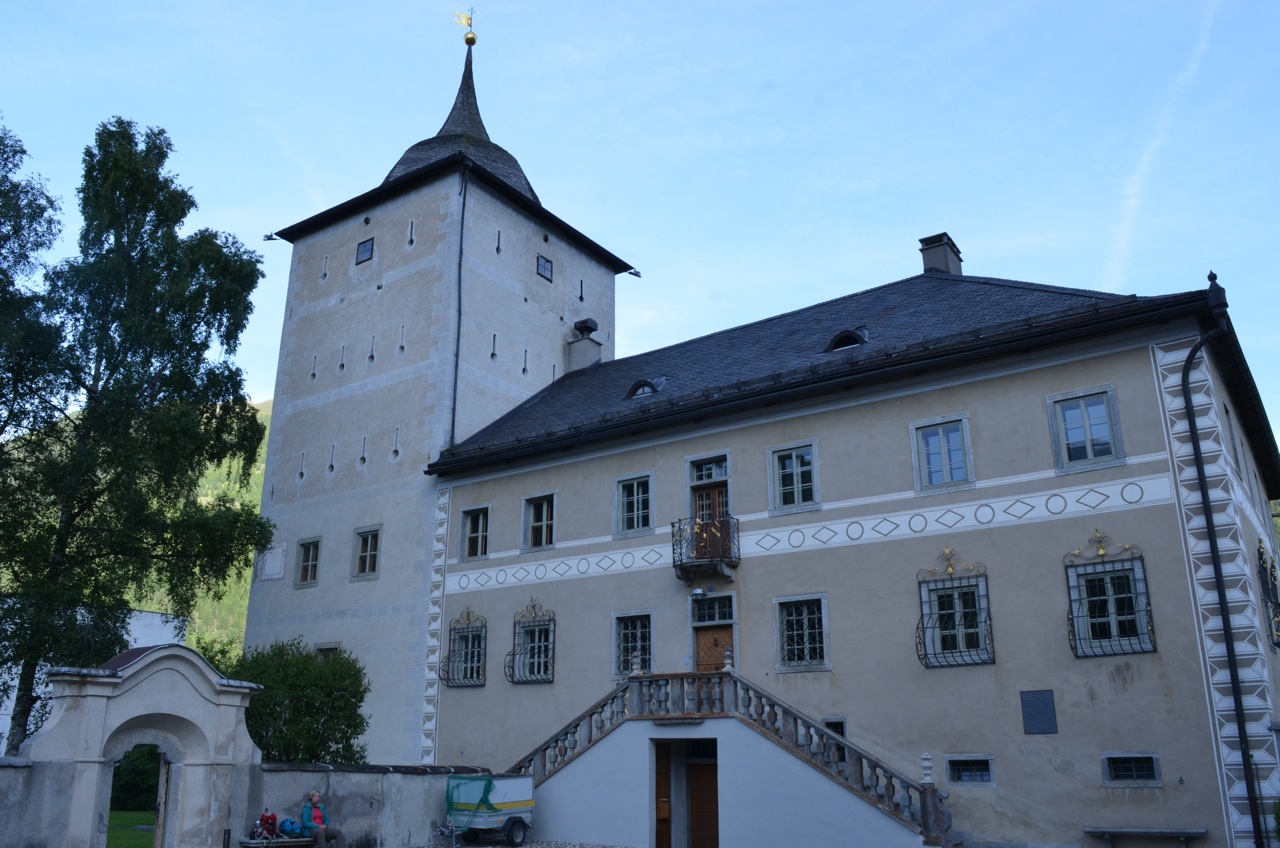
The admin building used to be a castle!

The admin building used to be a castle!

After this we met some of the team. There are several interns working for the Park at the moment. Ruedi told us he gets about 100 speculative CVs per year from people wanting to be part of the team. He can only take 5 each year, so he gets the pick of the bunch!
 We also met Tim, who has just finished his PhD and is now doing his civilian service working for the park. He is a geographical information systems expert which means he can use mapping software to do amazing things with data collected in the park. He is currently working on a project that will use photos taken over the last 100 years to build up an accurate picture of how the landscape has changed since the park was created. This involves working out exactly where the camera was located for each one of the photos by using the skylines in the pictures. Then the pixels in the photos will be superimposed in the correct places on a map of the park. So much work, but eventually you will be able to press play and watch the landscape of the park develop ACCURATELY from 1914 to 2015. Awesome!
We went across the road to the Information Centre, which is a modern concrete building and provides a big contrast to the offices! We got info-handsets that teach visitors about the exhibits in several languages. The first room was great, they call it a “shower of nature”. Three massive screens showing you videos of wildlife in the park through the seasons. It was beautiful and a great way to get in the mood for learning about nature!
The rest of the exhibits were in three rooms, concentrating on the geology, animal life and human activity in the park. We learned about marmots and deer, ibex and chamois. We found out about the reintroduction of bearded vultures,  which began in 1991 and has been a great success since the first pair bred in the wild here in 2007. We learned that the park has three goals: to protect nature, to research natural processes and to inform people. There was so much information available that we left after 2 hours feeling quite overwhelmed, and I’m not going to try to explain too much here! Safe to say that goal three is working!
One important thing to know is that there is really very little human intervention in the park. People are welcome to walk the marked trails but that’s about it! No cycling, no dogs, no leaving the trail, no fires. It sounds draconian, but the results speak for themselves. Some of the species in the park are very tolerant to people. The marmots will remain within a few metres, and even the red deer will sometimes allow people to get quite close. They know that people who stay on the trails don’t pose a threat. So the strict rules result in amazing opportunities to see shy animals up close.
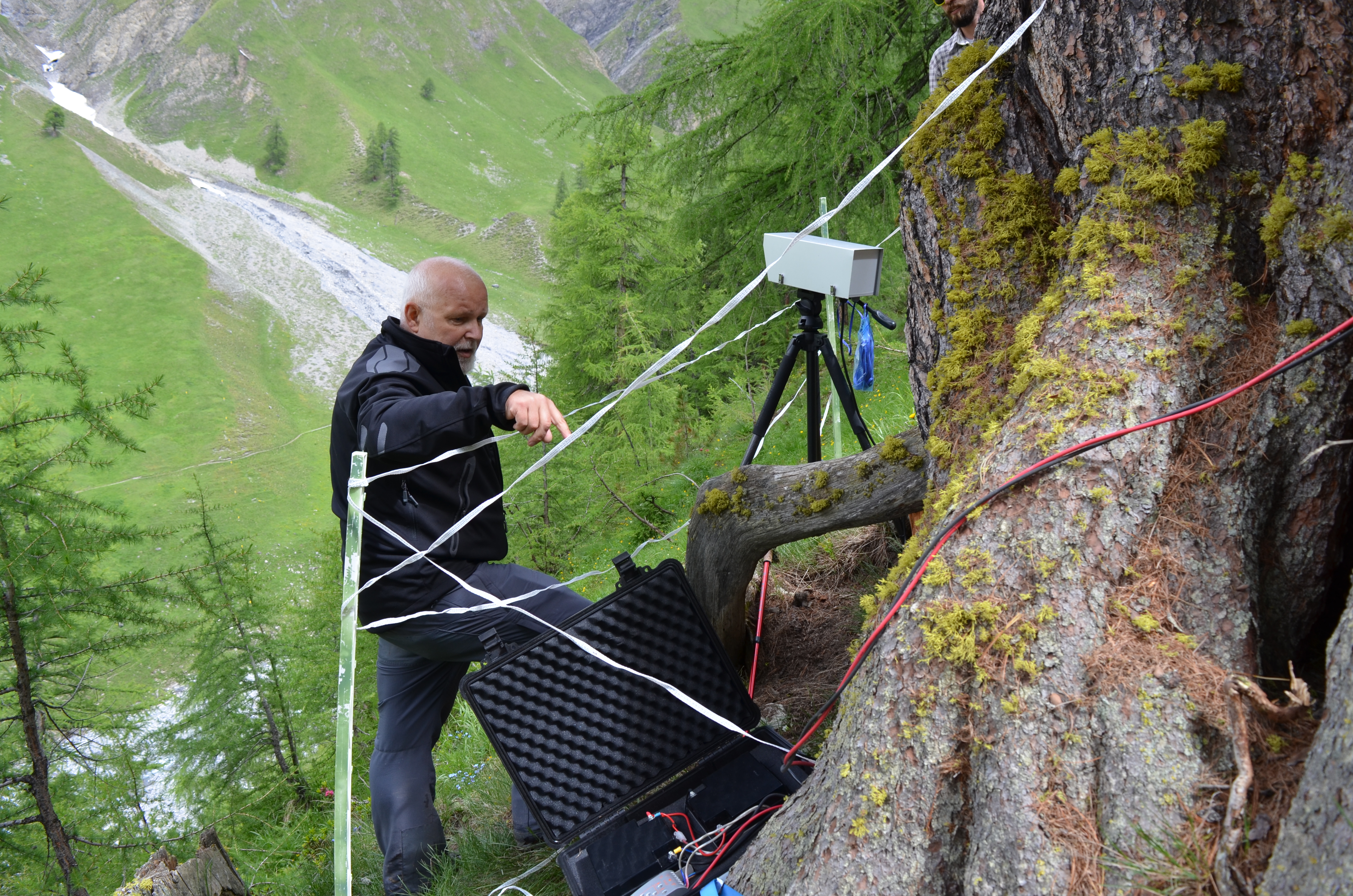
We went back to the office and met Cristoph, who is an electronics and technical expert. Tim, Anna and I were going to be helping Cristoph in the park. There is an infrared camera recording the heat signature of the ground on one side of a valley. The idea is to compare the heat signature with the different flora present, and see if there are any correlations. The camera batteries are solar powered, and they have run down, so our job was to see if we could work out why, and fix it.
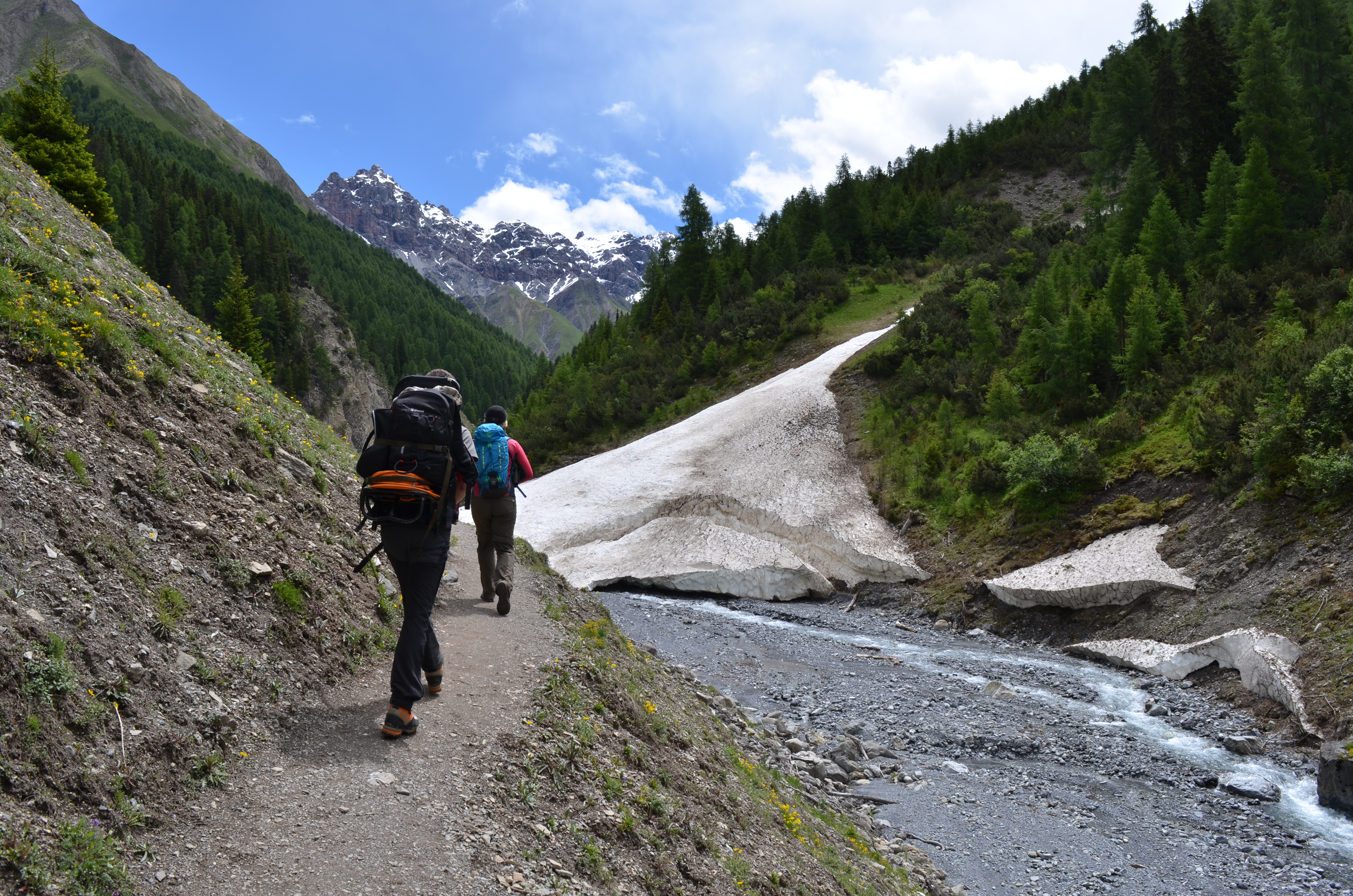
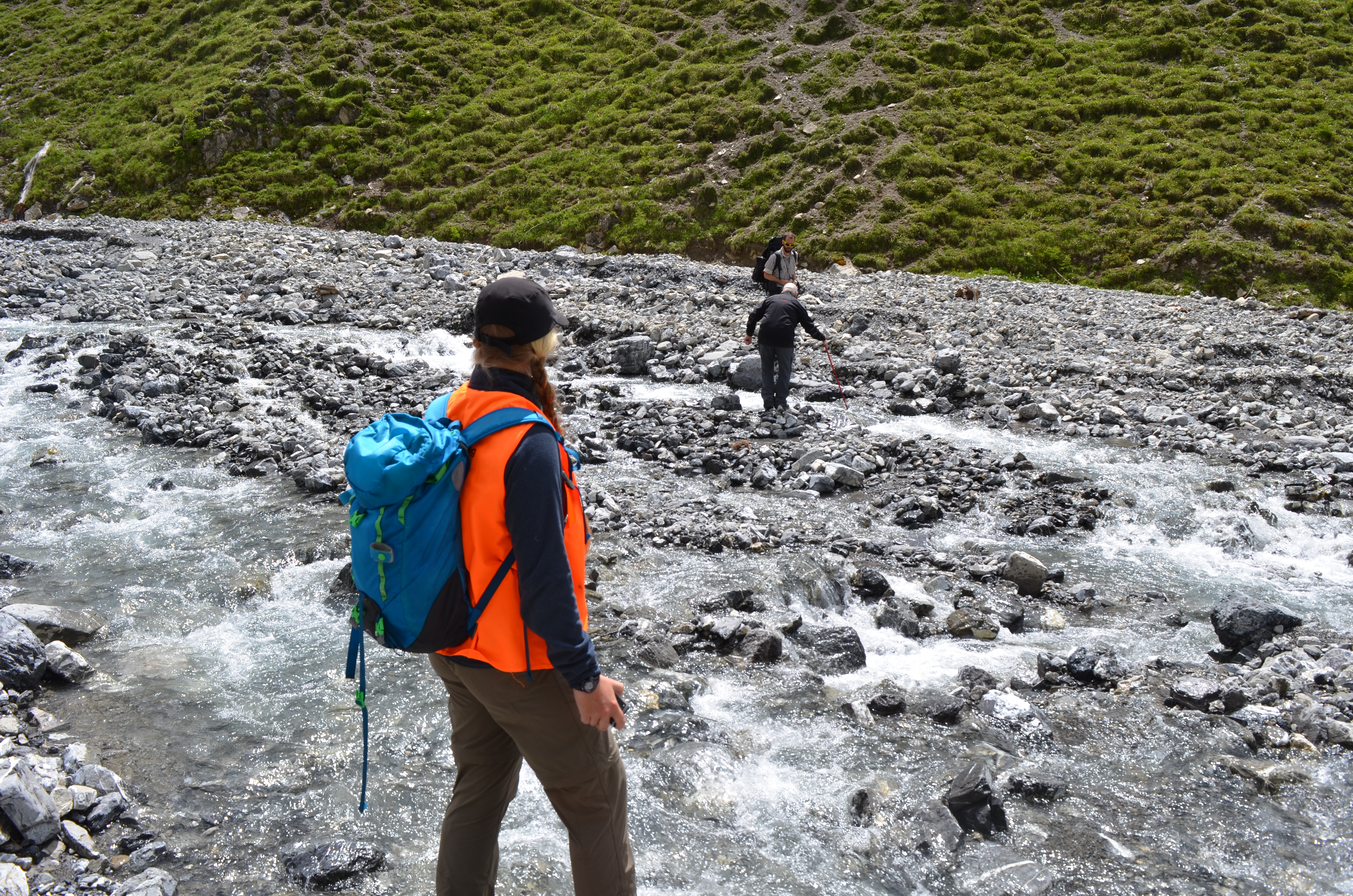
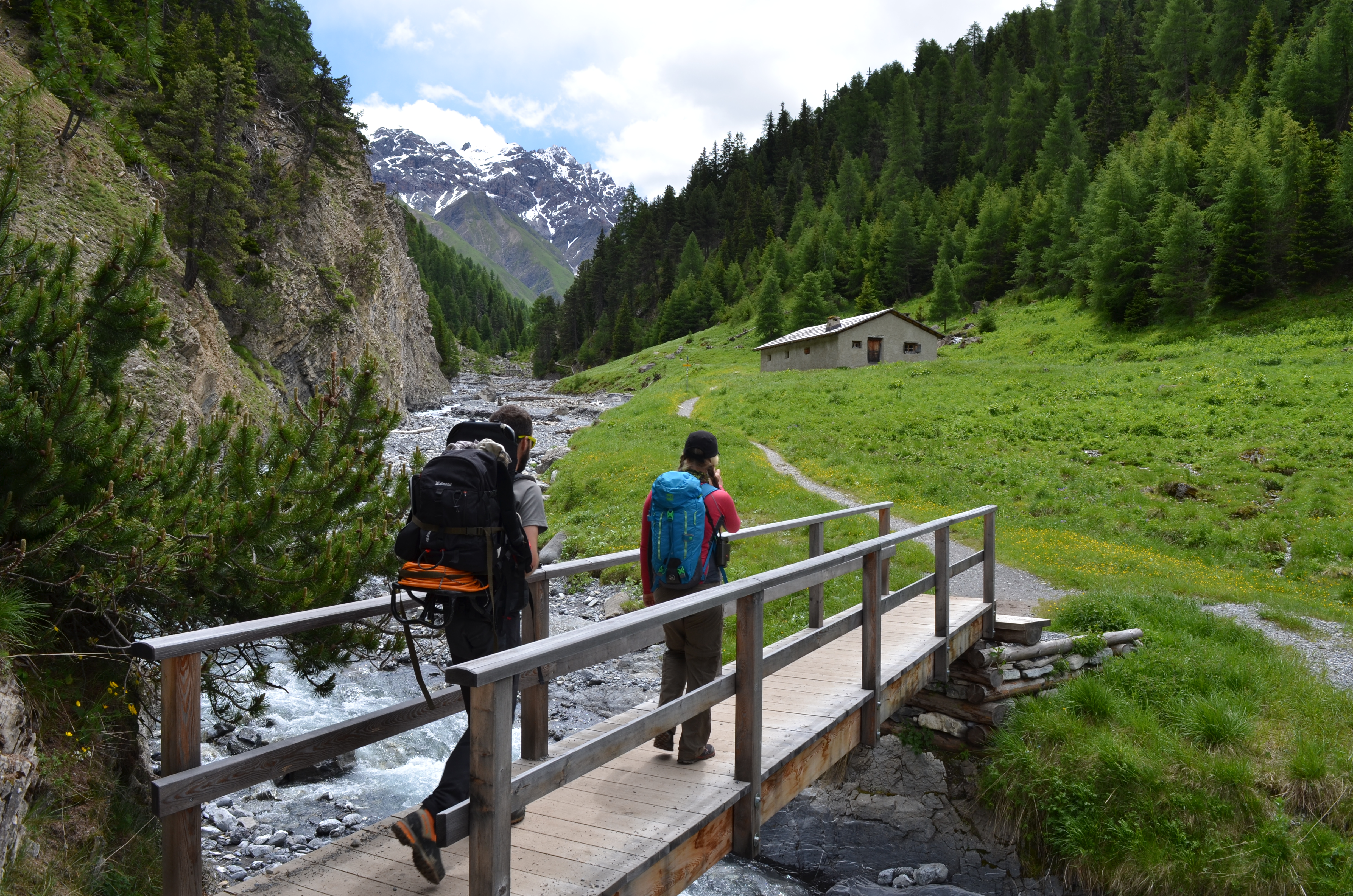
We set off in the car and after about 15 minutes we pulled into a carpark outside the boundary of the park. We began walking up a beautiful river valley, past a disused alp. Alps are areas of grassland in the mountains where cows are kept. There is usually a building in the area where milk, butter and cheese are produced. The mountain range we call the Alps is named for all the alps it contains. We occassionally stopped to look for red deer that were sometimes to be seen enjoying the grass high up the valley above the trees.
Into the park

Into the park

The old alp

The old alp

It started to rain and got a little cold, but before long we reached one of the ranger huts, which is near the camera station. Tim opened the door and we shook ourselves down and went in to sit down for lunch and coffee. Luxury!

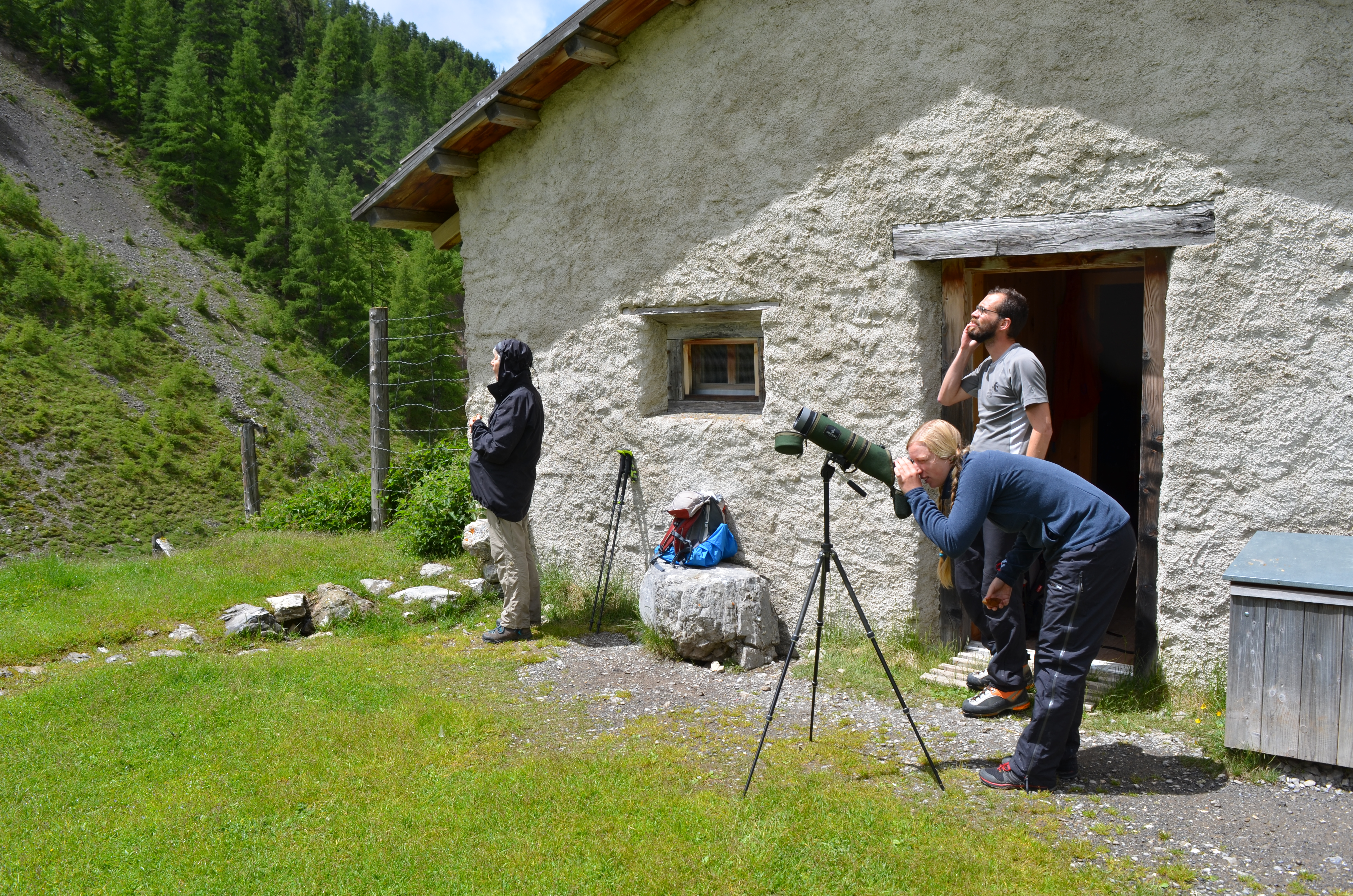
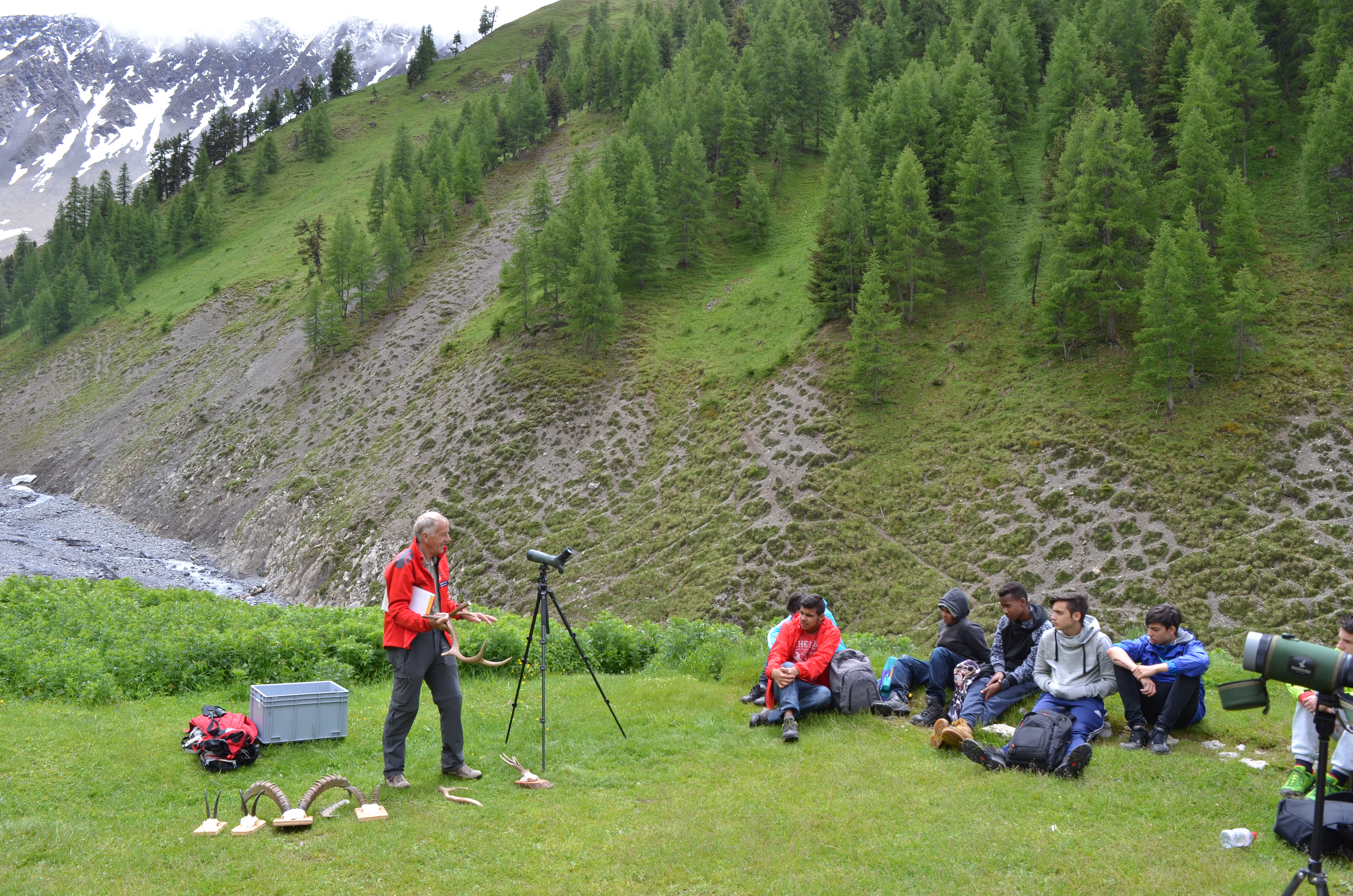
The rain soon stopped and we went outside to check the hills for wildlife. We were very lucky! We saw red deer, chamois and ibex scattered in small groups around the valley. Tim joked that we were only missing the bearded vulture, and afew minutes later one glided past, all the way to a curve in the valley where it circled a couple of times and disappeared behind a ridge. Such a cool experience! A group of schoolkids arrived with their teacher and a guide. They were a bit too cool for school at first but once they saw the animals through the telescope they got really enthusiastic, which was nice too see!
Watching the deer

Watching the deer

Kids unimpressed by man with antlers

Kids unimpressed by man with antlers

After lunch we crossed the river and climbed the steep hillside to cheek out the camera. Cristoph decided that everything was probably working fine, but that the solar panel wasn’t getting enough sun.

The crossing

The crossing

Cristoph checking the camera system

Cristoph checking the camera system

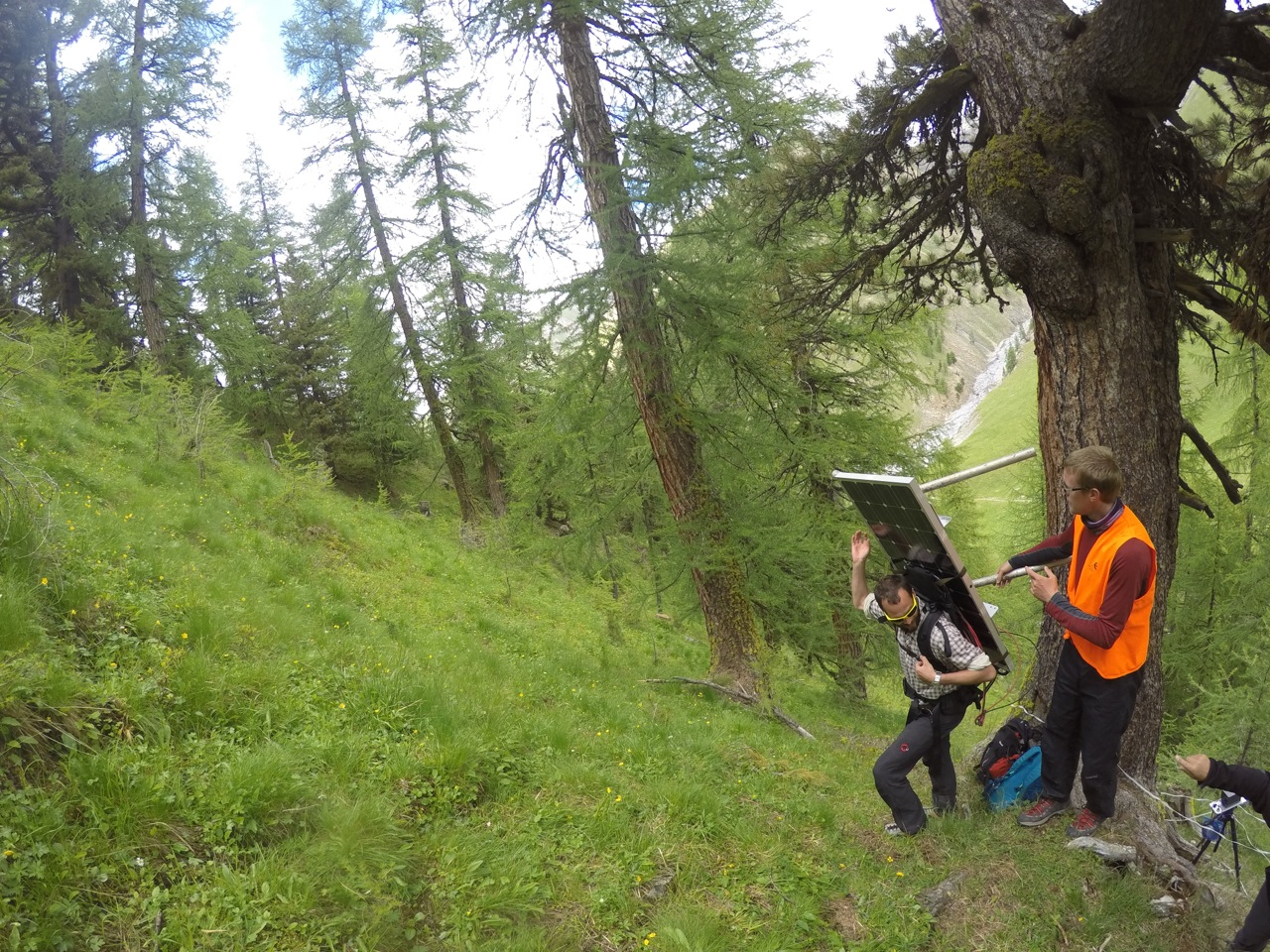
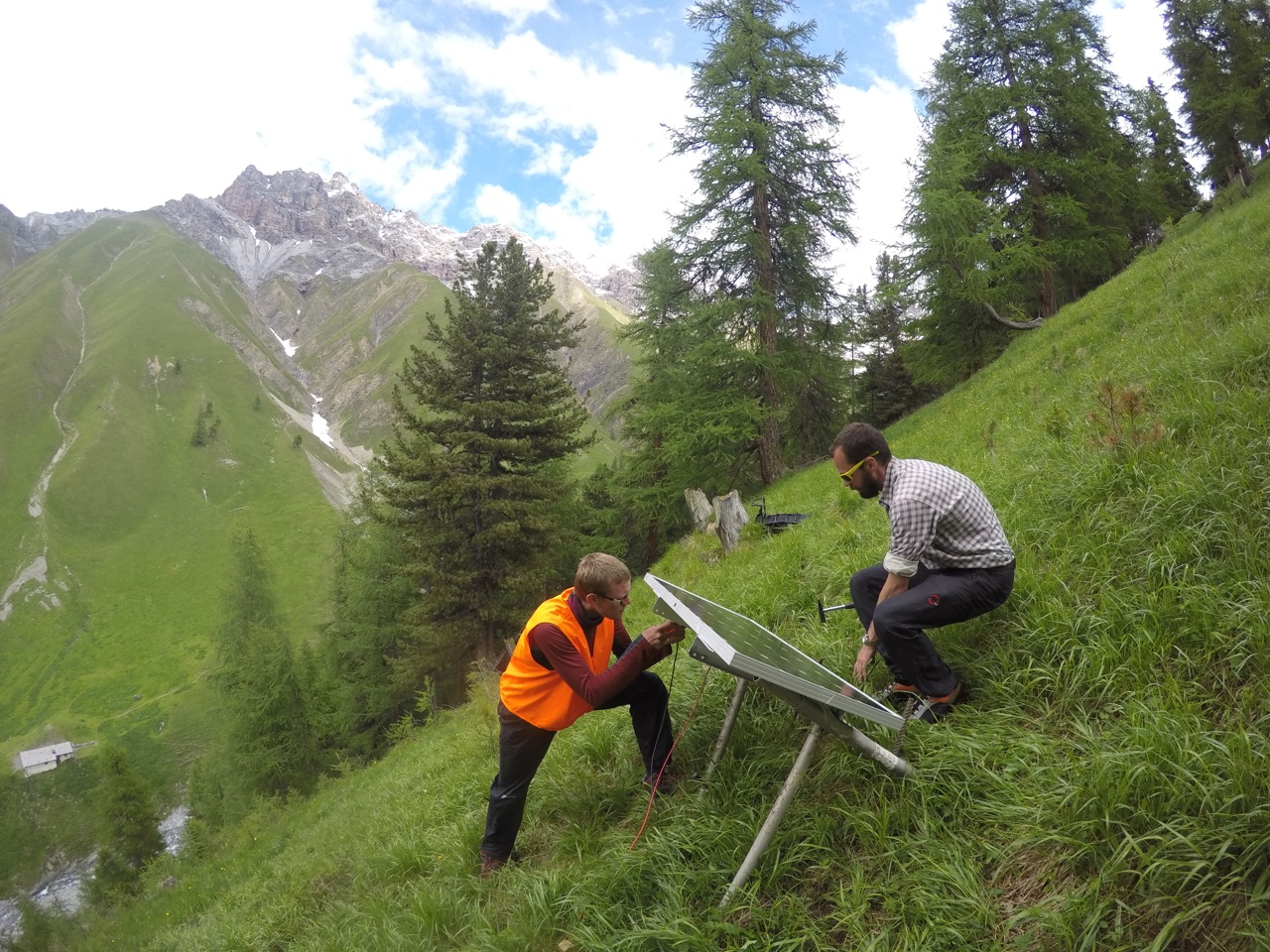
We decided to move the panel into a clearing a little further from the camera. This meant carrying the panel up the hill. Luckily Tim had brought a suitable carrying frame, and sure feet, and before long we were fixing the panel back into the hillside in clearing in the trees. That should keep the camera going!

I think I helped

I think I helped

Placing the panel

Placing the panel

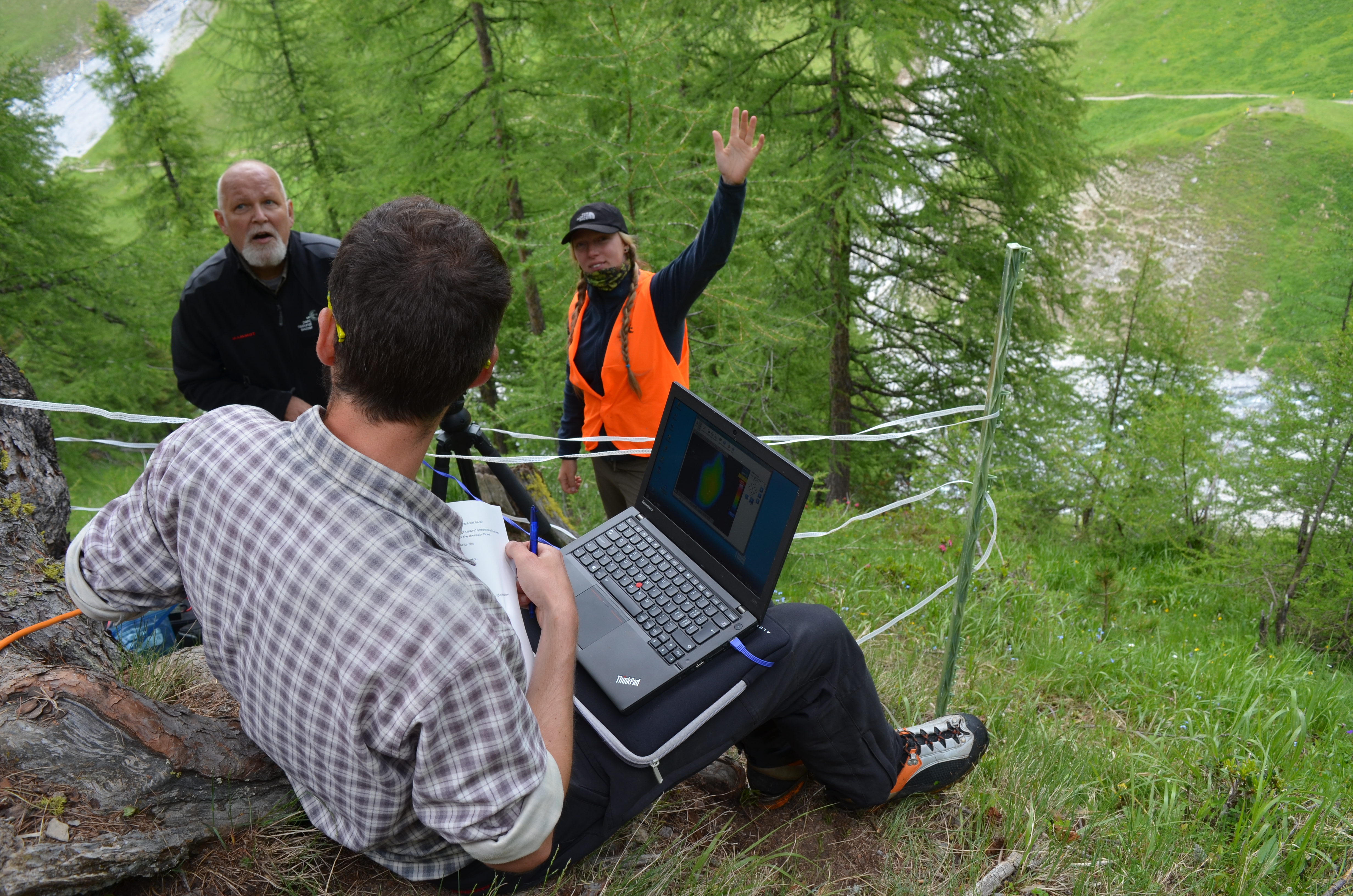
Once we’d secured everything we tested that the camera was working by using Anna’s hand. Then we tested it properly by getting thermal images of the hillside.

First test

First test (see screen)

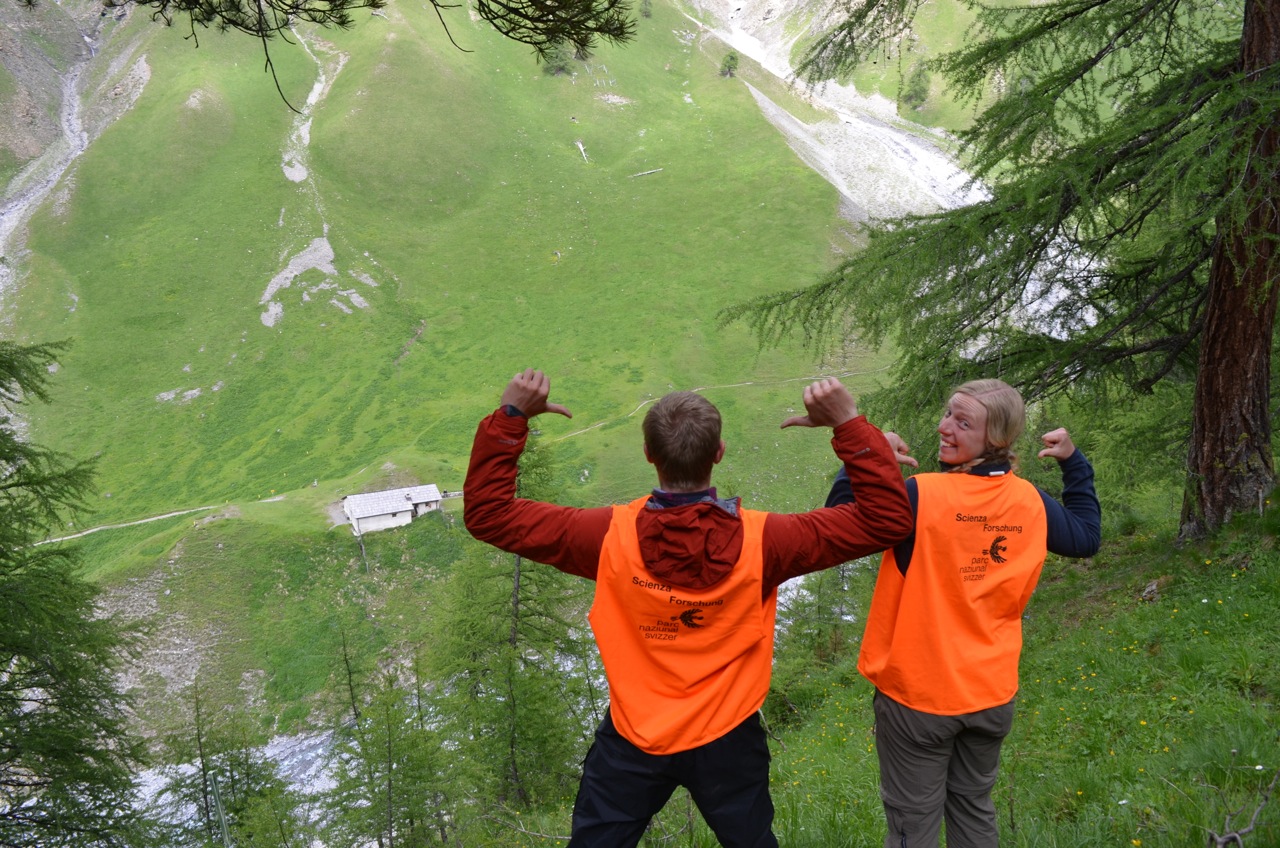
Part of the Team!

Part of the Team!

After that it was back to the ranger hut for another coffee. We tidied up for the Rangers (a matter of honour according to Cristoph), and headed back down the valley to the car.  A brilliant introduction to the park and some of the great people who work here!

– Dave